
Joseph Michael POWELL (1938 - 2022)
Personal Chair in Geography (1992 - 1998)
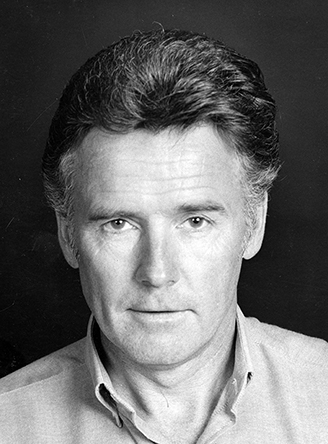
Emeritus Professor Joseph (Joe) Powell, who has died aged 83, began his research career with a study of nineteenth-century Wales but soon shifted his gaze to a larger landmass, becoming an expert in the historical geography of modern Australia and New World settlements.
Joe was one of the most outstanding historical geographers of Australia and was ranked amongst the best in his field. His fierce commitment to humanistic and historical research was not in vogue at the start of his career but became the hallmark of his work.
His contributions extended beyond academic geography to geographical education and particularly the history of geography and natural sciences. Colleagues concurred that as a writer, mentor, critic and educator, no historical geographer influenced their discipline in Australasia as much as Joe, and few have had such a profound effect on the nature and direction of the subject. His election in 1985 as a Fellow of the Academy of Social Sciences in Australia (FASSA), one of very few geographers so recognised, was a mark of the esteem in which he was held.
Joseph Michael Powell was born in Bootle, Lancashire, in December, 1938. He was educated at St Mary’s College, Liverpool, followed by Liverpool University where he gained a BA (Hons) in Geography in 1960, and an MA in 1962. His Master’s thesis explored the economic geography of Montgomeryshire – a county of Wales – in the 19th Century. Afterwards he moved to Middlesex in the south of England as an assistant lecturer at St Mary’s College, Twickenham.
Joe was keen to explore the landscape of Southeast Australia and came to Monash as a senior teaching fellow in 1964, working his way up the academic ladder to become a senior lecturer in 1970. The previous year he had completed his PhD which explored settlement and land appraisal in Victoria in the 19th century and was later published as a book, The Public Lands of Australia Felix.
Joe undertook postdoctoral work at the University of Canterbury, New Zealand, before returning to Monash, where he became a reader in the geography department in 1977. He became Monash’s first Doctor of Letters (DLitt) by formal examination in 1983, and was appointed to a personal chair in historical geography in 1992.
Joe’s career trajectory was far-reaching and broad. His research interests were diverse, encompassing more than two centuries and a world of ideas and influences. He was a formidable advocate for using humanistic approaches to understanding how knowledge and behaviour is shaped by geography, always paying close attention to its nexus with history.
In the later part of his career, his research focused on Australian water management. He was also passionately interested in heritage; he brought dozens of notable citizens to light in bio-bibliographies and chronicles, including the work of geographer, Oskar Spate.
In the late 1980s he was seconded to both the Victorian and Queensland Departments of Water Resources as an expert interpreter of and writer about their affairs. Joe’s sensitive understanding of the wider context and implications of his studies was evidenced in Watering the Garden State, his account of water management in Victoria from 1834 to 1988.
In total, he published 15 major books and was a long-serving editorial board member on nine international journals, as well as a book manuscript assessor for more than twenty years for UK, US and Australian publishers, including Allen and Unwin. He was also an editor, critic and research grant assessor. Joe’s books were regarded as being rich in documentary and literary evidence with a keen eye for landscape. Readers appreciated his idiosyncratic style and memorable turn of phrase.
Joe filled just about every position of responsibility and honour that the discipline of Australian geography could bestow, including President of the Institute of Australian Geographers 1984-85. He was elected a Fellow of the British Academy (FBA) in 2002, and was a visiting scholar at nine universities in half a dozen countries, as well as a respected keynote speaker. In 1988 he was awarded the Royal Society of Victoria’s medal for excellence in scientific research, and upon his retirement from Monash at the end of 1998 he was appointed emeritus professor.
His life’s work can perhaps be summed up in a plea from the last line of his book, Historical Geography of Modern Australia: “Let the past serve the present.”
Emeritus Professor Joe Powell is survived by his wife Suzanne, their children Melita and Stephen, and five grandchildren.
Joseph Powell was born on 27 December 1938. He died on 7 July 2022.
Edited version of article published in The Insider, 15 July 2022.