
John SHERIDAN (1950 - 2025)
Chair of Fluid Mechanics (2000 - 2015)
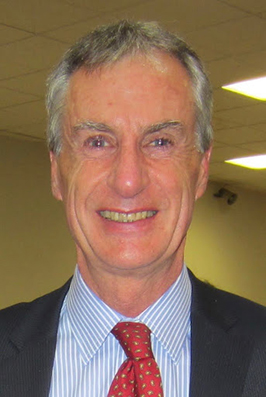
Emeritus Professor John Sheridan, who died on 10 July 2025 aged 75, was internationally renowned for his work in the field of fluid mechanics – the study of how fluids move and the forces they impart. Having served at Monash for more than 30 years, his particular expertise lay in investigating and manipulating the influence of air and water.
Throughout his career, he worked with his colleagues to apply their collective expertise to find solutions for some of the biggest problems in fluid mechanics: reducing the use of fossil fuels, increasing the power of wind farms, and improving rail safety. What made Professor Sheridan’s work so transformative wasn’t just that he knew how to solve these problems; it was also that he could see them materialising before many others could.
A significant portion of Professor Sheridan’s research focused on reducing fuel consumption and carbon emissions. He noticed a unique version of the carbon emissions conundrum in Australia – the extent of heavy transport use in the country – and he began working closely with the giants of the Australian transport industry to find ways of reducing the drag on large transport vehicles.
Professor Sheridan and his team explored novel methods of streamlining the trailers of large trucks using devices such as oscillating flaps, similar to those on aeroplane wings. He also pioneered a system of small air-producing jets that could be positioned on trailer bodies to enable greater aerodynamic gains.
Professor Sheridan lent his vast expertise to limiting the dangerous effects of pressure waves caused by high-speed trains passing through train stations, a severe threat to the safety of waiting passengers on the platform. He and his team collaborated with researchers at Central South University in China to evaluate the impact of desert winds on high-speed train networks.
Central to his work was the Monash wind tunnel, the largest of its kind in the southern hemisphere, which also played a part in the sport industry too. John and his team worked with the Australian Institute of Sport to improve cyclists’ performance through studying rider positions and the configuration of cycling teams. The experiments which preceded the 2012 Olympics in London were kept a closely guarded secret for months, so as not to alert competitors in other countries.
Professor Sheridan was also heavily involved in improving Australian wind farms. He investigated how the wake from a single wind turbine can affect the output of others positioned further away. He also examined the effectiveness of where wind turbines were located, evaluating the pros and cons of placing wind turbines near cliffs and escarpments.
After a decade working on solar technology with the CSIRO, Professor Sheridan returned to his alma mater in 1989 as a professor within the Department of Mechanical and Aerospace Engineering and was the Chair of Fluid Mechanics (2000-2015). He was Deputy Dean of the Faculty of Engineering (1998-2013), Head of Mechanical and Aerospace Engineering (2001-2007). In 2003, he served as Acting Dean, Head of the School of Engineering at the Gippsland campus.
Whilst an outstanding researcher, Professor Sheridan was passionate about attracting high quality students to the Faculty of Engineering; he spent countless hours speaking to groups of prospective students, both at schools around Melbourne and interstate, and in attending offshore recruitment events.
Despite fluidity being an intrinsic component of his life’s work, Professor Sheridan always applied method and structure to answer questions in fluid mechanics that few had even begun to ask. As impactful as his work was, he always appreciated and drew from the relationships with those he worked so closely with over the years.
During his tenure at Monash, Professor Sheridan received numerous accolades for his service to the University’s academic community. He was inducted to the Monash Honours Board for his excellence in academic leadership in 2012, one of the first inductees for this award. He was also elected by his peers to be President of the Academic Board for the period 2011-2013. During his term as President of the Academic Board, he also served as a member of Monash University Council.
Professor Sheridan was an avid runner and bushwalker and often could be seen running around the campus at lunchtime, with groups of fellow running enthusiasts. After the winds settled down on his decorated career, he was appointed Emeritus Professor in 2015.
The extended Sheridan family has made a very distinguished contribution to Monash University over generations. Professor Sheridan’s late father-in-law, Professor Guy Manton, was the second Dean of the Faculty of Arts. Professor Sheridan’s wife Liz, who survives him, has three degrees from Monash; a BSc of which she graduated from in 1971, a BE (Honours) of which she graduated from in 1973, and a PhD (with the Faculty of Medicine, Nursing and Health Sciences) which was conferred in 2012. In 1973, she became one of Monash’s first double degree graduates, at a time when double degrees were not formally offered by the University.
The University acknowledges with gratitude the life and accomplishments of Professor Sheridan and extends its sincere sympathy to his wife, Liz and their extended family on their great loss. A memorial service to honour Professor Sheridan will be held at the Clayton campus Religious Centre at 2.30pm on Monday 4 August.
Image courtesy of Emeritus Sir John Monash Distinguished Professor Tam Sridhar AO.
Edited version of article published 15 July 2025 and in The Insider edition of 17 July 2025.