To celebrate World Autism Understanding Day 2024 we bring our attention to how coaches can best support autistic players in community football programs. No two autistic people are “the same” but there are many ways to ensure autistic children get the best footy experience.
Monash Education investigators highlight some key ideas from the AllPlay Footy1 tools and resources, which have been developed in partnership with the Australian Football League (AFL), people with lived experience of disability, and consultants from National Sporting Organisations for People with Disability.
AllPlay Footy is a joint initiative by Monash University and the AFL to support all children to ‘live, learn and play’ at sport. With about 7,481 community football players and 5,043 NAB AFL Auskickers experiencing disability, and many of these players being on the autism spectrum, there is huge demand for this support.
With a family centred focus, AllPlay Footy offers children the opportunity to thrive developmentally in the natural landscape of childhood. Our research shows that playing team sports can improve psychological and physical outcomes. This is summed up beautifully by a child with autism who read about our AllPlay Footy program and said ‘I would prefer it if my doctor referred me to a game of footy to help with my development; that would be much more fun than spending hours in a clinic receiving therapy’.
This article offers practical advice to help coaches learn about autism and the strategies that can support autistic players in their group.
1. Learn about autism
Autism typically involves differences in how a person communicates or engages with social interactions. Some autistic players will like routines and things done in a particular way and some will dislike certain sounds and textures. Autistic players might have a strong interest in footy and might know a lot about the game or their favourite team, possibly more than most adults.
Many autistic people also meet the criteria for attention deficit hyperactivity disorder (ADHD) and/or experience high levels of anxiety. By taking time to learn about autism alongside learning about ADHD and anxiety, you can create a safe, responsive and comfortable environment that supports players who get easily distracted, hyperactive, impulsive, super energetic, worried, nervous or restless.
Enrol in the AllPlay Footy Disability Inclusion Coaching Course on CoachAFL to learn more about autism, ADHD, anxiety and other types of disabilities and evidence-informed inclusive coaching practices.
2. Learn about players’ strengths and support needs
Taking time to learn about your players’ likes and dislikes and what they need your help with will help you create an inclusive environment that supports their participation. You might like to ask questions such as:
‘What activities do you enjoy most at footy?” or
“Are there any activities that make you feel stressed or worried?”2
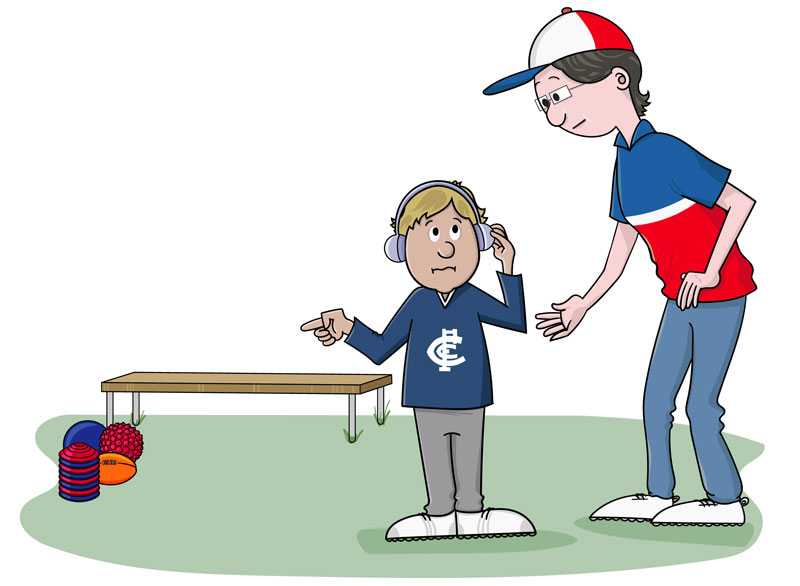
You could also use the AllPlay Footy ‘Supporting your child’s participation’ form with your player and their family to work out which strategies will support their learning and communication, and make note of anything that might make them feel worried or uncomfortable (e.g., whistles).
Elise Muller is an Essendon VFLW player who identifies herself as “First Nation, part of the LGBTQIA+ community, proudly autistic and also having ADHD and anxiety.”
In her collaboration with AllPlay Footy, she spoke to researchers about her experience of playing footy and the strategies that have helped her on her footy journey.
When speaking about the importance of inclusion, Elise said “I have autism, I have ADHD, I have anxiety. I have these labels and the disability doesn't live in them. The disability exists when the environment, approach, and system isn't created with me in mind, and my needs get left behind. They're not supported and therefore my differences are a limitation.”
3. Get ready for the new season
With the new season beginning, now is a great time to become familiar with tips that will help you be prepared to include all players. There are things you can do ahead of time to create inclusive footy sessions:
Use a visual schedule showing what activities the session will involve. This will help players understand what is planned and can reduce anxiety around unfamiliar routines. Find the best way to display it clearly so players can check what is up next.
Think carefully about your environment and your players’ strengths and support needs. This will help you create an environment where players can be themselves and thrive.
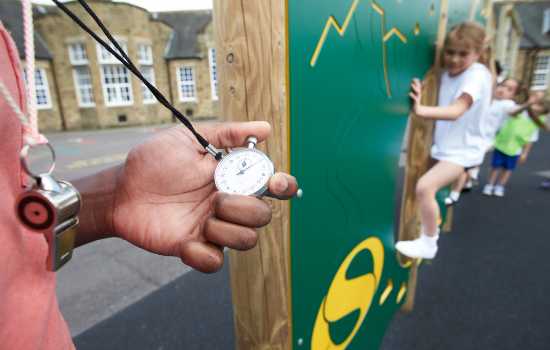
For example, think about noises that might make players feel uncomfortable (e.g., sirens, whistles) and have an alternative option on hand (e.g., a visual sign to start and stop activities).
Also consider that some autistic children may run away if they feel anxious or overwhelmed so having volunteers and a safe/quiet area can help.
Share footy stories with families to introduce children to the Auskick rules and the typical session schedule. This helps them become familiar with an Auskick session before arriving. Other stories in the AllPlay Footy suite will help with different scenarios that may present throughout the season.
4. Think about how you - and your players - communicate
The AllPlay Footy language guide can help you use language that is considerate of all players in your group.
As a coach, you can use a calm and reassuring voice and make some simple changes to the way you communicate that can support autistic players:
Visual instructions - Players might learn best if they can see what they need to do. Creating visual instructions to go with simple verbal instructions, and demonstrating and repeating your instructions can help.
Reduce distractions - Players might hear and focus best if distractions are reduced. Can you minimise background noise, or face the group away from distractions like other people and games?
Understand that player engagement looks differently for different people - Players’ engagement and attention might look different from how you expect. Re-consider how you can know if a player is listening and engaged.
“Taking things away from me and trying to get me to sit still and stop doing something stops me from being able to engage and listen. Having something that I can fiddle with, such as, like, a footy, or having the ability to move, or not show my way of listening in the way that you understand or perceive someone as listening, is gonna help me perform at my best.” - Elise Muller, Essendon VFLW player
5. Adapt activities to keep everyone playing
Minor adaptations to activities can make a big difference in supporting players to be or stay involved. Here are some ways you can modify tasks:
Shorten activities - using small groups or adding in breaks can help some players to stay engaged in the task.
Allow different ways to play - this can support children to participate in their own way. You could offer alternative ways to do footy skills (e.g., kick off a cone instead of a drop punt) or alternative roles (e.g., a child could be an umpire helper, instead of being a player). Remember, some players might be very keen to join in, but this might take some time if they prefer to watch an activity first.
Set up activities in a way that provides routine and consistency - this helps autistic players feel comfortable to participate. Prepare players in advance for any changes in activity (e.g., give a 5-minute warning) and use the same cue (e.g., a certain word) each time the group transitions to a new activity.
“I perform well when I have certainty and consistency. And knowing at the end of the day or on certain days I've got training, knowing that when I show up what the process is gonna be, that really provides that for me.” - Elise Muller, Essendon VFLW player
6. Know that these tips are good for all players
The adjustments a coach makes on a footy field so all children can play is not too dissimilar to how a classroom teacher might make ‘reasonable adjustments’ to cater for diversity so all children can have equal access to the curriculum and school experience. Taking time to learn about autism, players strengths and support needs and then making some adjustments goes a long way to supporting all children to play sport and beyond.
As Elise says, "I think what I'd tell coaches who are at grassroots is the approach that works for us and for everyone with different support requirements is actually just good coaching practice."
1 AllPlay Footy has received funding from the Moose Happy Kids Foundation, NDIS Information, Linkages and Capacity Building Grants (2016-2024), and J & S Wenig to conduct research and develop tools and resources to support disability inclusion at footy.
2 These prompts are adapted from the AllPlay Footy resources on play.afl, where you can find other questions to ask when you are getting to know a player.
Resources
Footy Stories - View or make your own AllPlay Footy stories
AFL LMS - Free training for coaches from the AllPlay Footy Disability Inclusion Coaching Course