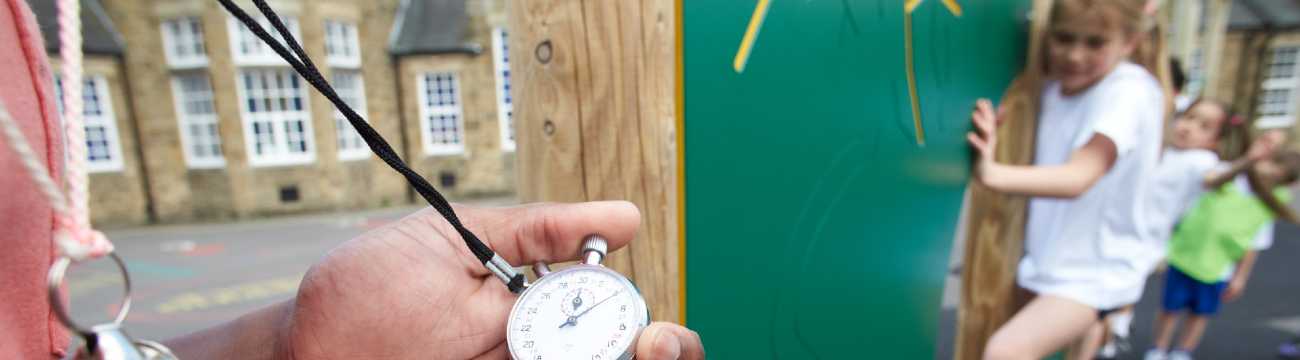

New Monash research shows how and why we need to move away from traditional fitness testing in health and physical education (HPE) so that we can foster more positive and educational experiences for students – and it starts with listening to how they feel.
Monash health and physical education researcher Laura Alfrey outlines her latest research.
We conducted research into fitness testing in schools, and investigated ways to transform fitness testing by using co-design approaches with students.
Fitness testing causes anxiety and body confidence issues
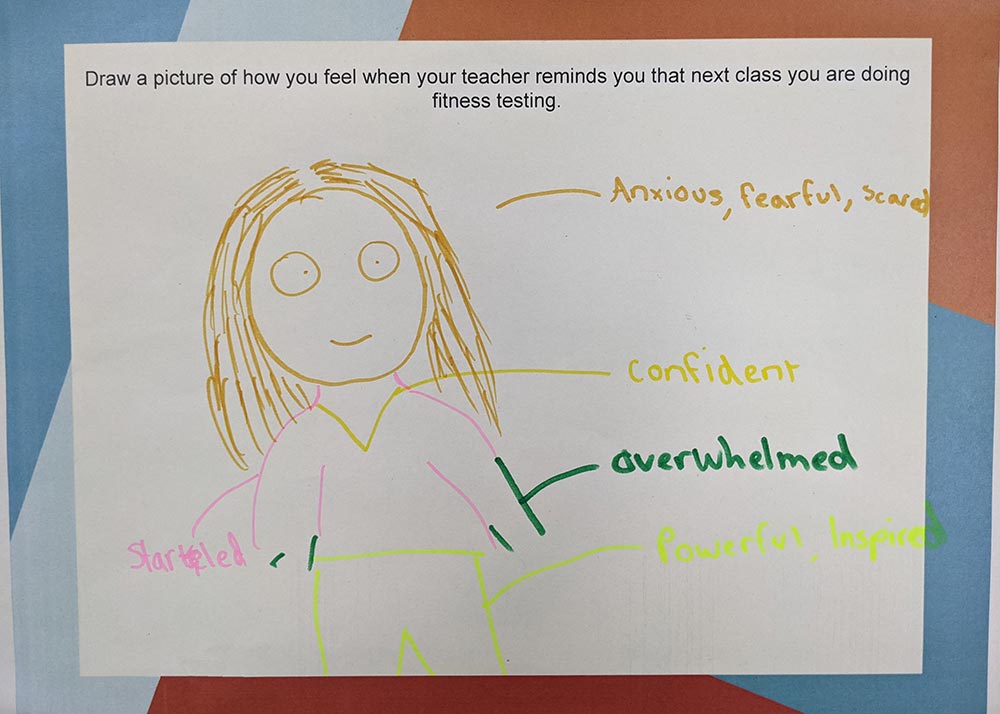
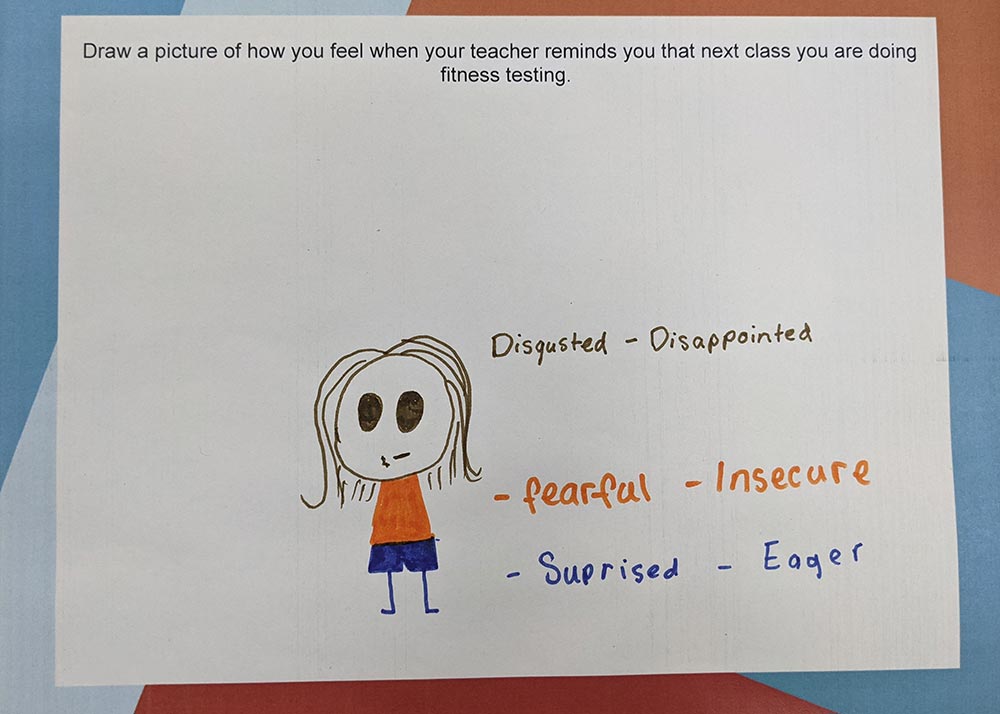
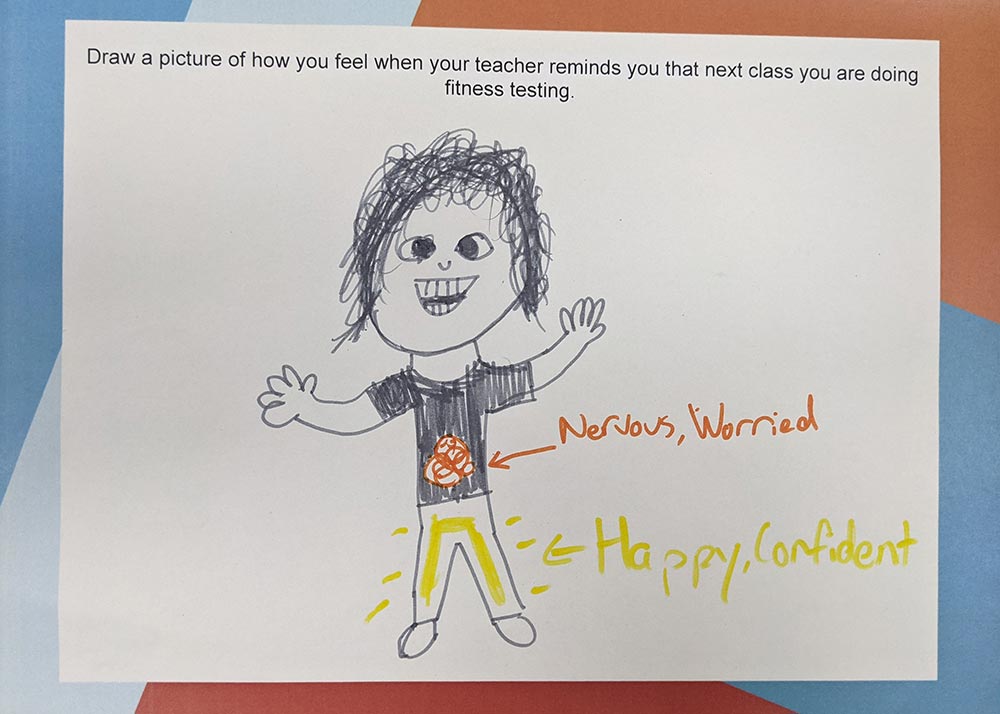
Nearly 50 Year 8 students took part in our study. We told them that in their next HPE lesson they would participate in their usual range of fitness tests. Then we asked them to draw a representation of how they felt about that. The results were mixed – students reported positive feelings like feeling energetic and excited as well as negative ones like feeling scared and overwhelmed.
Participants' thoughts and feelings BEFORE the fitness test


After the fitness tests were completed, we again asked the students to draw a representation of how they felt. This time the results were no longer as mixed. The group reported feeling embarrassed, confused and weak. A few felt happy, proud and excited – but on further investigation via interviews that was often because the test was over.
Participants' thoughts and feelings AFTER the fitness test


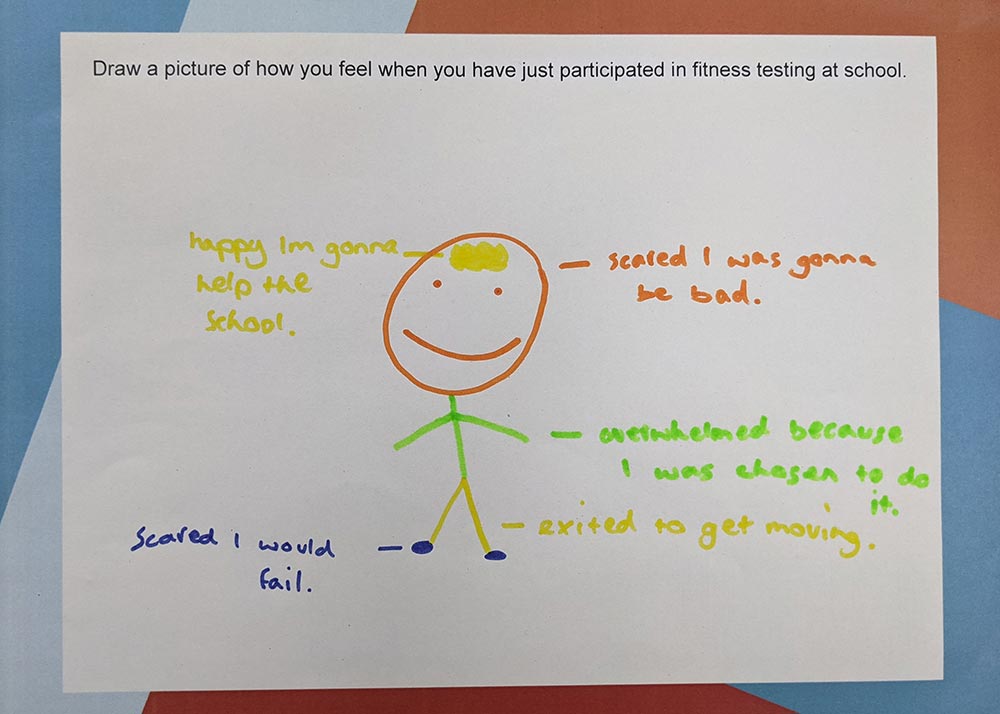
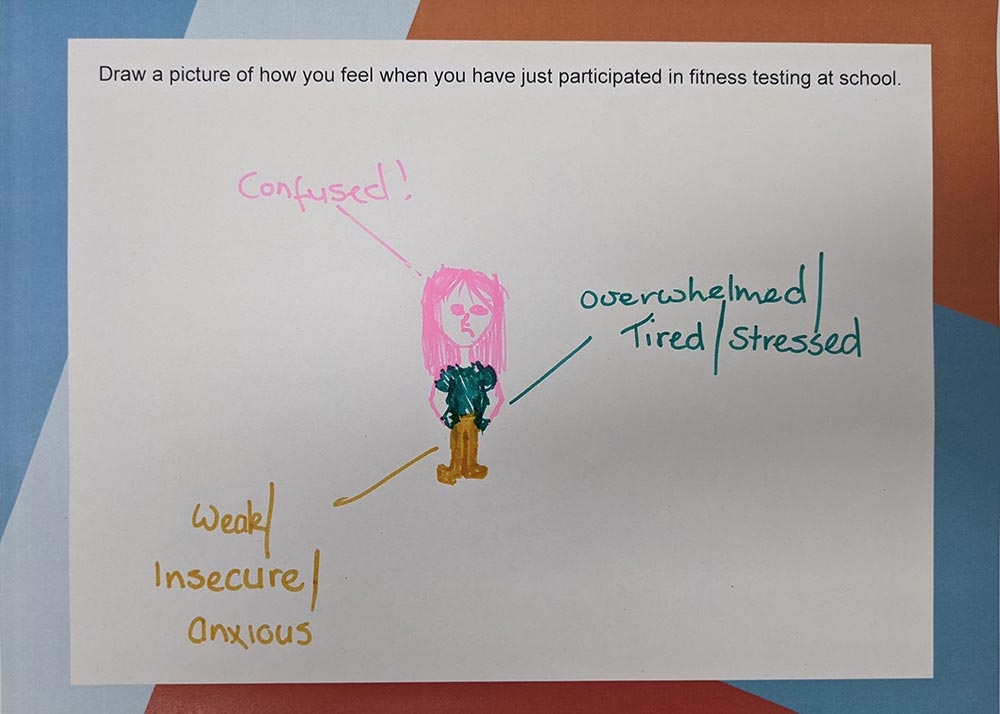
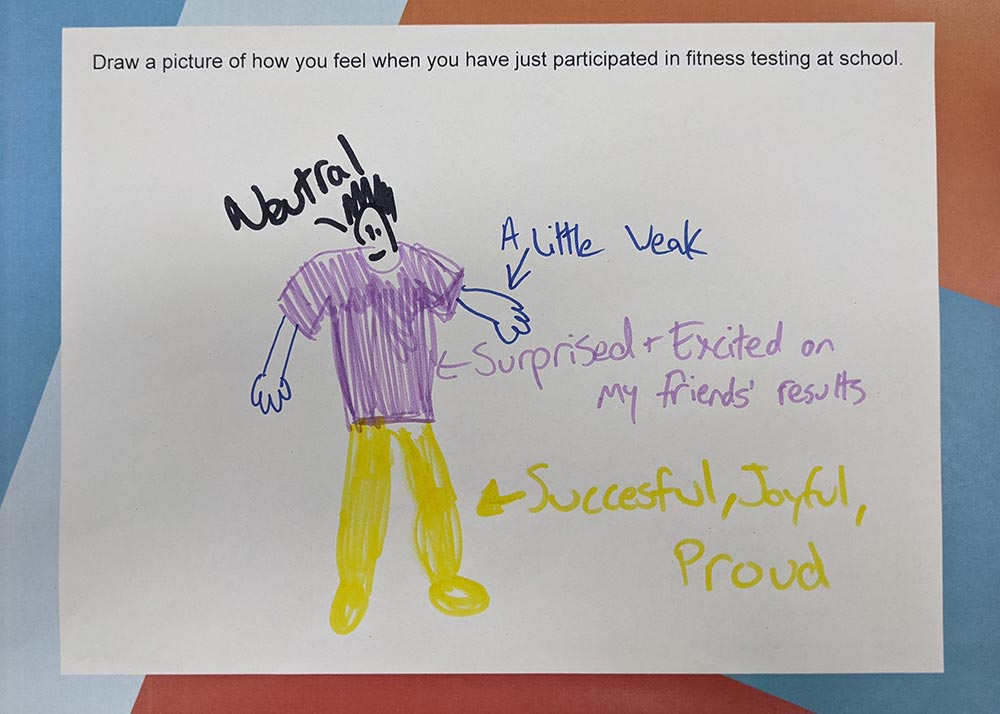
The interviews also revealed that the main sources of negative feelings stemmed from:
- Students participating in a whole-class beep test and
- The listing of their results on a spreadsheet that was visible to everyone.
These two approaches in particular left many of the students feeling exposed and judged.
What happens when we really listen to student voice
As part of the project, we shared with teachers (with permission) the student drawings and thoughts related to fitness testing in HPE. We asked teachers to read student quotes and reflect on what was said.
“I feel good about my body if I do good in the test and then if I do bad, I feel bad about my body.”
VIDEO: Health and physical education teachers respond to student’s feelings about fitness testing
The responses gave the HPE teachers cause to reflect on the purpose of the fitness testing. Most said it was tough to hear how fitness testing negatively impacted students.
“It really hurts when I hear they have been humiliated, that I’ve made a classroom that makes them feel like that,” one teacher said.
“It’s tough because…you never want to make a student feel that way,” said another.
Students’ suggestions for fitness testing changes
The students were invited to suggest new ways of teaching and learning through fitness testing. Many of their suggestions related to having choice about:
- Where they are tested, with some preferring the option to participate at home, or in an area of the school away from others.
- Who they are tested with, with most preferring to participate with a small number of chosen friends.
- Which tests they participate in, so that they can ensure that the tests are relevant to them and their lives beyond school.
- Whether they participate in validated tests or a test they develop themselves.
Students were also very clear that they:
- Want to know the purpose of fitness testing.
- Want to be clear on the learning that should be taking place.
- Do not want the results published, but want to know how the results are being used, and to what ends.
Why teachers should embrace the co-design process
We learnt from this research that the traditional and often current approach to fitness testing should be questioned, and alternative approaches need to be identified and co-designed if we are to ensure all students have safe and equitable access to fitness education. This is important if we want all students to have the knowledge and skills needed to live and advocate for active lives.
The co-design of fitness testing approaches in this research project was carried out by students, teachers and Laura (researcher). We found that teachers were keen to set up such a system because they wanted to update their approach to fitness testing but were not sure how to approach the shift.
The co-design process is attractive to students because it provides them with an opportunity to have voice, agency, and leadership in their health and physical education. This is often a strategic focus for schools.
The teachers who were part of this research were committed to listening and responding to student ideas from the beginning. Changes to fitness testing and fitness education are now being made in their school. Watch this space to see how they transform their programming.
Huge thanks to our partner school Western Port Secondary College who have keenly volunteered to trial the approaches to fitness testing and fitness education that were co-designed with students and teachers as part of this research.
Resources
How to co-design with young Victorians (VicHealth)
Empowering students through voice, agency and leadership (PFD file) (Victorian Department of Education and Training)
Why it’s time to reconsider fitness testing in health and physical education (TeachSpace)