


New Monash research has found that Australians have a high level of respect for teachers, with problem-solving seen as being one of the most important skills a student can learn.
Monash Education researchers Amanda Heffernan, David Bright, Fiona Longmuir, and Bertalan Magyar report on their latest research.
The results of our latest nationwide study into the public perceptions of teachers are the opposite of clickbait: people respect and trust teachers, and appreciate that it is a complex profession. COVID has only strengthened this.
Here are five key findings.
1. People recognise that teaching is intellectually demanding work
Members of the public overwhelmingly agreed that teaching is intellectually demanding work, with 8 out of 10 people recognising the intellectual challenge of teaching.
Australia’s teachers are highly educated, skilled professionals who make important decisions every day about how to best teach the young people in their care. Public recognition of the demanding nature of teaching highlights this.
2. The majority of people have at least one teacher who was influential in their lives
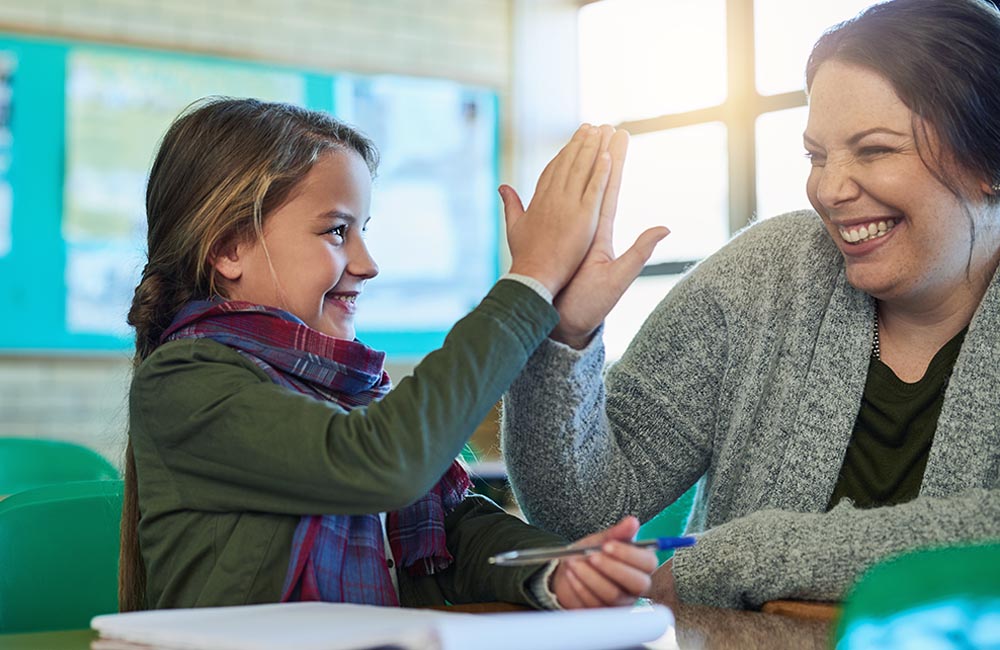
We were not surprised to see how many respondents had a teacher who was influential in their lives, with many recalling more than one teacher who made a lasting impact.
Teachers were remembered for making a difference through their
- Subject knowledge and passion for teaching
- Exceptional teaching skills: respondents recalled teachers tailoring work to students, and knowing how to engage all of their students
- Personal traits: kindness, creativity, and humour
- Willingness to go above and beyond for their students.
3. Teaching skills for life
We asked respondents what key skills young people need to learn, and to rank them.
Our findings showed that people placed a high value on schools developing skills in students that prepare young people for a changing world, and to participate effectively in society.

1. Problem solving
The ability to find and implement solutions to difficult or complex problems.

2. Social & emotional intelligence
The ability to recognise and understand emotions in both yourself and others.

3. Critical information literacy
The ability to make judgements about the types of information you are consuming every day.
Problem solving skills were ranked first, followed by social and emotional intelligence. Supporting students in critical information literacy – the ability to make judgements about the types of information you are consuming every day – was a close third.
These are skills that are already deeply woven into the teaching and learning that happens in schools. The results highlight broad support from the public for schools to develop these types of skills that extend from the so-called ‘basics’ often emphasised by politicians seeking curriculum reform.
4. More work needs to be done to raise the status of the profession – especially for early years teachers
The findings of our study showed that while members of the public trust teachers to work in the best interests of their students (72%) and recognise that teachers care for the wellbeing of their students (76%), more work needs to be done to lift the status of the profession.
There are a number of elements that impact upon status: media portrayals, social media portrayals, and public conversations about teaching and schools.
Findings of our study suggested that members of the public don’t think teaching is accurately portrayed in the media or on social media. Only 40% of participants felt teachers were respected by politicians.
Our results also pointed to the impact that people in positions of power – and with large platforms – can make to how our teachers are perceived, particularly acknowledging the impact of teachers, and the complex nature of their work.
In a ranking of 25 job categories, the teaching professions landed in the middle. Health care professions like doctors and lawyers were the highest, and politicians ranked among the lowest.
Of the teaching categories, school principals were the highest, with secondary and primary school teachers followed closely. Early childhood educators had the lowest perceived social statues, which highlights a lack of understanding and appreciation for the complexity of their work.
Quality education in the early years is vital for children’s development and learning. Countries Australia tries to emulate in terms of education (most often, Finland) have very strong support and funding for universal early childhood learning.
5. Close connection to remote learning during COVID led to increased appreciation of teachers
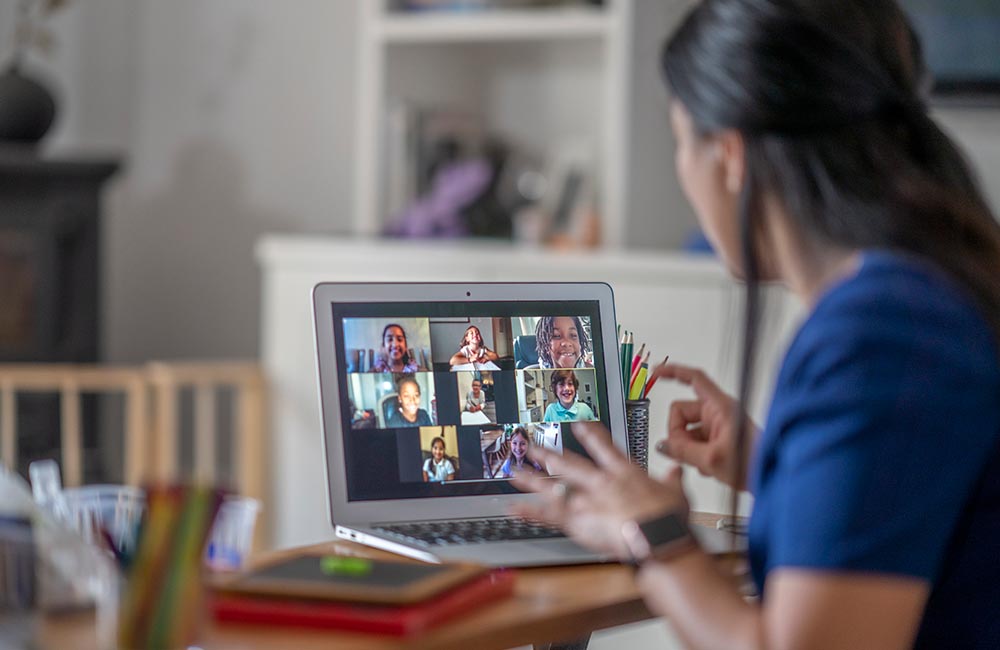
Almost half (41.6%) of respondents said that their perceptions of teachers’ work had improved as a direct result of COVID-19. The increase in positive public perceptions of teachers’ work reflects an awareness of how teachers responded to the challenges faced during the crisis. Importantly, our findings showed a correlation between respondents who had a school-aged child at home and more positive perceptions of teachers’ work during COVID-19. This suggests that people who experienced remote learning first-hand were more likely to have a more positive perception of teachers’ work as a result.
The increase in public appreciation of teachers’ work as a direct result of remote learning reflects an important shift in public opinion. Schooling has been opened up directly into the homes of many Australian families. At the same time, issues of equity and access to education have been highlighted and brought into the public consciousness, and if harnessed effectively, this awareness can inform the shape of schooling in years to come.
Read the full report Perceptions of Australian Schooling: What matters in 2021.
References
Barnes, M. (2021). Framing teacher quality in the Australian media: the circulation of key political messages?, Educational Review, 1-17.
Everton, T., Turner, P., Hargreaves, L., & Pell, T. (2007). Public perceptions of the teaching profession, Research Papers in Education, 22(3), 247-265.
Gallant, A., & Riley, P. (2017). Early career teacher attrition in Australia: inconvenient truths about new public management. Teachers and Teaching, 23(8), 896-913. doi:10.1080/13540602.2017.1358707
Gore, J., Barron, R. J., Holmes, K., & Smith, M. (2016). Who says we are not attracting the best and brightest? Teacher selection and the aspirations of Australian school students. The Australian Educational Researcher,43(5), 527-549.
Heffernan, A., Longmuir, F., Bright, D., & Kim, M. (2019). Perceptions of Teachers and Teaching in Australia. Monash University.
Heffernan, A., Magyar, B., Bright, D., & Longmuir, F. (2021). The Impact of COVID-19 on Perceptions of Australian Schooling. Monash University.
McGrath-Champ, S., Wilson, R., Stacey, M., & Fitzgerald, S. (2018). Understanding work in schools: The foundation for teaching and learning. Sydney, NSW: NSW Teachers Federation.
Mockler, N., & Groundwater-Smith, S. (2018). Questioning the Language of Improvement and Reform in Education: Reclaiming Meaning. Routledge.
Shine, K. (2020). ‘Everything is negative’: Schoolteachers’ perceptions of news coverage of education. Journalism, 21(11), 1694–1709. doi:10.1177/1464884917743827