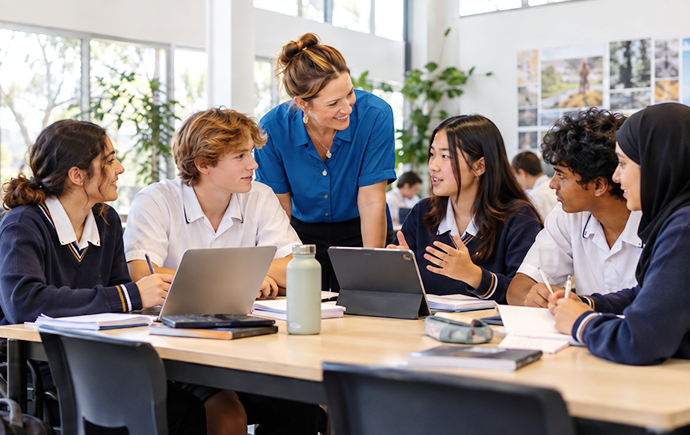


New Monash research shows how COVID-19 has significantly changed the way the Australian public perceives teaching and schooling. But what impact will this have long-term?
Monash Education researchers Amanda Heffernan, Bertalan Magyar, David Bright, and Fiona Longmuir outline their latest findings.
In 2019 Monash researchers wanted to better understand how teachers were feeling about their work, as well as the perceptions of Australians about the profession. In one of the biggest surveys of Australian educators to date about these issues, teachers reported they were feeling overworked and underappreciated. In contrast, Australians reported feeling respect and trust for teachers.
Perceptions of Teachers and Teaching in Australia 2019 (pdf)
COVID-19 brought school closures, lockdowns and remote learning. It brought the work of teachers directly into the living rooms of families. But did it change what Australians thought about teachers’ work? Here’s what we found out.
1. Perceptions of teachers have improved
Nearly half of people said their perceptions of teachers’ work improved as a direct result of COVID-19.
“2020 is a year like no other and I think teaching was inspirational.”
Remote learning opened-up the classroom to families and made teachers’ work more visible. Parents with a school-aged child at home reported the biggest shifts in their attitudes towards teachers, with those who experienced remote learning first-hand being more likely to appreciate teachers’ work.
These figures are very significant. During normal times, we would expect minimal shifts in public attitudes. However the COVID-19 crisis brought expert teaching practices into people’s homes, and highlighted the complexity of teaching and learning.
This included shifts in mainstream media, and social media, towards teachers during the pandemic.
But there is a downside to this shift that needs to be addressed.
Despite the increase in positive perceptions, evidence shows COVID-19 significantly increased the levels of stress and burnout among teachers around the world. If schooling is to be reimagined into a more flexible mode, teachers’ work would also need to be reimagined so that workloads — already at critical levels — would not be increased, and so that educators could benefit from flexibility as well.
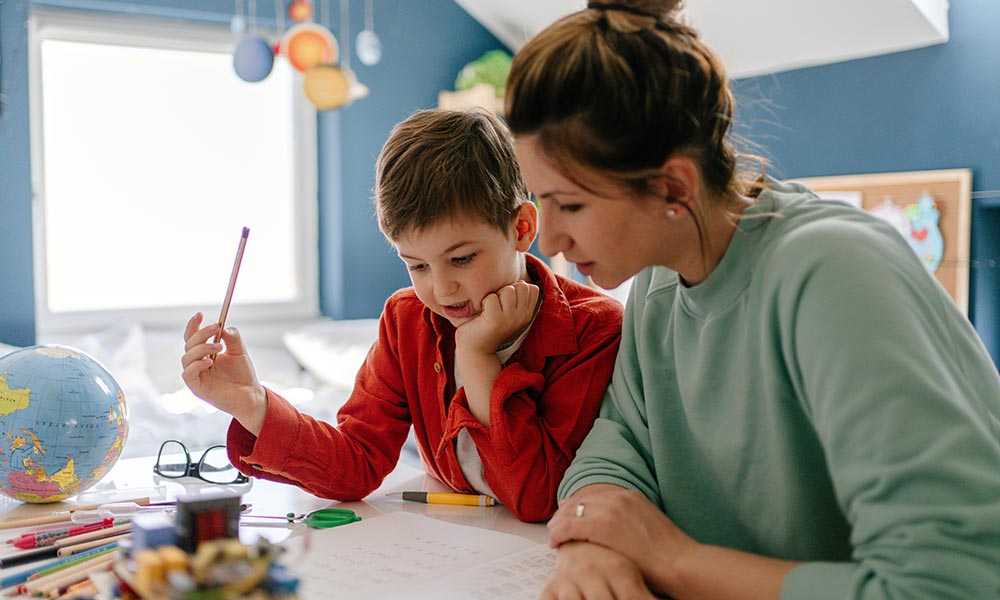
Having to home-school their children during covid lockdowns allowed parents to appreciate the work of teachers more.
2. Students need equitable access to technology
9 in 10 people believe it’s important for students from low socio-economic households to be provided with access to laptops and other devices to complete schoolwork at home.
Distribution of households with internet access paints a picture of inequality.
- Less than 40% of Australian households in disadvantaged areas have internet access.
- More than 90% of advantaged houses have internet.
Remote learning highlighted issues of equity and access for students. Schools delivered laptops and devices to students, while some governments subsidised internet and device costs. However, the digital divide also refers to the skills, knowledge and confidence required to navigate technology. Giving students access to technology while supporting them to use it can help mitigate this digital divide, and contribute to a future where rapid shifts to remote learning remain a possibility for all students.
Digital education in the aftermath of COVID-19: Critical concerns & hopes (pdf)
3. Thumbs-up for a more flexible approach
76.6% support a rethinking of the way we ‘do’ school with students given the option to take some classes online.
“If students can demonstrate they perform as well (if not better) via virtual classes than in the classroom, then this may be a very positive alternative.”
Parents reported benefits from online learning. They had more family time, flexibility in children’s schedules, better understanding of their children’s learning, a reduction in anxiety and stress, and an increase in children’s learning confidence. Relationships between schools and parents or carers improved too, and there was better teacher collaboration and collegiality.
Schools reopening, but it makes sense to plan for more remote learning

There is public support for giving students the option of taking some classes online.
4. The importance of face-to-face learning
35.9% said virtual (fully-online) school options were ‘of little importance’ or ‘not at all important’.
“COVID highlighted for me how much kids love the interaction with their friends and teachers.”
While it was recognised that virtual schooling would be great for some students, being online full-time is not perceived by the Australian public to meet the needs of all students. There are concerns around the experiences and needs of students with disabilities. And traditional face-to-face modes of schooling are seen as important for all students’ social and emotional development. This echoes research during the pandemic which focused on the need for students to maintain a sense of belonging and connection to their peers, teachers, and schools.
5. Remote schooling was seen as success
56.7% agreed the shift to remote schooling during COVID was successful.
Social media studied during April 2020 showed that during the early weeks of the pandemic, comments were largely positive and included humour, appreciation for the time spent with children, and appreciation for teachers. By the end of the three-week period, there were more negative tweets than positive ones, but tweets about teacher appreciation notably increased as time went on. There was widespread recognition of the challenging work teachers were undertaking to ensure students were supported and remained engaged.
References
Heffernan, A., Longmuir, F., Bright, D. & Kim, M. (2019). Perceptions of Teachers and Teaching in Australia 2019 (pdf).
Darling-Hammond, L. & Hyler, M. E. (2020). Preparing educators for the time of COVID … and beyond, European Journal of Teacher Education, 43(4), 457-465.
Gallop Inquiry Report (pdf) provides details of rising workloads and subsequent implications for teachers’ work.
Drane, C. F., Vernon, L. & O’Shea, S. (2020). Vulnerable learners in the age of COVID-19: A scoping review. Australian Educational Researcher.
Page, A., Charteris, J., Anderson, J., & Boyle, C. (2021). Fostering school connectedness online for students with diverse learning needs: inclusive education in Australia during the COVID-19 pandemic. European Journal of Special Needs Education.
Selwyn, N. (2020). Digital education in the aftermath of COVID-19: Critical concerns & hopes (pdf). Techlash, 1, 6-10.
Willems, J. (2019). Digital equity: Considering the needs of staff as a social justice issue. Australasian Journal of Educational Technology, 35(6), 150-160.
Selwyn, N. (2020). Schools reopening, but it makes sense to plan for more remote learning. Monash LENS.
Roy, A., Breaux, R., Sciberras, E., Patel, P., Ferrara, E., Shroff, D., … Becker, S. P. (2021, February 8). Key Strategies, Challenges, and Benefits of Remote Learning Expressed by Parents During the COVID-19 Pandemic.
Ziebell, N., Acquaro, D., Pearn, C., & Tiong Seah, W. (2020). Australian Education Survey: Examining the Impact of COVID-19: Report Summary (pdf).
Longmuir, F., Allen, K., & Grové, C. (2020). Begin with belonging: Why schools in Victoria need to focus on connection and wellbeing for term four. Monash LENS.
Ewing, L. A., & Vu, H. Q. (2021). Navigating ‘Home Schooling’ during COVID-19: Australian public response on Twitter. Media International Australia, 178(1), 77-86.
Kenway, J., & Epstein, D. (2021). The Covid-19 conjuncture: rearticulating the school/home/work nexus. International Studies in Sociology of Education.