


Graphic novels are riding a wave of popularity because of their easy-to-read mix of text and visual content. But how can they be used in the classroom?
Monash’s Kelly Carabott and Sue Wilson, along with primary teacher Kate Wall explain how graphic novels are transforming learning in classrooms.
Graphic novels have a long history, originating from Roman, Greek, Egyptian, medieval and biblical forms where images and words were brought together to tell stories.
And who hasn’t loved engaging with some form of comic or manga? Naruto, TinTin, Archie, Astro Boy, Asterix, Peanuts, Batman, Mad magazine – the list is endless.
Graphic novels are now being lapped up by contemporary readers, and are extremely sophisticated texts that contain a wide range of literary devices.
For five years, we have been working with students, teachers, preservice teachers and reading role models to re-engage learners who may have lost sight of their passion or purpose for reading.
One way was to bring our students’ out-of-school love for graphic novels and use them in the classroom. In doing that, we wove a reading and oral language experience together to model text prompts for writing.
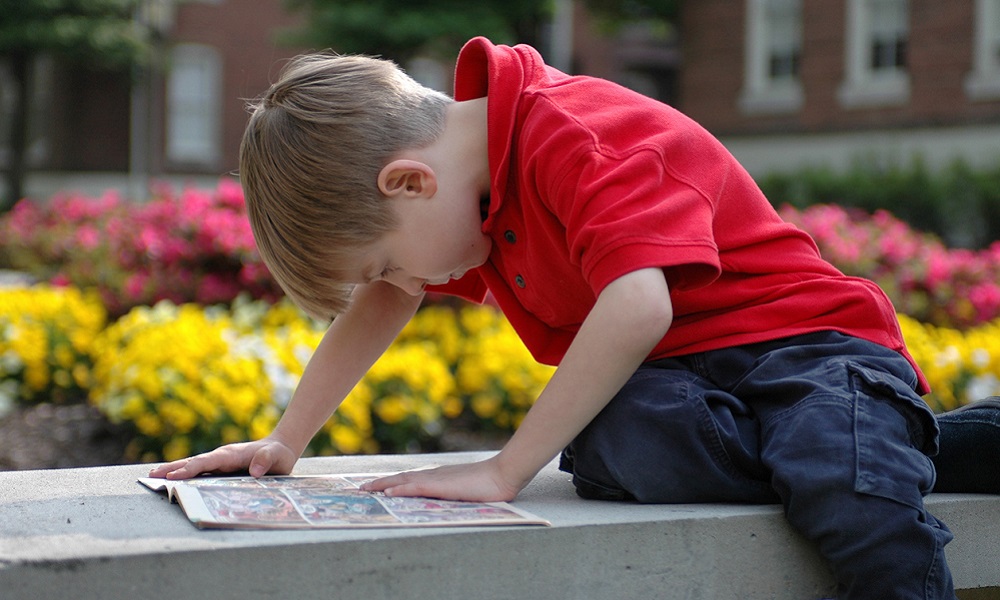
Here’s why it’s worked.
1. Graphic novels use interwoven visuals and text to convey meaning to readers
Graphic novels are a multimodel text and there’s a real knack to reading them. Their flexible structure is not apparent to everyone.
The story may appear simple, but there are layers of complexity as readers need to take in visual, spatial, gestural and linguist cues.
It’s not straightforward, even expert traditional print text readers don’t necessarily switch from one medium to another with ease.
Teachers need to explicitly teach students how to design graphic novels, the different modes of communication, and how they work to convey meaning to readers.
2. Graphic novels have their own unique visual conventions

| Thought bubbles: | Contain a character’s thoughts and give an insight into the character’s motivations. |
|---|---|
| Narrative boxes: | Provide narration to emphasise essential parts of the story. |
| Speech bubbles: | Contain the character’s dialogue. |
| Sound effects: | Usually provided via onomatopoeic words that imitate sounds. |
| Panels: | A frame or implied boundary, that tells a piece of the story. |
| Gutters: | Are the spaces between the panels that allow readers to infer what is happening between one panel and the next. Gutters provide a sense of time between panels. |
3. Graphic novels promote a wide range of language and literacy skills
Graphic novels use limited text but rich visuals, and are not simplistic stories. Research has shown there are many benefits for students who engage with them.
- Increased exposure to sophisticated vocabulary.
- The combination of visuals and text supports readers who have limited language proficiency.
- Development of critical thinking and comprehension skills.
- Increased understanding of literary techniques, terms and elements.
- Exploration of social and cultural issues, both historical and current.
- They provide an excellent scaffold to teach writing.
4. They are proven to motivate and engage students on a practical level
The Grade 5/6 students at Mossgiel Park Primary School loved their graphic novels so much it took their teacher Kate Wall by surprise. What started as a week-long lesson plan quickly evolved into a six-week unit that culminated in a comic convention.
Case study: Mossgiel Park Primary School Comic Con

Asking Year 5/6 students to write yet another narrative can be a risky challenge. The eye-rolling and mutterings of “again?” can be all too familiar.
Learning to communicate narratives through graphic novels proved an engaging and rich task for my students. Immersing the students in graphic novels was key. We explored comics from the old Archie and Marvel favourites to current graphic novels from the local library. Examining literary devices and learning to read the pictures provided opportunities for students of all abilities, including English language learners, to strive for excellence.
Students created their own super hero or villain, including their strengths and weaknesses and their background story. These characters were to star in a comic book that would be debuted at our first ever Mossgiel Park Primary School Comic Convention.
Rich discussions came from accountable talk sessions where students shared and provided feedback on each other’s story boards. The commitment and level of detail in their presentation of their comics blew me away! This was a prime example of what students can achieve with high motivation and engagement.
Students planned and created photo booths, props, decorations and hands-on activities for our Comic Con. Parents, students (F-6) and staff all commented on the exceptional work from the Year 5/6 students.
As a teacher, I was thrilled to find something that hooked them in from the get-go and provided my reluctant writers with an opportunity to shine.
Comic Con will return to Mossgiel Park in 2020 – Kate Wall.
5. They enable learners of all levels and abilities to shine
Our initial focus for this work was to support disengaged or struggling students, but learners of all types have benefited.
Graphic novels were used as mentor texts – examples of quality writing for the student – and emphasised the link between oral language, reading and writing. We were also able to draw on all types of literacy role models (and not just famous people).
In that way all students could experience success.

Resources
Monash University's ‘Leap with Lane: Linking into Literacies’ project
References
Department of Education and Training. (2018). The Pedagogical Model.
Hargadon, E. E. (2019). Using Graphic Novels to Motivate Readers. Reading Teacher, 72(4), 529–530.
Meyer, C. K., & Jiménez, L. M. (2017). Using Every Word and Image: Framing Graphic Novel Instruction in the Expanded Four Resources Model. Journal of Adolescent & Adult Literacy, 61(2), 153–161.
Pantaleo, S. (2011). Grade 7 students reading graphic novels: “You need to do a lot of thinking.” English in Education, 45(2), 113–131.
Pantaleo, S. (2013). Panelling “Matters” in Elementary Students’ Graphic Narratives. Literacy Research and Instruction, 52(2), 150–171.