
Laser controlled drug delivery a step closer at MIPS
May 2010
Monash Institute of Pharmaceutical Science researchers are one step closer to developing a drug delivery system that is activated by light.
PhD student, Wye Khay Fong is investigating how light sensitive nano-materials can be used to switch on or off drug release.
Khay's supervisor Dr Ben Boyd said Khay's research has implications for the treatment of macular degeneration and other illnesses affecting difficult to access tissues.
"Controlling the release of drug on-demand has great potential to improve the convenience and effectiveness of therapies that currently require frequent injections. Khay's research has progressed us towards such a system using a smart approach that takes advantage of the unique properties of these materials "
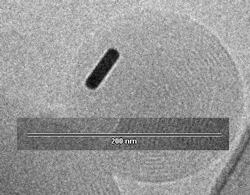
The research is investigating hybrid nanomaterials prepared from lipid-based liquid crystals and light sensitive materials such as gold nanorods. A light source can be used to activate the light sensitive material, inducing structural changes that switch on or off drug release. This kind of light sensitive drug delivery system would allow a single injection to replace many separate injections, by allowing a dose of drug to be released by shining a laser onto the desired site of treatment only when symptoms arise.
Using the Australian Synchrotrons, SAXS/WAXS beamline, Khay has been able to demonstrate that the gold nanorods act as a ‘nano-heater' when exposed to the laser, triggering a change in the structure of the liquid crystal in a controlled and reversible manner. These findings have been published this month in Langmuir.
Khay is completing her PhD under the supervision of Dr Ben Boyd in the Drug Delivery Disposition and Dynamics (D4) theme of MIPS. Her research is being conducted in collaboration with Dr Tracey Hanley (ANSTO), Dr Benjamin Thierry (UniSA) and Dr Nigel Kirby (Australian Synchrotron).