
There’s a little island in the Great Barrier Reef Marine Parks called Konomie (North Keppel) Island that is generating ripples of hope about what can be achieved in addressing ‘net zero’ emissions targets in schools.
As we approach Zero Emissions Day on 21 September we reflect upon the growing urgency to address climate change and reduce carbon emissions. All sectors of society, including schools, need to play a part in the solution to this crisis.
So who is actually achieving results and how can schools get started to help shape a greener future?
Monash Education’s Alan Reid explores the first ‘carbon negative’ tropical island in Queensland and how it offers hope and practical insights for schools wanting to take on the challenge of working towards net zero emissions.
Konomie Island: A beacon of hope
The ABC’s recent story on the Konomie (North Keppel) Island Environmental Education Centre, in the Great Barrier Reef Marine Park offers a symbol of hope in the fight against climate change.
This centre hosts about 2,500 students from Queensland schools each year for environmental education camps. Students learn about climate change, First Nations culture on Woppraburra Country, and sustainable living both on and around the island and its reefs.
Konomie Island's solar hybrid energy system produces 450 kW hours of energy daily, and serves as a blueprint for other schools on the journey toward carbon neutrality. By engaging students in sustainable practices and offering energy literacy education, schools can not only reduce their carbon footprint, receive a significant return on investment, but also enhance students' understanding of the environment and systems thinking.
From the margins to the mainstream
Victorian schools are becoming proactive in responding to climate change challenges too. Some schools are tackling the issue by addressing their fossil fuel dependency, while others are rethinking what makes ‘a school’ in Victoria in these times. This involves looking at how to foster sustainability and ethical development.
A Call to Action in the ‘Education State’
In Victoria, the pursuit of net zero emissions has prompted local bodies like Sustainability Victoria and the Department of Education and Training to assess the energy literacy of school communities. Schools are now being asked to consider the following:
The power of small changes
Small changes can yield significant results. For example, turning off appliances at the wall can lead to substantial savings. If every school in Australia adopted this practice, it could reduce costs by millions annually.
There is great scope for schools to play a pivotal role in society's transition to 'net zero' emissions. The Konomie Island example highlights the potential for schools to become energy hubs and community revitalisers by providing off grid energy supplies, especially in isolated areas.
“Australians spend $876M a year on ‘standby’ energy, which contributes to 2.4M tonnes of CO2e. If ONE school turned their appliances off at the wall every night it would save, on average, $2,225 per school per month.
If the 9,500 schools in Australia did that, it would reduce costs by $21M a month or $235M per annum.”
Zero Positive - For Schools
Support for Victorian schools
ResourceSmart Schools is an award-winning Victorian Government program that assists schools to embed sustainability in everything they do. They have more than 1,400 schools in the program and have achieved great results including:
Melbourne’s Albert Park Kinder is a prime example of how effective whole-school initiatives like the ResourceSmart Schools program can be. In 2019, it became the first early learning centre in Australia to be certified carbon neutral.
2023 Victorian Roll of Honour
- Castlemaine Steiner School and Kindergarten, Muckleford
- Ardeer South Primary School, Sunshine West
- Ocean Grove Primary School, Ocean Grove
- Eastwood Primary School & Deaf Facility, Ringwood East
- Mount Scopus Memorial College, St Kilda East
- Overnewton Anglican Community College, Keilor
- Braybrook College, Braybrook
- Lilydale Mercy College, Lilydale
- St Patrick's Parish Primary School
Why the ‘zero emissions’ goal is so important for schools
Recent research and development work by the Climate Council’s Dr Portia Odell shows schools can easily reduce their carbon emissions on average by 20% on a per student basis, and save an average of 15% in costs.
Given that energy consumption in Australian schools is expected to increase in the coming decades due to aging buildings, more digital technologies and increased utility costs, this focus on the ‘low hanging fruit’ argument is compelling.
Better still, more than 70% of schools participating in such initiatives had low or zero cost.
A Call for Caution
As we consider Zero Emissions Day and acknowledge there is much room for action, we must also be cautious of 'greenwashing' as well as boosterism, denial or doomerism masking as quality climate education.
Equally, some schools’ environmental credentials won’t necessarily check out under closer scrutiny. They must be able to maintain their commitment to embedding sustainability and net zero over time.
Where to from here?
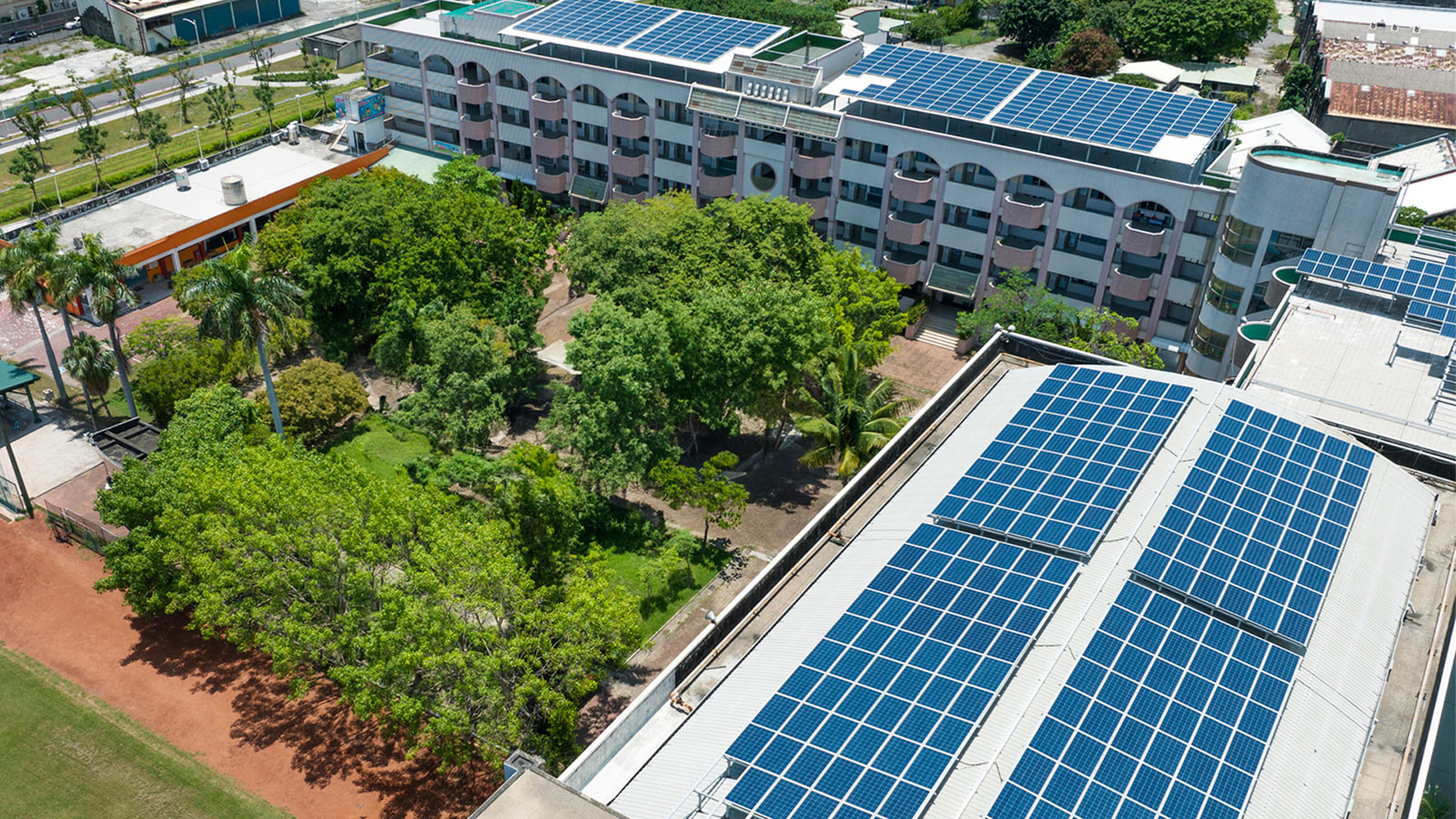
Involving students in setting and meeting zero emissions targets enables them to see the results of their actions and can provide them with a sense of agency and purpose.
The success of Konomie Island’s ‘carbon negative’ program is inspiring and is a reminder that the climate crisis is not all ‘doom and gloom’. As James Merlino Victorian Minister for Education recently said:
“Climate empowerment starts in the classroom. We’re celebrating students, teachers and schools who are quelling climate anxiety by learning and acting, inspiring contributions to our goal of net-zero by 2050.”
If your school is interested in working towards zero emissions, register your interest for the ResourceSmart Schools program.
References
The burden of bad news: educators’ experiences of navigating climate change education
Environmental Education Research
Beasy, K., Jones, C., Kelly, R., Lucas, C., Mocatta, G., Pecl, G., & Yildiz, D. (2023)
‘I tend to be very gentle’: how teachers are navigating climate change in the classroom
The Conversation, 30 August
Beasy, K., Lucas, C. & Peci,G. (2023)
Teaching about climate change in the midst of ecological crisis: Responsibilities, challenges, and possibilities
Educational Philosophy and Theory, 55(10), 1087-1095,
Bleazby, J., Burgh, G., Thornton, S., Graham, M., Reid, A., & Finefter-Ronsebluh, I. (2023)
Normalizing catastrophe: sustainability and scientism
Environmental Education Research, 19(2), 187-197.
Bonnett, M. (2013)
Educating Australia on the climate crisis
Policy Forum
Gough, A. (5 February 2020)
The climate change education ambition report card: An analysis of updated nationally determined contributions submitted to the UNFCCC and national climate change learning strategies
Education International
Kwauk, C. (2021)
A New Green Learning Agenda: Approaches to Quality Education for Climate Action
Center for Universal Education at The Brookings Institution
Kwauk, C., & Casey, O. (2021)
Identifying Effective Climate Change Education Strategies: A Systematic Review of the Research.
Environmental Education Research, 25(6), 791–812.
Monroe, M.C., Plate, R.R., Oxarart, A., Bowers, A., & Chaves, W.A. (2019)
Climate Change Education in Formal Settings, K-14: A Workshop Summary
The National Academies Press
National Research Council (2012)
Crosswalk for Climate Literacy: The Essential Principles of Climate Sciences and Excellence in Environmental Education – Guidelines for Learners (K-12)
NAAEE
North American Association for Environmental Education (NAAEE) (2015)
Schools: An untapped Opportunity for a Carbon Neutral Future
Sustainability, 13(1), 46
Odell, P., Rauland, V. & Murcia, K. (2021)
Empowering political engagement with unsustainable actions: the possibilities and limitations of teaching guides for climate change education
Environmental Education Research, 28(8), 1109-1125
Olsson, D. (2022)
Climate change threatens the rights of children. The UN just outlined the obligations states have to protect them
The Conversation
Peleg, N. (28 August, 2023)
Declaring a climate emergency. In K-A. Allen, A. Reupert, & L. Oades (Eds.)
Building Better Schools with Evidence-based Policy: Adaptable Policy for Teachers and School Leaders (1st ed., pp. 247-254), Routledge
Allen, A. Reupert, & L. Oades (Eds.) (2021)
Education and Training Climate Change Adaptation Action Plan 2022–2026
State of Victoria Department of Education and Training. (2022)
The oil industry in our schools: from Petro Pete to science capital in the age of climate crisis
Environmental Education Research, 26(4), 474-490
Tannock, S. (2020)
Justice in climate change education: a systematic review
Environmental Education Research, 29
Trott, C., Lam, S., Roncker, J., Gray, E.S., Courtney, R.H., & Even, T.L. (2023)
Getting climate-ready: a guide for schools on climate action
UNESCO
UNESCO (2016)
Getting every school climate-ready: How countries are integrating climate change issues in education?
UNESCO.UNESCO (2021)
United Nations Framework Convention on Climate Change (UNFCCC) Conference of the Parties (COP) (2022). Decision 18/CP.26 Glasgow work programme on Action for Climate Empowerment
Report of the Conference of the Parties on its twenty-sixth session, held in Glasgow from 31 October to 13 November 2021. Addendum. Part two: Action taken by the Conference of the Parties at its twenty-sixth session, 17–26
United Nations
Ever wondered what our curriculum teaches kids about climate change? The answer is ‘not much’.
The Conversation
Whitehouse, H., & Larri, L. J. (2019)