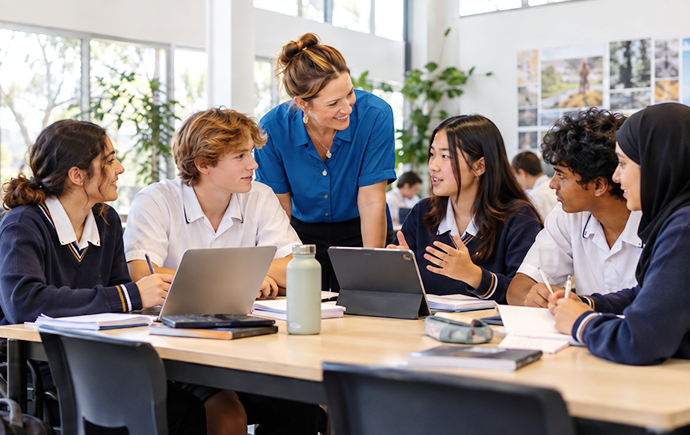


Building an inclusive culture is a fundamental part of contemporary schooling. But how do you foster a collective mindset? We asked three school principals who are leaders in inclusive practice about what works for their school communities.
School leaders Stephan Munyard, Fiona Williams and Helen Jamieson, along with inclusive education researchers share their insights.
There is a concept in South Africa called ‘ubuntu’. It literally translates as ‘I am because you are’. It fosters a mindset that places people as part of a collective, expressing humanity to each other. The idea brings communities together, and nurtures common bonds. It was a concept that was fundamental to post-apartheid healing, where all citizens were important.
For most Australian schools – where inclusivity is largely accepted and widely practised – the idea of ‘ubuntu’ can deepen a collective mindset. Schools in a sense become villages, and that’s where authentic inclusion can be truly implemented.
School leaders can foster that collective capacity, and with it the ability to accommodate and include all students. But what does it look like in practice? We asked three school leaders how they create ‘collective inclusivity’ in their schools.



From their insights, we identified the five critical features to ensure authentic inclusion, utilising a collective mindset.
1. Collective school culture
A fundamental feature of an authentic inclusive school is the development of a collective and concerted mindset that supports all students. Every member of staff, whether they are teachers, support staff or administrative personnel, should essentially support and foster inclusive practice. This shared culture is likely to create "inclusion champions " (Helen) who are advocates of authentic inclusion. Within this shared mindset, staff are more likely to see students individually, for their unique gifts and talents, and collectively, in order to develop a wider context of belonging. The "creation of inclusive communities” (Stephan) positions schools on the journey to full and authentic inclusion. In this regard, the culture becomes an organic, evolving entity, thriving through shared values and an essential need for belonging. In order to foster and maintain this inclusive school culture, inclusion has to become an “articulated value” (Fiona) – so that all members of the school community, students, parents and staff, “live the value” (Fiona) of true inclusivity.

Authentically inclusive schools aim to develop a collective and concerted mindset that supports all students.
2. An injury to one is an injury to all
Borrowed also from the resistance in South Africa to racial discrimination, collective inclusion is also built on the premise that everyone finds their individual identity through a shared belonging. In this context, every student counts. Helen acknowledged that inclusion is “challenging” especially since she has assumed a more fluid position for her school with regard to including all students. She noted that at her school, there are often transitions in roles between and among teachers and support staff. Stephan noted that some students are more at risk, so building support systems to take care of students collectively improves overall learning opportunities for all students. Fiona similarly saw diversity as an aspect to be nurtured and celebrated, reducing the possibility of stigma, and promoting the value of every student. All leaders accepted the notion that the failure on the part of individual students impacts on the school in its entirety. Harm to one will therefore be a harm to us all in the village.
3. We care for each other
Nurturing wellbeing and psychological comfort is fundamental to inclusive schools. The journey to create an inclusive school is not easy and one can get tired very quickly. It requires members to support each other emotionally, physically and in any other way needed at the time. When educators support each other, the benefits are not just for the staff but for all students. All three leaders highlighted the need to care for the vulnerable students as a key priority. Fiona observed that happy and engaged students were more likely to succeed, so her school prioritised wellbeing as part of their efforts to include all students. Likewise, Stephan perceived inclusivity as a means of 'restoring' students, building their self-esteem and individual worth through focused programs which supported emotional and psychological development. At her school, Helen saw this provision of time and resources to support wellbeing as making a difference to students. She observed that altering the view to a more strengths-based position resulted in a positive shift in students and staff, with regard to wellbeing.
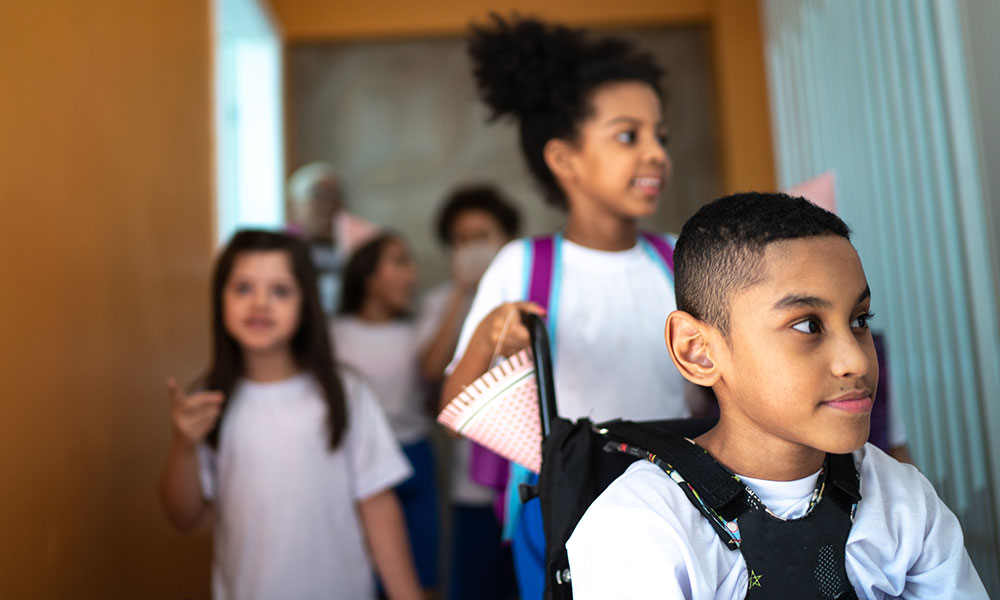
Promoting the need to care for the vulnerable students as a key to inclusive schools.
4. We are inclusive by involving parents and families
All three leaders highlighted that the involvement of parents and families was crucial to their inclusive initiatives. Fiona perceived the involvement of parents as integral to the appropriate provision for students with additional needs, similarly noting that their contribution was of great value to the overall building of the inclusive culture. Stephan observed that parents were grateful their child's needs were addressed, and that this provision would prompt a more equitable society. He also stated that active involvement of parents makes them better educators, as their school learns a lot from parents to create a successful inclusive school. Helen encouraged parents to become part of the school community more actively – acknowledging that parents of students with disabilities want their child to be part of a mainstream classroom. There are twin benefits for parents who contribute to this culture. Firstly, their involvement solidifies the ‘village' mindset which positions them as equal partners in the educational provision for their children. Secondly, involving parents sees inclusion as a socially equitable process, since students with disabilities are viewed as part of a wider milieu, with unique familial needs and social obligations.
5. We must mind our language!
Helen summed up her school’s position through the motto that 'every child can succeed’. This alters the language from reductive labelling to affirming ability – establishing the view that "everyone is able”. This explains why her school won a prestigious inclusion award titled “Exceeding expectations, Embracing the X factor”. Stephan consolidated this through his view that the school is a microcosm of life and that it serves as a preparation for participation in society. Altering the language to be positive and embracing of all, regardless of difference, establishes a similar acceptance and celebration of diversity in society. Fiona summarised this well when she maintained that this altered language creates a different lens for the student, positioning them at the centre of the 'village', and giving them a voice.
All in all, it was acknowledged that inclusivity is a collaborative effort. Encouraging a communal and collective mindset sets a firm platform for authentic inclusion. Drawing on all human resources within a school is vital to the success of inclusion.
With special thanks to Helen Jamieson, Stephan Munyard and Fiona Williams for their generosity, insights and commitment to sharing their experiences about inclusive education.