

Bringing play into digital literacy can shift classroom learning from instruction to exploration. By moving beyond teaching discrete skills and towards exploratory practice, students build agency, curiosity, and more meaningful understandings of how digital environments work.
This TeachSpace article explores how play – through experimentation, imagination, and creative reinterpretation – can deepen opportunities for digital literacy learning.
Why play matters in digital literacy
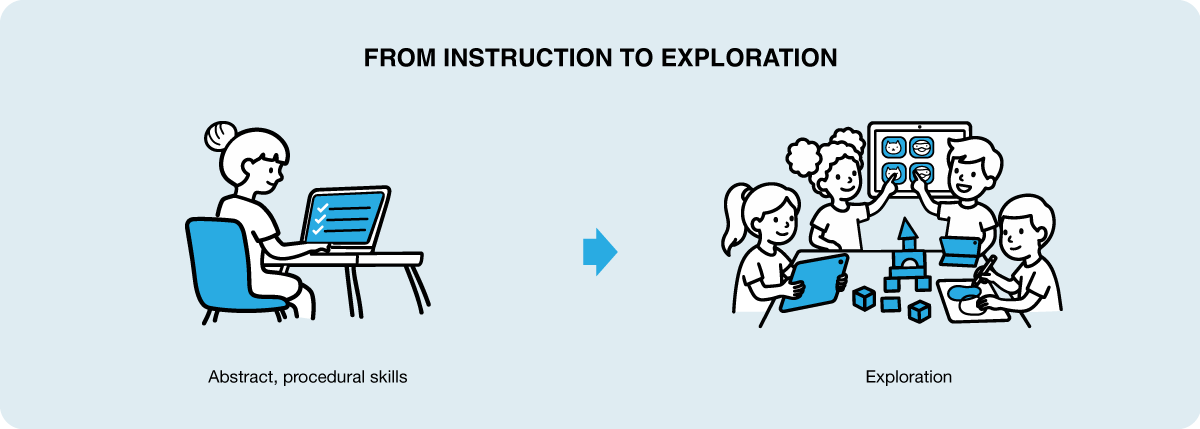
Digital literacy is often taught as a set of essential skills – understanding information quality, navigating online platforms, protecting privacy, and communicating responsibly. While these are important, they can feel abstract or procedural, especially for students who experience digital environments in their own leisure time as vibrant, expressive, and constantly shifting.
Integrating play into digital literacy experiences offers a powerful way to invite experimentation, curiosity, and creative risk-taking, and in doing so, transforms digital learning into an active, engaging, and personally meaningful process.
Bringing play into practice
At its heart, play encourages students to explore how digital systems work by allowing them to investigate, manipulate, remix, and reinterpret content.
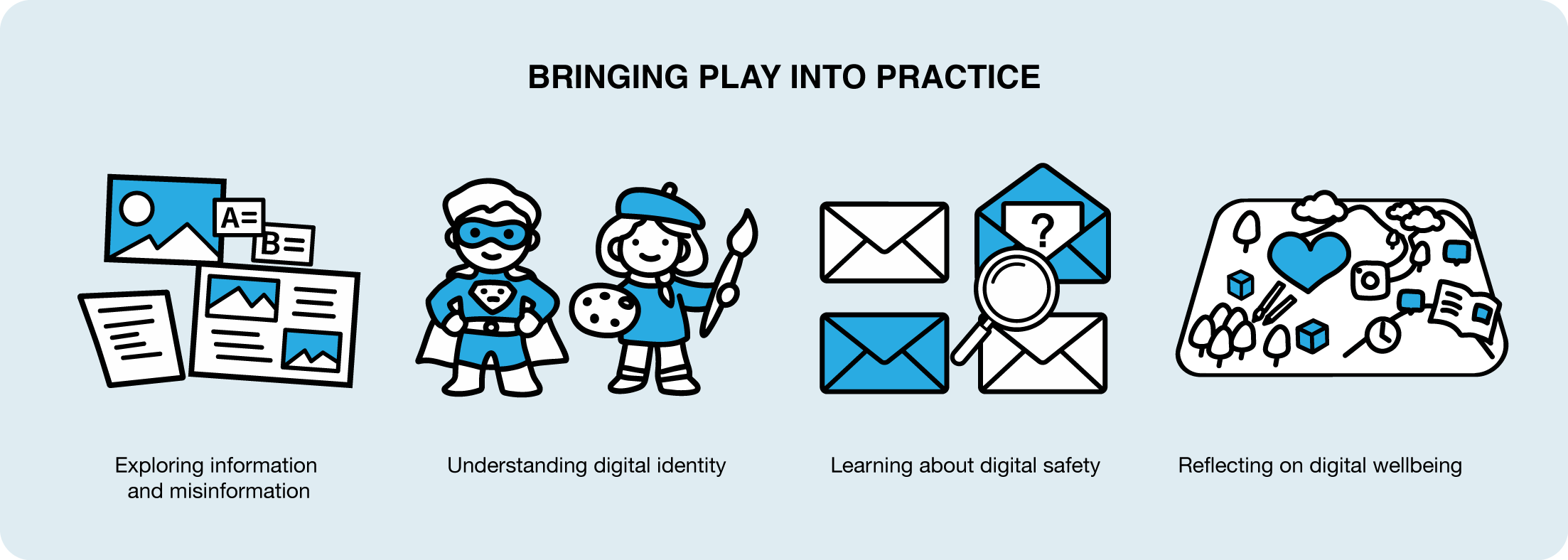
Exploring information and misinformation
Rather than only identifying “true” or “false” information, students can:
- take a piece of misleading text or an image and rework it in different ways – humorous, dramatic, or neutral
- discuss how interpretation can be shaped depending on presentation
- explore how persuasion and bias work in digital content
This playful reframing makes abstract ideas like misinformation more vivid and helps even the youngest students to think critically through creative experimentation.
Understanding digital identity
Play can help students explore how identity is constructed online. For example, students can:
- create fictional profiles using edited images or avatars
- use these profiles to role-play different online personas – cautious, expressive, or ambiguous
- place these imagined personas into hypothetical online scenarios and explore how choices influence reputation, relationships, and digital footprints
This helps students both explore and reflect on their own digital presence in a safe and imaginative way. By observing students at play, educators can more fully understand the knowledge they hold.
Learning about digital safety
Imaginative play allows for honest exploration and reflection, making complex concepts easier to grasp. Play can also transform learning about digital safety.
Rather than listening to rules about passwords, privacy settings, or phishing, students can engage in interactive challenges:
- “spot the suspicious message” activities or “unlock” secure behaviours
- password-strength challenges
- interactive tasks that reward safe decision-making
This approach turns safety into a puzzle rather than a warning, shifting the emotional tone from fear to curiosity. When students feel like active recipients, protective habits become more intuitive and enduring. Through these understandings, students become more in control of their digital environments.
Reflecting on digital wellbeing
Digital wellbeing is often framed around balance, boundaries, and emotional awareness – but it can also benefit from playful approaches.
In the classroom, students might map their digital habits as a creative landscape, such as:
- valleys of distraction
- mountains of productivity
- forests of creativity
This kind of activity turns self-assessment into a creative task. It helps students:
- visualise their habits
- recognise patterns
- identify areas for change
Importantly, play makes reflection feel exploratory rather than corrective.
Building agency through play
Play helps students see that digital environments are not fixed – they are shaped by participation and creativity. When students:
- recreate or redesign digital content
- role-play online scenarios and redesign interactions
- experiment with different tools and platforms,
They begin to understand that they can actively shape their digital experiences. Through this, students learn not only how to navigate digital spaces, but how to shape them thoughtfully and confidently. This fosters a sense of agency.
Why this approach works
Play strengthens emotional engagement and lowers barriers to learning in the following ways:
- encourages risk-taking and experimentation
- makes learning more memorable
- supports emotional connection to content
- helps students internalise positive digital behaviours
Importantly, play does not trivialise digital literacy – it humanises it. It acknowledges that digital life is not only functional but expressive, social, and imaginative.
Integrating play into digital literacy experiences blends structure with creativity, rigour with curiosity, and knowledge with personal connection.
Play prepares students not just to operate within digital spaces but to engage with them critically, creatively, and with a sense of ownership over their digital childhood.
Supporting digital learners through play
Integrating play into digital literacy transforms essential skills into engaging, exploratory experiences. Through imagination, experimentation, and creative reinterpretation, students gain a deeper understanding of digital behaviours. This approach nurtures curiosity, critical thinking, and adaptability - qualities essential for navigating an ever-changing digital world.
By embracing play, educators can move beyond teaching digital skills as a checklist and instead foster adaptable, thoughtful, and empowered digital learners.
Resources
DigIQ – Professional learning modules for educators
Early Childhood educators wanting to explore some of these ideas further can access the DigIQ modules (written by Lisa Kervin and Steven Howard), housed on the ARC Centre of Excellence for the Digital Child page.
The four modules include opportunities to focus on key ideas, listen to podcasts, view examples from practice, consider actions for own practices, explore additional materials, and engage in self-reflection.