
Monash Pharmacy PhD student Erica Tong, from the Centre for Medicine Use and Safety (CMUS), has received prestigious awards for her research paper conducted at Alfred Health on reducing medication errors in hospital discharge summaries.
She is lead author on the paper titled Reducing medication errors in hospital discharge summaries: a randomised controlled trial. It was awarded the 2017 Sir Richard Stawell Memorial Prize and the MDA National Prize for Excellence from the MJA.

The research evaluated whether pharmacists completing the medication management plan in the medical discharge summary decreased the rate of medication errors in these summaries. Ms Tong and her collaborators found that completion of the medical plan was effective, with medication errors occurring at a rate of 15 per cent when the plan was completed by a pharmacist, compared to 61.5 per cent when it was not.
Ms Tong’s supervisors and co-authors from CMUS include Professor Michael Dooley and Associate Professor Kirstie Galbraith. Associate Professor Galbraith highlighted just how extraordinary Ms Tong’s achievements were.
“For the AMA to award such a prestigious prize to a lead author who is still completing their PhD is unheard of,” she said.
“To receive two awards as a PhD student from the AMA and the MJA on the same paper is a significant recognition and demonstrates the importance of Ms Tong’s research.”
Reducing medication errors in hospital discharge summaries: a randomised controlled trial, Erica Y Tong, Cristina P Roman, Biswadev Mitra, Gary S Yip, Harry Gibbs, Harvey H Newnham, De Villiers Smit, Kirsten Galbraith and Michael J Dooley Med J Aust 2017; 206 (1): 36-39. || doi: 10.5694/ mja16.00628 Published online: 16 January 2017
MIPS researchers Doctor Denise Wootten and Professor Patrick Sexton have been awarded prestigious National Health and Medical Research Council (NHMRC) Senior Fellowships.
NHMRC Senior Fellowships are five-year fellowships supporting health and medical researchers. The Fellowships aim to bolster the capacity for future Australian research and encourage knowledge sharing. They represent significant academic success and innovation and are awarded to researchers who have demonstrated consistent commitment to the profession and improving health outcomes.
Professor Patrick Sexton is one of the founders of DDB. He has been awarded a Senior Principal Research Fellowship, the highest level of fellowship the NHMRC offers. His research addresses the behaviour and quantification of allosteric drug action, focusing on key areas of GPCR research. The laboratory studies different paradigms of GPCR function and investigates the function of key peptide hormones involved in major diseases such as diabetes, osteoporosis, cardiovascular disease and obesity.
Doctor Wootten is the Group Leader of the Class B G protein-coupled receptor (GPCR) Biology team in the Drug Discovery Biology theme at MIPS. Her work focuses on the study of GPCRs and understanding modes of regulation to identify new and innovative approaches to drug discovery, including addressing treatment for chronic disease such as obesity or cardiovascular disease. Doctor Wootten’s research examines the interaction of receptors with regulatory accessory proteins, differential signalling and the mechanisms of GPCR activation.
Professor Sexton and Doctor Wootten co-run the Sexton Laboratory, part of the Drug Discovery Biology theme. Their research focusing on GPCR has been published in high-impact journals including Nature and Molecular Pharmacology, demonstrating the significance of their research for the wider scientific community. Their continued research has significant implications for individuals living with chronic disease and the opportunity to improve their health outcomes.
Both Professor Sexton and Dr Wootten are lead-authors on several recent papers in notable journals including Nature, Endocrinology and Biochemical Pharmacology. Together they are also undertaking a project addressing the structural basis for Family B GPCR function with the NHMRC.

In a world first, Melbourne scientists have discovered a new type of anti-cancer drug that can put cancer cells into a permanent sleep, arresting tumour growth and spread without damaging the cells’ DNA.
Research led by Professor Jonathan Baell, Associate Professor Tim Thomas and Associate Professor Anne Voss from the Walter and Eliza Hall Institute, and Dr Brendon Monahan from Cancers Therapeutics CRC investigated whether inhibiting KAT6A and KAT6B could be a new approach to treating cancer.
The new class of drugs target KAT6A and KAT6B proteins, both known to play an important role in driving cancer. Rather than causing potentially dangerous DNA damage, as chemotherapy and radiotherapy do, this new class of anti-cancer drugs simply puts cancer cells into a permanent sleep.
Professor Baell said the project was particularly significant because the scientific community had coined the gene family as ‘undruggable’.
“There were many hurdles to overcome with this project; this compound certainly didn’t fall into our laps,” Professor Baell said. “But with perseverance and commitment, we are excited to have developed a potent, precise and clean compound that appears to be safe and effective in our preclinical models. Our teams are now working on developing this compound into a drug that is appropriate for human trials.”
Professor Baell said the project was indebted to funding from the Australian government and proved that public research could be an effective translational vehicle.
Correspondence: Reply to 'Compound 17b and formyl peptide receptor biased agonism in relation to cardioprotective effects in ischaemia-reperfusion injury' Qin, C. X., May, L. T., Sexton, P. M., DeBono, A. J., Baell, J. B., Christopoulos, A. & Ritchie, R. H. 1 Dec 2018 In : Nature Communications. 9, 1, 4 p. 530
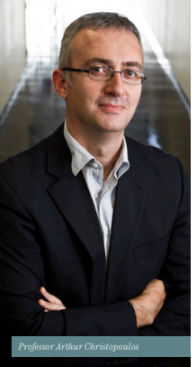
Researchers from the Monash Institute of Pharmaceutical Sciences (MIPS) have presented the first high-resolution structure of an activated adenosine A1 receptor, bound to both its native activating ligand, adenosine, as well as its main “signal-transmitting” partner, the heterotrimeric Gi protein.
The adenosine A1 receptor is a member of the largest class of medicinal targets, and is linked to several diseases, including cardiovascular disease, cognitive dysfunction and chronic pain. The new MIPS research, which has ‘captured’ the structure of the receptor and its G protein in the process of being ‘switched on’ by adenosine promises to overcome previous drug selectivity limitations, as well as shed new insight into how this receptor works on a molecular level.
Lead researcher Professor Arthur Christopoulos said the study’s findings had significant implications for healthcare and drug discovery.
“Our results have exciting implications for future drug discovery. For the first time, we are now in a position to use atomic-level information to rationally develop new targeted medications to treat heart disease while minimising side effects.”
“Understanding how this receptor is activated could also be applied to develop treatments for neuropathic pain in the future through more extensive research.”
The research was facilitated through use of novel technology termed “cryo-Electron Microscopy” (cryo-EM), a technique that was most recently acknowledged through the award of the 2017 Nobel Prize in Chemistry to its key originators. Cryo-EM involves firing beams of electrons at proteins that have been frozen in solution to identify their biomolecular structure.
Structure of the adenosine-bound human adenosine A1 receptor-Gi complex Draper-Joyce, C. J., Khoshouei, M., Thal, D. M., Liang, Y. L., Nguyen, A. T. N., Furness, S. G. B., Venugopal, H., Baltos, J. A., Plitzko, J. M., Danev, R., Baumeister, W., May, L. T., Wootten, D., Sexton, P. M., Glukhova, A. & Christopoulos, A. 20 Jun 2018 In : Nature. 558, 7711, p. 559-565 7 p.

A study published by researchers at Monash University and the Karolinska Institutet earlier this year identified a potential new benefit of a commonly used treatment for Alzheimer’s disease.
The study demonstrated that the risk of ischaemic stroke was 15 per cent lower and the risk of death was 24 per cent lower in people with dementia who were dispensed acetylcholinesterase inhibitors (AChEIs) compared to people with dementia not dispensed these drugs.
The study’s primary author Dr Edwin Tan is an NHMRC-ARC Dementia Research Development Fellow at the Centre for Medicine Use and Safety and the Aging Research Center at the NVS department at the Karolinska Institutet and Stockholm University.
Article has an altmetric score of 31 Acetylcholinesterase inhibitors and risk of stroke and death in people with dementia Tan, E. C. K., Johnell, K., Garcia-Ptacek, S., Haaksma, M. L., Fastbom, J., Bell, J. S. & Eriksdotter, M. 1 Jan 2018 (Accepted/In press) In : Alzheimer's and Dementia. 8 p.