
Pharmacy, pharmaceutical science and the pandemic
At the beginning of the COVID-19 pandemic, the word “unprecedented” was suddenly on everybody’s lips. If you received an email from an organisation whose mailing list you subscribed to, whether they sold shoes or dispensed health advice, chances are you saw it. And as tired as it became, there was truth behind the cliché.
Nobody alive had witnessed a worldwide health crisis of this nature. It quickly overwhelmed existing systems and challenged venerable institutions. It became clear that this was an all-hands-on-deck situation, with the deck being vaccine development, hospitals and health services, vaccine administration and so on. In this section of Alchemy we speak to the people at Monash involved in the response to the pandemic, those who have gone to often-extraordinary lengths to combat a public health phenomenon the likes of which we haven’t seen before.
 Alumni leading the charge
View
Alumni leading the charge
View

Helen Dixon jokes that she now has two distinct calendar eras in her professional life: “BC” and “AC” – Before Coronavirus and After Coronavirus. She is the Deputy Chief Pharmacist at St Vincent’s Hospital, Melbourne, and a Monash alumna.
This distinct career dichotomy is common among many Monash alumni who, like Dixon, have been at the vanguard of vaccine preparation and administration over the last eight to 12 months. That, of course, goes for so many people affected by the pandemic, but for Dixon and her peers the distinction is particularly stark.
I think I became aware of the seriousness of COVID pretty early on in 2020. I remember being in a number of meetings in January with some senior staff in our hospital who had lived through the SARS epidemic in Hong Kong in 2003 and they basically said to us, ‘brace yourself’, and unfortunately they were right. From then on, you couldn’t hide from COVID," Dixon recalled.
Alexandra Edwards is a teaching associate at Monash University and the Royal Melbourne Hospital’s Deputy Director of Clinical Pharmacy. She remembers that COVID-19 completely disrupted a major project she and the hospital were working on. They needed to postpone the launch for months as almost everything shifted.
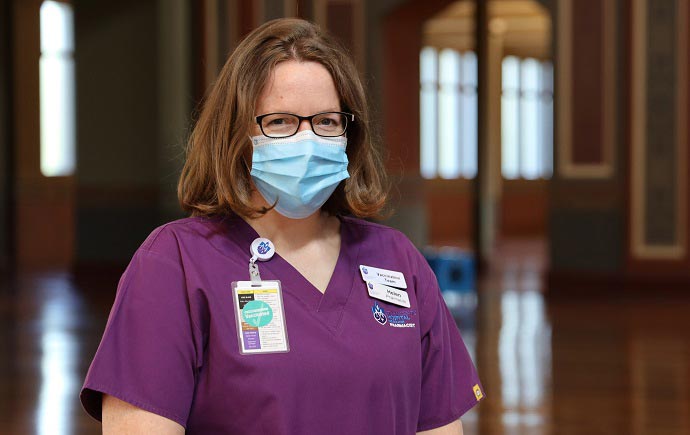
“Our focus completely changed. Staff and patient safety was at the forefront of our minds.
“We had a COVID outbreak on our aged care ward and that really knocked our pharmacists around a bit. And we had to really make sure that we were focusing on the wellbeing of our staff and what the confronting environment meant for their wellbeing. [There was a] lot of maintaining communication and providing ongoing support.”
Sue Kirsa is the Head of Pharmacy for Monash Health, a service encompassing five major hospitals and nine individual sites. She said that the virus has had such a momentous influence on her work and life that it’s hard to remember what she was doing before the pandemic.
“In the very early days I distinctly remember the news of a new bug coming out of China. And getting a little bit of a sense of what the management of patients with COVID would be.
“In those days the management was certainly supportive care – you know, the usual medicines we would use for patients who were sick with a viral infection. Nothing that was very specific to COVID. We all thought that our role would be essentially supporting those patients as we support other patients with viral infections – nothing too dramatic.”
What happened next was indeed dramatic. The severity and transmissibility of the disease meant that drastic action was required, and that action affected everyone from supply chains (a crucial part of any senior pharmacist’s work) to workforce management, logistics to patient care. And then came another challenge. With the advent of safe and effective vaccines came the need to inoculate an entire adult population as quickly as possible.
Steven Walker confronted these challenges as well. He’s a Practitioner-Educator, a position encompassing practising pharmacist, undergraduate teacher and unit coordinator. His role before the pandemic concentrated heavily on building relationships between Monash University and major tertiary teaching hospitals. In September of 2020, however, he took up an additional role, as Lead Pharmacist for Workforce and Development at Alfred Health, which is how he became involved in the vaccination effort.
“Alfred Health is a sub-hub of Monash Health. We were one of the first that was vaccinating frontline workers,” Walker explained.
His team developed guidelines on how to make the vaccine using the required aseptic technique, an area in which Walker has extensive experience. They also needed to create a pattern of work that ensured maximum safety and efficiency in the process from production to administration.
A unique part of the Alfred program was that pharmacists weren’t just preparing vaccines but were also immunisers. They were actually one of the first [groups of] pharmacists to vaccinate people, and it was vaccinating people working in [quarantine] hotels.”
Before a vaccine can be administered it needs to be prepared and Kirsa remembers that the preparation of Pfizer, in particular, had the potential to be challenging for those new to such a singular area of pharmacy.
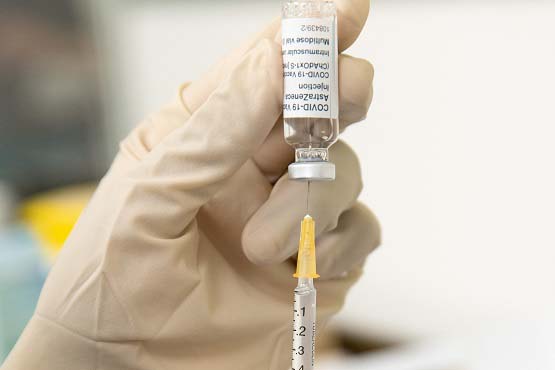
“The Pfizer vaccine needs to be reconstituted before it can be drawn up. It comes as a concentrated liquid that needs a dilutant to be added to it. The mRNA protein that is the active ingredient in the vaccine is quite delicate and it [can’t] be shaken around – if you don’t deal with it carefully it can foam and then it can de-nature.
“Also, the better people are trained to do this work, the more doses you can get out of each vial. So a well-trained workforce can get up to seven doses from each vial. And because there was quite a shortage of this vaccine we wanted to maximise the number of doses each vial was providing for us.”
It goes without saying that this was a far larger vaccination project than any undertaken previously, and so required a surge workforce of heroic proportions. Those seconded across the state included pharmacists, pharmacy technicians, pharmacy students, as well as dentists and podiatrists.
Dixon played, and continues to play, a central role in the establishment and operation of the vaccine hub at Melbourne’s Royal Exhibition Building.
“In January 2021 [St Vincent’s] Hospital started to discuss the rollout of the COVID vaccine. I stepped forward to be the pharmacy lead. We commenced with the development of a staff clinic that was in an unused hospital ward. And this was our stepping stone into the much grander environment of the mass-vaccination hub.
The Exhibition Building is our neighbour at St Vincent’s. It’s a wonderful big space. It’s a World Heritage Listed building. And it has a history of being used as a makeshift hospital for the Spanish Flu outbreak in 1919. So we lobbied the government to let us that place as a public vaccination clinic and we got approval in March to do that.”
After approval they had just a week to get the clinic up and running. That may sound extraordinarily little time – it is – but Dixon said she relished the challenge.
“I used to be the Senior Manufacturing Pharmacist at the Royal Melbourne Hospital and that experience meant that this project was really kind of a dream job for me.
“I now manage a team of over 40 pharmacists and pharmacy students who coordinate the preparation and distribution of the vaccine. We also train the vaccinators – nurses, paramedics and other approved staff. We’ve established standard processes that mean that the vaccine is always prepared in a really safe and consistently high-quality way.”
Dixon said the Exhibition Building hub administers an average of 2,000 vaccinations per day. St Vincent’s recently became responsible for a second mass-vaccination hub at Campbellfield in Melbourne’s north which administers about the same number of inoculations per day.
They also administer vaccines to Melbourne’s most vulnerable community members – including those who have no home – via mobile centres.
Edwards was also involved in mass vaccination, but in a different area of the city.
“At the time we thought that [vaccinating staff] was a fairly big thing until we found out we were going to be running the Convention Centre hub. This involved a lot of collaboration – we had to look at all the resources and look where pharmacy best fit and how we’d work together to run those clinics.”
Like Dixon, Edwards’ team had just a week to create a workforce of students, technicians and pharmacists. The initial recruitment and establishment of the hub was successful, but the vaccination effort is so significant that staffing continues to be a challenge to this day.
In fact, the efforts of many Monash alumni in responding to the pandemic are not decreasing in intensity – in many cases they are escalating. Dixon admits she would have liked to be finished by now, but vaccine supply constraints have made that impossible.
She can take solace in the fact that her work, along with the work of Walker, Kirsa, Edwards and thousands of others, has brought us so much closer to a third calendar era: After Coronavirus.
 Creating connection at a time of separation
View
Creating connection at a time of separation
View
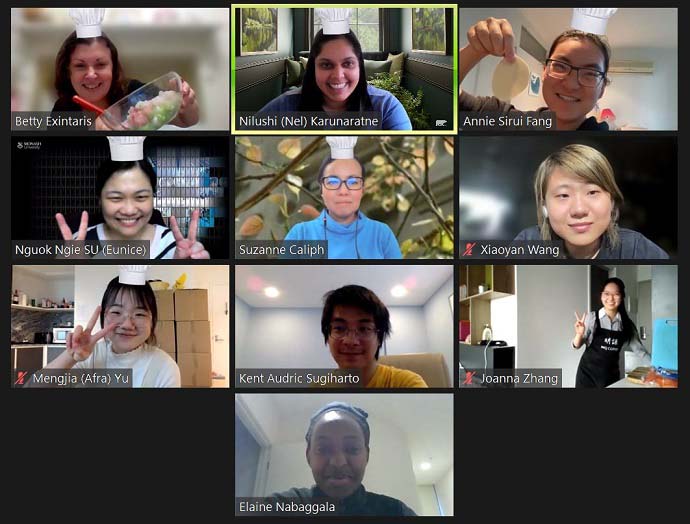
In March 2020, as the seriousness of the COVID-19 pandemic became clear, Australia closed its borders to international visitors. Although it was an important public health measure, it brought about a period of heightened isolation and uncertainty for Australia’s many international students.
Some were trapped in their home countries, unable to make it to campus for the rare in-person classes that lockdown allowed. Others found themselves confined to their accommodation in an unfamiliar city, with little opportunity to meet people or make new friends. In response, academics from Monash University’s Faculty of Pharmacy and Pharmaceutical Sciences (FPPS) began an engagement program with the aim of creating a more inclusive community for those affected.
The program was based on research that suggests international students are typically less likely than their "domestic" peers to seek help for mental ill health or to utilise support services offered by universities. Specific activities within the program have been informed by the findings of a 2020 report released by youth mental health organisation Orygen.
It recommended regular academic-led meet ups with students, newsletters and wellbeing days, all of which are part of the program.
Yan Wang is in the third year of a degree in Pharmaceutical Science. She remembers hearing about the pandemic while home in Shanghai during the end-of-year holidays and said that although there was a country-wide lockdown during Chinese New Year, she never expected that she wouldn’t be able to return to Melbourne.
It is hard for me to keep connecting with my friends in Melbourne. As an international student, I do not have many friends in my hometown. I was feeling isolated and my motivation in doing online classes was decreasing.”
The international student support program made a significant difference though, Yan said. She discovered it via an email inviting students to a virtual afternoon tea.
“I was hoping to talk to someone due to my isolated state [and an] afternoon tea via Zoom sounded fun. It was indeed fun and relaxing. It felt like the organisers cared about offshore students very much.
“We had cooking sessions several times. There were networking events where we could talk to students in different universities in different countries. Sometimes there were trivia games and origami making. I have participated in most of them.”
Annie Fang is a first-year Bachelor of Pharmaceutical Science Advanced (Honours) student who came to Australia as a Year 10 student. She’s spent the last year of secondary school and the first year of university under COVID-19 conditions.
“I heard about the pandemic when I came back to Australia, having spent the first half of my Year 11 summer holiday with my family in my hometown. Soon afterwards the Australian border was closed, so I was lucky to be back in time.”
Annie, too, came across the program after receiving an email and quickly became an enthusiastic participant.
“The program is a good place to discuss studying strategies, to have a guilt-free break and to connect with fellow international and exchange students. It is truly relaxing, fun and supportive.
I have been to many events, in particular the baking sessions where we had made fortune cookies, peanut butter cookies and dumplings. The exam preparation webinar was also helpful. Moreover, when I have questions about anything related to how university works, Nel, Betty and Suzanne are my trusted source of information.”
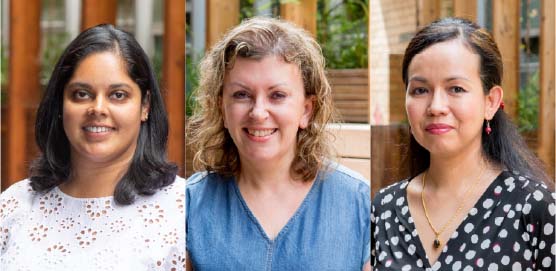
Nel is Dr Nilushi Karunaratne, a lecturer at the FPPS. She co-founded the program with her faculty colleagues, Dr Betty Exintaris and Dr Suzanne Caliph.
Dr Karunaratne said it’s pleasing to see that the idea has been well-received by those who’ve participated.
“We’ve received a lot of really positive feedback from international students who have attended the regular Zoom events we’ve put on to help them feel supported and connected. The program has been a big success for the FPPS.”
It’s been so successful, in fact, that it received an Inter-Faculty Transformation Grant of $49,000, which will allow it to be extended for two years, and expanded across the university. The grant will specifically support international students across the Faculty of Medicine, Nursing and Health Sciences, the Faculty of Arts, the Faculty of Science, the Faculty of Law, the Faculty of Engineering, the School of Pharmacy and Pharmaceutical Sciences (Monash Malaysia) and the School of Medicine and Health Sciences (Monash Malaysia).
Yan said that based on her own experience, she highly recommends the program to others who get the opportunity to take part.
“I enjoy the conversations we have each meeting. I could never build such good relationships with anyone in my degree and my lecturers via Zoom classes, but it can be achieved in the program.
I am more motivated in both my study and my social life after being involved.”
 mRNA vaccines: An overnight success years in the making
View
mRNA vaccines: An overnight success years in the making
View
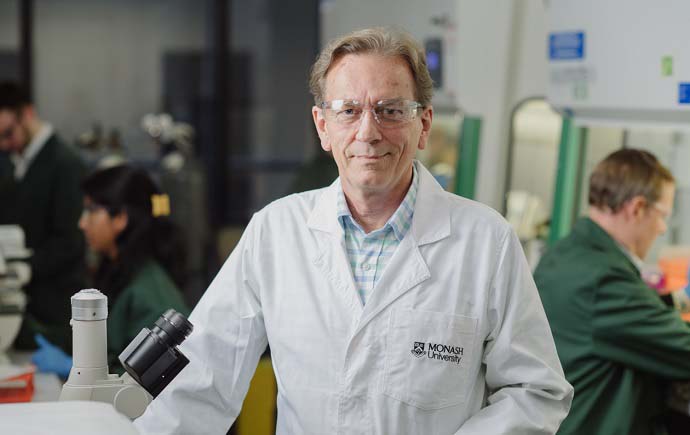
In early 2020, a team led by Colin Pouton, a Professor of Pharmaceutical Biology working within the Monash Institute of Pharmaceutical Sciences (MIPS), began working with a team on three COVID-19 vaccine candidates. All of them would use messenger ribonucleic acid (mRNA) technology.
That made them unique in Australia, but it wasn’t a new undertaking for Professor Pouton or MIPS. The Institute had been working on mRNA vaccines prior to the advent of SARS-CoV-2 and, when the seriousness of the virus became clear, they turned their attention – as well as their existing research and knowledge – to the new global threat.
When asked about the advantage of mRNA-based therapeutics in the middle of last year, Professor Pouton spoke about the inherent adaptability of the technology.
“Candidate mRNA vaccines can be produced for testing very soon after a new virus is detected, and if the virus mutates, a new vaccine can be tested within a few weeks.
It’s essential that we develop our own rapid response system in Australia using mRNA vaccination, not just for COVID-19 but also for other viruses that could emerge in the future throughout the region.”
As Australia and much of the world attempts to combat and mitigate against variants of the virus considerably harder to control than the original L strain, his words seem prescient.
We now have highly effective mRNA COVID vaccines – those developed by Pfizer-BioNTech and Moderna. They are not, of course, Australian and cannot currently be produced in this country. After much lobbying from Professor Pouton, however, Australia is now building the capability to produce mRNA vaccines.
In August, pharmaceutical manufacturing company IDT Australia acquired a $1 million machine, the NanoAssemblr, which will make production possible in Melbourne.
It’s a critically important piece of equipment, the physical centrepiece of a partnership between IDT, MIPS and the Doherty Institute. But it may never have been possible if it hadn’t been for the persistence of Professor Pouton and his vaccine development team.
After much work and research, one of their three vaccines has shown significant promise and in June of 2021, the Victorian State Government provided MIPS with a $5 million grant to put the candidate into clinical trials. It came just months after a $50 million investment into general mRNA vaccine development and manufacturing.
The NanoAssemblr will help IDT to manufacture more than 150 doses of the MIPS vaccine for Phase I of the trials.
But why, when we already have multiple approved vaccines, do we need to keep creating them? Well, there are several reasons, including those identified by Professor Pouton over a year ago.
“We’re at the stage of the pandemic where we need to look at second generation vaccines. We don’t know how many variants there will be, and we don’t know how they’ll evade existing vaccines, all of which were encoded from the original L strain,” he said more recently.
There will be a need to boost against variants. We just don’t know yet whether worse variants will arise.”
From an Australian point of view, having mRNA boosters that can be quickly produced in Melbourne is enormously important. And, thinking beyond our shores, it’s easy to forget that in many parts of the world, as of the end of 2021, vaccination rates are below ten percent. More vaccines will be needed for years to come.
Then there’s the promise of mRNA vaccine technology outside COVID-19, the work that MIPS was doing prior to the pandemic.
Now that we have established an mRNA manufacturing capability in Victoria, we can begin work on developing life-saving vaccines and therapeutic treatments for all Australians.”
“Our immediate focus will be COVID-19, but this technology has the potential to treat cancer, HIV and many other illnesses,” Professor Pouton said.
 Surge Workforce: Students join the COVID fight
View
Surge Workforce: Students join the COVID fight
View
At the end of 2020, when it became clear that not one but multiple vaccines for COVID-19 had passed through Phase 3 trials and were proving extremely effective against the virus, there was much celebration. There is no such thing as inevitability when it comes to vaccine development and the fastest a vaccine had been developed previously was about four years – for mumps.
The success of Pfizer and AstraZeneca, and many others that followed, was a remarkable scientific achievement. But it inevitably brought about an enormous challenge: how does a stretched health system urgently administer inoculations an entire adult population?
Part of the answer was what is now known as the surge workforce.
Of course, the need to radically shift health resources to the COVID response arrived as soon as it became clear how transmissible and dangerous the virus was, but vaccinating 20 million people twice in less than a year is a project of unprecedented scale.
Alexandra Edwards is a teaching associate at Monash University and the Royal Melbourne Hospital’s Deputy Director of Clinical Pharmacy. She remembers that once a decision was made that pharmacists were going to prepare the vaccines for centres, clinics and hubs across Victoria, she and her colleagues commenced a mass recruitment and training programme.
“We had a few brainstorming sessions and realised we didn't need pharmacists as the sole people who would be [preparing the vaccines]. The majority of our workforce ended up being students and technicians.”
Kerry Huang was one of those students. He’s in the fourth year of a Bachelor of Pharmacy/Master of Pharmacy at Monash University and has worked at the Royal Melbourne Hospital, as well as St Vincent’s Hospital, and with Peninsula Health, Monash Health and Alfred Health.
My experience in the surge workforce started in May when tertiary hospitals had just begun ramping up their recruitment processes to incorporate and prepare pharmacy students for the opening of their vaccination clinics.

“l have been very fortunate to have been able to [work] for multiple health services where l help prepare vaccines, performing daily stocktakes as well as other tasks that are important to the workflow and running of the clinic.”
Julie Noto is studying a Bachelor of Pharmacy/Master of Pharmacy at Monash as well, and says she was encouraged by the University to seek opportunities within the COVID workforce.
“I applied to a hospital as a pharmacy technician to assist with the preparation of the AstraZeneca, Pfizer and Moderna vaccines. Using my knowledge and training gained from hospital I helped implement the vaccination service within a community pharmacy.
[I have been involved in] preparation of vaccines via drawing up as per protocol, labelling of vaccines, ensuring vaccines are stored correctly and collaborating with patients and other health professionals.”
Xie (Kate) He is a third-year student in the Bachelor of Pharmaceutical Sciences Advanced (Honours). A message from her course director alerted Kate to the possibility of working as part of a vaccination team.
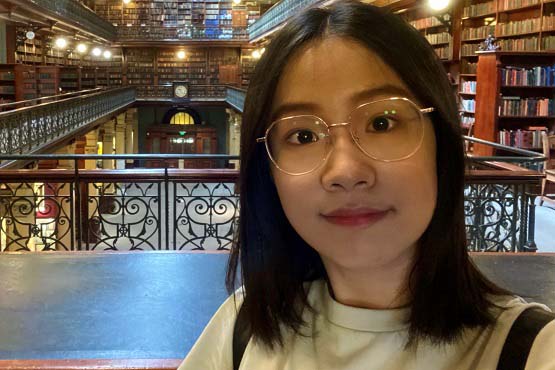
“I thought this is such a great opportunity. We can utilise our lab skills, plus essential training, to help with the vaccine rollout in Australia. The recruitment process consisted of an online application form and an interview. Monash Health gave us a warm orientation session after we got into the program.”
Kate has been working at the Sandown Racecourse Vaccination Clinic since the start of September. Initially she was responsible for recording, labelling and stock maintenance but is now also drawing up doses.
“Currently I am doing either dose preparation or pharmacy support during my shift, based on demand at the Vaccination Clinic. However, as final exams are approaching, I only work one or two shifts every week.
“I may contribute more after exams.”
Kerry, Julie and Kate all say the experience has been personally and educationally rewarding.
"The main reason why l decided to join the surge workforce was because l was interested in seeking new challenges and experiences as a pharmacy student. It has also given me the chance to learn from other healthcare professionals such as doctors, nurses and paramedics,” Kerry says.
“But more importantly, [it has given me] the chance to play a role in giving back to the community on the frontlines.”
Kate says she’s proud to think that every dose she prepares helps to reduce the probability of COVID infection in Victoria.
“One day I came across the morning briefing given to the nursing team. The team leader concluded the briefing by saying that ‘Let’s go and save the world!’ Then I heard the applause burst from the team.
I was so touched by this scene and proud of every healthcare worker who strives to keep our communities safe, and to support the vaccine campaign.”
At the conclusion of her degree, Julie plans to complete her internship within a hospital pharmacy.
“Upon registration [I want to] continue to be a part of forward-thinking services that benefit the health outcomes of the community.”
Kate is looking forward to the final year of her degree in 2022, after which she plans on undertaking a PhD in the field of biomedical and pharmaceutical research.
Kerry says he will be involved in the program until the end of the year and will then move on to an internship in a hospital or within a community pharmacy.
By then, he, Kate, Julie and a massive team of students, as well as pharmacists who have come out of retirement, pharmacy technicians, nurses, dentists, podiatrists and people from many other health sectors will have contributed to something that has never been done before. They will have protected the vast majority of an entire nation’s adult population against a lethal virus with a vaccine developed in under year.