
Project Pharmacist concludes: John Jackson looks back
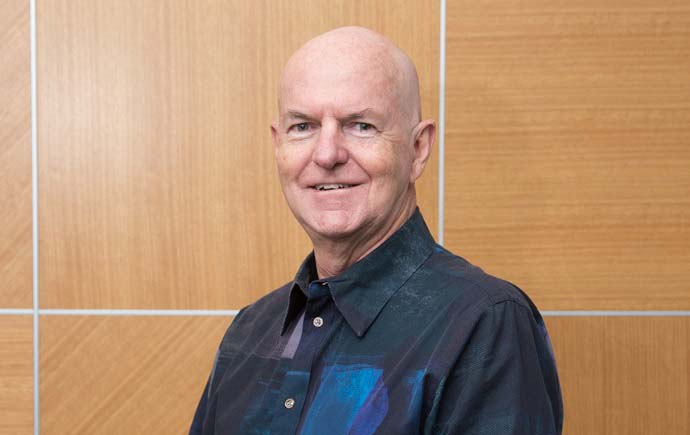
John Jackson
In 2007, John Jackson was the President of the Pharmaceutical Society of Victoria. In that year Professor Bill Charman became Dean of the Faculty of Pharmacy and Pharmaceutical Sciences (then the Victorian College of Pharmacy). In their first meeting, Jackson told Charman that he had a significant concern about the state of pharmacy in Australia.
“I knew that the majority of students [who would come out of Monash] would go into community pharmacy – and community pharmacists were struggling. There was a high level of dissatisfaction with current roles and a high number of pharmacists leaving the profession,” Jackson explained.
In their discussion, Bill said that Monash intended to broaden the education of pharmacy students, equipping them to undertake activities such as medication reviews and to provide professional services to patients. But John was blunt: once these students graduated they may not have many opportunities to apply such skills and knowledge.
The two kept in close contact and, some time after that initial conversation, Charman told Jackson about a project he had a small team working on. The aim was to consider a new model for pharmacy practice in the country – and part of that objective was to answer the question that the pair had discussed in 2007: How do you give pharmacy students an opportunity to apply all the skills they were acquiring as part of their Monash degree?
Charman asked Jackson to join the team. The timing was right for Jackson professionally, but he was wary about the scope of the role.
“I told Bill, ‘It’s beyond me. It’s beyond any one person to develop a new model.’ But I said I was happy to investigate the barriers that were stopping pharmacists from implementing enhanced roles that we were training them to deliver.”
In 2014, Jackson joined Monash as the Director of Project Pharmacist and brought with him decades of broad practice experience in the pharmacy field. He had spent much of his professional life as a consultant pharmacist and had held governance roles in professional bodies, elected positions in government committees and roles in health organisations.
Project Pharmacist arose from a belief that pharmacists’ contribution to primary care, including through their roles in community pharmacy, was not being maximised. In fact, opportunities for pharmacists to provide professional services beyond dispensing were being restricted by existing policies and particularly the absence of funding programs.
“Furthermore, community pharmacists’ key function – dispensing medicines – is at increasing risk of becoming commoditised, driven by price and volume-business practices, which are likely to further compromise opportunities for enhanced professional roles.”
The role, Jackson said, expanded beyond academic research and gave him the opportunity to make numerous submissions to government (and other) reviews relating to pharmacy. They included the Victorian Parliamentary Inquiry into Community Pharmacy and the King Review of Pharmacy Remuneration and Regulation.
“Such submissions and contributions to the professional dialogue on pharmacists’ practice both through society journals and committees, were as important as the research that I initially set out to undertake.”
Jackson, who had been a visiting lecturer to Monash for many years, expanded his undergraduate teaching during his time at Monash, and lectured on topics such as health policy, public health and international pharmacy practice. But his main role has been research, which has covered identification of factors affecting adoption of enhanced roles, disruptive innovation in community pharmacy, demographics of the pharmacist workforce and performance-based funding for dispensing. The goal, he said, has never been some kind of panacea or quick fix. He’s realistic about the time it takes for thorough, high-quality research to translate into significant change within an industry. Nonetheless, his work has been critical during a period of significant change in Australian pharmacy and in pharmacy education at Monash.
In 2022 he will continue his lifelong contribution to the discipline by undertaking a PhD that examines the influence of Community Pharmacy Agreements on Australian pharmacy over 30 years. He says he will look back at his time at Monash with fondness. “I greatly appreciated the support of Bill Charman and Carl Kirkpatrick [Professor of Pharmacy Practice at the Centre for Medicine Use and Safety], who paved the way for my role, and the collaboration of colleagues in CMUS.
It was great to work on a personal passion in an inquiring environment. Being able to maintain my roles in the profession both in Australia and internationally was, I believe, beneficial for both the Faculty and the organisations.