
Emeritus Professor Colin Chapman receives a PSA Lifetime of Achievement Award
A multifaceted influence on pharmacy
In 2024, The Pharmaceutical Society of Australia (PSA) presented the PSA Victorian Lifetime Achievement Award to Emeritus Professor Colin Chapman FPS for his outstanding contribution to pharmacy. We look at his career, achievements and passion for pharmacy and veterinary science.
Pharmacy or veterinary science?

Emeritus Professor Colin Chapman.
Colin Chapman was tempted to study veterinary science on leaving school in Geelong. Instead, he chose pharmacy.
The decision, he says, was inspired by pharmacist Bill Wishart who had been a prisoner-of-war with his father in Changi Prison, Singapore. After persuading Colin to take up pharmacy Bill also became a major influence on his career.
“Bill believed pharmacists had a major role to play in primary healthcare, as a first port of call like a triage - do we treat or refer?” Colin explains.
“Pharmacies did that well back then, and while the profession may have lost track of it for a few decades as dispensary computers took over, it links to the scope of practice debate going on today.”
“For me, the primary healthcare aspect is the most satisfying part of pharmacy,” he says. “That’s part of what has driven my lifelong interest in pharmacy.”
Colin completed his studies at the Victorian College of Pharmacy in 1969, and his undergraduate years were formative ones.
“I met my wife when we studied pharmacy together, and forged many other relationships that exist to this day,” he says.
One of them was with Associate Professor Louis Roller AM, a relatively new academic when he taught Colin as a student, before going on to work with him as an academic, and as a member of the PSA Continuing Education Committee, until his own retirement in 2008.
“The last three Deans have been my students,” Louis says, before describing Colin as a diligent student, incredible scientist and excellent communicator.
Merging two passions

Emeritus Professor Colin Chapman graduating.
After finishing at the College, Colin worked as a trainee pharmacist for Bill Wishart, at Bull & Owen pharmacy in Geelong.
He was then conscripted during the Vietnam War and undertook 18 months of National Service in the Australian Army. After graduating from Officer Training he spent most of his time in the Royal Australian Army Medical Corps, including time as a pharmacist at the 2nd Military Hospital. Following his service, Colin had the opportunity to fulfil his dream to study Veterinary Science at the University of Melbourne, where he was Dux of his year and was awarded a host of prizes.
He then worked at Attwood Veterinary Research Institute, during which time he undertook a PhD in immunology through the Walter & Eliza Hall Institute for Medical Research.
Mr Bill Horsfall OAM was Director of Continuing Education at the PSA for two decades, and met Colin in 1981 when he was organising a veterinary pharmacy conference at Dookie Agricultural College.
“Colin turned up and said he was a pharmacist and vet, and he asked if I needed any help running the conference,” Bill says.
Bill welcomed Colin into the conference working party and says that with Colin’s input the conference was a huge success. Both Bill and Colin agreed this offer helped to change the trajectory of his career.
“He later joined the Continuing Education Committee and remained on it for years - that was the start of his journey into academic pharmacy,” Bill says.
Bill describes his friend as a great communicator with enormous intellect and robust energy, who went on to make a big contribution to continuing education and CPD.
“One of his passions is development of professional services in pharmacy,” Bill says.
Like Bill, Dr Jenny Gowan AM, met Colin through the PSA in the 1980s and worked with him for over two decades on the Continuing Education Committee, designing and presenting courses and lectures. She recalls his enthusiasm for attracting rural pharmacists, as well as veterinary pharmacy.
“Colin thought pharmacists should know more about veterinary pharmacy, which was unique at the time,” she explains. “He gave very memorable lectures on zoonosis, a disease which can be transmitted to humans from animals”.
“He is an incredible person, enthusiastic, innovative, likeable and approachable,” she says. “He always has a smile on his face.”
“His immunology lectures were excellent, and he took the time to explain what is a very complex field,” she says.
Becoming a pharmacy academic

Professor Colin Chapman with first year students Jack Sia Kee Thai, Adeline Yap Ai Hui and Wang Siew Ling.
According to Colin, his lecturing and tutoring with the PSA in the 1980s led him back to Parkville. When a vacancy came up in the Department of Pharmaceutics at the College, he made the decision to leap out of veterinary research and into pharmacy academia.
Colin joined the Victorian College of Pharmacy in 1987, heading up the Department of Pharmaceutics until 1990.
“The department dealt with pharmacokinetics: how drugs behave,” he explains. “That’s underpinned my interest ever since.”
Louis Roller says Colin’s vet background broadened and expanded his view and he was naturally good at working with students.
“He was always open to students, and very empathetic with them,” says Louis. “There was a light in his eye when you saw him talking to students, he loved the students and was very good with them.”
One of Colin’s students was present Dean, Professor Arthur Christopoulos.
“I first met Colin when I was an undergraduate student and he was one of my lecturers,” Arthur says. “Colin was also my formal mentor in my final ’trainee’ year of the Pharmacy Degree.”
Arthur describes Colin as collegiate but no-nonsense, a respected educator with a dry wit and great communication skills, who was always generous with his time and his ideas.
A great contribution to pharmacy
Louis Roller saw Colin’s strong drive and ambition, informed by his military training and encouraged him to apply for the position of Dean.
“I told him to apply,” Louis says. “Maybe he’d decided already, but he did, and he got it”.
Always humble, Colin says he “threw his hat in the ring”, and was appointed Dean of the Faculty of Pharmacy and Pharmaceutical Sciences (which was then still the Victorian College of Pharmacy) in 1991, a role he held until 2006. It was a pivotal time, with Colin overseeing the College’s merger with Monash University and laying the groundwork for the modern pharmacy and pharmaceutical sciences faculty that operates today.
“It was an amazing decade or more when the College merged with Monash and blended into the Monash culture,” Colin says. “The Monash Vice Chancellor, Mal Logan, welcomed us and gave us a great opportunity. He basically said, ‘we’ll give you Faculty status, just get on with it’, which was perfect.”
“It was about integrating into Monash and making the most of it, and we made use of every opportunity that came our way,” he says.
He says this led to new horizons, like increasing research, introducing new courses, acquiring new buildings and establishing the Faculty Foundation with Alistair Lloyd.
“We did the preliminary work for the Monash Institute of Pharmaceutical Science (MIPS), brought in new courses in pharmaceutical sciences, medicinal chemistry and wound care, and got involved in intern training for pharmacy graduates,” he explains. “All of which was helped by recruiting fabulous people, like Bill Charman, Susan Charman, Peter Scammells, Roger Nation, Peter Stewart, Colin Pouton, Geoff Sussman and Marian Costelloe, everyone pitched in.”
“Monash also did a lot of international expansion, so pharmacy was introduced at the new campus in Malaysia and there was a contract to introduce pharmacy at the University of Sharjah in the UAE,” he explains.
A big input into Monash’s success
Current Dean, Professor Arthur Christopoulos, reflects on the positive way Colin tackled the challenges of his tenure.
“Colin had the unenviable task of navigating one of the most notable and historic achievements in our Faculty’s history: the merger of the College with Monash University,” Arthur says. “He ensured that we retained our identity and provided the foundation of what was to come next.”
“He was the driving force behind several transformative initiatives,” Arthur adds. “This included the extension of the Bachelor of Pharmacy from three to four years, the introduction of several new degrees, developing and implementing a range of initiatives to attract and retain health professionals in rural communities, and laying the groundwork and planning for the purchase of a new building, which eventually became home to the now world-renowned MIPS.”
Louis Roller says Colin’s 15 years as Dean was an achievement in itself but also highlights his encouragement of a patient-centred approach.
“Over time we grew from a small college to one of the top pharmacy schools in the world and Colin played a big role in that,” Louis says. “Colin was, and is, a force to be reckoned with and a good guy.”
A PSA Lifetime Award
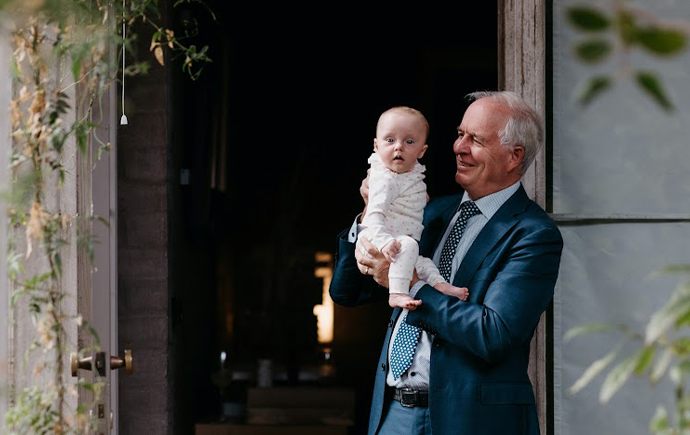
Colin continued as Professor of Pharmacy with the Faculty until his retirement in 2010, and was appointed Professor Emeritus of Pharmacy in 2011.
His contributions to academia go beyond Monash, to the University of Melbourne as a veterinary pharmacology lecturer, Professor of Pharmacy at the University of New England (2016-18) and his role as Adjunct Professor at James Cook University.
“He still works flat out every day of the week, as both a locum pharmacist and vet, or doing HMRs with his wife, plus research and advisory activities associated with drug detection in racehorses and he’s also running a crop and sheep farm,” Bill Horsfall says.
In addition to the PSA’s Lifetime Achievement Award, which was presented to Colin this year, he was previously made a Fellow of the Pharmaceutical Society of Australia in 1996 and received Certificates of Appreciation in 2011 and 2015.
“On behalf of the Faculty, University and broader pharmacy community, I would like to extend my warmest congratulations to Colin for this most well-deserved recognition of his incredible, decades-long, service to pharmacy practice, education and mentorship,” says Dean, Professor Chistopoulos.
Jenny Gowan, who nominated Colin for the Award, explains that it recognises his contribution towards professional services, professional development research and advocacy.
“Colin has made a significant contribution to the pharmacy profession,” she explains.
Colin says he is flattered and thrilled to receive the PSA Award and pleased that some of his work from decades ago is still relevant, like his efforts in competency standards that have been crucial to recent scope of practice debates.
“You never do the work to get awards, but it recognises that the hard work led to something, that I pitched in and worked in pharmacy’s cause for all those years and was able to have an impact,” he reflects.
“The current scope of practice debate means pharmacy is being recognised for its role at the coalface in primary healthcare. It will, once again, become a central plank of what pharmacists do. The issue is always who pays and how will you pay for it?”
“Pharmacists can provide remarkable assistance and have varied careers - not just in the community, but in hospitals and research too.”
It is something the PSA Lifetime Award also recognises by celebrating the impact Colin has had through his own varied career.


