Dr Belle Lim: 2025 Young Melburnian of the Year
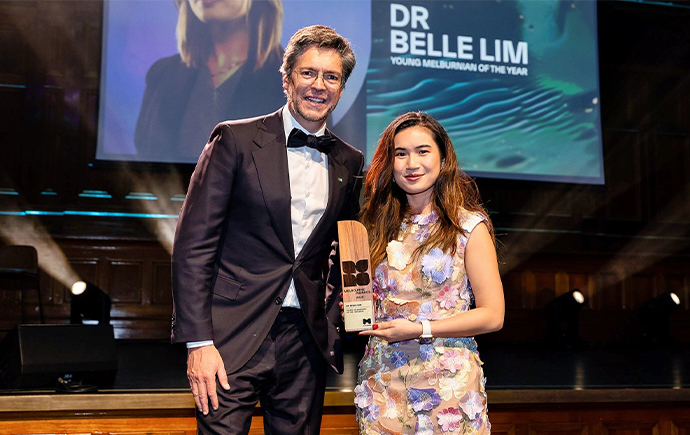 Pharmaceutical Sciences alumni Dr Belle Lim has been named the Young Melburnian of the Year for 2025. Belle received the honour for her leadership in championing diversity, equity and inclusion for international students and women in STEM—work she has advanced through Future Forte, an initiative to connect, inspire and empower international students.
Introducing Belle Lim: From Malaysia to Monash
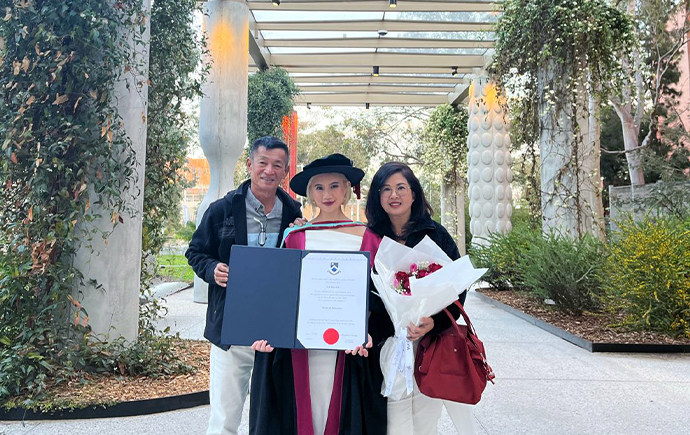
Belle grew up as the eldest of four kids in what she describes as a conventional Chinese Malaysian family. She arrived in Australia aged 17, keen to expand her horizons and study Pharmaceutical Science at Monash.
After completing a Bachelor of Pharmaceutical Sciences (Honours) through the Faculty in 2018, Belle undertook a PhD focused on breast cancer familial genetics, completing in 2022.
We spoke to Belle about her journey to Monash, her incredible work with international students that led to her award, and how a passion for diversity and inclusion has shaped her career, taking her from science to working with the AFL.
Why did you decide to come to Melbourne for your studies, and why did you choose to study Pharmaceutical Science?
 In high school, I was always interested in biology and chemistry and, when I was looking at courses, Pharmaceutical Science immediately jumped out. Australia was a natural choice as it is reasonably close to Malaysia and I chose Monash because it is a well known uni with a good reputation—particularly given the campus in Malaysia.
Coming to Australia as the first in my family to go to uni and study abroad felt like a big bold move for my younger self, but it was also very exciting. My parents don’t speak English and when I arrived, I had to learn to have conversations and navigate a new country in English. Fortunately, I knew I had my parents' support if anything didn't work out.
Both my parents come from humble backgrounds and I always saw them working hard to provide for our family, so being hardworking was instilled in me, as was the importance of humility. These characteristics definitely contributed to giving me the resilience required to settle into a new country and culture, and helped overcome the challenges many international students face.
Tell us a bit about your experience of being an international student in Melbourne. What challenges did you and your peers face? What opportunities did you identify?
In a new country you’re on your own. You’re not familiar with the usual things like rent, housing, banking, the health system—even GPs are foreign to us. Arriving at uni, Orientation Week definitely helped me settle in, but in a totally new environment and culture, there is an overwhelming feeling that you’re not sure if you are doing things right.
When I first came to Australia it didn’t come naturally for me to speak up in class, raise my hand or take the spotlight. It’s a culture shock or culture clash for the first couple of years. Even day-to-day interactions are unfamiliar; you wonder to yourself things like “am I saying this word right?”, “am I greeting people in an acceptable way?”. There is also a lack of connection, belonging, network and community, which can be quite destabilising. It’s so holistic that it’s hard to put into words.
Given the rising number of international students in Australia, getting the best out of young people requires enhancing cross-cultural understanding and cultural intelligence or competency.
Ultimately, my experience led to me creating Future Forte. I wanted to build that community. Making a positive impact on the community and in the world is important to me.
Tell us how Future Forte came about and what it aims to achieve?
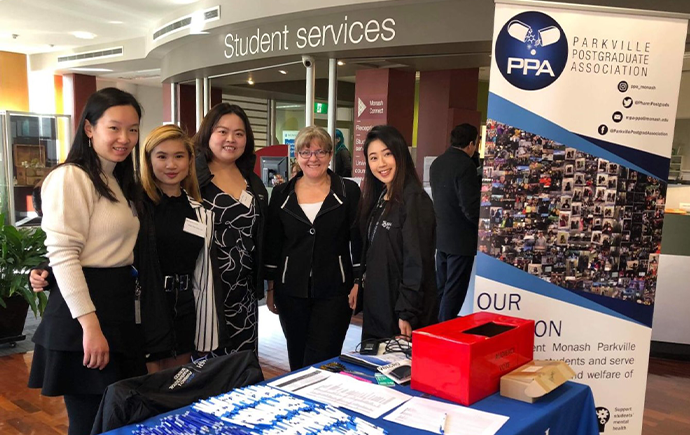 I got involved in student representation at Monash through the Parkville Postgraduate Association (PPA). From there I had the opportunity to be involved with the Monash Graduate Association, then the Council of International Students Australia. I was a few years into my journey in Australia and I had accumulated some lived experiences to put words to some of the challenges and issues that I and my peers faced.
As a student representative, I was passionate about gender equity for international students and recent migrants. A lack of diverse women in leadership is still an issue—a lot of us don’t see ourselves in leadership positions, whether that is in Australia, or globally in our home countries.
When I was growing up in Malaysia I didn’t have women role models to look up to. When I first came to Australia, Julia Gillard was the Prime Minister and it was so eye-opening to me. I didn’t realise that women can be front and centre and leading a country. I now know the many obstacles she faced, but it was still mind blowing.
There are also issues around financial disparity and economic insecurity for a lot of migrant women or international students. The issue of sexual assault and sexual harassment is also still very stigmatised in many communities. I knew there were a lot of women suffering in silence in migrant communities.
I started Future Forte as a series of forums and events to create this space for women international students to come and share experiences, find solidarity and together build an advocacy platform. We gained some momentum and then the support of the Victorian Government to hold a big event in March 2019. It was the first Future Forte conference, but it was called Future Female back then. It was a day of inspiration, community and sharing. We had 20 speakers and 250 attendees, all women international students.
This year we held our sixth conference. We've grown and developed a leadership program, but our organisation has always been international student led, designed and delivered.
Since graduating with a PhD in 2022, your career has taken a step away from science, tell us about where Future Forte has taken you?
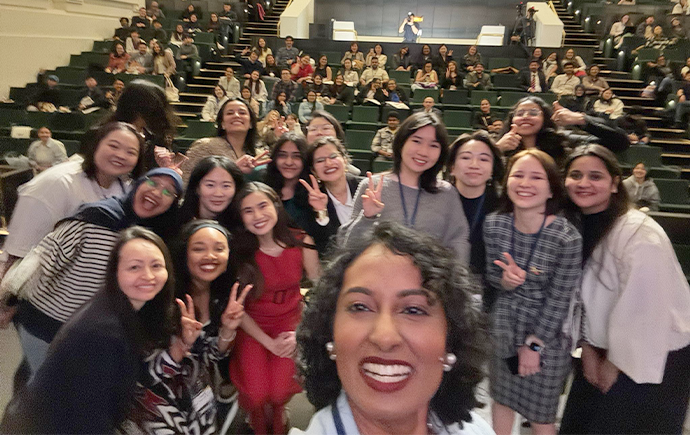 I am really proud to have helped develop a team of young leaders at Future Forte, and I now chair the board. I am proud it is now bigger than me and will continue to do good things.
When I set it up I was doing my PhD at the Peter MacCallum Cancer Centre on breast cancer genetics. I really enjoyed research and was passionate about the subject matter, but starting Future Forte really sparked my interest in pursuing social policy and advocacy for diverse communities. So I took a step away from science into consulting, before recently taking on a new role as Head of Cultural Diversity Engagement and Growth at the AFL.
It's a really cool role. For so long I was an outsider in Australia, learning to fit in and integrate, and figuring out how to live and succeed in Melbourne. Through this role I will be able to use footy to make other people and other migrants feel like they are welcome to engage and participate—that they can develop a sense of belonging in Australia through footy. I get to do what I have done at Future Forte, but at a bigger scale with this iconic cultural institution. I feel lucky to be able to drive this forward.
How do you think your pharmaceutical science education and time at Monash prepared you for the work you currently do?
Even though the subject matter I studied isn’t relevant to my work day-to-day, there are so many transferable skills that you get from university that form my understanding of the world. My years at Monash gave me experiences and the opportunity to engage with people from so many different cultures and backgrounds, which has made a big difference in my career. I also think my scientific background gave me a real appreciation for evidence and data, which is absolutely crucial if you want to make decisions that make sense.
What advice do you have for young graduates of Monash's Faculty of Pharmacy and Pharmaceutical Sciences?
Firstly, regardless of whether you are an international or domestic student it is such a great opportunity to be able to go to university, so have fun and make the most of it.
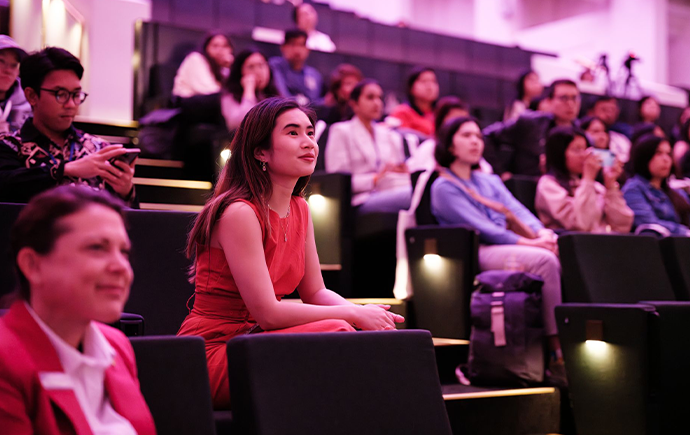 Secondly, take advantage of the opportunities beyond academics—like student clubs, volunteering and sports. Finding things that align with your interests outside of study are important steps in figuring out who you are, as well as distinguishing yourself from all the other graduates who will finish uni with the same qualification. Getting experiences and building a network is crucial.
How did it feel to be named Young Melburnian of the Year?
It was surreal. This award, this category, wasn’t open to non-Australian citizens for a long time. It is great that the City of Melbourne is recognising the contribution of international students. I feel really proud to have my contributions and achievement recognised, but there are many other advocates and international students who have led us to this point.
I share this acknowledgement with the many international students who contribute so much to this city. My journey has shown that when young people feel they belong, they can lead with confidence and help shape the future of their communities. Melbourne gave me that sense of possibility, and I’m committed to ensuring others experience the same.