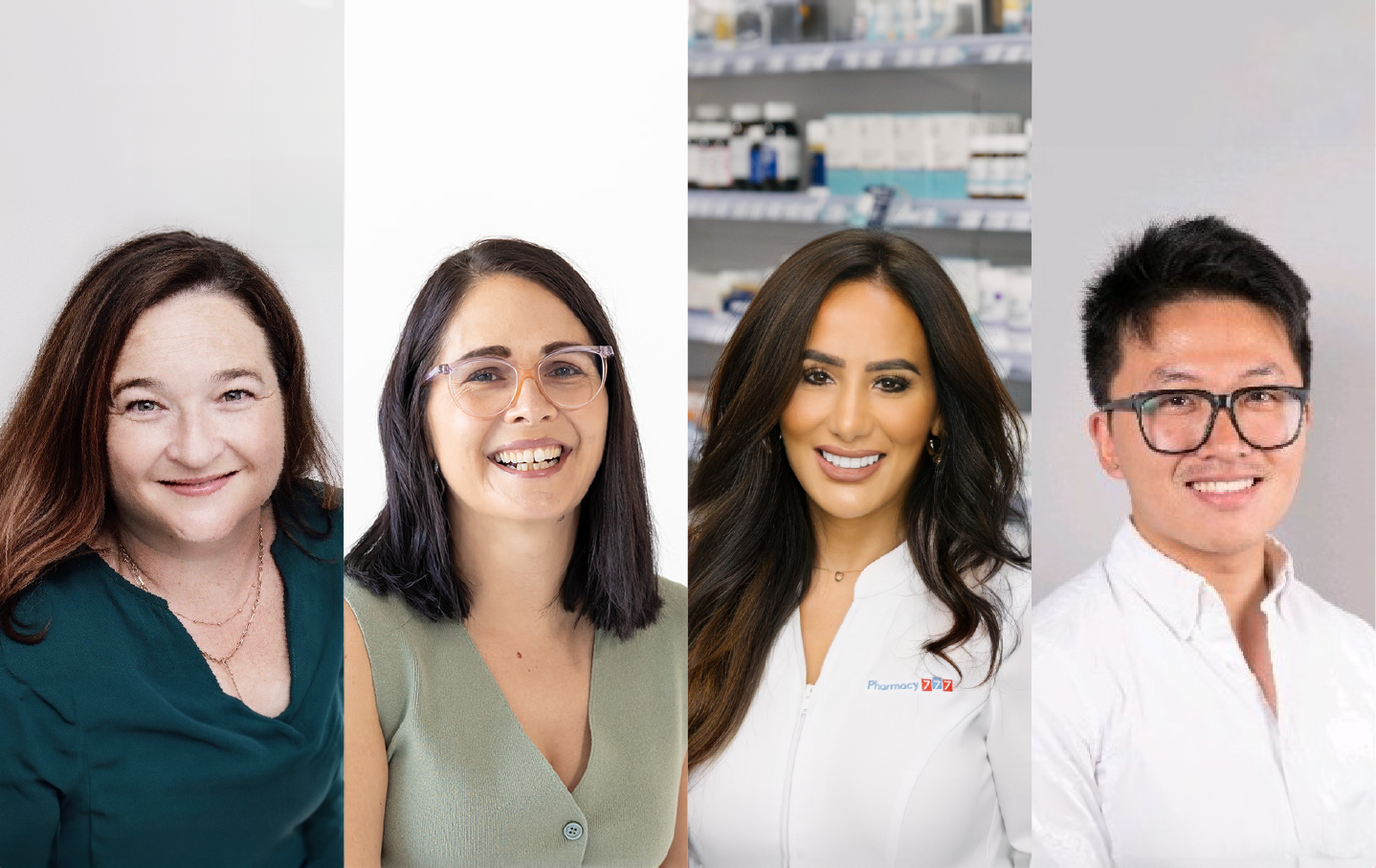
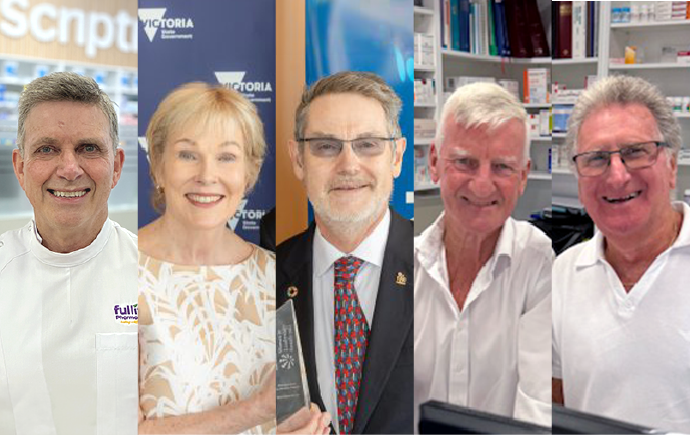
Keeping it in the family: Generations of pharmacists and pharmaceutical scientists
As the world evolves at an accelerating pace, young people are increasingly entering professions that were unimaginable during their parents' era. In spite of this, the fields of pharmacy and pharmaceutical sciences have endured. Through continuous adaptation to contemporary challenges and expansion to address changing needs, no two generations of pharmacists or pharmaceutical scientists look the same. For a first-hand perspective, we spoke to Parkville campus graduates where the apple doesn’t fall too far from the family tree.
The Dadalias’
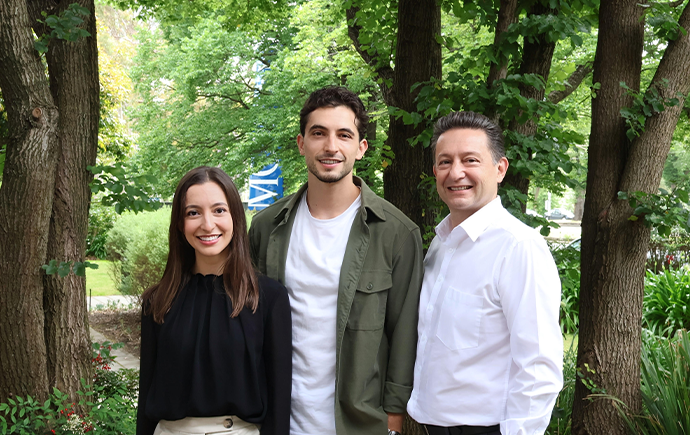 Angelo Dadalias, his daughter Demi and son Steven are Monash-trained pharmacists who have pursued different careers through pharmacy.
ANGELO: I always wanted to be a pharmacist. From an early age, my local pharmacist in Carnegie (Mr Dutton) was the person our family would go to for advice. The local ‘chemist’ was someone the community trusted and made a memorable difference to the lives of many families. I decided to study at Monash University and completed my Bachelor of Pharmacy in 1990.
STEVEN: I chose Monash because Dad always used to talk about his time at University and how much he loved it, and I could also see my sister experiencing the same a couple of years above me. I was in the first year of the new pharmacy double degree program that started in 2017. I was also part of the Dean’s Scholars Program and graduated in 2021.
DEMI: I studied a Bachelor of Pharmacy (Hons) at Parkville from 2015-2018. I really enjoyed my time at Parkville. My cohort was on campus every day of the week attending lectures and workshops. I have great memories celebrating the end of exams with my friends, many of whom I know will be lifelong friends.
After graduating, Demi worked in end-of-life care for the Statewide Pharmacy Service (VAD) and at the Alfred Hospital, managing the inpatient pharmacy service for the renal and rheumatology ward. Steven interned at St Vincent’s Hospital, where his passion for clinical pharmacy led to pursuing Medicine at Monash University.
ANGELO: We are constantly bouncing ideas and thoughts off each other at the dinner table. I expect as an onlooker the conversation could get boring, but we always had Mum to settle the discussions!
DEMI: It’s great when you can call and ask for advice on a complex case, or reflect on your day and get some feedback about how the other would approach a situation. Learning about business from Dad, a different hospital system from Steven, and getting a ‘customer’ or ‘patient’ perspective from Mum.
STEVEN: Dad would also always tell us “the customer is always right” which I think has now been engrained into us both.
Demi currently works at the PSA and Monash University, and particularly enjoys her role as a Pharmacy Board examiner. After graduating from his studies, Steven plans to pursue general or specialist medicine where he can utilise his pharmacy knowledge in his practice as a doctor. With his experience as a pharmacy owner, Angelo enjoys mentoring team members as they transition into pharmacy ownership themselves.
ANGELO: I was the first in my extended family to go to university. I have grown from a pharmacist to a pharmacy manager and then a pharmacy owner. At each stage I felt that I was reinventing myself and starting all over again, as the skills required for these new positions threw many challenges my way.
DEMI: My Dad taught me to remain passionate about the impact I have on people’s lives, to take care in my work and act with integrity. Simply meeting people in my community, hearing their stories and being able to help them with their health is very fulfilling.
ANGELO: I have always believed that pharmacists can make a big difference in the communities they serve—even if it’s just by listening to a mother with concerns she has for her child. She may leave with no medication, but be able to sleep a little more soundly that night, and that is something many pharmacists do not realise they do each day. My family witnessed me work long hours, but they could see that it was more than a job for me—it was a passion that gave me purpose. I feel the life of a pharmacist is challenging, but it is a good life.
STEVEN: There was no pressure to ever follow our dad’s exact footsteps. We found our own unique interests in the pharmacy field. Unfortunately for Dad both his children were more interested in hospital pharmacy, rather than helping him out with the family business!
The Fords
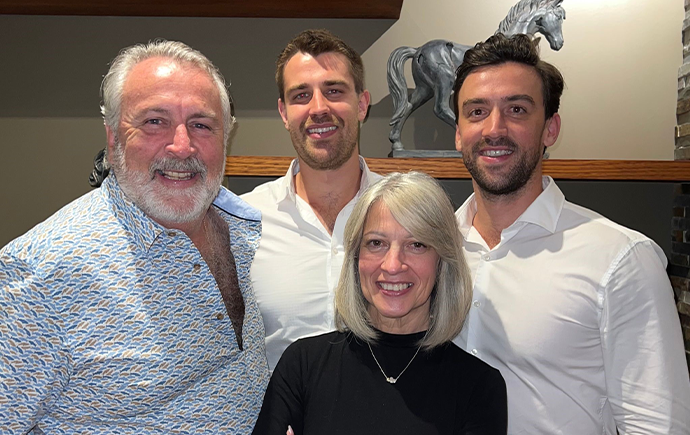 The Ford Family, David, Dina, James and Liam, are all pharmacy graduates of the Victorian College of Pharmacy (VCP) / Monash University.
DAVID: I graduated in 1983 from VCP, and completed my internship at Western General Hospital in 1984. After practising as an ICU pharmacist, in 1990 I became inaugural Director of Pharmacy at Sunshine Hospital. Since then, I’ve been Director of Pharmacy at Western Health, North-Western Health Care Network, Melbourne Health, Northern Health and Northeast Health between 1997 and 2025. I started my own consultancy business in 2010 which continues to this day.
DINA: I graduated in 1985 from VCP and also completed my internship at Western General Hospital, where I met David. After working in community pharmacy I returned to hospital practice at Sunshine and Western hospitals, as well as at the Royal Melbourne Hospital. During COVID, I worked at the Exhibition Building COVID vaccination clinic for St Vincent’s hospital, and am working at St Vincent’s to this day.
JAMES: I completed a year of Biomedical Engineering before switching to Pharmacy at Monash University, graduating in 2018. I then completed my internship at Austin Health and became an ED pharmacist and student coordinator over the next 7 years. Currently, I’m a senior pharmacist in the Learning and Development team at Alfred Health.
LIAM: I completed a degree in Biomedical Sciences before switching to the vertically integrated Pharmacy Master’s program at Monash University, and graduated in 2021. I completed my internship at the Royal Melbourne Hospital and became a clinical pharmacist. Since 2024, I’ve also worked in both the pharmaceutical and medical devices industries.
The Fords self-describe themselves as the most boring family in the southern hemisphere, with all family members in the same profession. However, they have found that sharing a profession allows for great discussions on complex clinical cases, new therapeutic developments and the progression of pharmacy practice over time.
DAVID: The very first computer at VCP took up an entire room, and was operated with cards and pencils. And what is now the northern-most building on the Parkville site was vacant land, where we used to kick the footy between lectures. The advancement in technology and teaching infrastructure at Monash has been extraordinary. With virtual pharmacy dispensing laboratories and computer-assisted learning, the university is now regarded as one of the best Pharmacy schools in the world.
It’s amazing to see the advancement in pharmacy practice over the last 45 years, from the initiation of hospital pharmacy services in the early 80’s, to pharmacist prescribing, and the emergence of AI in healthcare today. Over time, pharmacy practice has diversified in both hospital and community settings.
The next 45 years will be even more exciting with pharmacist diagnostics and disease management. The extensions of prescribing and clinical services to the communities we serve will further advance this great profession. The future looks brighter with targeted gene therapy and the further release of fusion proteins and monoclonal antibodies to treat diseases currently refractory to conventional therapy. Such advances will dominate pharmacy practice in years to come, and further entrench the vital roles of pharmacists in the healthcare system in Australia.
The Pictons
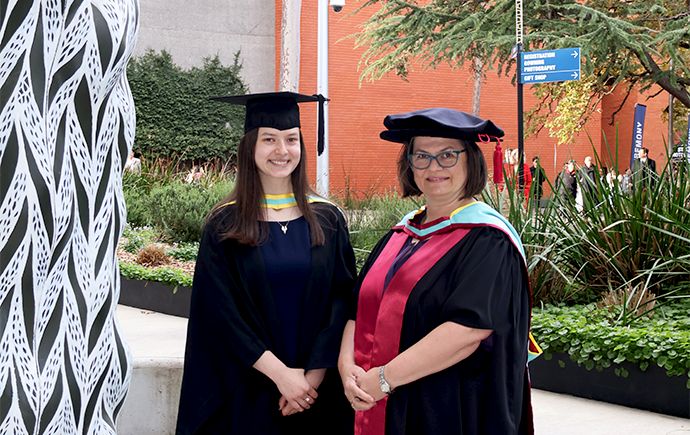 Leonie and her daughter Charlotte pursued studies in pharmacy and pharmaceutical sciences respectively, sharing a graduation ceremony in May of 2025.
CHARLOTTE: I studied a Bachelor of Pharmaceutical Science Advanced (Honours). I finished my studies in 2024 and graduated in 2025.
LEONIE: I did a PhD in pharmacoepidemiology with CMUS. My topic was 'Medication use and health outcomes in people living with dementia and chronic comorbidities'. I commenced in October 2018 and graduated in May 2025. It was quite a journey.
Leonie has been a practising pharmacist since 1992. While working for a pharmacy that serviced residential aged care, she found there was much room for improvement in the medication management of residents. Leonie saw that treatment guidelines were not based on good quality evidence, as older adults were generally excluded from clinical trials. After completing a Graduate Certificate in Clinical Research at the University of Melbourne and a Masters in Clinical Epidemiology online at the University of Newcastle, Leonie continued her research with a Pharmacy PhD at CMUS.
LEONIE: I found that Associate Professor Jenni Ilomaki's work using real world data to understand medicine use in the population interested me the most.
CHARLOTTE: I remember really loving chemistry in VCE and when we got to the small section on biochemistry, I instantly knew this world of biochemistry and medicine was something that interested me. My mum had already started her PhD at MIPS by that point and was able to suggest the Monash University Bachelor of Pharmaceutical Science degree. I might not have known about this course otherwise and I am so grateful I found it.
Charlotte recalls studying and having fun with her friends on campus as a highlight of her undergraduate studies. She served as president of the Pharmaceutical Science Society in 2023, and was a joint winner of the Faculty Honours Prize and Cyril Tonkin PhD Scholarship in 2024.
LEONIE: We rarely saw each other on campus. I was so proud that she was there, doing her own thing. Because I was more clinically focused and she was more Pharm Sci focused, there were no conflicts or awkward moments like me teaching in one of her courses or workshops—I'm sure that would have been mortifying for her. It was nice to share stories and know the other could really understand. Hopefully she feels that I was able to support her through the ups and downs of a demanding degree.
CHARLOTTE: I liked having someone in my family who really knew my field and exactly what I was going through—unfortunately I don’t think she can say the same about me given that her PhD was much more advanced! She was very patient with me while I was stressed about my Bachelor’s degree which I really appreciated.
LEONIE: We all face challenges in life, at all stages of life, and undergraduate courses have their stressors and pressure points, which can be very difficult to navigate at times. I think it helped me be more understanding towards the students I was teaching. I did quite a bit of sessional teaching for the Pharmacy course and really enjoyed working with the next generation of pharmacists, getting to know them and watching them prepare for professional life.
Leonie is now a part of the PBAC evaluation team at the Centre for Health Economics at Monash Business School. Charlotte has decided to continue her honours research through a PhD at MIPS studying antibacterial resistance and pharmacokinetics/pharmacodynamics.
LEONIE: When I started out in Pharmacy I never thought I'd be doing what I do now, and to be fair, I never thought I'd have the opportunity to do this kind of work, so I'm happy to embrace interesting opportunities as they come up.
CHARLOTTE: I love how our work can lead to the creation and administration of medicines that can have a real impact on someone’s health. It is so interesting to me how different aspects of biology, chemistry, and physics come together to make it all possible.
The Tans
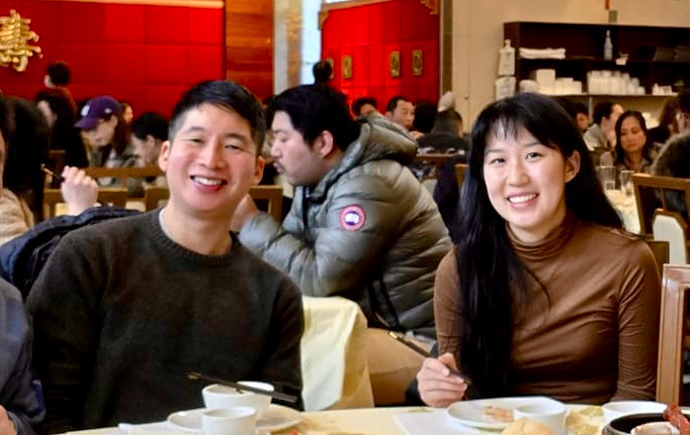 Edwin Tan and Caitlin Owyong are second cousins once removed. Edwin is a pharmacy alumnus, and Caitlin is a current student in pharmaceutical sciences.
EDWIN: I studied a Bachelor of Pharmacy (Honours) and graduated in 2007. I also completed a PhD in Pharmacy and graduated in 2014.
CAITLIN: I began my PhD in Drug Discovery Biology in 2024. My research looks into the structural biology of allosteric modulators at Class A GPCRs.
EDWIN: I’ve always been drawn to healthcare and helping people, and pharmacy felt like the perfect way to combine that with problem-solving. I was also fascinated by the science behind medicines – how they work in the body and can transform health outcomes.
CAITLIN: I knew I was interested in a career in science, but was a bit more indecisive in my study path. Right after high school I was accepted into the Pharmacy (Hons) course here at Monash Parkville. But I decided to pursue Biomedical Sciences instead, and then worked as a research assistant in drug discovery. When I considered doing a PhD, the Monash Doctoral Program really stood out to me. It seems like in the world of pharmaceutical sciences, all roads lead to MIPS!
EDWIN: During my PhD, I was actively involved in the Parkville Postgraduate Association, and also worked as a casual tutor, an experience that sparked my love for teaching. Some of my fondest memories are the friendships formed during lectures, long hours in the labs, study sessions and even late-night phone calls before exams. Going on a rural placement with my friends to Albury-Wodonga was an unforgettable experience. It gave us a deeper appreciation of healthcare in rural communities and strengthened our bond as classmates.
CAITLIN: One thing I really appreciate is the community spirit on campus. Everyone is really supportive of each other—not just in student communities but across labs as well. In some institutes, postdocs and lab heads can feel inaccessible to students but I feel like it’s very much the opposite here. Everyone celebrates each other’s wins.
Edwin spent two years at the Karolinska Institutet in Sweden on a NHMRC-ARC fellowship before taking on a teaching-research role at the University of Sydney. He was recently awarded a Dementia Australia Mid-Career Fellowship to tackle challenges in psychotropic prescribing in dementia care.
EDWIN: Among my proudest achievements were receiving the Mollie Holman Doctoral medal for the best thesis of the year and being awarded an Endeavour Research Fellowship, which allowed me to visit Harvard University and the Karolinska Institutet in Sweden.
CAITLIN: So far the only award to my name is $50 for winning the People's Choice Award at the DDB 3-Minute Thesis competition! It’s really nice to have someone like Edwin to look up to. Having someone in the family who’s done it before you is reassuring in an unpredictable field like research.
Today, as an academic, Edwin combines clinical insights with data-driven research and teaching to improve medication safety and outcomes at a population level. In her PhD, Caitlin aims to solve the structures of ligand-bound receptors, enabling the development of safer therapeutics for people living with schizophrenia and Parkinson’s Disease.
EDWIN: My research focuses on medication safety in older adults, particularly those living with dementia or multiple chronic conditions. Older adults often take many medications, and their health conditions can interact in unpredictable ways. Capturing this complexity in research without losing sight of practical solutions is difficult. Working with large datasets brings its own hurdles, from data quality issues to the time and expertise required for advanced analysis.
CAITLIN: I’m lucky to not have large datasets to work with! My challenges lie mostly on the lab bench purifying stubborn proteins. I like being involved in the hands-on process from generating bacmids to protein expression and purification. It’s really rewarding to know that my work is the beginning of a future class of new and safer medicines.
EDWIN: I find it deeply fulfilling to know that research can make a tangible difference in people’s lives. Each challenge we overcome reinforces why I chose this path: to advance knowledge and improve care for some of the most vulnerable members of our community.