
New drug discovery to target ‘visceral leishmaniasis’, a deadly disease affecting some of the world’s poorest people
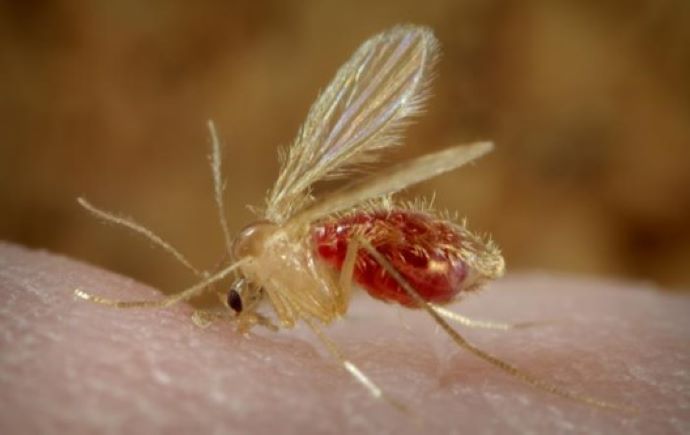
Leishmaniasis is caused by a parasite carried by a female sandfly. Photo credit - James Gathany
15 January 2024
An international study, co-led by Monash University, has reported the discovery and preclinical development of a potential drug candidate to target leishmaniasis, a complex vector-borne disease in which Leishmania parasites are transmitted through the bite of female phlebotomine sandflies.
Leishmaniasis affects some of the world’s poorest people and comes in three forms, including visceral leishmaniasis which, if left untreated, is nearly always fatal. New drugs for visceral leishmaniasis that are safe, low cost and adapted to the field are urgently required.
In this study, published in Science Translational Medicine, the team of researchers describe how they identified ‘DNDI-6174’ - an inhibitor of Leishmania - along with data to support its selection as a potential drug candidate for visceral leishmaniasis.
Monash’s Professor Susan Charman is Director of the Centre for Drug Candidate Optimisation within the Monash Institute of Pharmaceutical Sciences and a lead author on the study, alongside Dr Susan Wyllie from the University of Dundee and Dr Eric Chatelain from Switzerland’s Drugs for Neglected Diseases initiative.
“Despite concerted efforts over the last several years, the number of new chemical entities that are suitable for clinical development for the treatment of visceral leishmaniasis remains low,” Professor Charman said.
“In this study, the team collaborated with GSK to conduct a phenotypic screening campaign which identified a hit compound that was optimised to identify DNDI-6174 as a promising oral preclinical candidate against a range of Leishmania species responsible for causing visceral leishmaniasis and also ‘cutaneous leishmaniasis’ - the most common form of leishmaniasis causing skin lesions on exposed parts of the body.”
In animal models, DNDI-6174 was found to reduce parasite burden against a variety of Leishmania species and no major flags were identified in preliminary safety studies, including an exploratory 14-day toxicology study in rats.
Ultimately, the priority is to deliver an antiparasitic drug that will meet the target product profile for visceral leishmaniasis, as published by the Drugs for Neglected Diseases initiative. This means an orally active, safe, effective, short-course, and field-adapted treatment for leishmaniasis that would have the potential to revolutionise treatment.
“With pharmacological, physicochemical, and pharmacokinetic properties that support short-term oral administration consistent with the Drugs for Neglected Diseases initiative target candidate profile for visceral leishmaniasis, DNDI-6174 is a clear candidate with suitable development properties to reach the preclinical development stage,” said Professor Charman.
“Overall, the data for DNDI-6174 support its continued development to determine whether this compound can become a much needed safe oral treatment for patients living with multiple forms of the devastating neglected tropical disease leishmaniasis.”
DNDI-6174 is currently under preclinical development with the goal of starting a clinical phase 1 trial in 2025.
ENDS