
New research makes critical discovery for the global fight against antibiotic resistance
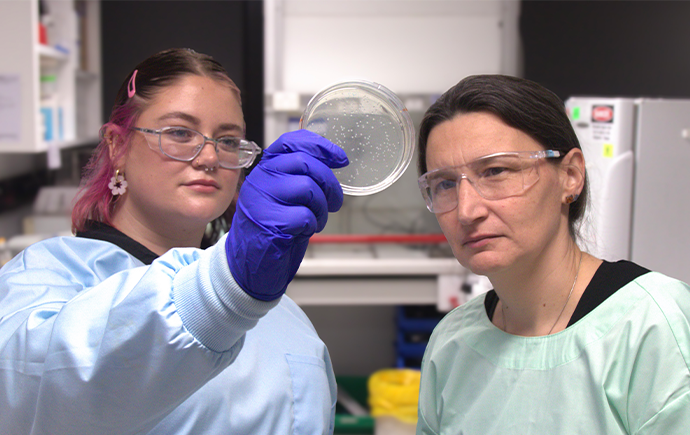
Dr Siobhonne Breen and Associate Professor Cornelia Landersdorfer.
26 June 2026
A Monash University-led study has found that an unusual pairing of two commonly used antibiotics can kill and stop the spread of resistance in a highly drug-resistant bacterium, Pseudomonas aeruginosa, which can cause life-threatening bloodstream infections, pneumonia and meningitis.
Published in The Lancet Microbe, Monash Institute of Pharmaceutical Sciences (MIPS) researchers used a validated laboratory infection system in which they were able to expose bacterial samples from infected patients to simulated antibiotic dosing regimens, as would actually occur in hospitalised patients.
The discovery of the combination regimen of two so-called β-lactam antibiotics – the most commonly used antibiotics class against serious infections – comes in the context of the World Health Organization’s designation of Pseudomonas aeruginosa as a high-priority pathogen requiring rapid and sustained action.
To read the full article, visit here.