As educators of colour, we are often immersed in discussions about what can be done to advance racial equity in schools. Australia is uniquely positioned as a country to address this, as we rest on Indigenous heritage, and draw from the efforts and mindsets of many people of colour who have arrived into the country as immigrants.
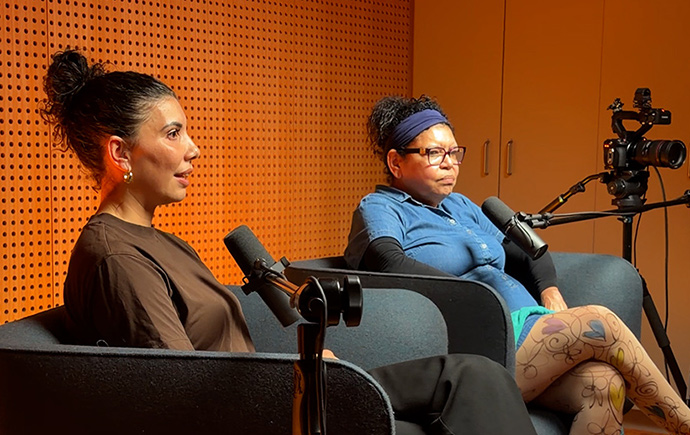
Monash Education’s Pearl Subban and Casey Grammar’s Ryan Subban discuss how to maintain momentum toward greater racial equity in the classroom.
The Black Lives Matter movement confronted people around the globe with the injustice of racism, compelling every school to relook at implicit bias, and effect change to reduce its damaging impact on young black, Indigenous and people of color (BIPOC).
Here we offer five strategies as starting points to educators, with a view to reducing the damaging effects of racial discrimination within contemporary Australian school settings. In offering these suggestions, we acknowledge that our position may be personally biased and that we have not considered every element of racial awareness. We are essentially learners too and want to do better by all our students. This is therefore an ongoing work of heart (not art) and indeed a mobile, fluid offering to our field.

1. Get to know your students
Knowing our students is fundamental to our role as educators, we acknowledge that each student possesses a unique profile — and for many, race is an essential aspect of that profile. Teachers, as leaders, facilitators of learning and caregivers, should be able to acknowledge a student's race with sensitivity and allow them to bring their full identity to school. This could be through something as simple and as powerful as learning how to correctly pronounce a student's name, an essential aspect of identity. If you have ever watched the Netflix show Orange is the New Black, then you will no doubt be familiar with Nigerian-born actor Uzo Aduba, who shared this witty, yet insightful comment from her mother, about the anglicising of her traditional name:
“If they can learn to say Tchaikovsky and Michelangelo and Dostoyevsky, they can learn to say Uzoamaka."
Perhaps it is not so much about mastering the pronunciation, but about positioning ourselves as learners, when it comes to understanding race, culture and language diversity. Positioning ourselves as learners translates into intentional conversations with both students and colleagues of colour, attempting to listen more and interject less. A personal conversation which is respectful and acknowledging of diversity is likely to explicitly convey a message that advocates for racial equity.
We found Start Here, Start Now: A Guide to Antibias and Antiracist Work in Your School Community by Liz Kleinrock particularly useful when considering how to accommodate individual students into the classroom.
2. Develop an appreciative lens
Developing an appreciation for racial diversity and the naturally occurring challenges it poses for individuals of colour generates more empathetic interaction. Intersectionality, a phenomenon coined by Professor Kimberlé Crenshaw, reflects on the interconnected nature of social categories, such as race, class, and gender, especially in relation to systems of discrimination and disadvantage. An appreciative lens is recognising those intersections and seeing them as an asset in your classroom — a mindset that is critical to acknowledge, honour and celebrate racial diversity. Individuals who are part of racially privileged groups are likely to be well positioned to effect this change in the classroom (and subsequently, in society) through this altered, consistent mindset.
For example, during those conversations with racial minorities in your class, allow them to challenge you. Introduce discussion in the classroom about race and encourage your students to understand issues from multiple perspectives. Celebrate the diversity of your classroom. Arrange excursions to spaces where people of colour are represented positively and study narrative texts in English that portray people of colour as heroes, champions and people of resilience.
Several Victorian schools have explored this idea through their study of Rachel Perkins’ Mabo as part of their English curriculum. A grounding dialogue between the lead characters articulates the need for understanding of Aboriginal and Torres Strait Islanders’ survivor mentality and a need to defend their dignity. Returning from a racially charged and discriminatory encounter with a supermarket attendant, Bonita bemoans to Eddie, “We can’t afford to be troublemakers”. The enigmatic Eddie responds, “People like us have no choice but to be troublemakers”. A mindset shift means understanding the positions of people of colour and becoming aware that a defence of race often results in difficult confrontations. Developing an appreciative lens positions an educator in this context as more empathetic to individuals of colour.
We found Cultures of Belonging: Building Inclusive Organizations that Last by Alida Miranda-Wolff useful when considering race through an appreciative lens.

3. Include parents in the process
Educators and school leaders are most likely aware that parents of colour and those from diverse language backgrounds are often reluctant to be involved in school events, such as parent-teacher evenings and other events that may require engaging in the dominant language, English. Schools should endeavour to break these barriers, by proactively considering ways of including parents from diverse racial, cultural and language backgrounds. Imagine the message a school would send by hosting a guest speaker from a racially and linguistically diverse group. Inclusion of this nature is likely to break barriers even further, dispel myths about the hegemonic role of English, and encourage greater contact between the school and the parents.
This is because schools cannot merely be sponsors of racial diversity — this is too passive for the contemporary world. Instead, schools should be positioned as advocates and activists. As allies of the Black Lives Matter movement, schools should realise that racism cannot be reduced by those who face it, but by those who perpetuate it. In her article ‘Dear White People: Now You Know and You Can’t Pretend You Don’t’, Mungi Ngomane — the granddaughter of Archbishop Desmond Tutu — urges modern audiences to, “Protest alongside people of colour and when you can, put your body between them and the police”. This is both a physical and metaphoric urging — that people from a privileged background must be actively involved in the fight against racial injustice. So, how does this translate for schools? They can become active advocates by drawing on the wisdom and experiences of parents in their communities. In so doing, they send a paradigm-shifting message of respect that people of colour contribute and shape educational provision, and are active participants in the educational community.
We found Inclusive Conversations: Fostering Equity, Empathy, and Belonging across Differences by Mary-Frances Winters to be useful when considering conversations relating to race with parents.
4. Ensure everyone is represented
Racial diversity should ideally be embedded into all school materials, with language and word choices being mindful of this diversity. The profile of the typical Australian student has altered, and this racial range should be explicitly a part of all visual aspects within the school, from school brochures, billboards and other public-facing materials.
Maya Newell’s film In My Blood It Runs, which documents the perspective of 10-year-old Dujuan Hoosan, resonated with so many students, parents and teachers of colour because it confronted the lack of or limited representation of racial diversity in school curricula, teaching content and teaching modes. The evident disconnect between Dujuan’s Aboriginal identity and a problematic education system that refused to acknowledge who he is, paved the way for a challenging and ultimately discouraging educational experience. The complexity for us, as contemporary educators, is to disrupt that narrative, and avoid our students becoming statistics in a system that was not constructed with them in mind.
Dujuan was invited to the United Nations subsequent to the film’s release, where he noted: “My film is for all Aboriginal kids. It is about our dreams, our hopes and our rights”. Is it not time that we, as educators, altered the narrative that permeates our classrooms? Let’s have schools with diversity in our teaching and leadership teams, so that the needs and identities of students of colour are better represented within high-level discussions. Let’s consider culturally sensitive teaching materials, uniforms and better representation of marginalised groups among student bodies. Every individual should be represented, have a voice and possess agency through intentional representation in our school communities.
We found How to Be an Inclusive Leader: Your Role in Creating Cultures of Belonging Where Everyone Can Thrive by Jennifer Brown to be useful when reflecting on representation of race.
5. Create a visible translation of talk into action
Ultimately, racial diversity requires a translation from soothing rhetoric to actions that demonstrate a plan for change is in motion. Our schools should be places of action, not just talk. When Chadwick Boseman, the star of Marvel’s 2018 movie, Black Panther died, CNN reported that a young fan, Kian Westbrook, held a small memorial to mourn the loss of his hero. Kian said the reason he was so devastated about Boseman’s passing was that “He was a good role model to me and Black boys because he let me know Black boys can be heroes too”. Similarly, in their book, Erasing Institutional Bias, Tiffany Jana and Ashley Diaz Mejias acknowledged the pivotal role Black Panther played in the cultural zeitgeist. Despite being the highest grossing movie by a Black director and the ninth highest grossing movie of all time, Black Panther’s greatest legacy is what it has done in changing culture around race.
All young people require role models, and they look to leadership within their learning environments, their communities, and their wider society for people like them. Knowing that people of colour hold significant roles allows them to aspire to such positions. In the case of Kian, seeing a Black superhero like Chadwick Boseman let him know the world was made for him too. In their play, The 7 Stages of Grieving, Indigenous Australian playwrights Wesley Enoch and Deborah Mailman capture a similar sentiment in one of their vignettes. The vignette explains that young people of colour are sometimes caught in a vicious, destructive cycle, with limited hope of progress or escape, due to the restrictive racial practices of our society.
We found Beyond Diversity: 12 Non-Obvious Ways To Build A More Inclusive World by Rohit Bhargava useful when considering the translation of talk into action regarding race.
Race is essentially a social construct — it is a product of thinking, and it has unfortunately created an unjust hierarchy in society over time. Race forms an inextricable part of our identities. Consequently, it is important, within educational settings, to acknowledge an individual's racial and cultural identity. Whether this acknowledgement is among colleagues who teach and interact alongside us, or students whom we nurture within our learning environments, overlooking this element, is to dismiss an integral element of an individual’s personal identity.
Australia is well positioned, as a multicultural society, to become a trendsetter for a more racially equitable educational environment. Teachers are often reluctant to engage in these conversations since the level of controversy can become uncomfortable for some; however, if challenging topics like race are included in regular dialogue, it will likely reduce the level of bias and prejudice experienced within the setting, and ultimately the world.
Let’s be advocates, and be mindful of the words of Martin Luther King, Jr, “In the end, we will remember not the words of our enemies, but the silence of our friends”.
We acknowledge the traditional lands and waters upon which we live, work and play. Aboriginal and Torres Strait Islander peoples are the Traditional Custodians of our land and we recognise the continuous connection to Country, community and culture. We pay our respect to Elders past, present and emerging. We acknowledge and honour the sharing of narratives that have been passed down through the generations.