
Monash University’s ‘We Are Well: Art-moving-wellbeing’ project explores how art education, wellbeing, histories and cultures of Australian First Nations Peoples, can create dynamic learning experiences in primary schools, universities, and senior groups.
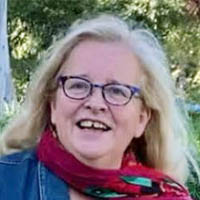
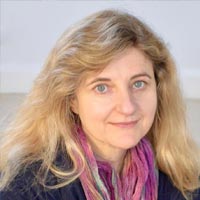
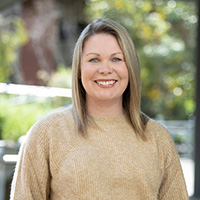
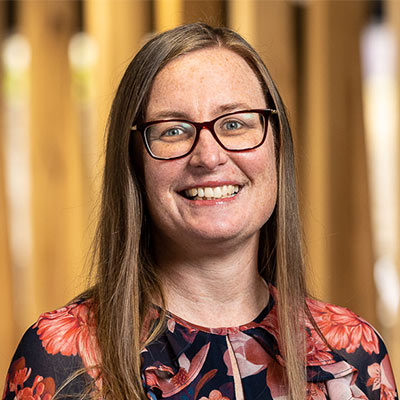
Monash Education’s Dr Geraldine Burke, Dr Megan Adams, Dr Laura Alfrey, and Monash University’s Rehabilitation, Ageing and Independent Living (RAIL) Research Centre, Dr Aislinn Lalor, and Nikki Browne (McClelland Gallery) share the outcomes of their latest learnings.
Monash students and staff from the Faculty of Education and the Department of Occupational Therapy, local children, and older adults from U3A and Rotary met with Indigenous artists and knowledge holders for four workshops at the Monash Peninsula Studio and McClelland Gallery.
Monash students experienced creative project-based learning, as they learned about the value of Indigenous perspectives in their work, and how creative and community partnerships can be forged. They will take these experiences into their respective fields.
The participants developed a new appreciation for people of different ages, cultures and experiences during this project. Stereotypes were challenged as they learned about Indigenous cultures, local plants, eco-dyeing, sun printing, and each other, while connections were made within and across generations.
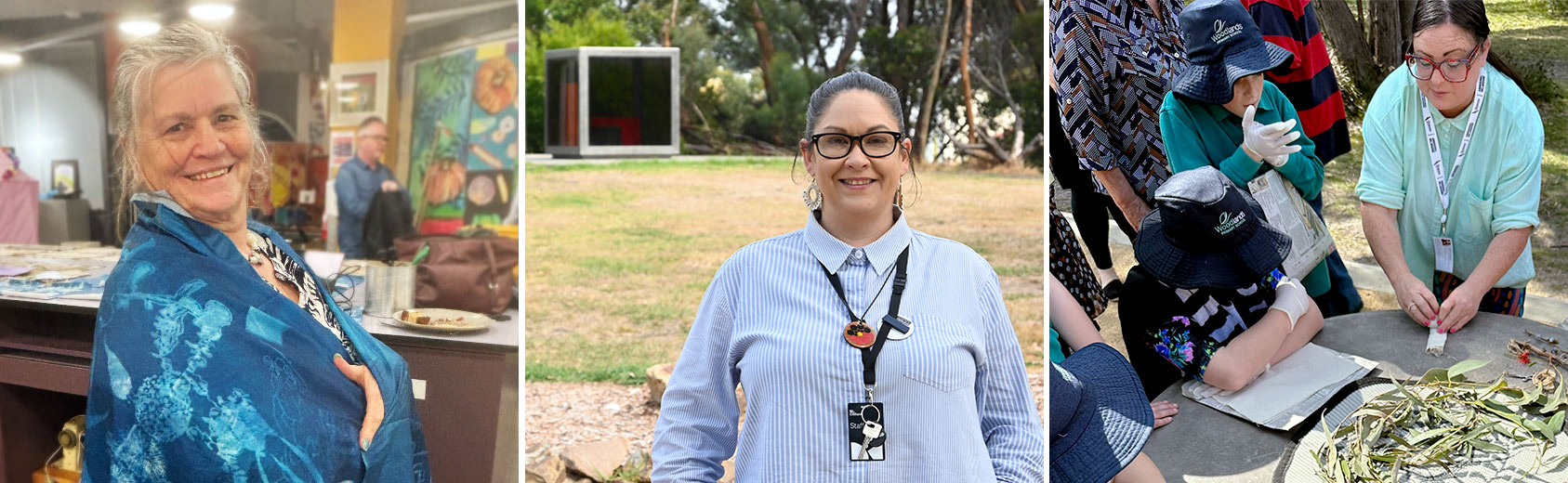
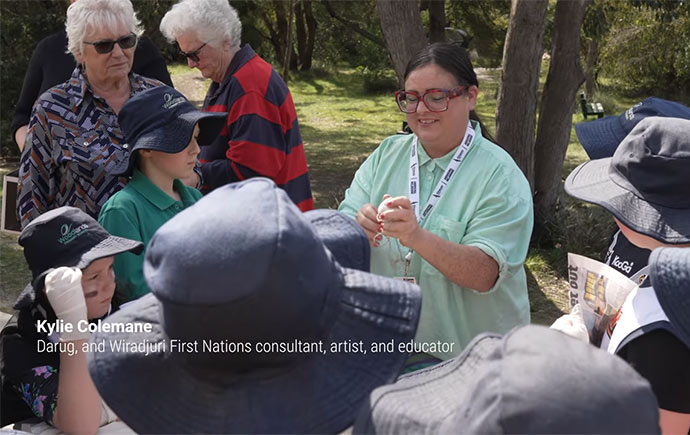
Participants worked across generations with (from left) Aunty Karan Kent, Nikki Browne and Kylie Colemane and were able to demonstrate cross-curricular learning related to:
1. Aboriginal and Torres Strait Islander Histories and Cultures
Participants learned about First Nations histories and cultures during a Cultural Safety day followed by a series of workshops where Aunty Karan, Kylie and Kursty Colemane highlighted:
- How living communities and identity are central to First Nations People’s histories and cultures.
- The special physical and spiritual and central place of the arts of First Nations Peoples to Country/Place
- How First Nations Peoples belong to the world’s oldest continuous culture that continues to powerfully impact arts and stories and cultural policy today.
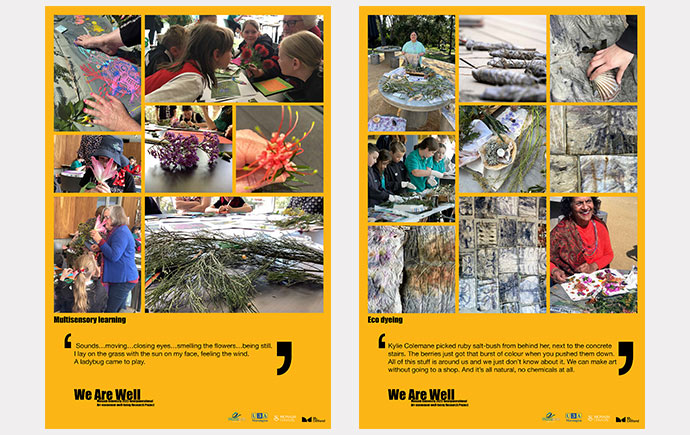
Participants were immersed in the arts and could explore and respond, develop practices and skills, create, as well as present and perform artworks together using locally inspired visual art education methods. Seasonal plants were used to create eco-dyed cloth that connected the group to seasonal knowledge, while different forms of printmaking enabled participants to express their connections to place, feelings of gratitude, and cultural awareness.
They responded to cultural storytelling and engaged in creative movement through Wayapa Wuurrk and understood how their movements interacted with their health and physical education.
2. Wellbeing benefits through socially engaged arts workshops
The ‘We Are Well’ project identified and explored creative ways to improve social connectedness in post-lockdown times. The loneliness that affects us across generations has been exacerbated by pandemic lockdowns.
Research shows us that continued engagement with the arts across generations can enhance feelings of wellbeing. It reduces social isolation, strengthens community connection, and builds self-esteem.
To build intergenerational learning and care the project developed a series of socially engaged art workshops that involved creative activities alongside discussion, collaboration, and social interaction across age groups.
While making artworks and moving, participants discussed what they loved about Country, what they would like to share about their learning with others, and what they were grateful for after each workshop together. In the process conversations eased, friendships were forged, and cross-generational learning began to flow.
To celebrate our intergenerational learning a suite of posters and videos were created so that participants could share their learnings about art-moving-well-being with others.
3. Wellbeing behaviours that connect to Health and Physical Education
In line with the Health and Physical Education curriculum, this project created an opportunity for participants to investigate and apply behaviours that contributed to their own and others’ health, safety, relationships, and wellbeing.
This was especially demonstrated when participants shared and discussed their ‘well-being superpowers’ such as connecting with others and participating in arts based and physical activity in nature.
The participating children, Monash students, and seniors were also able to clearly articulate how they could now:
- Practice and understand strategies for enhancing mental wellbeing such as mindfulness
- Apply skills and strategies to interact respectfully with others of different ages
- Apply fundamental movement skills as part of rhythmic and expressive activities and articulate how moving on Country could support mental and physical wellbeing.
4. Developing shared know-how together
Participants were also part of a shared aim to develop learning across:
- Intergenerational know-how: Where a consideration of and respect for one’s own and others’ generational knowledge and needs, perspectives, and social skills for shared conversations were encouraged and valued. Giraudeau & Bailly, 2019
- Equity and Inclusion skills: Where participants actively listened to and learned from Indigenous knowledge and celebrated lived experiences of Country together. They checked in with each other so everyone felt safe, supported, and respected. A sense of belonging was created across age groups, which helped enhance community knowledge across generations. (Monash Equity, Diversity and Inclusion Framework 2022-2030)
- Artist/researcher/teacher know-how: All participants were encouraged to take on the roles of artist/researcher/teacher/learner (no matter their age group). Their shared experiences were expressed through creative outcomes exhibited through our pop-up exhibition and communicated through a suite of project posters.
- Creative partnerships: Participants played a part in actively promoting creative and cultural capacity, knowledge, and expertise across institutions. Each group/institution benefited from each other’s contribution and First Nations artists were central to cultural knowledge across all groups.
This approach enables learning about wellbeing through Indigenous-informed art and wellbeing practices. In forging this approach to learning, we hope to inspire schools, senior groups, and Universities to work with Indigenous artists and knowledge holders to explore art, movement, wellbeing and cultural knowledge together across generations.
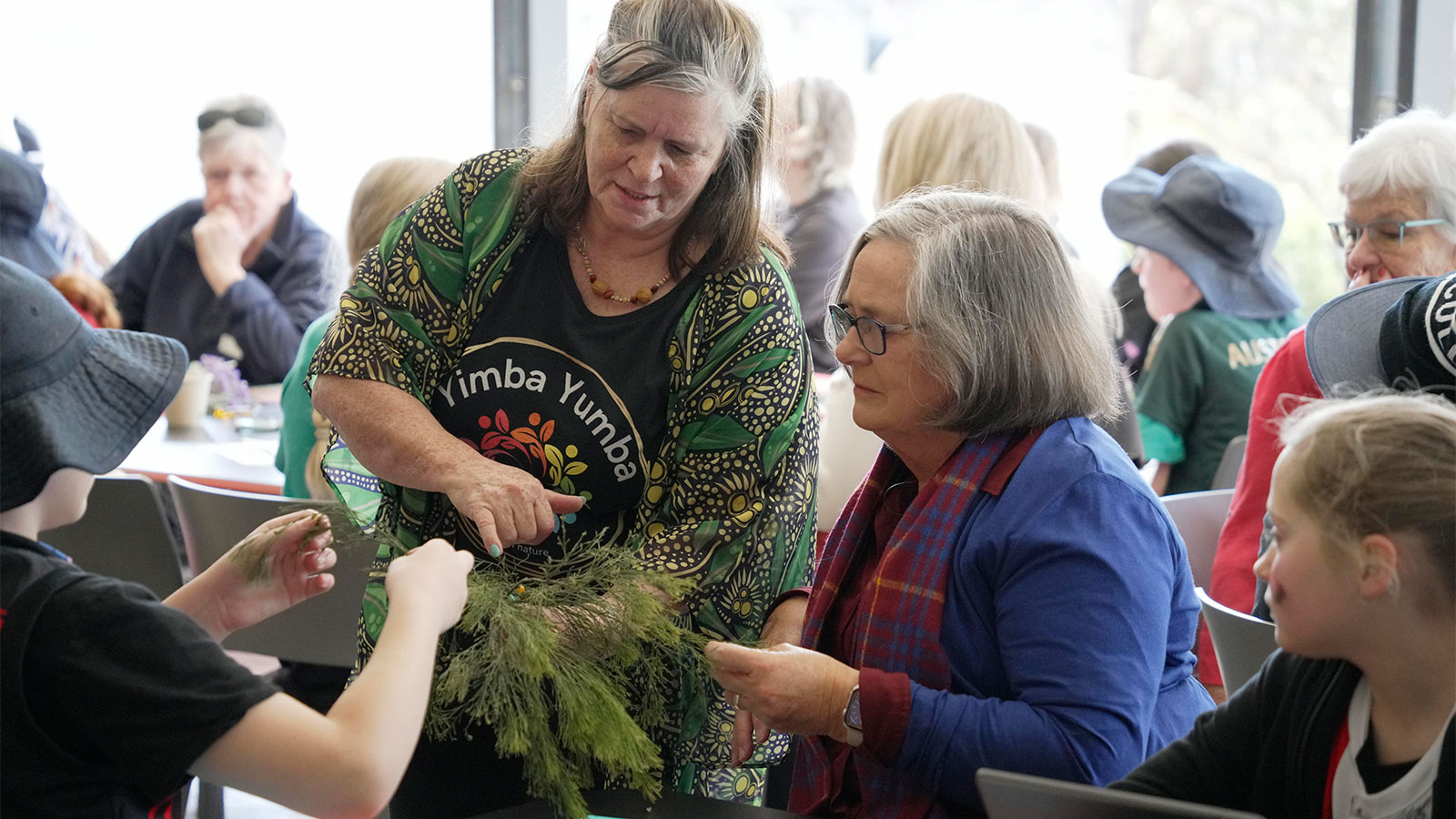
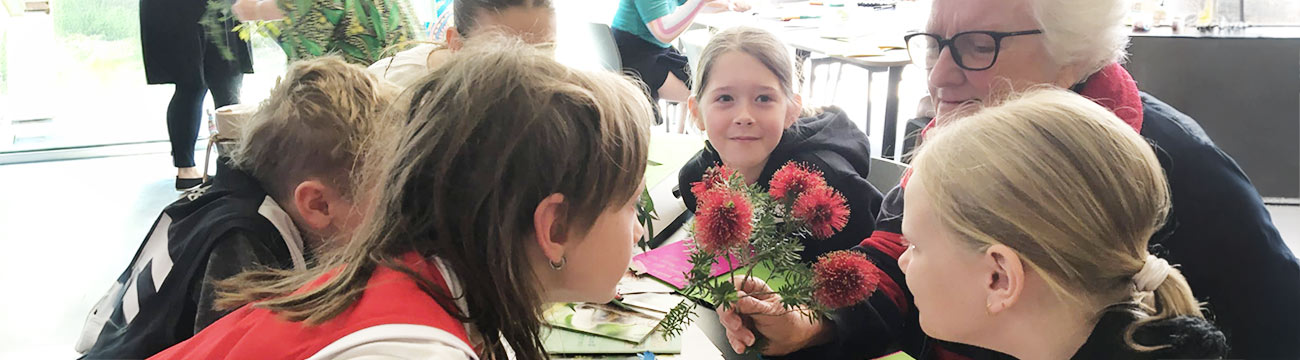
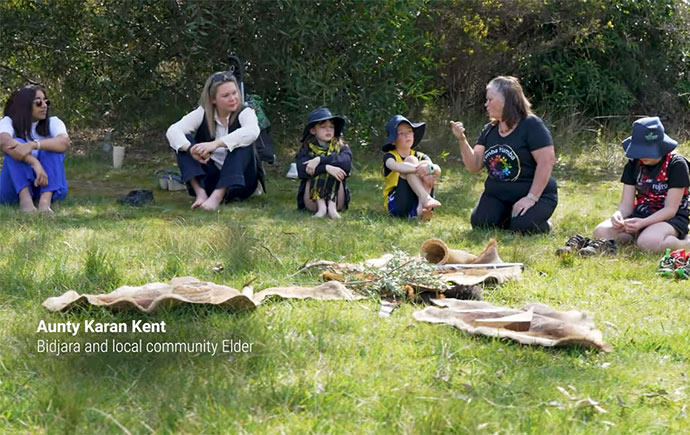
In this photo, Aunty Karan shows participants three local plants used for our Acknowledgement of Country. She says they are a really beautiful reflection of the three generations involved in the project.
Acknowledgments
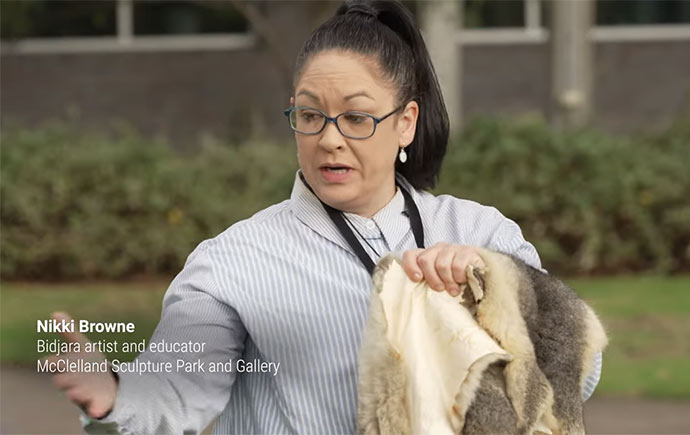
Our ‘We Are Well: Art-moving-well-being’ project celebrates and appreciates the cultural and artistic leadership of Aunty Karan Kent, Bidjara, Community Elder and Founder of Yimba Yumba; Kylie Colemane, Darug and Wiradjuri First Nations consultant, Artist, and Educator and founder of Your Green Prescription; Kursty Colemane, Darug and Wiradjuri First Nations Knowledge-holder, Artist, and Educator and Nikki Browne, Bidjara Artist and Educator, and First Nations Learning and Programs Manager, McClelland Gallery. We also acknowledge the input of Jillian West (Palawa & Bunurong) who led a Cultural Awareness Day for participating groups involved in our project. Our respects extend to the Traditional Owners of this land as we acknowledge the Aboriginal connection to the material and creative practices that have existed on these lands for thousands of years.
Project team: Geraldine Burke, Megan Adams, Laura Alfrey, Aislinn Lalor, Keith Hill, Priscilla Pettengell
References and further reading
- Conceptualising Intergenerational Lived Experience: Integrating Art–Moving–Well‐Being across Disciplines, Communities and Cultures
Adams, M., Burke, G., Browne, N., Kent, K., Colemane,K., Alfrey, L., Lalor, A., Hill, K. (2023), International Journal of Art & Design Education,10.1111/jade.12464, 42, 2, (216-229). - Learning about health through ‘intergenerational arts-led pedagogies’. Health and physical education: exploring pedagogical possibilities
Alfrey, L., Burke, G., O’Connor, J. & Hall, C. (2020), Sport, Education and Society. - Intergenerational learning: Challenging stereotypes and supporting social connection
Burke, G., Adams, M., Alfrey, L., Lalor, A., Hill, K. (2023, Dec 7). Monash Lens. - Drawing with art-well-being: intergenerational co-creation with seniors, children and the living museum
Burke, G., Alfrey, L., Hall, C., & O’Connor, J. (2021). International Journal of Art & Design Education, 40(3), 630-654. - Sina Summers & Nairm Marr Djambana Aboriginal Corporation
Kent, K. (2023). Aunty Karan Kent (Eds.). Telling: Stories of Resilience. Magabala Books - Monash Aboriginal and Torres Strait Islander Framework, 2019-2030
Monash Indigenous Engagement: