How PPSEd is redefining pharmaceutical education
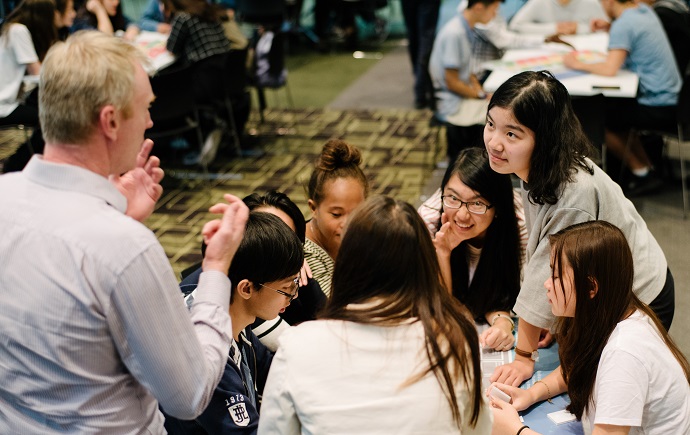
Pharmacy and Pharmaceutical Sciences Education research refocuses our teaching to meet the evolving needs of our students.
The Faculty of Pharmacy and Pharmaceutical Sciences’ vision is to create “Better graduates by design”. One way it’s actively doing that is through the research theme of Pharmacy and Pharmaceutical Sciences Education, or PPSEd.
“PPSEd refocuses our teaching to meet the evolving needs of our students,” explains Deputy Dean and Associate Dean Education of the faculty, Professor Paul White. “In doing so, it underlines our commitment to student-centric learning that emphasises practical application and immersive experiences."
What is PPSEd and why does it matter?
Elizabeth Yuriev, Associate Professor, Pharmacy and Pharmaceutical Sciences Education, says that across universities, the traditional path has been for academics to fall into teaching while focusing on their own research.
“PPSEd focuses on higher education,” she explains. “The original path for academics teaching in this field was to do an undergraduate degree and then a PhD.”
“They would then end up with a class of students and were just told, ‘teach them’” while they continued their lab-based research.”
PPSEd aims to overcome this by giving some faculty members the responsibility of researching the education of students within a particular discipline.
“For instance, I’m originally a chemist,” Elizabeth says. “So, I focus on chemistry-based education research, although I’m also interested in pharmaceutical sciences research more generally, too.”
“Others, for instance, focus on practice-based research - so they research specifically how a pharmacy student learns and engages with the education process.”
“The result is that we have insights into how pharmacy and pharmaceutical sciences students learn and retain knowledge based on each discipline, and we can teach to that.”
“Ultimately, this doesn’t just lead to better staff; it also leads to better students,” she notes.
A broader trend with a Monash flavour

Associate Professor Elizabeth Yuriev and Professor Paul White.
Elizabeth says that this approach is part of a global trend towards disciplinary-based education research, known as DBER. However, she says, Monash really is at the forefront of the movement.
“We’ve redesigned the portfolios of academics so that those interested in education itself no longer have to juggle that with their own research and teaching. Instead, DBER becomes their sole research focus. It’s still research, just not lab-based research.”
“While this isn’t unique to Monash, we are ahead of the curve.”
Paul also observes that Monash's structure for PPSEd is vastly different from most universities worldwide.
“Most health sciences schools have a setup where the science departments run everything,” he says. “The biology department runs the biology teaching, and the chemistry department runs chemistry teaching. We didn’t want to do that.”
Instead, while PPSEd offers discipline-specific research, its findings feed into the Faculty more generally, allowing academics across the board to draw on findings and use them to the best effect.
“The work of both the current Dean, Professor Arthur Christopolous, and the previous Dean, Professor Bill Charman, really shows through in the way PPSEd encourages collaboration across the Faculty,” he observes.
A student-driven approach to learning
While PPSEd may have come together as a research discipline over the past five years, Elizabeth says its origins go back over a decade.
“About 15 years ago, Monash was looking at what approaches we could take to improve student learning and experiences,” she says.
“Then, in 2012, the Faculty introduced a new role for ‘education-focused academics’. This was teaching and research with a focus on education. At the time, there were about four people in that role. For quite a few years, we were based on our themes. For instance, I was in Medicinal Chemistry.”
“Over the years, the numbers grew, and we began enrolling honours and PhD students, and we reached a critical mass where it became viable to create a new theme,” she explains.
Paul says that this evolving approach separates Monash from many other universities because it means that the needs of students have become the main driver of both what gets taught and how it gets taught.
“Often you find in universities that the drivers or decisions of which courses get taught are the interests of the staff,” he explains. “In our model, the students themselves become the focus of our efforts to teach better.”
“Their needs become the primary driver of everything we do.”
The proof of the pudding
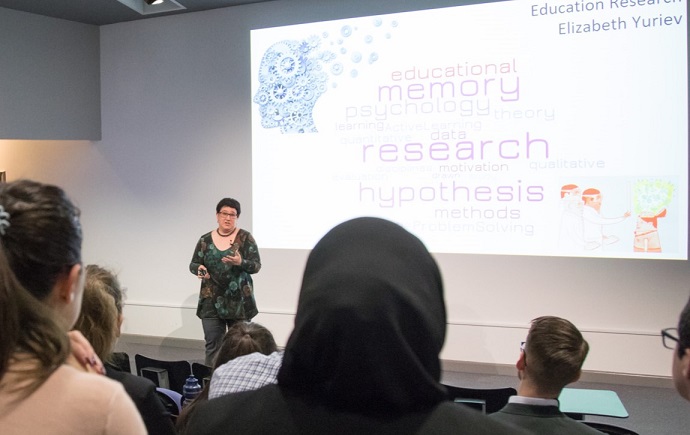
The formation of PPSEd is part of a global trend towards disciplinary-based education research, and Monash is at the forefront of the movement.
Paul says that, in recent years, Monash has become known as much for the quality of its education as for the quality of its research, and that this can be seen in developments such as MyDispense - an online pharmacy simulator that started at Monash and has been adopted by universities worldwide - as well as in changes to curriculum and an emphasis on active learning.
“These have been driven by PPSEd research,” he explains.
But, Paul says that even more important than any reputational growth has been the impact it has had on students.
“Students have much more engaging classes,” he explains. “We’ve developed a lot of craft in how to design a class so students are immediately immersed in a scenario that shows them exactly why it’s important to learn this complicated stuff we’re talking about today.”
He also says PPSEd has driven a real emphasis on ‘learning by doing’ and that this data shows this has particularly impacted the educational outcomes of students from low SES cohorts.
“If a lot is going on in your life, and you need to work hard outside of university to afford to attend, it can be much harder to stay motivated with a disengaging class and campus,” he notes.
“Data shows lower SES students perform better academically in our Faculty than in others. My view is that this is because the classes are so interesting, and the students feel a strong connection to the Faculty and their peers.”
Paul also observes that PPSEd is already leaving its mark on the profession.
“Graduate employers keep telling us that they are impressed by the ability of our recent graduates when it comes to problem solving and communication,” he says.
The important role of Monash alumni
Paul explains that while the Faculty leadership and staff may have played an important role in the success of PPSEd, the students - including alumni - do too.
“Our alumni are our connection to industry. They have been critical in telling us what our students need to be able to do. They also teach in our programs.”
“Without their input, we would be stuck in an ivory tower and producing graduates that aren’t fit for purpose.”
Meanwhile, Elizabeth encourages any alumni who haven’t had any contact with PPSEd to offer their feedback, even if that involves coming back to campus.
“I’d encourage them to come and sit in a class or a research seminar and see how we’re teaching or how our students present and to let us know what they think,” she says.
“We want to produce the best graduates possible, and our alumni can be a vital part of that.”