Meeting the challenges of our age
As 2024 draws to a close, the world looks a very different place from just a few years ago. Rapid developments in artificial intelligence (AI) have unlocked unprecedented possibilities, but also notable challenges; breakthroughs in drug discovery have saved more lives than ever, but also fuelled scepticism and misinformation; and while medicines continue to transform communities for the better, there has also been growing awareness of the impact they can have on the environment, highlighting the need for a better way forward.
It’s against this backdrop that Monash University identified three significant global challenges to inform its Impact 2030 Strategy: Climate Change, Geopolitical Security, and Thriving Communities.
The Faculty of Pharmacy and Pharmaceutical Sciences is contributing to the University’s efforts, tackling these challenges head on through its research, innovation and education - and even changing its direction where necessary.
Tackling climate health
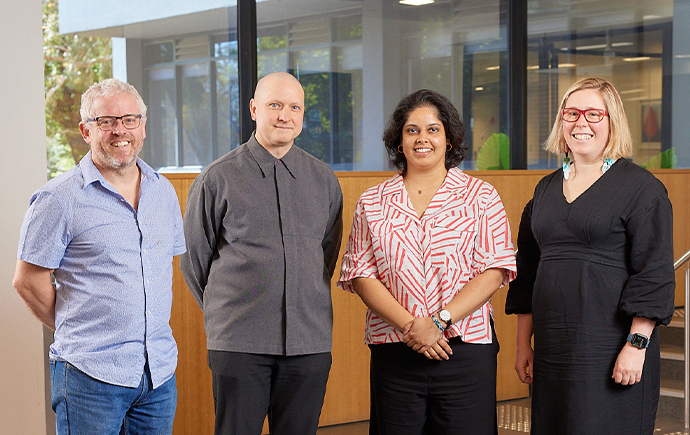
L-R: Matthew Belousoff, Dr Stefan Huth, Dr Nilushi Kuranaratne and Dr Lauren May.
When people think of sectors with a high environmental impact, their mind usually turns to the obvious polluters such as energy and resources or transport. Meanwhile, the pharmaceutical sector tends to sneak below the radar.
“By and large, pharmaceuticals is a field that helps society, which can give it something of a ‘free pass’ when it comes to the environment,” says Dr Stefan Huth, Senior Lecturer and Team Leader.
“This means people don’t tend to pay as much attention as they probably should to environmental issues directly caused by the drug discovery and manufacturing process, like residues ending up in our waterways or the environmental footprint of pharmaceutical manufacturing.”
In fact, one study found pharmaceuticals are responsible for 55 per cent more emissions per dollar of revenue than the automotive industry. Another found it was responsible for 4.5 per cent of all the world's greenhouse gas emissions.
Stefan says universities have traditionally been slow to respond to this issue: “Sustainability often plays only a marginal role in pharmaceutical science degrees,” he observes. “In many syllabuses it doesn’t get mentioned at all.”
In an effort to change that, Stefan has been working with a colleague from the Monash Sustainability Development Institute to develop approaches that will encourage pharmaceutical science students to consider sustainability when formulating decisions.
One approach that has been effective is having students prepare and perform environmentally-focused debates in front of their fellow students for assessment. In doing so, Stefan says students are forced to grapple with the complexities involved, and logically defend their positions.
“We want students to understand that sustainability in pharmaceuticals isn’t just about ticking boxes; it’s about wrestling with real trade-offs, understanding the lifecycle of medicines, and questioning how we can reduce our impact while still delivering effective treatments,” he explains.
Meanwhile, Lecturer, Experiential Development and Graduate Education, Catherine Forrester, has been working with other pharmacy educators and students to integrate sustainability into the pharmacy curriculum by linking it to existing topics. As part of this, students undertake a case study that looks at the environmental impact of asthma medicines and the health impacts of climate change. It then explores how optimising an individual’s treatment can be a “win-win-win” for them, the healthcare system and the planet.
Pharmacy students have also embraced extra-curricular opportunities to join an international virtual exchange program focused on planetary health, and to co-design new learning activities for their peers. Catherine says these activities allow students to develop their skills in leadership and working with other healthcare professions, and these topics extend their ability to deal with “shades of grey”.
“Traditionally, the way science subjects are taught is there is a right and wrong answer, and science students tend to be very comfortable with this approach,” she notes. “Sustainability and climate change are topics that often don’t have clear right or wrong answers, which can be challenging for science students accustomed to certainty.”
“This kind of thinking will be essential for healthcare professionals navigating the uncertain impacts of climate change and environmental challenges.”
Moving towards green pharmaceuticals

While educators have a role to play in driving sustainability, Monash recognises that scientific research is also critical. After all, while rigorous research and testing goes into drug development, comparatively little has traditionally gone into what will happen after the drug has been used.
However, recent research has found the drugs we use could be impacting the environment in ways that we weren’t previously aware of.
As highlighted in a recent commentary, one global study detected medicines in environmental samples across all continents, including Antarctica. Medicines have also been detected in groundwater used for drinking.
Environmental pharmaceutical pollution can have severe consequences for wildlife. Scientists are increasingly detecting developmental, physiological, morphological and behavioural changes in animals, which they attribute to pharmaceutical contaminants. For instance, male fish exposed to high levels of estrogen, have been shown to become infertile - potentially causing population declines and even extinction - that will have significant flow-on effects through the food chain.
Monash Senior Lecturer and Group Leader, Dr Lauren May, is attempting to tackle this issue by undertaking research on greener drug design, including developing biodegradable medicines that don’t end up in ecosystems.
“The processes that break drugs down within the body can be very different from those outside of it,” Lauren says. “While drug discovery programs spend a lot of effort optimising the former, typically not enough thought has gone into the latter.”
Lauren says the drug discovery and development expertise at the Monash Institute of Pharmaceutical Sciences (MIPS) allows for significant advances in this space.
“MIPS is intentionally structured to support and advance the transition of new medicines through the drug discovery pipeline, providing a unique opportunity for us to lead in the development of safe and eco-friendly drugs” Lauren notes.
But it isn’t just through fundamental science that we can make a difference. Lauren says drug manufacturers, researchers and developers can help usher in a new era of ‘green’ medicine. Packaging, distribution and sales methods can all play a role in reducing the impact drugs can have on the natural world.
“Even public awareness campaigns around returning unused medicines, and making it easier to do so, can have a massive beneficial effect by reducing the impact drugs are having on the environment.”
Lauren also highlights the Centre of Medicine Use and Safety’s (CMUS) research into deprescribing unnecessary, sometimes harmful medicines - which also have an environmental impact.
AI and geopolitical instability
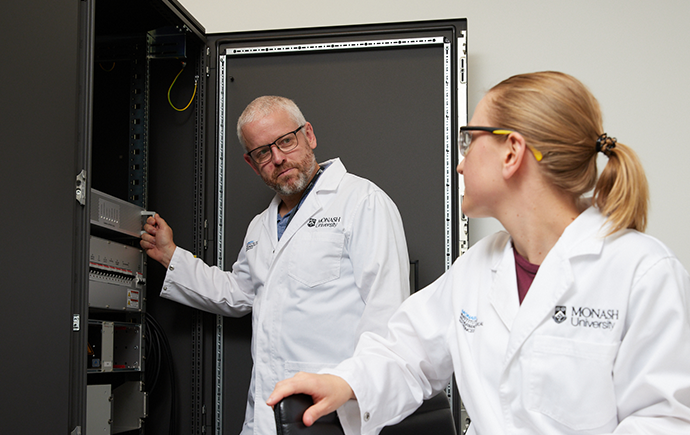
Dr Matthew Belousoff and Dr Sarah Piper.
While climate change may represent an existential threat to the planet, it isn’t the only one. Misinformation and social unrest have defined the post-pandemic era, while the sudden explosion of AI has seen government and sectors scrambling to define the “rules of play.”
A combination of advances across areas such as machine learning algorithms, availability of large datasets, and investment from industry has led to unprecedented advancement in the field of AI. But, while there's still work to do, particularly when it comes to regulation, AI has the power to revolutionise the field of medicines.
MIPS AI and Data Science lead, Matthew Belousoff, says AI’s potential to transform drug discovery leaves all past advances in the shade.
“Most people’s experience of AI to date has been to play around with a large language model (LLM) like ChatGPT, but this is just a tiny subset of AI,” he explains. “Its potential in drug discovery is like nothing we have seen.”
“We’re sitting at the start of a revolution that will be nothing short of the industrial revolution in terms of its scale and impact. My view is that AI will change the world even more.”
Matthew says research once measured in months, such as analysing terabytes of data from electron microscopes, can now be measured in hours. This is allowing scientists to develop, design and experiment with research in a way that was once unheard of - improving the quality and efficiency of drug discovery exponentially.
“AI enables researchers to contextualise their experiments with historical data, predict outcomes, and identify patterns that would be impossible with traditional methods,” he says.
Already, Matthew’s team has been using AI extensively in structural biology research, especially for analysing protein shapes.
“AI allows us to move from static snapshots of proteins to dynamic 'movies,' revealing how drugs interact with their targets in real time,” he says.
“You can tweak one element - maybe a specific protein or molecular interaction - and almost instantly see how it behaves or binds. Then, you tweak another and compare. What used to take weeks of trial and error can now be done in a matter of hours.”
Educating for an AI-based future
Standing in the way of AI’s potential, however, is what Matthew describes as “poor computer literacy.” Put simply, many students, researchers and academics lack the requisite skill level to tap into the technology’s potential.
To overcome this, Matthew is running AI-focused workshops and bootcamps, in which he shows people how to use AI more effectively.
“So far, I have had more than 90 Monash staff attend,” he explains. “Once they understand the basics, they can start asking the kind of research questions that matter, and use AI to answer them.”
Faculty staff are also being educated on how to integrate AI into the classroom in a way that promotes understanding while recognising its limitations, says Nilushi Kuranaratne, Chair of the Faculty's Digital Teaching and Learning for Education (DTLEd) Committee.
“Twelve months ago, educators and students viewed AI, particularly generative AI, as something intimidating and even negative,” she explains. “Students tended to see it as the ‘easy way out’, while teachers saw it as a vehicle for plagiarism.”
“Over time, we have worked to shift this perception. Now the emphasis is on figuring out how it can be used as an education tool.”
Nilushi says several members of the Faculty’s teaching staff have been building their own, subject-specific chatbots. These are used to help educators identify and support students on an individual level by answering queries, providing personalised feedback and reinforcing their understanding of course materials.
“Upskilling educators in AI technologies ensures students gain access to innovative and impactful learning experiences,” Nilushi says. “Educators can integrate these tools to foster creativity, critical thinking and problem-solving skills - key attributes that will prepare students for the challenges of a rapidly evolving workforce.”
A commitment to equity
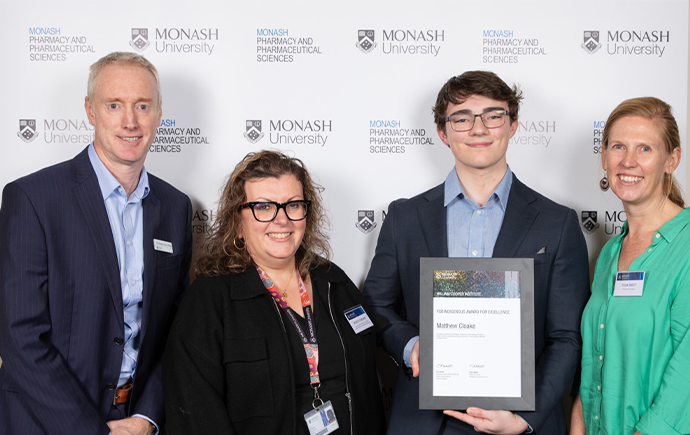
Matt Cloake awarded the FBG Indigenous Award for Excellence.
The third pillar of Monash’s Impact 2030 is 'Thriving Communities' - an ambition that has been one of the Faculty’s key foci since its inception.
Monash recognises that thriving communities require equitable access to healthcare and education; it also recognises this often remains a significant hurdle for many rural and Indigenous Australians.
For Indigenous second-year student Matt Cloake, these challenges are personal. Growing up in both Sydney and rural areas across NSW, Matt witnessed first-hand the disparities in healthcare access between urban and remote communities. This - along with a love of science - are what encouraged him to study pharmacy in the first place.
“Living in rural towns taught me how vital pharmacists are in sustaining community health in remote areas,” Matt says. “They’re often the first point of contact for primary care services. That means they interact with patients regularly and have a comprehensive understanding of the unique challenges of rural health.”
Matt also highlights the systemic barriers that prevent Indigenous Australians from pursuing tertiary education, such as the lack of role models within the healthcare sector, financial burdens on students, and the isolation of leaving their communities to study.
Matt, who was the 2023 recipient of the FGB Indigenous Award for Excellence, says Monash stands out for its efforts to break this cycle of inequity.
“Monash’s academic, financial, and cultural support has been phenomenal. It’s the reason I could pursue my studies and stay connected to my heritage and identity even while living far from home,” he says.
Matt’s story underscores the Faculty’s broader commitment to creating a more equitable healthcare landscape. By supporting Indigenous students and addressing systemic barriers, the Faculty is helping to ensure Australia's healthcare workforce reflects the diversity of its population.
Moving with the times
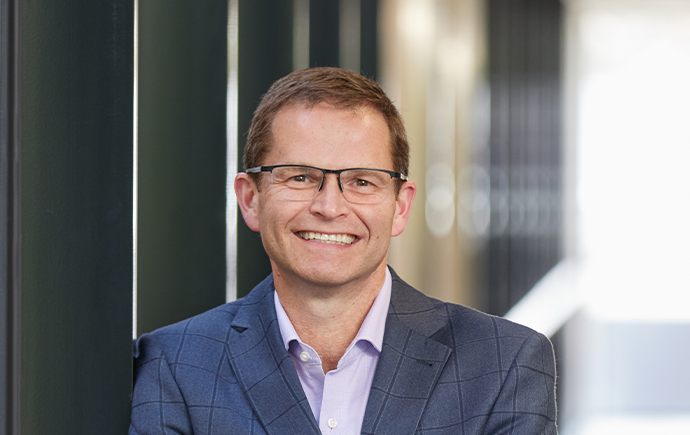
Professor Chris Porter.
Professor Chris Porter, Director of MIPS, says as the world attempts to meet these challenges, educational institutions will have to continually prove the value they’re delivering.
“Increasingly, the focus won’t be on traditional academic outputs such as papers and grants, but on how research can make a positive change in people’s lives via commercialisation and translational research.”
As a result, MIPS recently released a new strategic plan that complements the University's broader initiatives.
“Our new strategic plan focuses on four pillars: AI and data science, addressing climate health challenges, enhancing translation and commercialisation, and developing a more flexible workforce with industry, clinical, and business experience,” Chris explains.
Chris points to 'MedChem Australia' as an example of the type of initiative that will help ensure the school remains at the forefront of how pharmaceutical science advances society. This national initiative is headquartered at MIPS, in partnership with the WEHI and the University of Sydney, and provides medicinal chemistry support for drug discovery programs across the country.”
“It’s a $15 million investment over five years from the Medical Research Future Fund (MRFF), Therapeutic Innovation Australia (TIA) and the three major academic partners, that will help us translate the fundamental biology strengths we have in Australia into potential drug candidates.”
He also believes that academic/industry collaborations, such as MIPS’s partnership with Moderna to advance homegrown mRNA medicines are key to surviving and thriving in a changing global landscape.
Never standing still
Finally, Deputy Dean, Professor Paul White, explains that, while the past few years have been incredible ones for the Faculty and University - including a string of commercialisation success , record growth in student numbers, and consistently ranking in the top three in the world in Pharmacy and Pharmacology - it is how it tackles these issues that will define the next chapter in its life.
“We’re not just aware of these challenges, we’re actively at the forefront of responding to them and taking the opportunities that are there,” Paul says.
“We’re not resting on our laurels; we’re working hard on these big problems and big opportunities.”