Teaching beyond the classroom
Employability initiatives in pharmaceutical sciences
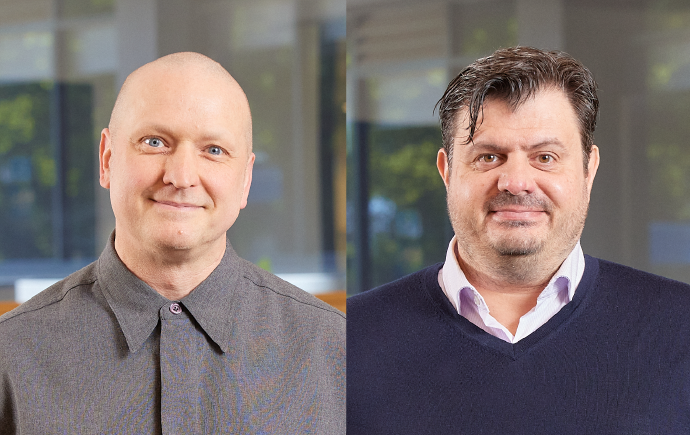
L-R: Dr Stefan Huth and Dr Joaquin (Ximo) Sanchis Martinez.
The Bachelor and Masters of Pharmaceutical Sciences (BPharmSci /MPharmSci) coursework programs include professional placements and employability initiatives. Both are part of Monash’s commitment to student employment outcomes.
Work placements are an integral part of Monash’s BPharmSci and MPharmSci.
Lecturers in pharmaceutical sciences education, Dr Stefan Huth and Dr Joaquin (Ximo) Sanchis Martinez work together to arrange industry placements, with Stefan leading placements for the MPharmSci and Ximo for the BPharmSci.
Placements change mindsets
Dr Joaquin (Ximo) Sanchis Martinez says that each year, around 90 bachelors students complete their four-week placements in the winter break between semesters or during the first four weeks of semester two.
“Each placement is different because every company is different,” Ximo says. “Some have a specific project in mind, or several small projects, while others incorporate the student into general company life.”
“Students may be supervised by one employee or experience various rotations across the company. Some offer hybrid work with a mix of online tasks like literature reviews, while many are face-to-face.”
“The student’s job is to contribute to the company by applying their skills and gaining confidence in their professional value,” Ximo explains. “Even if a student doesn’t want to pursue that industry, or role, it’s typically a valuable learning experience”.
Ximo says one of the many benefits is the transition he sees his students undergo.
“Placements provide real responsibility, which changes their mindset,” he explains. “They really grow. At Monash, they are students, doing labs and pracs because they have to. But if they’re working in Quality Control and the analysis is wrong, that has implications - they suddenly have a responsibility to the company.”
Students going on placement will have undertaken a skills coaching subject, where they discuss soft skills like communications and time management. Ximo says they quickly realise how important these are, and the benefits of networking, when they enter a company.
“Some organisations are small, with just a handful of employees, while others are very large, so students have a wide range of different experiences,” Ximo says. “I visit the companies who offer placements and I’ve seen that they all truly care about the students and want to contribute”.
“Our host organisations are usually very good at involving them in professional meetings or real life scenarios and that means they really mature,” he explains.
Ximo says that placements prepare students for applying for a job, because they gain a little bit more idea about what they’re looking for.
“Sometimes it breaks their ideal,” Ximo says. “But it’s a holistic experience - the real world atmosphere is what we cannot provide within the Faculty”.
Looking to the future, Ximo hopes the placement program can be expanded interstate or internationally, if logistical challenges can be overcome.
Supporting companies to take on students
Dr Stefan Huth points out that, as applied degrees, the work placement in industry or research is in many ways the culmination of both pharmaceutical sciences courses.
“These degrees lead to a professional or a research career,” Stefan explains. “So the placement is the halfway step between their studies and going out to do something with it”.
“It offers a different level of immersion and challenge and we want students to experience that and take it with them to their career,” Stefan says. “We want them to reflect on what they have learned at uni, and experience a professional environment, but it’s also about considering career choices and direction.”
Students undertake a formal reflection as part of their assessment for the placement, as well as a presentation. This also acts as a framework to guide them through the placement.
“Some students may not have been high performing academically but blossom in the workforce where they do work with real meaning,” Stefan says.
Like Ximo, Stefan highlights the fact that every student - and every placement - is different.
“The work placement may be the first significant professional experience they have had,” Stefan says. “But Masters students may have worked in a different field, and want a career change or step up, and for international students they may not have worked in Australia, so for them, the ten-week placement can also be an entry point into a different type of work.”
Stefan says that while a placement provides students with the opportunity to apply their technical skills, his focus is on the soft skills.
“We talk a lot about these transferable skills, like communication and other professional skills, but it really hits home during the placement that without them, their science skills are not going anywhere,” Stefan says.
With 120 students now enrolled in the masters, Stefan says the biggest challenge is keeping up with the number of placements - so he is always on the lookout for new partners.
To this end, Stefan believes there can be many benefits for companies that offer students a work placement. He also says the faculty understands the obstacles and challenges and works flexibly with organisations to help overcome them.
“Some companies have not had a student before but, in partnership with the Industry Experience Team, we support them in that journey and try to work with the requirements of the company and the students,” he explains. “We find that companies are happy to train the students, as long as the students are willing to learn.”
“Some employers are keen to be involved in developing their future workforce, others are looking to recruit and can test out students through the placement framework. Some companies realise the benefits of being supported in your career and want to give back, or use it as a leadership and training opportunity for their junior staff to supervise students. And, many companies find the work students do is genuinely useful.”
Students often take placements in pharmaceutical and manufacturing, household products, food and cosmetics.
“Clinical trials is a growing sector in Australia, and this year we had some students work with a logistics company who ship pharmaceuticals, and biotech companies,” he explains. “We’ve also had students end up in accounting and consulting so we are continuing to explore new possibilities.”
Alumni who can host a student or have work or projects that interns can add value to, are invited to find out more here or contact our dedicated internship team: pharmsci.placements@monash.edu.
How Livia found her sweet spot as an R&D tax consultant
View


Meet Bella Kaur: Team Leader for the PharmSci Internship Program
View
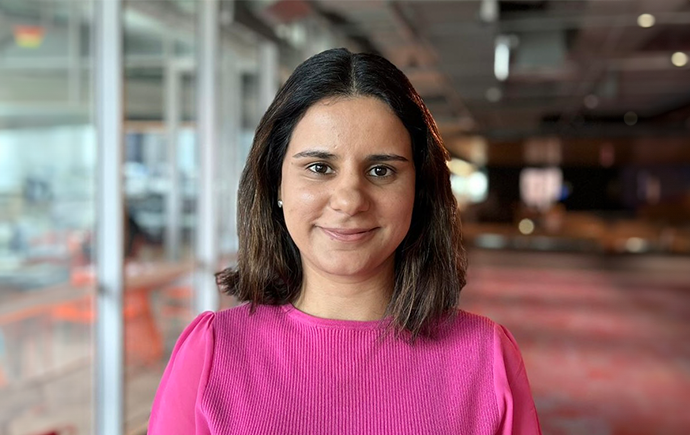
Dr Laurence Orlando: Winner of the Employability Award in the Australian Financial Review’s Higher Education Awards
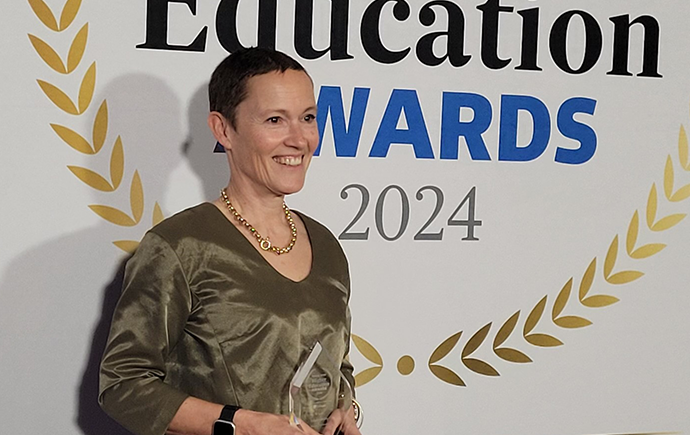
Dr Laurence Orlando.
In 2024, Dr Laurence Orlando, Senior Lecturer in Pharmaceutics, won the Employability Award in the Australian Financial Review’s Higher Education Awards for her outstanding work on the Pharmaceutical Sciences Employability Program. This program enhances student employability through blending innovative education experiences and industry-informed events.
Laurence’s passion for employability stems from her own experience. She began her career in the pharmaceutical industry in her home country, France.
“I spent a decade with a French pharmaceutical company, before working in New Zealand for a couple of years, then moved to Melbourne,” Laurence explains.
While recruiting for a pharma startup, Laurence saw a gap in the knowledge and skills that industry required of graduates. She approached the Monash Bachelor of Pharmaceutical Sciences course director with an offer to run some industry sessions. Eventually, Laurence joined the faculty as a lecturer.
She has since spent the past 17 years at Monash and, as the Bachelor of Pharmaceutical Science course has grown in popularity, so has Laurence’s employability program.
“Seventeen years ago we had 14 students in a cohort, now we have 200,” she explains. “I'm always networking with former and current students to exchange ideas and simplify the transition from study to workplace”.
While Laurence’s own background is in the pharmaceutical industry, there is increasingly strong demand from allied industries for students to work in product development across fields including cosmetics, paints, food and agrochemicals.
Industry placements are just one part of the broader employability program.
“It all starts each November with Employability Week,” Laurence explains. “This year we had 275 students attend”.
The activities kick off on a Monday with students learning how to compile a LinkedIn profile and a pitch.
“We also have a bit of fun, with a fashion show on a catwalk to explain how to dress well for an interview,” Laurence says.
From Tuesday to Thursday students visit multiple different industry partners. The week concludes with students practising their pitch in six “speed dating” style job interviews, before a networking event sees students mix with industry partners and alumni.
“Students gain real skills,” Laurence says. “It motivates them, because they find out what they are working towards, and how future roles relate to the subjects and courses”.
“We want the students to understand the different roles, placements and industries, because students are more likely to get hired if they are interested in the work,” she says. “We introduced interviews because good matching can also lead to employment.”
“The employability sessions prepare them for the little things that can derail them - small talk, first impressions, how to write an email, integrating into a team, selling themselves, and even practising a handshake.”
Laurence describes the steps involved in the employability program as a process of “learning to invent and build their professional self”.
She also prioritised real world learning and skills that increase employability into her teaching.
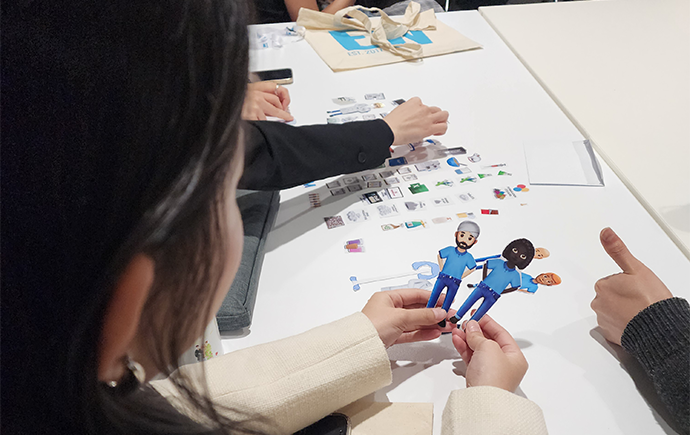
“For a unit on formulation I invite industry partners to conduct workshops on how to develop cosmetic products and the students do labs run by the suppliers of ingredients,” Laurence explains. “The assessment task is to build a cosmetic company and create the product. The final exam is the Monash cosmetics expo, and all the industry partners attend. On the day of the expo, three students were offered a job”.
Laurence sees the AFR award as validation of the importance of connecting people, including alumni.
“Employability grew organically because there was a gap - it was needed and I was just the catalyst,” Laurence says. ”It has been well received by industry partners and a highlight for me is seeing students happy in a job, I follow their careers with interest”.
“Professional lives are important,” Laurence says. “I love that I have a direct impact on changing them”.
“We can’t do any of this without industry engagement,” she explains. “It’s awesome when our students get hired, and they come back as alumni to employability week, or the careers fair, and they’re on the other side of the table”.