The right to prescribe: A turning point for Australian pharmacy and patient care
Monash’s new Graduate Certificate of Pharmacist Prescribing to equip pharmacists for frontline clinical responsibilities
Australia’s healthcare system is in the middle of one of the most significant transitions in recent memory: one driven not by new technologies or medical breakthroughs but by a more fundamental question:
“How do we empower our healthcare workforce to better offer patients access to timely and safe frontline care?”
Filling in the gaps
In 2025, the growing realities of an ageing population, rising rates of chronic disease, persistent health inequities and a widening metropolitan/regional divide have exposed pressure points in Australia’s healthcare system.
 While general practitioners remain fundamental to Australia’s healthcare frontline, there are too few doctors in regional and remote areas. Meanwhile, wait times for common, uncomplicated conditions are often too long, even in metropolitan areas. And widespread health events—like COVID-19—can quickly overwhelm primary care.
Against this backdrop, it makes perfect sense that pharmacists—already among the most accessible and trusted health professionals in Australia—step into a more active clinical role, including prescribing medicines for certain conditions.
“The pharmacy profession is at an inflection point,” says Professor Arthur Christopoulos, Dean of the Faculty of Pharmacy and Pharmaceutical Science. “And, as health needs change, it’s now widely acknowledged that pharmacists have an increasingly important role in how Australians access timely and safe care.”
How the pandemic brought the profession to the forefront
Arthur says that, if there was a single moment that shifted public perception about what pharmacists can and should do, it was COVID-19.
“During the height of the pandemic pharmacists often became the most visible and accessible front line health professionals for many Australians—especially as they were given authority to administer the COVID-19 vaccine,” he explains.
The numbers support this view, with Pharmacy Guild of Australia data showing that, during the height of the pandemic, the nation’s 6,000 community pharmacies administered more than 12 million vaccinations.
“Pharmacies stayed open late, rapidly adopted e-scripts and mobilised additional staff to keep the system going,” Arthur says. “This provided important additional capacity and flexibility to a health care system that otherwise might have been under severe strain.”
Associate Professor Steven Walker agrees, noting that, in the process, pharmacists’ skills, knowledge and expertise were brought into the spotlight in a way they never had previously been. This proved to the world what anyone who has studied pharmacy already knew: that pharmacists were more than just medicine dispensers, they were expert frontline clinicians capable of delivering critical care.
 “Since the pandemic, we’ve seen a much more overt recognition from the public about all the things pharmacists can do,” says Steven Walker. “The high regard that pharmacists are now held in is reflected in our enrolment numbers, and the sheer volume of high school graduates who want to study pharmacy."
“Community pharmacies are really now seen as a primary care hub where you don’t just fill your prescriptions, but where you get advice on broader preventative health and vaccinations.”
“We're also really the first line of triage and are very well trained in asking ‘Is this something I can manage, something to see a GP about or something that really needs to be referred to the emergency department?'.”
“The public debate has shifted from ‘Should pharmacists be doing more?’ to, ‘What else can pharmacists do to support patient care?’.”
Blazing trails—or just playing catch up?
Given pharmacists had already proved they possessed relevant scientific and therapeutic training to do more in healthcare, the next logical step was to allow pharmacist prescribing for common conditions.
This is something that has already happened in many jurisdictions around the world, even prior to the pandemic.
In the United Kingdom, for instance, Pharmacist Independent Prescribers have been embedded in the healthcare system for more than a decade. In fact, their role is so well established that prescribing is a compulsory part of undergraduate degrees; from 2026, all newly graduated pharmacists will be prepared to be prescribers.
New Zealand also introduced pharmacist prescribers more than 10 years ago, with excellent safety and patient-satisfaction outcomes. And, across Canada, prescribing has been expanded province-by-province, improving access to care and reducing pressure on emergency departments.
These international models show that pharmacist prescribing can be safe, effective and deeply integrated into primary care. But Australia has been slower to catch up.
Here in Victoria, pharmacist prescribing was first made possible under the Community Pharmacist Statewide Pilot, which tested an expanded role for community pharmacists. Running from 27 October 2023 to 30 July 2025, the pilot allowed trained community pharmacists to provide prescription-only medicines and vaccines including:
- Resupplying oral contraceptive pills without a prescription
- Treating uncomplicated urinary tract infections (UTIs)
- Treating adults for herpes zoster (shingles) and mild plaque psoriasis flare-ups, and
- Administering vaccinations for hepatitis A, hepatitis B, poliomyelitis and typhoid.

In the first 12 months of the program, Victoria’s pharmacists provided more than 23,000 services without a single serious reported safety concern.
As a result, from 25 November 2025, the program became formalised as Chemist Care Now—a scheme that allows trained community pharmacists to continue carrying out these same services.
In parallel with this clinical expansion, the Victorian Government also moved to formally support the education pipeline behind pharmacist prescribing. The announcement formally endorsed advanced prescribing education as a critical workforce priority for the state’s future health system, providing confidence that pharmacist prescribing is no longer a short-term experiment, but a permanent part of Victoria’s primary care landscape.
Which is where Monash comes in…
The Graduate Certificate in Pharmacist Prescribing
On 12 November 2025, Monash’s Graduate Certificate in Pharmacist Prescribing became the first university program in Victoria to be accredited (with conditions) by the Australian Pharmacy Council.
However, the Faculty had been working on the program well before Chemist Care Now became reality. Steven Walker says his team spent more than a year redesigning existing Experiential Development in Graduate Education (EDGE) programs—which aim to upskill practising pharmacy professionals—into a formal prescribing curriculum, based on what would best serve the community.
“In designing the course we started with the question, ‘what does a safe, competent pharmacist prescriber need to be able to do on day one?’ And then we built the program backwards from that,” Steven explains.
In analysing this, Steven says that his team engaged with different groups and sought information from various sources. These included domestic and international prescribing experts, practising pharmacy, medical, nursing and allied health clinicians, and global models such as the UK’s independent prescribing framework.
This led them to develop a curriculum that emphasises real-world clinical reasoning and scenario-based decision-making. A core component of the course involves an Aphra-registered provider assessing prescribing competency within a work-integrated learning setting.
“Competence in prescribing isn’t just about knowing the therapeutics,” Steven says. “It’s about showing you can make safe decisions under real clinical pressure in collaboration with the broader healthcare team.”
“That’s why our program focuses so heavily on supervised practice, feedback and interprofessional training.”
It’s a combination that obviously speaks directly to the profession, with the course receiving more than 100 applications on the first day they were open.
 Pharmacists driving demand
Steven says this strong demand comes not just as a result of regulatory requirements, but pharmacists’ own quest for knowledge and desire to better utilise their skills to serve the community.
“Pharmacists want to contribute at the top of their scope and they have been asking for more training in prescribing,” Steven explains. “Many feel that their contribution to patient care went far beyond a role defined primarily by supply and dispensing.”
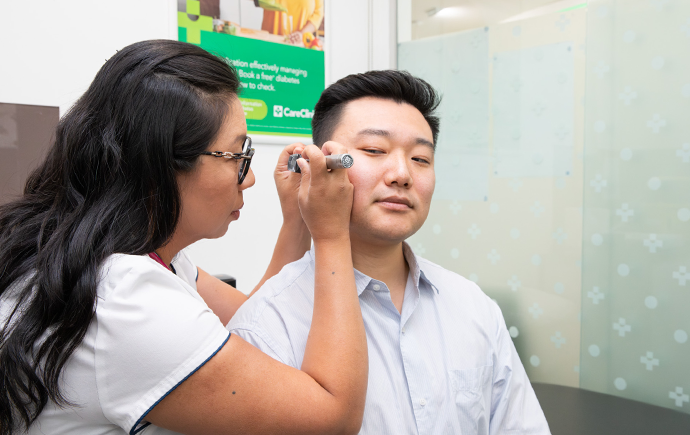
“We’re already assessing symptoms, identifying red flags and deciding if something could be managed in the pharmacy, needs a GP or emergency care. Our course empowers pharmacists with physical examination skills to make more informed triage decisions and safe person-centred prescribing decisions.”
How pharmacist prescribing benefits the community
For patients, pharmacist prescribing will change how healthcare looks on the ground.
In many suburbs and regional towns, the most immediate impact will be improved access to care. Instead of potentially waiting days for an appointment to treat something as routine as a UTI, resupply the contraceptive pill or manage a mild shingles case, people will be able to walk into their local pharmacy and receive timely, evidence-based care.
That responsiveness, Steven Walker says, “isn’t just a convenience: for many people, it’s the difference between early treatment and a condition getting worse”.
Steven says the system benefits too. When pharmacists manage straightforward, low-risk conditions, GPs can direct their time to patients who genuinely require medical expertise: complex chronic disease management, diagnostic work-ups, acute presentations and vulnerable cohorts.
The impact of the changes will be most significant in regional and rural Australia. In towns where GP shortages are longstanding and sometimes worsening, community pharmacies often serve as the only healthcare option. Giving pharmacists the authority to prescribe within a clear scope provides residents with consistent, reliable access to treatment without the burden of long travel or unpredictable wait times.
Steven Walker says it also improves equity. As he puts it: “Pharmacist prescribing isn’t just about expanding scope. It’s about removing barriers that stop people getting the care they need.”
Then there’s the human layer: the continuity of relationships pharmacists build with their communities. Many patients see the same pharmacist year after year: someone who knows their medications, their family, their health patterns. Prescribing strengthens this existing relationship, allowing for more holistic, consistent care.
 For Grace Chong, a prescribing pharmacist who owns a community pharmacy in Queensland—where pharmacist prescribing is more entrenched—these experiences play out every day.
“In regional communities, people will do almost anything to avoid sitting in an emergency department for 12 or 14 hours,” she says. “If we can safely assess them, treat them early or direct them to the right care pathway straight away, it saves time, stress and, in many cases, deterioration.”
Grace says that even when a prescription isn’t required, for many patients, the simple act of formal assessment—examination, documentation and referral—has been transformative.
“Sometimes I examine someone properly and write a structured referral letter for their GP,” she says. “But that alone is incredibly reassuring for patients. They feel heard, supported and taken seriously.”
A future shaped by collaboration
Steven is clear, however, that any increase in the role of pharmacists should be complementary to, rather than a replacement for, the role of general practitioners.
“Pharmacists aren’t here to take over what GPs do,” he says. “We’re here to handle what we can safely manage, to fill in the gaps and take the load off them for tasks they don’t need to be involved in, and to refer everything else. That’s how you create a stronger system.”
That stronger system will be one where common conditions are treated quickly, complex cases are prioritised, regional communities stop falling through the cracks and patients spend less time navigating bottlenecks.
“As prescribing expands, it will be pharmacists—embedded within the community across the country—who help knit that system together,” he says.
For Professor Arthur Christopoulos, it’s this community presence that is exactly why the expansion of pharmacist prescribing matters.
“Pharmacists are among the most accessible and trusted health professionals in Australia,” he says. “They sit at the intersection of science, medicine and the everyday lives of patients. As pressure on the health system grows, their role in supporting safe, evidence-based care in the community becomes even more critical.”
Arthur also says that he sees prescribing not as an endpoint, but as part of a broader evolution in how care is delivered.
“This is about using the full capability of the healthcare workforce,” Arthur says. “If we want a more resilient, equitable health system, then pharmacists must be supported to practise to the top of their training, with rigorous education, strong governance and clear collaboration across the professions.”
At Monash, that philosophy runs from classroom to clinic. And, as the first cohorts of Monash-trained pharmacist prescribers move into practice, it will be felt in the everyday interactions between our graduates and the communities they serve.

Meet a prescribing pharmacist: Grace Chong (BPharm (Hon) (Monash); BAsc (RMIT))
Grace Chong is a Monash Bachelor of Pharmacy (Honours) graduate who now owns community pharmacies in both Queensland and Victoria. She has already seen the impact of pharmacist prescribing firsthand through Queensland’s prescribing model.
In her regional Queensland pharmacy, Grace regularly manages acute presentations that would otherwise require long hospital waits or delayed GP appointments. She says that common patients include children with ear infections, patients with skin infections and time-poor adults who don’t always have the opportunity to wait for a GP.
 “They’ve loved it,” Grace says of her community’s response to pharmacist prescribing. “The people who benefit most are often those who don’t have a regular GP or who haven’t had proper medical follow-up for years.”
“Being able to assess them properly and either treat them or refer them with confidence has been incredibly powerful and helpful to the local community.”
In practice, Grace estimates that pharmacists are able to manage around 80 per cent of acute presentations within their scope safely, with the remaining cases escalated through formal referral pathways.
She notes that this has also transformed collaboration with doctors and hospitals.
“At first there was a mix of curiosity and scepticism from some GPs,” she explains. “But once they saw the quality of our assessments and referrals, that trust grew very quickly. Hospitals have actually welcomed it because most of the triage work is already done when we refer.”
For Victorian pharmacists looking to add prescribing to their capabilities, Grace warns that passing exams isn’t a formality, but means returning to “full study mode” in a way most won’t have experienced since university. She also says that the shift into a prescribing role requires a genuine change in mindset and practice.
“This isn’t just a paper exercise,” she says. “You’re taking a full history, you’re examining patients, you’re making clinical decisions and you’re accountable for those decisions.”
“Pharmacists need to be prepared to study properly, practise hands-on skills and be comfortable stepping into that responsibility.”
“You do have to get used to physically examining patients: checking ears, looking at skin, palpating and asking deeper clinical questions,” she says. “But that’s exactly why the training matters. Once you’re properly trained, that responsibility becomes empowering rather than intimidating.”
For Grace, that readiness is what ultimately protects both patients and the profession.
“If we want prescribing to be trusted and sustainable, pharmacists have to take the education seriously and practise to a very high standard,” she says. “That’s what builds confidence for patients, for doctors and for ourselves.”