Putting research into perspective: Consumer engagement at MIPS
In early 2023 the Medical Research Future Fund (MRFF) established principles for consumer involvement in the research that it supports. Since then it has updated its grant application guidelines to mandate consumer engagement, stating “the MRFF encourages researchers to involve consumers at all stages of their proposed research, including its prioritisation, design, conduct, the dissemination of results (including to the community), and its translation and evaluation.”
Grants from the MRFF are distributed by governing bodies such as business.gov.au and the National Health and Medical Research Council (NHMRC), which has been encouraging consumer engagement across funded projects in recent years. Loosely defined, consumers are ‘end-users’ of the ‘products’ of medical research; typically people living with diseases of interest, but also anyone using or impacted by the product including patients, carers, professionals, and the public. As the ultimate beneficiaries of research, their lived experiences bring critical insights when considering patient needs, safety and values.
Coming from an ongoing federal funding body, this mandate reflects the importance of consumers to national research interests. Since its establishment in 2015, the MRFF has amassed a total of $24.83 billion. The fund operates in dialogue with multiple advisory bodies, such as the independent Australian Medical Research Advisory Board (AMRAB); which identifies spending priorities, and the Australian parliament; where legislation determines final outcomes. By funding research in alignment with national priorities, the MRFF enables Australians to benefit directly from research carried out on home soil. Embedding end-users as part of the process puts that research into perspective.
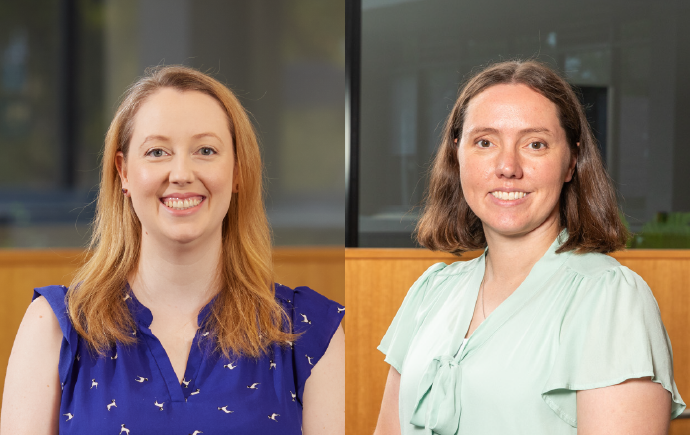
L-R: Dr Emily Reeve and Dr Amanda Cross.
At the Faculty level, MIPS is committed to integrating consumers as active collaborators rather than simply as research participants or subjects. While we are in the early stages of this work, we are fortunate to have staff who are experienced in this area within our Centre for Medicine Use and Safety (CMUS) theme. Dr Emily Reeve and Dr Amanda Cross have been leading the CMUS Consumer Panel since 2023.
Amanda is an NHMRC Emerging Leader who is passionate about consumer engagement and has been successfully partnering with consumers, particularly Dementia Advocates, in grant writing, development of medication safety resources and translation of resources into practice. In addition to acting as co-chair of the CMUS Consumer Panel since its commencement 2 years ago, Amanda serves as the co-chair of the MIPS Neuroscience and Mental Health Therapeutic Program Area (TPA) and is committed to supporting other MIPS researchers to incorporate genuine consumer engagement in their research.
“In research you can sometimes get caught up in the ‘what’ we’re doing and lose sight of the ‘why’ we’re doing it,” says Amanda. “Hearing directly from consumers reminds us of the real people and stories behind the research, and partnering with consumers ensures purpose and meaning to the science.”
Emily has been engaging with consumer representatives for over 10 years, although she admits that she didn’t always get it ‘right’ in the beginning. Her work in deprescribing lends itself naturally to consumer engagement as she aims to identify and address real-world problems. In her role as a Senior Research Fellow funded by an NHMRC Investigator Grant, Emily addresses barriers to the withdrawal of medications that are high-risk or no longer beneficial to patients. Emily has seen a variety of benefits to engaging consumers in her work. "Consumer engagement has been incredibly valuable to my research, by way of supporting recruitment, interpreting the findings and disseminating the results. There have also been several situations where there is no single best way to approach a problem."
Consumers have helped guide us to a pragmatic solution to ensure the research can continue to progress.
Over the years, Emily has created a strong community of valuable contributors. One such member is Dr Janney Wale, who has been a member of the CMUS consumer panel since 2023.
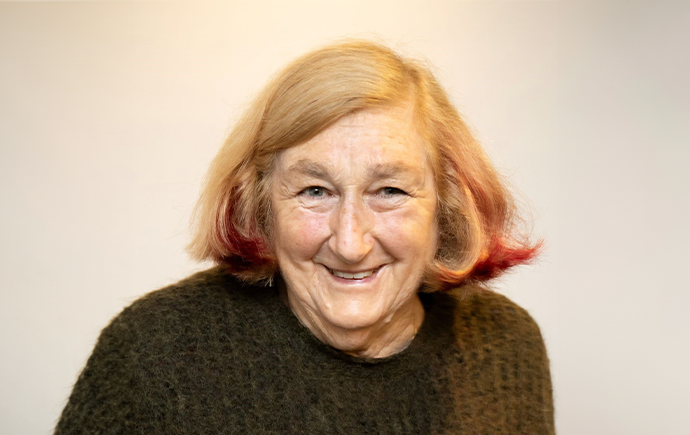 Janney has been an active consumer representative for 25 years. She is involved in multiple committees alongside the CMUS Consumer Panel, including the SUPPORT-Meds Consumer Advisory Group (which she chairs), the Australian Orthopaedic Association, and the Cochrane Acute and Emergency Care Thematic Group. She is also a member of committees across Bond University, The Royal College of Pathologists of Australasia, the Australian College on Healthcare Standards, and Health Technology Assessment International at the Australian National University.
“As you get older you get more comorbidities, so you can relate to more projects!” says Janney. “There is valuable work being done and I’m happy I can contribute. There is a bigger and bigger role for consumers in how healthcare is managed.”
Janney’s research career in cardiopharmacology gives her a unique perspective as a consumer representative. “It’s easy to believe that the scientist knows better, so consumers may want to people-please and tell researchers what they think they want to hear.” This not only compromises the science, but takes away consumer integrity. There exists a huge power imbalance between researchers and people without science backgrounds, though it may seem counterintuitive given the position of funding bodies, who clearly see the value in mandating consumer engagement. Janney believes that it is important for researchers to engage with consumers authentically on an interpersonal level to avoid tokenism.
“As a consumer, it’s not about having one voice speaking for everyone, but giving valuable input where you can. Effective science communication is so needed, to bring the research down from the ivory towers.”
 Her observations are shared with Margaret Bright, whose expertise lies in epidemiology. As a breast cancer survivor, Margaret served as a consumer representative on a breast cancer-related medicinal chemistry project. While she found the experience to be fulfilling, Margaret believes that the best outcomes are achieved when the unique skills of the consumer are matched to the project. “Mandating consumer engagement is a good starting point, but it’s not one-size-fits-all,” says Margaret. “Some studies are better suited to it than others.”
With each project being so different from the next, Margaret believes that investing time and effort into finding a good consumer fit is the key to a successful study. Going back to basics with a face-to-face introductory meeting to lay a foundation of understanding not only facilitates genuine relationships, but puts the human in the scientist too.
“Continuity is incredibly important to keep your consumer representative engaged,” she says. “If you don’t keep your consumer in the loop with updates and give them opportunities to contribute, you won’t get much of an output from them.”
Margaret believes the common thread in each success story is good communication. “Technical skills and social skills are equally important,” she says. “The tension between the progression of science and the scrutiny of it will always remain – and now the role of the consumer brings accountability to the table.”
For researchers wondering where to begin, Amanda’s advice is to start small, building relationships on the people-facing aspects of a project. From there, it is easier to expand into different areas. To address power imbalances, Amanda recommends balancing numbers of researchers to consumers around the table.
"Language matters so much," says Amanda. "It is critical to avoid stigmatising language, or language that may accentuate the power imbalances. Setting up an open and safe environment from the very first meeting is important and if you are just starting out with consumer engagement, being upfront about that can make consumers feel more comfortable to provide advice to you about how you can better engage with them.”
Emily recommends forward-planning wherever possible. “As researchers, we are juggling a million different things at once. But the earlier you can start a conversation with a consumer, the better. You may get feedback that supports a project you are currently running, or information to inform a future grant.”
MIPS looks forward to partnering with consumers across the full spectrum of drug discovery, from designing studies through to sharing and applying findings. As researchers embark on their endeavours, Amanda emphasises keeping empathy front of mind: "a single pill may seem so small in the context of someone’s life. It sometimes makes your research feel like a drop in the ocean. But when you realize how that pill affects their ability to work, to go out and see their friends and family, you realize you are uniquely positioned to change peoples’ lives.”