A new era for the CDCO: Building on a strong reputation for providing ADME and pharmacokinetic expertise in Australia
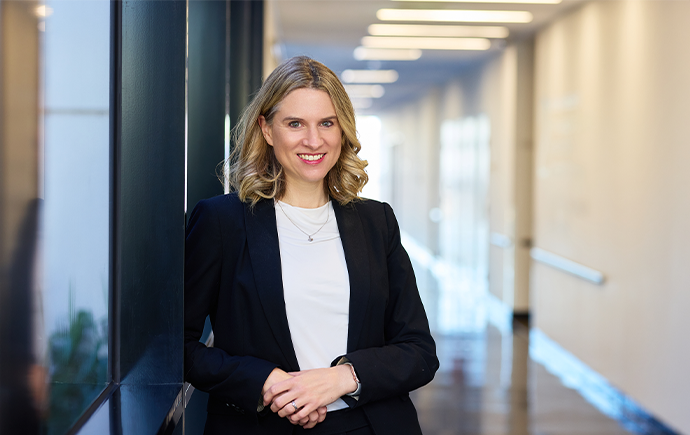
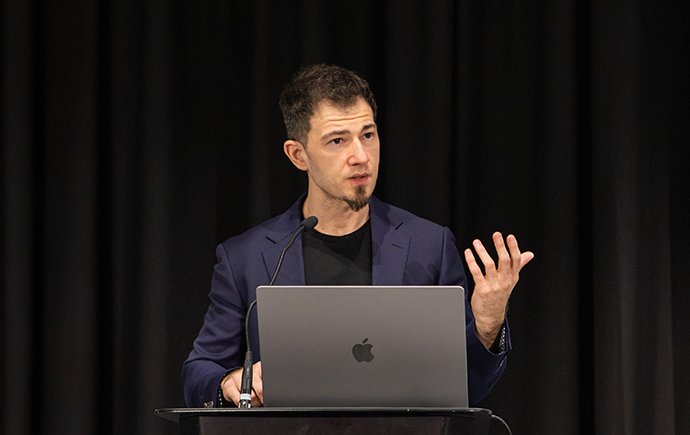
Since establishing the Centre for Drug Candidate Optimisation (CDCO) in 2003, Professor Sue Charman has been instrumental in helping it build a global reputation for absorption, distribution, metabolism, and excretion (ADME) and pharmacokinetic expertise. In 2025, Professor Charman stepped down as Centre Director and Theme Leader, handing the reins over to Professor Joseph Nicolazzo, who shares his new vision for the centre.
 A history of impact in drug development
The CDCO is one of five themes within the Monash Institute of Pharmaceutical Sciences (MIPS). Over the past 22 years, it has collaborated with partners to progress more than 40 new drug candidates into clinical development. Three compounds developed by the CDCO’s collaborators have reached the market as registered and approved drugs.
One success story is ‘Momelotinib’, a drug discovered by Australian researchers for the treatment of bone marrow cancer. In 2023, it was approved by the US Food and Drug Administration (FDA) to treat myelofibrosis.
More recently, the CDCO was involved in work on a breast cancer drug called ‘PF-07248144’ (co-invented by scientists from MIPS), which progressed to Phase 3 clinical trial in 2025.
Alex Stupple, Senior Business and Operations Manager for the CDCO, highlights the centre’s achievements across a range of diseases including cancer, CNS disorders, cardiovascular and metabolic disease, and infectious diseases.
“We help translate basic research into real life applications that have benefits for patients,” she says.
“The CDCO works with a range of internal Monash and external stakeholders, supporting their drug discovery programs.”
“This includes academic groups and researchers, medicinal chemists and biologists, or small to medium sized businesses that are looking to progress drug discovery programs.”
Alex says the centre sees itself as a collaborative partner that helps overcome the translation gap between core research and taking a product to market. For example, within MIPS, the CDCO evaluates how new compounds from the Australian Translational Medicinal Chemistry Facility (ATMCF) will be absorbed, metabolised and excreted by the body.
“The CDCO has a role to play in helping our partners source the right data to support the transition towards translation and commercialisation,” she explains.
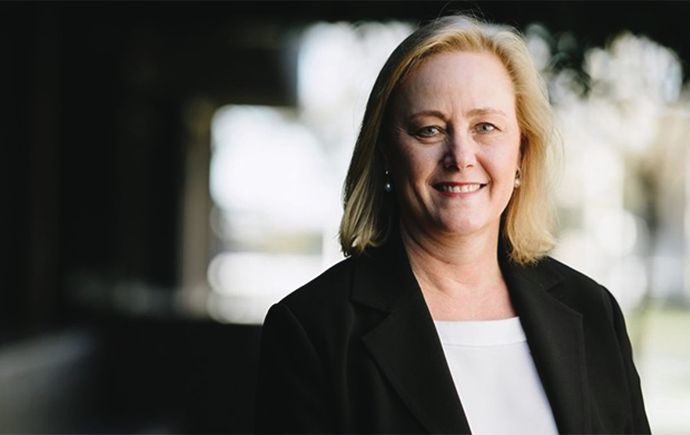 Farewelling Professor Susan Charman
Professor Susan Charman has led the CDCO since its inception in 2003. Its evolution is woven closely into her career as a leading scientist who has been integral to the growth and evolution of both the Faculty and MIPS.
Born and raised in the United States, Sue completed her Bachelors degree in Chemistry then a PhD in Pharmaceutical Science. She worked for a US-based drug company before moving to Australia in 1988.
Sue says she originally envisioned herself in an industrial R&D role. However, once in Melbourne, she realised the greatest research opportunities were often within universities. She joined the Victorian College of Pharmacy in 1989, before the Monash amalgamation.
By the late 1990s, Sue’s expertise in drug metabolism and pharmacokinetics was in rising demand.
Spotting an opportunity, Sue—along with colleague Professor Bill Charman—put in a funding application to the Victorian Science, Technology and Innovation Infrastructure program that was in place at the time. The goal was to establish a collaborative research centre, providing expertise in physicochemistry, drug metabolism and pharmacokinetics to support medicinal chemistry and biology.
“We received $4 million in foundation funding and the CDCO has been successful ever since,” she says.
Bill and Sue were initially co-directors, but when Bill stepped down in 2007 to become Dean of the Faculty, Sue took over as sole director.
A changing journey of discovery
Sue says that over the last 22 years, the CDCO has changed and evolved along with science.
“Knowledge grew and approaches changed,” Sue explains. “We gained more experience, and developed processes and systems that helped us become more efficient and kept us up to date with industry best-practice.”
“We also implemented new instrumentation, an electronic laboratory notebook, a quality management system and gained ISO9001 accreditation, to ensure the rigour and robustness in our processes, documentation and systems.”
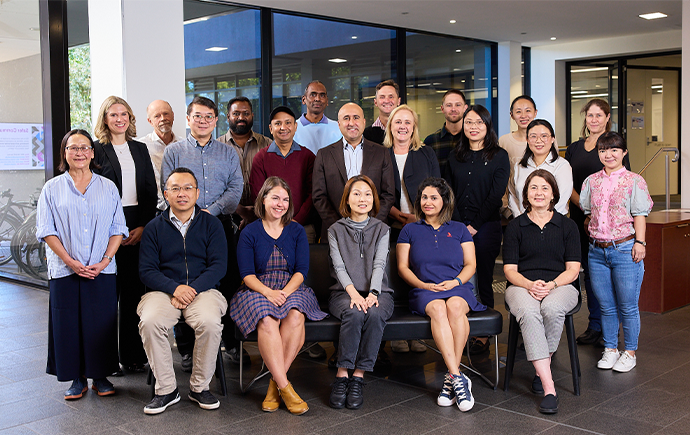
Today, the CDCO team consists of around 20 people—something that makes Sue very proud.
“Being part of an academic organisation like Monash, we have a role in training the next generation of scientists and it has been rewarding to see many scientists and post-docs come through our doors and then move into positions in academia or industry, both locally and overseas,” she says.
Reflecting on her achievements with the CDCO, Sue highlights the role she has played in trying to educate and increase awareness of the importance of early assessment of absorption, distribution, metabolism and excretion (ADME) properties to inform drug discovery and drug candidate optimisation.
 “Many people don’t understand ADME and pharmacokinetics and why early assessment is so important. Pharmacokinetics underpins drug dosing to achieve effective and safe therapy. I hope I played a role in raising this awareness with Australian drug discovery groups to benefit their programs and deliver higher quality drug candidates into clinical development,” she explains.
Sue says the CDCO’s strong reputation has been a catalyst for other MIPS programs.
“I am very proud of the CDCO’s accomplishments—just to exist for 22 years with the obvious challenges of funding is a major achievement,” she says. “Monash and NCRIS-funded Therapeutic Innovation Australia (TIA) have been hugely supportive of our activities, and the many therapeutic programs we’ve worked on have benefited from this support. I’m confident that the CDCO has been beneficial for drug discovery in Australia and will continue to play an important role.”
An incredible legacy
One of Sue’s interests was and continues to be the discovery of novel drug candidates for the treatment of tropical infectious diseases, including new medicines to treat malaria. Her work in this area was kickstarted by the Medicines for Malaria Venture in around 2000.
“It was exciting, our international teams delivered seven drugs into clinical development. But drug development is a tough and challenging process; one drug was registered in India and is being used in patients in Africa, but unfortunately many of the other development programs have been halted for various reasons. I’m still involved in two international malaria programs, so I’m hopeful that one or both of these will deliver promising candidates into the clinic.”
Professor Arthur Christopoulos FAA FAHMS, Dean of Monash’s Faculty of Pharmacy and Pharmaceutical Sciences says Sue’s skills, capability, commitment and drive will be sorely missed.
“Sue has built the CDCO into an organisation that has expertise, capability and a reputation that is unparalleled in Australia, and is truly one of a handful of elite groups in drug metabolism and pharmacokinetic lead optimisation worldwide,” Professor Christopoulos explains.
Sue is taking long service leave before her official retirement, and has taken on a part time development role on a new translational project for 2026.
“After that, I plan to travel,” she says. “It was incredibly rewarding and fulfilling leading the CDCO, and while I will miss the people and teams I had the privilege of working with over the years, and the many unique experiences, it's time to do something different.”
Sue is confident that under Joe’s directorship, the CDCO will expand into new areas needed by the industry and continue to provide much-needed expertise.
“Joe is doing a great job in taking the CDCO forward and I’m sure it will continue to grow and evolve,” she says.
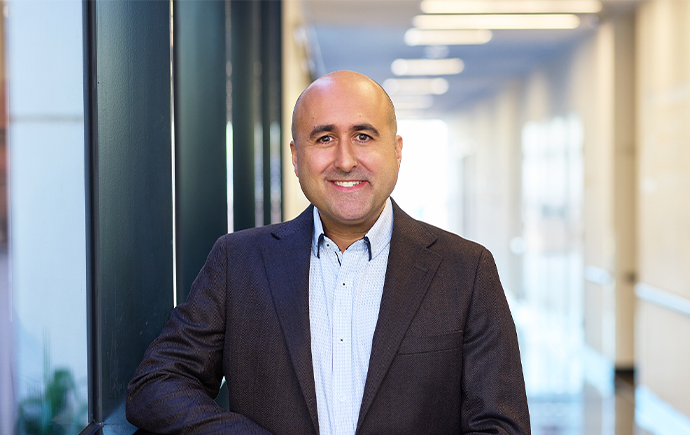 Introducing the CDCO’s new Director: Professor Joe Nicolazzo
Professor Joseph (Joe) Nicolazzo took on the role of Director for the CDCO in February, having already had a long association with the centre.
Joe completed his BPharm at Monash in 1999, before completing an honours year. In 2004, he completed a PhD in buccal mucosal drug delivery.
After a brief stint as a post doc at the University of California, Los Angeles (UCLA) working on the blood-brain barrier, Joe returned to Melbourne.
“Bill and Sue Charman started the CDCO in the lab opposite to where I completed my PhD,” he says. “They knew I was interested in the blood-brain barrier and were receiving requests in this area. They asked if I was interested in helping to set up the blood-brain barrier models at the CDCO.”
Joe started as a research scientist, before taking on an academic teaching and research role in pharmaceutics. After almost 20 years, he has returned to take on the role of Theme Leader and Director of the CDCO.
“Being a pharmacist is all about patients, and I was attracted to the CDCO role to be that one step closer to the translation of discovery to development of medicines for people,” Joe explains. “It helps bridge fundamental scientific discovery, getting compounds ready for clinical trials.”
Joe credits the CDCO with helping the Faculty become one of the highest ranked pharmacy and pharmacology ranked disciplines in the world, thanks to its excellent reputation and track record in moving compounds closer to clinical trials.
“Professor Sue Charman is Australia’s premier scientist in lead optimisation,” Joe says.
“Her attention to detail and striving for excellence is what has given the CDCO the reputation it has. And she’s built it from scratch, assembling a fantastic team of scientists that work so well together. It’s an amazing achievement.”
Future direction
Joe says more collaboration outside of Monash and involvement in academic-based projects within MIPS is helping seed and advance drug discovery along the pipeline.
“We want to be the most preferred, visible and distinguished provider of ADME and pharmacokinetic expertise in Australia, to facilitate drug discovery programs to deliver impactful therapies to patients,” Joe says. “And we want to do it with integrity, flexibility and innovation.”
Joe sees some of the future opportunities as harnessing drug discovery efforts within biotech and academia, as well as considering opportunities in the Asia Pacific and to explore artificial intelligence and ADME.
"The landscape in drug discovery is changing and medicines are changing, with more work into peptides, proteins, vaccines and cell based therapies, and while we cannot do all of this, we will expand the scope a little," Joe explains. “We need to focus on our core strengths in small molecule drug discovery but also introduce tools and technology that can help us grow into new areas, to ensure we remain current with drug discovery efforts in Australia.”
Joe points to more collaboration with the biotech sector as well as attracting and training the next generation of ADME scientists.
“As a university, we really have the chance to shape the future of ADME in Australia,” he says.
Advocating for drug discovery to remain on-shore is also a priority, working with partners like Therapeutic Innovation Australia (TIA), Queensland Emory Drug Discovery Initiative, The Centre for Drug Discovery Innovation at the University of Sydney and even venture capitalists.
Joe says that partnering with the CDCO often appeals to researchers and investors given the centre’s strong emphasis on integrity and ethics, as well as the fact that commercial partners are often eligible for the R&D tax incentive.
“The CDCO is important, because it fills that critical gap in lead optimisation, allowing clever medicinal chemistry to translate into candidates for clinical trials, ultimately saving lives,” Joe says.
“We invite future partners to get in touch to explore exciting opportunities with the CDCO.”