Expanding our international efforts and perspectives with our first Associate Dean International
Professor Joseph Nicolazzo has been appointed the Faculty’s first Associate Dean International (ADI), signalling an expanded focus on building on Monash’s international opportunities for students, researchers and staff. Joe also coordinates the new Monash Global Campus Intensive program (MGCI) to Prato for Pharmacy students. He describes this as an “immersive, intensive study experience” that not only exposes pharmacy students to a different healthcare system but allows them to give back to the local community and bring that knowledge back home.
 Professor Joseph Nicolazzo appointed first Associate Dean International
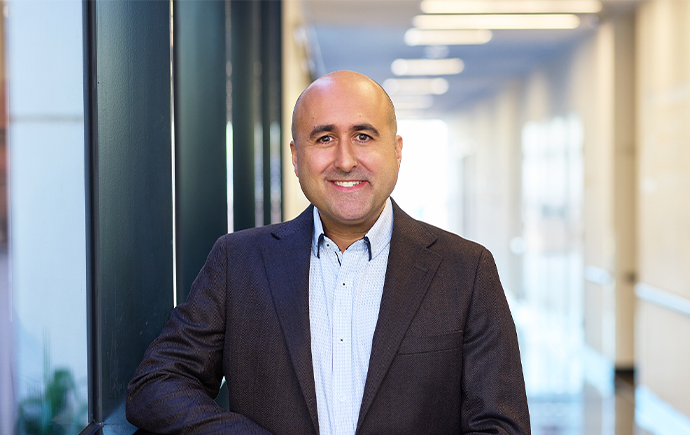
In April 2025, Professor Joseph (Joe) Nicolazzo was appointed the Faculty’s first Associate Dean International (ADI), a role which saw him tasked with advancing the Faculty’s international footprint.
“We’re already global leaders in education and research in pharmacy and pharmaceutical sciences,” Joe explains.
“As ADI, I’ll focus on international engagement to elevate us to the next level, while aligning our activities with the broader university’s international strategic plan.”
The appointment also brings the Faculty in line with others that have already established this position.
Enriching opportunities for students and staff
Developing international opportunities for both undergraduate and postgraduate students is a priority for the Faculty, in line with Monash’s strategic goal of creating 'global citizens'.
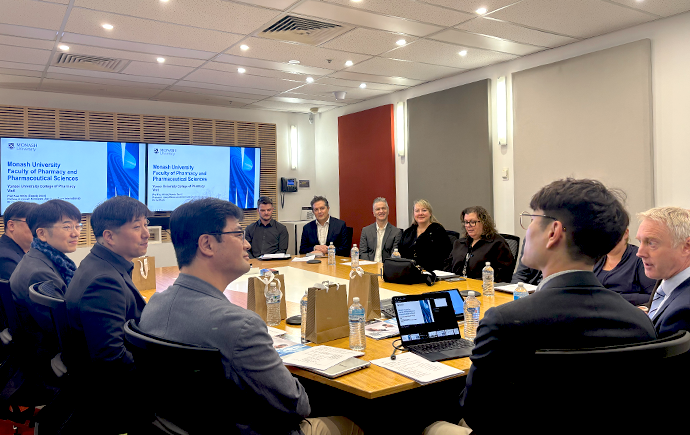
As a first step, Joe has assembled a Faculty International Advisory Team—known as FIAT—which draws on representatives from education, research and engagement to advise on the faculty’s international plan.
Joe's team is also working on developing transnational student opportunities with universities abroad. Transnational Education arrangements can take many forms, the most common being Student Exchange programs. It can also include organising arrangements that involve students beginning an undergraduate degree at an overseas university before completing it at the Faculty.
"When students study one degree between two countries, it allows them to bring their experience, including their cultural background and knowledge, to another part of the world,” Joe says. “They learn about their chosen discipline in two different contexts—in our case two different healthcare systems—and they double their networks and employment opportunities."
Also on the cards is continuing to foster the Faculty’s existing international connections and collaborations through PharmAlliance, as well as leading initiatives with strategic international associations such as the International Pharmaceutical Federation (FIP) and Globalization of Pharmaceutics Education Network (GPEN).
“Being seen to be actively giving back and contributing to the profession is critical to maintaining our reputation,” Joe says.
Joe also wants to build international research experiences and opportunities through the Enhanced Research Experience (ERE), part of the PhD program.
He also plans to encourage research funding opportunities from international sources.
“Tapping into international funding helps diversify our research income as well as fostering further collaboration on a global scale,” he says.
Joe says that one of the biggest challenges in facilitating international engagement of any kind is Australia’s distance from potential collaborators.
“Our distance makes these exchanges and collaborations more difficult, costly and harder to organise,” Joe explains. “There are so many opportunities, but the challenge is to find and focus on the best ones.”
 The MGCI in Prato: A new opportunity for pharmacy students
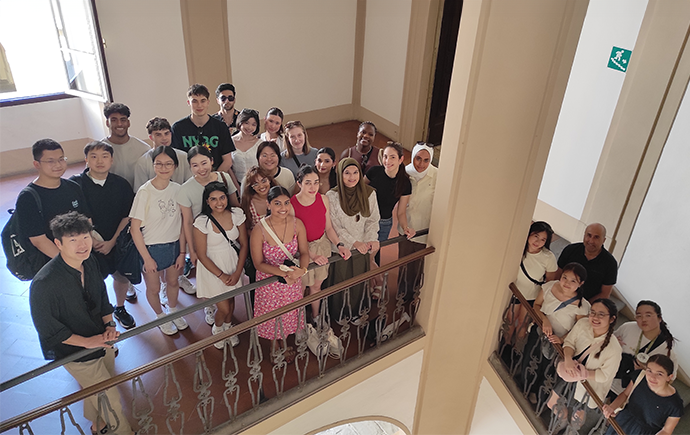
This year also saw Bachelor of Pharmacy students able to apply to participate in the Monash Global Campus Intensive program (MGCI) for the first time. Applications to study the third year 'Inquiry and Innovation Methods' subject were competitive and the first cohort of 30 students went to Monash’s campus at Prato in June 2025.
“Pharmacy is quite a structured degree, with no electives,” says Joe, who lectures and coordinates the subject in Prato.
“So while students have often asked about overseas experiences, opportunities at scale were mainly restricted to Malaysia, where Monash also has a campus.”
Joe describes the MGCI as an immersive, intensive study experience for pharmacy students that exposes them to a different healthcare system and allows them to give back to the local community, while also bringing knowledge back home.
“In Prato, they’re learning towards their degree but applying it in a different culture with different norms and behaviour around medicines use and safety. This lets them see outside of what they are comfortable with.”
Joe says that, by learning how pharmacy is practised elsewhere, they can cast a critical eye on the way things work back home.
“Students gain an ability to be flexible and adapt,” Joe says. “They also see how things work and are different in community and hospital pharmacies overseas and what could be implemented here or vice versa.”
The benefits of a global experience
In Prato, students complete an accelerated version of the subject’s coursework and meet the unit objectives to create a research project on a health challenge. However, it’s tailored to the Italian environment.
“We invited guest speakers from the local hospitals, community pharmacies and pharmaceutical companies to talk about what pharmacy in Italy is like: the past, present and future, as well as challenges and barriers. Then we developed three local challenges that the students needed to address through a research proposal using their recently-acquired knowledge of how to undertake research.”
Joe says the students rose to the challenge of working in an unfamiliar environment and went above and beyond in their own research projects before presenting them to stakeholders. He says that some of the presented recommendations have the potential to be employed in real life, potentially impacting real healthcare outcomes in pharmacy settings in Italy.
“The enthusiasm in the room was amazing,” Joe says. “The staff at Prato were impressed at how respectful, well behaved and easy to get along with our pharmacy students were. They were great ambassadors for our Faculty.”
For Joe, one of the highlights was the fact he received a third year lecturer of the year award, but only taught these thirty third-year students in Prato. “They must have liked it,” he laughs.
“I can really see the benefit of a global experience,” Joe says. “It can change a student’s life.”

 Student perspectives on the first Pharmacy MGCI to Prato
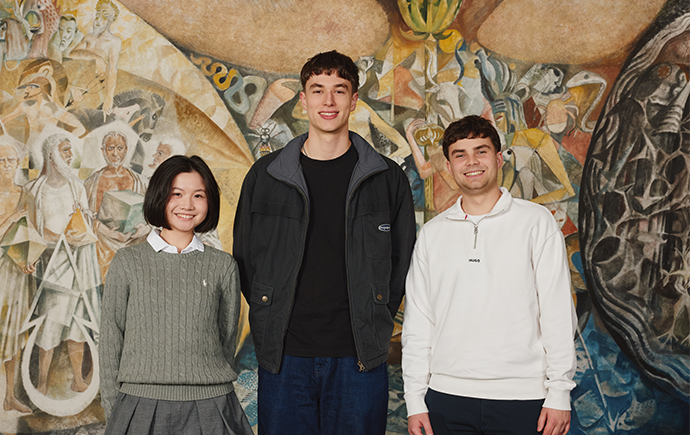
Among the cohort of 30 Bachelor of Pharmacy students who travelled to Prato in June 2025 were David Hickey, Oskar Cislo and Angelyn Ling.
David Hickey: Making connections and ticking off a subject while travelling
David Hickey saw Prato as a great chance to explore and travel, while completing his degree more efficiently. After all, he’d have one less unit to study the following semester, giving him more time to focus on other subjects back in Melbourne.
With around 200 students from a variety of Monash faculties studying at the campus at any one time, he says one of the benefits for Pharmacy students was the chance to make new connections.
“Beyond forging closer relationships with our pharmacy cohort, we also met Monash students from campuses and faculties like Law and Business, who we don’t normally get to mix with at Parkville.”
David also enjoyed field trips to Italian pharmacies, a hospital and GSK’s vaccine centre in Sienna, which allowed him to observe the differences between the Australian and Italian context when it came to pharmacy.
“Even small things, like when patients are discharged from a hospital, they receive their first three months of medicine free,” he explains.
The subject ran over three weeks, with six assessments covering six topics, plus an individual and group proposal.
“We had a guest speaker from the Ordine dei Farmacisti (akin to a Pharmacy Guild), who told us they don’t have that clinical exposure early in undergraduate pharmacy studies,” he says. “This gave us the idea for our group proposal topic, around introducing early clinical exposure into their undergraduate degree.”
With weekends off, David enjoyed visiting Rome, Venice, and some smaller Italian towns.
“It was quite intense, but we had all the materials before we left and it’s suggested you complete three topics before you get there, which helped,” he says.
After graduating, David plans to work in hospital pharmacy, and says the Prato experience has made him keen to return to Italy.
“Before I went, I wondered if it was worth me going through Monash rather than just planning a holiday on my own,” David admits. “But the community aspect and completing a subject while travelling definitely made it worthwhile. I highly recommend the experience.”
Oskar Cislo: Learning from the differences and similarities of two healthcare systems
Oskar Cislo says he was inspired to apply for the MGCI because he was interested in the international healthcare context.
“I wanted to see differences between the Australian and Italian healthcare systems and engage with the local culture and community,” he says. “It was great to travel with uni friends too.”
Oskar says he gained knowledge in cultural aspects of health. He believes the experience has shaped his perspective and future plans by allowing him to see the bigger picture, and how pharmacy can be tailored to a different context.
“It’s a research subject, and research improves in a global context, so it allowed me to gain insight and understanding into future paths like international research in vaccines or community pharmacies,” Oskar explains.
“It was also cool to make a proposal specific to Tuscany, where we were studying. In Italy there is a separate post-grad degree which focuses on patient care, while it is more integrated in Australia.”
Oskar says that studying in Prato allowed him to see how different cultures appreciated the work of healthcare professionals, and gave him practical insights into what the Australian pharmacy model did well and where it could improve.
He counts the new connections with pharmacy students, lecturers and Prato staff as a highlight and says that he is glad Monash’s pharmacy students now have an opportunity to study at the campus.
“It’s a great idea to have an international study experience that counts towards your degree, and this unit works really well overseas. I felt it was a big success and we all learnt a lot,” he says.
Having a Polish background also meant he could take a few days to visit family outside of the course.
“I’m open to possibilities of working overseas in the future,” he says. “A bridging course may be required but Pharmacy is an international degree.”
Angelyn Ling: Combining theory and real world practice in an international setting
Angelyn Ling says she applied to study at Prato because she wanted to combine study and travel with cultural immersion, while also seeing pharmacy practice beyond Australia. She was curious about Italy’s approach, where pharmacists play a big role in patient care.
“The inquiry project was a chance to explore a real issue in the Italian pharmacy sector, which gave me insights I could never have learned from a textbook”, she says.
“Academically, it really brought together theory and real world practice. The subject gave me the tools to look at real world healthcare problems and think critically about how to solve them, and doing it in an international setting made it even more meaningful.”
Her group proposal, presented at the MyDispense symposium, explored the idea of adding a clinical pharmacy stream into the Italian undergraduate pharmacy degree, which currently focuses on basic sciences. She says studying internationally helps pharmacy students build cultural awareness, adaptability and innovative thinking, and broadens perspectives.
“You start to question how and why things are done the way they are and how we might improve them back home,” she explains. “In Italy, for example, we saw how community pharmacists have such diverse roles. They often collaborate closely with clinics and are involved in things like eye checks, CT scanning, drug compounding and more.”
“Experiences like that make you think about how we can expand the community pharmacist’s role in Australia to better support our local communities,” she says. “The whole experience really strengthened my confidence in stepping into new environments and thinking globally about pharmacy practice.”
Highlights included enjoying time in Prato, where students experienced the local lifestyle: the food, the language and the sense of community, including cooking and language classes.
Beyond gaining confidence, new skills, and lifelong friendships, Angelyn also says the experience changed the way she sees pharmacy.
“It’s a global profession that constantly adapts to different community needs,” she says.
“Studying in Prato inspired me to think bigger about my career, in terms of combining clinical work with research and global collaboration,” she says. “It also made me more open to the possibility of working or studying internationally.”
Felicity Xu: Broadening perspective through the UNC Inquiry Project
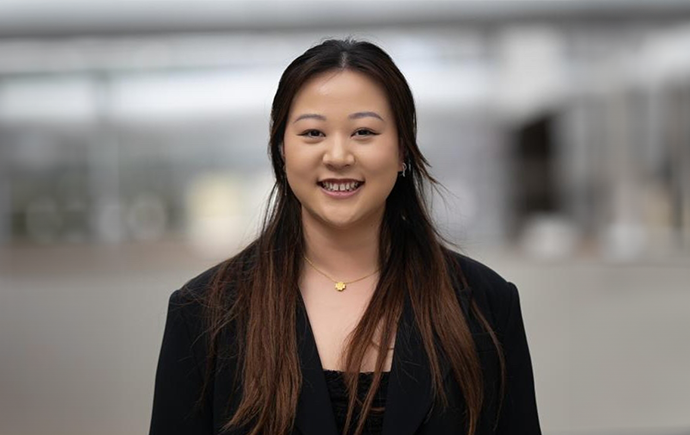 Felicity Xu was one of the fourth year Bachelor of Pharmacy students who undertook an eight week Inquiry Project from February to April 2025 as part of their Inquiry and Innovation Projects unit at Monash’s PharmAlliance partner, the University of North Carolina (UNC) at Chapel Hill.
“All fourth years have to complete an Inquiry project and I thought doing it in the US at UNC would be a great learning experience, while allowing me to travel,” Felicity says.
Her assigned research topic was education focused, titled 'Leveraging AI as a Tool in Assessment and Evaluation for PharmD Student Objective Structured Clinical Examinations', and saw her team assess whether or not AI was effective in marking Objective Structured Clinical Examinations (OSCEs). Felicity’s team compared the ability of three different AI models, and found that it can be used to mark OSCEs but further testing on bias would have to be undertaken.
“UNC is quite research oriented, and the team we were working with was the education department of the pharmacy school, with a topic at the intersection of pharmacy education and AI,” she explains.
Felicity was able to attend some student classes, speak at a conference, make presentations to faculty members and participate in journal clubs on new research in the pharmacy world.
“I’d always viewed research as drug-based or clinical, but this education topic made me stop and reflect and see that there is a lot more to pharmacy research than how a drug molecule or specific agent works,” she explains.
“As a result, research is something I'd like to take into my future practice.”
For Felicity, a highlight was getting to experience American university life, staying in a campus fraternity, and having weekly meetings with pharmacy students.
“The US is quite diverse and pharmacy is a post-graduate degree, so you meet people from states all over the US, who are older than you, and who have experience in different fields of study,” she explains.
Felicity looks forward to taking her international experiences with her to her intern year at a community pharmacy.
“The UNC Inquiry Project broadened my experience of pharmacy healthcare, my network and understanding of the US culture and the world.”