Ten years of trust: How pharmacy schools on different sides of the world built an innovative degree
The Master of Global Medicines Development represents PharmAlliance's most ambitious achievement and pharmaceutical education's answer to an industry-wide skills gap
Ten years ago, Monash, the University of North Carolina (UNC) and University College London (UCL) formalised a bold idea: that three of the world’s leading pharmacy schools could achieve more together than they ever could alone. That idea became PharmAlliance, a partnership built on shared vision, trust and a willingness to collaborate across continents and time zones.
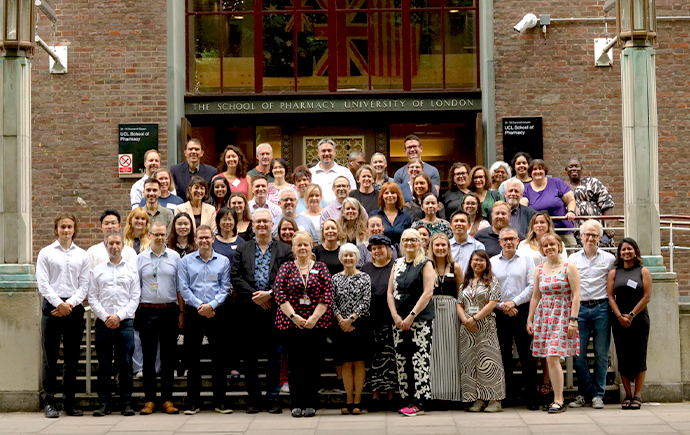 Over the past decade, PharmAlliance has helped seed millions in joint research funding, built robust student communities and created opportunities for learners and academics that simply didn't exist before.
In 2025, PharmAlliance’s most ambitious achievement became reality when Monash and the UNC Eshelman School of Pharmacy launched the Master of Global Medicines Development (MGMD).
The MGMD is a first-of-its-kind international degree shaped directly by industry needs and four years of intensive cross-university collaboration. Designed to prepare graduates for the global pharmaceutical and biotech landscape, it represents what ten years of cooperation can deliver: a program no single institution could have created alone that fills a global skills gap.
What the MGMD brings to global medicine
PharmAlliance envisioned a joint degree with exceptionally high industry relevance. So they approached the world’s leading biotech and pharmaceutical companies to ask “what’s missing?” or more precisely, “what do companies need that current graduates don’t currently offer?”.
The answer it received was remarkably consistent.
While companies had access to technical specialists, they struggled to find what Caroline Sasser, Assistant Professor at UNC, calls “general athletes”. That is, people who could move confidently across the entire medicines development lifecycle by combining technical scientific knowledge with managerial skills and a global outlook.
This gap in the workforce became the starting point for the MGMD: a degree intentionally designed to create globally-minded leaders for an industry whose default operation is now across borders.
“We designed this program to create well-rounded graduates who have master’s-level training and understand everything from foundational science to the regulatory process, through to financial and data management and leadership principles—and who’ve had hands-on experience working on an actual global problem,” Assistant Professor Sasser says.
What the MGMD delivers
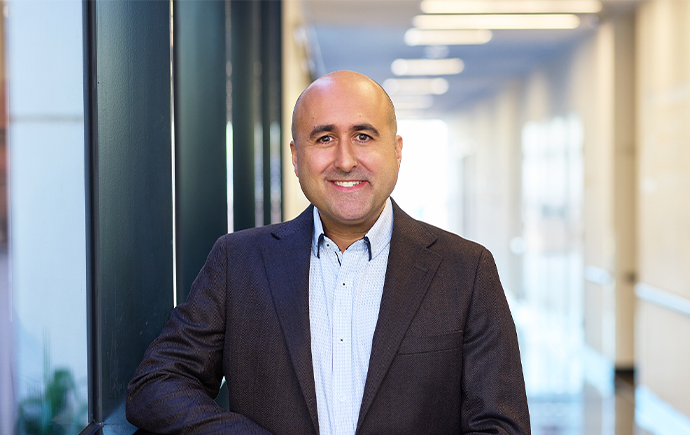
 L-R: Marian Costelloe and Caroline Sasser.
Built jointly by Monash’s Faculty of Pharmacy and Pharmaceutical Sciences and the UNC Eshelman School of Pharmacy, the MGMD gives students a broad, cross-functional understanding of how medicines are developed, regulated, manufactured and then brought to patients across different regions.
But what makes the program even more distinctive is its delivery model.
“This is a genuinely international program,” she explains. “It is jointly delivered, jointly assessed and jointly governed by two of the world’s top-ranked pharmacy schools operating in different countries with different regulatory and funding environments, and different strengths.”
Students complete the degree over three semesters (18 months), beginning with two in-person semesters at Monash in Parkville. During this time, they study a hybrid curriculum designed and delivered by faculty from both Monash and UNC. Some UNC courses are taught online; others see UNC academics travel to Melbourne to teach in person, giving students live access to leaders from both institutions.
In the third semester, students complete a capstone placement with an industry partner, working on a real-world problem of global significance.
These placements are not simulations or case studies, but structured projects tied to a company’s active pipeline or operational challenges. They culminate in students preparing and delivering a final presentation that functions as a 'mini-thesis'.
Students have the choice to complete their placement in Australia or in North Carolina’s world-renowned Research Triangle Park (RTP), which is home to more than 300 life sciences and biopharmaceutical companies.
For students from Australia, the benefits of undertaking their placement at UNC is obvious. As Caroline Sasser notes: “Where we are situated in Chapel Hill, near Durham, North Carolina is a hotbed of health and pharmaceutical research with many companies at the cutting edge of biotech situated right on our doorstep.”
For overseas students who come to study in Australia, Caroline says the opportunity to study at one of the world’s leading pharmacy schools is not the sole drawcard. The Melbourne experience of a complementary scientific culture will provide an international perspective many will have never before encountered.
The result is a cohort that learns together across countries and modalities, guided by a shared curriculum but shaped by the cultural and scientific strengths of both institutions.
As the Monash Faculty of Pharmacy and Pharmaceutical Science’s General Manager, Marian Costelloe, puts it, the MGMD offers “a very unique experience: one that exposes students to leadership development and global perspectives on medicines that don’t exist anywhere else.”
The four-year journey to launch
Although the vision for the MGMD came together relatively quickly, turning it into a fully accredited, cross-continental degree was anything but simple. It required a four-year development process involving hundreds of meetings, countless approvals and the creation of new academic pathways that had never previously existed.
From the outset, the goal had been for the MGMD to be a three-way degree between PharmAlliance’s three partners—Monash, UNC and UCL. But, as the planning committee progressed, it became clear that there were significant administrative and regulatory complexities.
Each institution had different rules around curriculum approval, admissions, grading scales, academic calendars, remediations, financial models and quality assurance. Something as simple as credit equivalencies or assessment weightings had to be created from scratch, aligned across partners, and then reviewed by multiple governance bodies.
“The challenges weren’t ideological,” Caroline explains. “We agreed on the vision from the start.”
“The delays came from the administrative hurdles. Everything you have to do at one university, you have to do twice or three times. It almost doubles or triples the time.”
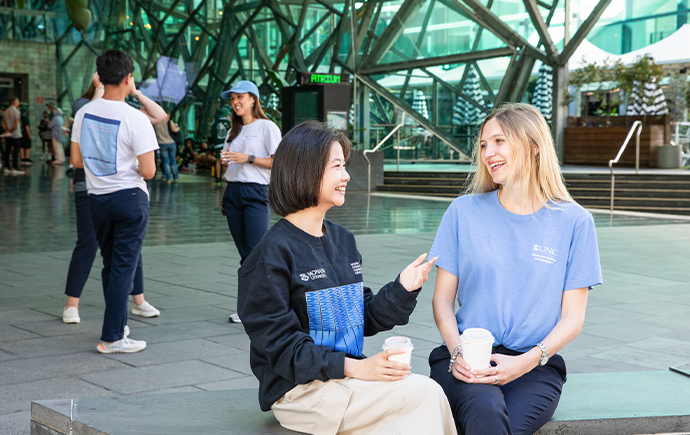 Marian notes it quickly became “a very complex legal and logistical exercise”, requiring sustained goodwill and constant cooperation across time zones. The approval of each major component, such as the course map, financial model, learning outcomes, governance structure, was treated as a go/no-go decision at Dean level.
Eventually, after a second major delay caused by incompatible approval timelines, the partners made the difficult decision to launch first with Monash and UNC, with the clear intention of bringing UCL into the program in future iterations. That redesign alone required significant structural changes, including navigating separate legal agreements, registrar requirements, tuition models, visa and in-person study mandates, blended delivery standards and accreditation submissions.
But both institutions persisted and the result is a degree that breaks new ground. As Caroline explains: “We forged new pathways at every step of the way, even right down to the admissions process.”
An achievement worthy of a 10-year anniversary
In short, the MGMD only exists because academics, professional staff and leaders across both universities refused to give up on an idea that they believed would reshape global pharmaceutical education.
And now, after years of approvals, redesigns and early-morning/late-night cross-continent meetings, the program that once seemed almost impossible is ready to welcome its first cohort.
As Tony Hughes, Monash's Course Director for the MGMD puts it: "We could have taken the low hanging fruit, and had each of us offer credit into one of our existing degrees. But that wouldn't have been special. It wouldn't have delivered the truly tailored global experience that the jointly-awarded MGMD will provide."
Looking ahead, Monash and UNC plan to bring UCL into future iterations of the program, deepen industry partnerships and grow the MGMD into a flagship international pathway for globally-minded pharmaceutical leaders.
For students, it marks the beginning of a new kind of career journey: one designed for leadership roles within an industry that increasingly operates across borders, cultures and disciplines.

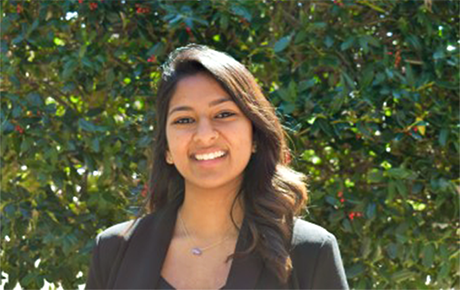 Despite cataloguing many achievements, Sophia says her biggest discovery while compiling the report was the ambition and generosity of PharmAlliance members.