Course Directors’ Updates
 Dan Malone: Course Director for Pharmacy
Teaching awards and preparing for an expanded scope of practice
The Bachelor of Pharmacy team began 2025 on a high after the transformed Pharmacy degree received another coveted teaching award, as Associate Professor Dan Malone, Course Director for the Bachelor of Pharmacy (Hons) / Master of Pharmacy, explains.
“The Pharmacy degree received the award for ‘Programs that enhance learning: Curriculum transformation and innovative pedagogy’, at the Australian Awards for University Teaching,” he says.
2025 also saw Pharmacy receive more enrolled students than ever before. All up, 350 first-year students chose to study Pharmacy at Monash, with greater numbers again expected in 2026.
Dan explains that, while this is overwhelmingly positive news—pointing to both the growing popularity of the degree and the increased visibility of pharmacists—it does present its own challenges, especially when it comes to providing individual student support.
“We’re putting together a framework to identify students struggling, or at risk of struggling, to ensure they get the support they need to succeed in the degree,” he says.
“We’re also looking at tools and teaching innovations, including using Generative Artificial Intelligence (AI), to ensure that students can obtain feedback in a meaningful and efficient way.”
Using AI to enhance understanding
Dan notes that the University is currently reviewing course design, so that students have the opportunity to become AI-literate without academic integrity being compromised.
“We need to show students how to use AI to enhance their learning, but avoid them coming unstuck because they’re too reliant on it.”
Dan says that staff are also engaging with the possibilities AI can bring to learning. For example, Senior Lecturer, Dr Emily Stokes, has developed a GenAI avatar that provides feedback on students’ verbal and non-verbal communication skills to help them prepare for oral assessments or Objective Structured Clinical Examinations (OSCEs).
“It's been very popular with students so it has been rolled out for each year of the course,” he says.
Meanwhile, he notes that Lecturer Dr Jae Pyun has been building custom GPTs that can be fine-tuned for specific skill development, in a third year inquiry unit he teaches.
“Rather than providing answers, students can ask the GPT things that they don’t understand, and it provides resources and prompts and asks them questions to enhance their problem solving skills,” Dan explains.
Course updates in line with community priorities
Bachelor of Pharmacy course-level learning outcomes have been updated over 2025, to ensure they stay aligned with new accreditation requirements, as well as the way pharmacy is evolving.
“There are a lot of changes at the moment in pharmacy, with the accreditor about to release a new capability framework for pharmacists and an expanded scope of practice,” Dan explains.
“There is also a greater emphasis on social accountability, particularly as it relates to Indigenous health and upskilling pharmacists in diagnostics—both of which we’re embedding into the Pharmacy degree.”
“At a faculty level, we’re looking to employ an Indigenous Initiative Lead to oversee aspects like how we embed Indigenous health outcomes into our pharmacy degree.”
Dan also highlights the importance of continuing to invest in local community engagement, through ongoing consumer group meetings and stakeholder feedback, as well as a program that sees local community members attend workshops and speak with first year students.
“Students get to practice their communication skills with members of the community, so it's meaningful both ways,” he says.
A final highlight for Dan over 2025 has been the higher number of students representing the faculty internationally. This includes attending The International Pharmaceutical Federation (FIP) meeting in Denmark, presenting at a university in Finland, engaging with the Transnational Educational Initiative in Italy (which included having the first cohort of 30 Pharmacy students studying at Monash’s Prato campus), and several overseas study placements.
“A greater number of pharmacy students are also going to the University of North Carolina (UNC) for inquiry projects, and we’re looking to expand that to other areas in the future,” Dan says.
Read our article on the new ADI International here.
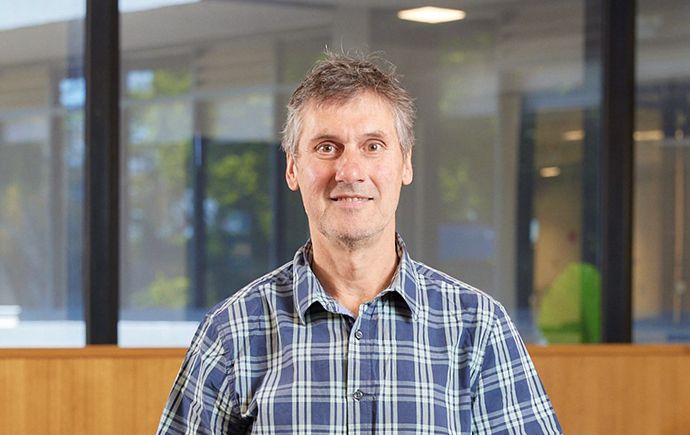 Ian Larson: Course Director for the Bachelor of Pharmaceutical Science
Exploring AI and double degrees
Dr Ian Larson, Course Director for the Bachelor of Pharmaceutical Science, says the big discussion starter for Pharmaceutical Science over 2025 has been AI.
“We know students will use it and so we now teach them how to use it ethically and effectively, including prompt engineering and the need to validate results,” Ian says. “We’re also working through the challenges of adapting our assessments for the AI era, moving towards hybrid assessments, including oral exams.”
“But a real highlight has been the successful way the staff have engaged with AI to help students learn,” Ian explains. “It can be a true learning tool and we have several staff who’ve leveraged AI to help students learn in particular units—something we expect to see continue to grow.”
Ian says staff have been applying AI to practice problems and real life on-the-job scenarios. The focus has been on using it to provide hints, rather than answers, in a way that encourages learning.
Life beyond Parkville
In 2025, the Bachelor of Pharmaceutical Sciences also welcomed some transfer students who commenced studying the same degree at Monash Malaysia.
“We need to maintain open communication with our overseas academics, so if something changes in Parkville it has to change in Malaysia too, or vice versa, to ensure the courses line up for students and accreditation,” Ian explains.
The popularity of the Bachelor of Pharmaceutical Sciences continues to grow, with student numbers steadily increasing and a further 3% rise forecast for the next five years.
“We currently have over 220 student enrolments,” Ian says. “While it’s called a Bachelor of Pharmaceutical Science, only a third of students end up working in pharmaceutical sciences after graduation.”
Mixing business with science
Because many graduates enter the personal care industry, the Faculty has developed a Monash Cosmetics Hub. Masters students already had access to this in 2025, and undergraduates will have access to it next year too. Ian says the Hub takes existing industry partnerships to the next level.
“It has a lot of industry support,” Ian explains. “Industry provides the problem and opportunities, puts forward a mentor, raw materials and sometimes access to equipment or facilities to create the product. In return, they gain academic-led innovations.”
“Students want to learn about creating unique, novel cosmetic formulations, like cleansers or other skincare products and get to tackle new problems as well as experience work on marketing, branding and design.”
Ian also points to the work Faculty staff including Laurence Orlando and Zoe Porter are doing in personal care around products like retinol, and the accuracy and effectiveness of SPF ratings for sunscreens.
“People are questioning if they can trust the SPF numbers, but what does the market want from sunscreens? It’s important to have quality sunscreen in Australia and they've had two articles published in The Conversation.”
Because a lot of graduates end up working in the personal care industry, Ian notes that many are likely to transition from the scientific side to the business side of a company over the course of their careers.
“In response, we’re exploring double degrees with business, economics and law, to enable graduates to progress from laboratory roles to management,” Ian says.
“This aligns with Monash University’s emphasis on double degrees and means students will gain scientific knowledge along with business training. This will provide future career opportunities in areas including company operation, licensing and more.”
Read our article on AI and the new supercomputer here.
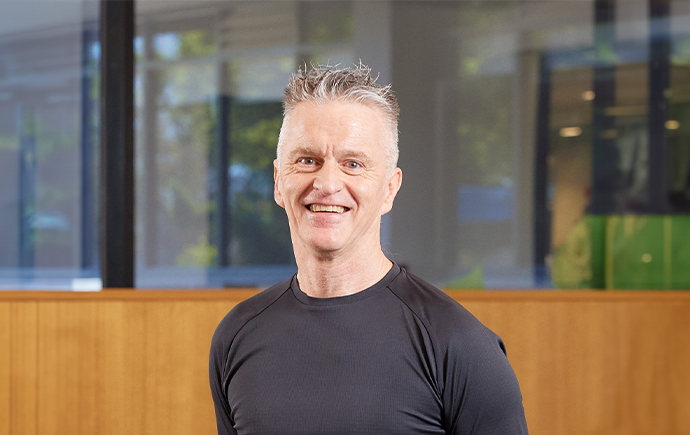 Tony Hughes: Course Director for the Master of Pharmaceutical Science
A new Cosmetics Hub and Alumni engagement
Dr Tony Hughes, Course Director of the Master of Pharmaceutical Science, says that 2025 saw the largest cohort of students yet, with over 200 completing their degree.
“This was beyond our initial expectations,” Tony says.
He believes the growing popularity of the course is partly the result of strong employer demand for Master of Pharmaceutical Science graduates.
“We aim to develop graduates that are really flexible in their thinking, with broad skills,” Tony says.
“They may have a speciality in Pharmaceutical Science but they also gain a breadth of skills and a lot of students are embracing the sidestep into cosmetics, thanks to the parallels between cosmetics and drug formulation.”
Real-world experience
As part of the Master of Pharmaceutical Science's employment focus, Tony says that over the course of the year, Faculty staff including Dr Stefan Huth, Dr Will Parsons and Dr Joaquin (Ximo) Sanchis Martinez, worked hard to create valuable and meaningful placement experiences for students.
In the first semester, around half the cohort undertook the University-wide Monash Innovation Guarantee (MIG) for the first time, receiving strong industry exposure outside of the formal placement program in semester two. The formal program was bolstered by two new Faculty initiatives that Tony says aim to increase engagement and connections between industry partners, students, staff and the broader pharmaceutical science sector.
“We expanded the offering for placements at the Medicines Manufacturing and Innovations Centre (MMIC), run by Professor Michelle Mcintosh,” Tony explains. “The MMIC is a joint initiative of the Victorian State Government, Monash University and industry partners to advance manufacturing innovations in Victorian-based pharmaceutical and allied industries.”
“We also established The CosHub—or cosmetics hub,” Tony says. “This was something completely new, that was supported to get off the ground by a lot of people around the Faculty including Dr Laurence Orlando and Dr Shruti Chacra”.
Over 40 Master of Pharmaceutical Science students worked on cosmetics projects. They were assigned roles in a 'virtual' company and worked on real projects from industry partners, receiving a taste of what it's like to work in cosmetics manufacturing.
“The aim was to give the students a professional experience, not just another set of labs or practical classes—they work with industry to solve real problems and the students really bought into the idea, which was vital to its success.”
A professional life after university
Tony says that another positive for 2025 was having ex-students return to campus for info sessions.
“Alumni were involved in several events. They spoke to students about what to expect when they graduate, the variety of jobs they are working in and the journey from student to professional.”
“That alumni group is growing, and we’re constantly leveraging and connecting our web of students, teachers, industry and alumni,” Tony says. “It was remarkable seeing graduates with jobs who have transformed into professionals—they’re almost unrecognisable.”
Tony explains that the Master of Pharmaceutical Science will receive a few tweaks in 2026 to ensure all students receive a strong foundational experience. The biggest news is the commencement of a new postgraduate pharmaceutical science degree to sit alongside the Master of Pharmaceutical Science: The Master of Global Medicines Development (MGMD).
“This is a very exciting joint degree with the University of North Carolina and Monash,” Tony explains.
“The enrolments for the Master of Pharmaceutical Science are steady now, at just over 200 students per year. We will have a smaller cohort starting in the MGMD in 2026, but hope and expect this to grow over time.”
Read more about the new Master of Global Medicines Development here.