Her Research Matters
Improving gender equity and the representation of women in science is not a new issue. Her Research Matters is a grassroots collective set up in 2019 that's on a mission to highlight and celebrate the work of women researchers within the Faculty and MIPS.
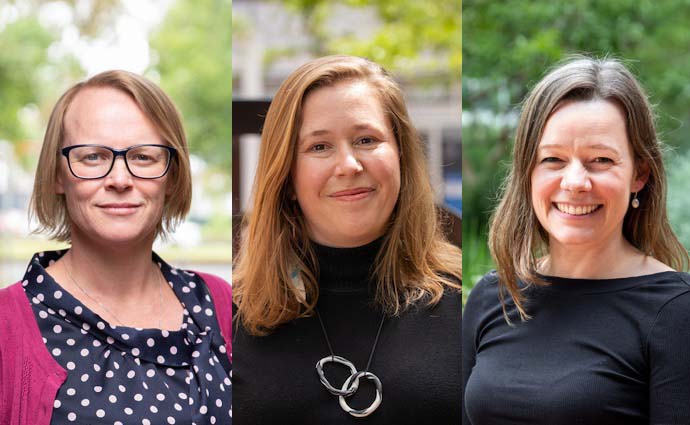
L-R: Associate Professor Karen Gregory, Dr Lauren May, Associate Professor Michelle Halls
While more than half of science PhD graduates and early career researchers are women, they make up only 17% of senior scientists in Australian universities and research Institutes.
Women’s underrepresentation in the upper echelons of science is a longstanding issue, and, despite the best intentions of many, is proving to be a problem difficult to solve.
Frustrated by the glacial pace of change, a group of academic staff and PhD students at the Monash Faculty of Pharmacy and Pharmaceutical Sciences and the Monash Institute for Pharmaceutical Sciences (MIPS) are taking action. They’ve banded together as Her Research Matters (HRM), a grassroots collective on a mission to highlight and celebrate the work of women researchers at the Faculty and MIPS. They also want to draw attention to the obstacles and barriers these women face – then try to remove them.
Founded in 2019 by Dr Lauren May and Associate Professor Karen Gregory, and now co-chaired by Associate Professor Michelle Halls, the group consists of over 110 members.
Be the change you want to see
Her Research Matters began, as so many great ideas do, over coffee.
“It started from recognising that there was a problem and wanting to put forward a solution,” says Gregory.
It was 2019, and Gregory and May were among a group of women academic staff at the Faculty appalled by the gender disparity in the funding outcomes of the new NHMRC Investigator Grants. But it wasn’t just the money side of things that spurred them into action. It was the lack of diversity in leadership and decision-making positions in the field. Other metrics of research recognition, such as which researchers were being invited to present at conferences, were also coming up short on gender representation.
The group recognised that the women who were succeeding were surrounded by like-minded people, and wanted to provide that support network for others.
“That is a really valuable piece of being successful - being able to see where you want to go and have people give you honest and useful information,” says May.
Gregory and May were not the only ones who noticed the lack of diversity in the field. Similar conversations about gender equality were being had by academic staff across the Faculty and MIPS. These discussions coincided with a period of change, with the Faculty of Pharmacy and Pharmaceutical Sciences appointing a new Dean. Gregory and May saw an opportunity to make a difference and went for it. Her Research Matters launched in October 2019.
Challenges, obstacles and barriers
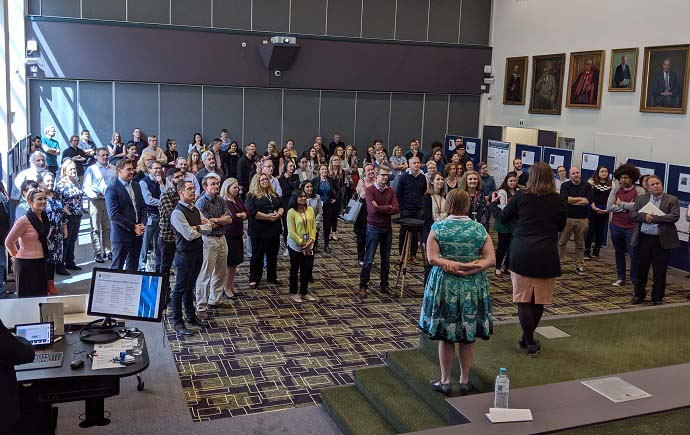
HRM was launched in October 2019 in Cossar Hall.
Gender equity has long been an issue in the wider STEMM community. When it comes to the life sciences, including pharmacy, the problem isn’t attracting women to the discipline. According to Women in STEMM Australia, over half of all Bachelor of Science and PhD graduates since the 1980s have been women. But, they’re not making it through the ranks. Of every 10 investigators at senior levels in Australian universities and research institutes, less than two of them are women. So what’s going wrong?
According to Gregory, May and Halls, there are two main problems. One is that barriers exist in the field for women that simply aren’t there for men.
“Often, the barriers are attributed to career breaks due to parenting or caring responsibilities,” says Gregory. “There's definitely a big chunk of inequities that comes from that, but because of the nature of scientific research it's not easy to put research on pause. But it's also much bigger than that.”
Women face unconscious biases, she explains, citing studies that show both men and women can be guilty of failing to attribute the same recognition of effort and competency to others based on their gender. Women also experience workplace harassment at a greater rate than men.
They are also more likely to be given gendered roles that focus on nurturing a cohort or are administration-heavy rather than strategic, risk-taking, high-impact positions that attract attention, funding and opportunities for promotion. In this way, women miss out on the chance to demonstrate the breadth of their expertise and skills.
The other issue is that less value is placed on the roles and tasks that women are frequently given and often excel at.
“Women tend to be more collaborative. They tend to work in teams,” says Gregory. “They tend to share credit, and our systems are not built to recognise that.”
Halls thinks it can even come down to how men and women prioritise their time at work.
“Women, on average, would tend to perhaps spend longer in those more nurturing roles, making sure you've got all those supervision meetings in place for your students and your postdocs, making sure they've got access to everything they need for them to succeed,” she explains.
“Perhaps men are generally spending less time on that, so they've got more time to be writing the papers or applying for this award or that award. And that goes back into all those metrics in the system that allow you to advance at a faster rate.”
As Gregory points out, women working collaboratively are being left behind.
“Across the STEMM field we don't reward quality mentoring, or quality sponsorship of others' careers.”
Bringing solutions, not just problems
Gregory, May, Halls, and others, including Professor Erica Sloan and Professor Denise Wootten, set out to create an inclusive environment where women researchers felt valued and supported in their work. They also wanted to highlight the path forward, so these researchers could increase their contributions to the field.
Of course, Her Research Matters is not the first or only initiative established to tackle gender inequality. There are plenty of programs endeavouring to address the issue. Co-founders Gregory and May were keen to distinguish their project by ensuring it maintained a positive approach.
Everyone, no matter what their gender or career stage, has been welcome at HRM from the beginning. The group’s ‘allies cluster’ invites interested men, those who identify as men and those who aren’t researchers to sign up and stay abreast of what the group is up to. Nor is HRM limited to staff – PhD students are also welcome.
“It's really a grassroots approach, trying to bring everyone into the discussion so everyone can understand where these things sit because, quite often, the women and other minorities may understand or feel some of the barriers that are in place, but other people may be completely oblivious to them,” explains May. “So part of the purpose of HRM is to raise awareness.”
While shining a light on the issues women face is part of HRM’s purpose, so is offering their preferred solutions.
“We're always trying to say, ‘Okay, what can we do to make this better?’” May says.
They’re clear that delivering solutions involves advocating for systemic change rather than ‘fixing women’. As Gregory explains, “we're not here to train people to act within the systems created by the majority.”
A key priority for HRM is raising the profile of the women working at MIPS and celebrating and communicating their research success. They say that amplifying the success of women researchers not only helps boost the profiles of those women, but benefits the University as well.
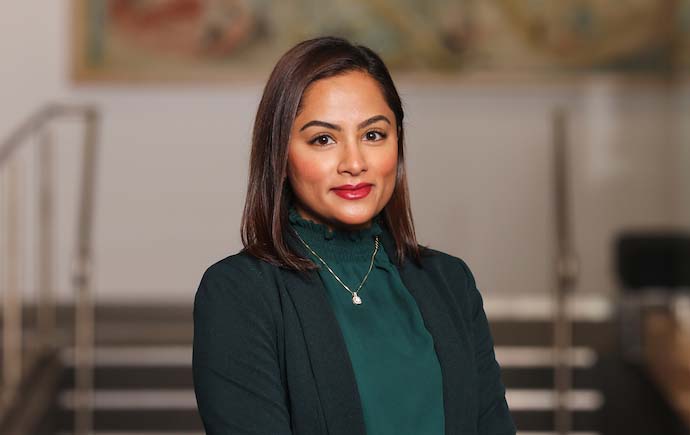
Professor Erica Sloan Professor Erica Sloan has dedicated her career to studying how our perception of the world impacts our health, with a particular focus on cancer. She has spent 20 years investigating how cancer responds to the body’s stress signals and how that response affects the progression of both the illness and its treatment. Her aim? To develop new therapies that help patients manage their stress response, not only to make them feel better, but also to improve their response to treatment and their survival outcomes. The newly promoted Professor was involved in the early conversations that led to the creation of Her Research Matters. Since then, she has been involved with the group in practical ways, such as providing feedback and advice to women applying for promotion or managing challenging workplace situations. “As well as being a platform to showcase the research of women and gender diverse people in the Faculty, Her Research Matters allows people to access connection and collaboration as a strategy to move forward in their research,” says Professor Sloan. |
|---|

“Often, women are not featured to promote the exchange of ideas across the Institute, so when we are, the Institute and Monash benefit from what we're doing,” says Gregory.
Part of HRM’s purpose is to improve the situation for the next generation of researchers, too. May says they realised that as mid-career researchers, “We owe it to the people we’re training to come up behind us to make the system as equitable as possible.”
As Gregory says, by championing inclusive leadership, they hope to provide younger researchers with role models so they “don’t have to do this all again”.
From little things, big things grow
Her Research Matters clear focus is not only on identifying the issues facing women, but actually doing something about them. So the group has taken a practical approach to bring about change over the past three years, and has had tangible results.
Thanks to the efforts of the HRM collective, the Faculty has introduced a policy ensuring all PhD panels include diversity. When a PhD student approached HRM feeling uncomfortable that her PhD panel was made up exclusively of men, the group put forward a position that panels should include a diversity of genders and career stages. While May doesn’t believe women were deliberately excluded from the PhD panel in question, she believes HRM has a valuable role to play in drawing attention to – and working to rectify - this type of oversight.
“HRM is able to bring some of these issues to the forefront and have that collective voice behind them, so it carries a bit more weight,” she explains.
There are also the everyday efforts the HRM collective makes to raise the profile of the Institute’s women researchers and help them further their careers. From featuring early career researchers on its Twitter feed and in the Faculty newsletter every month, to supporting their members when they’re applying for promotion by running mock interviews and providing feedback on their applications.
As well as making a difference at an individual level, the group has also worked to effect change on a broader scale. HRM collaborated on the development of diversity, equity and inclusion policy with Monash’s PharmAlliance partners, the University of North Carolina and University College London. The group has also connected with other groups driving change here in Australia, like the Equity in Medical Research Alliance.
This year, for the first time, HRM sponsored several of its members to attend the Science Meets Parliament event, giving them an opportunity to learn how to influence change at a federal policy level. It plans to do it again in 2023. The group is working to influence the next generation, too, running research projects and workshops looking at the representation of women in pharmacy with fourth-year Bachelor of Pharmacy students and high school students at the Monash Scholars Knowledge Summit.
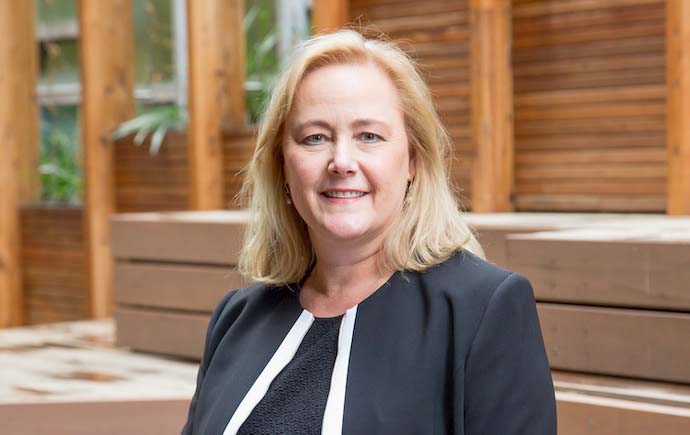
Professor Denise Wootten Since the group's launch, Professor Denise Wootten has been an executive member of the Her Research Matters board and is currently serving as its Treasurer. She says HRM’s grassroots approach, coupled with its co-chairs’ input into the Faculty leadership, means it is uniquely positioned to take the issues its members are facing on the ground directly to the top. “There's also a lot of peer-to-peer support within the network. It's really sponsoring, fostering, and promoting that network and supporting each other, which you don't necessarily get from the top down,” explains Professor Wootten. Wootten’s research studies the G protein-coupled receptors targeted by metabolic diseases, with a focus on type 2 diabetes, obesity and their comorbidities. Her research sets out to better understand how these receptors work, how drugs and natural hormones bind, and how that affects the physiological response. Her ultimate goal is to develop new strategies to design better medicines for the treatment of metabolic disorders. She was recently promoted to Professor. |
|---|

The group’s efforts haven’t gone unnoticed. In 2021 HRM gained a Monash Vice-Chancellor’s Award for Excellence in Diversity and Inclusion, recognition of its outstanding contribution to supporting diversity and fostering inclusion at the University and beyond.
A shared focus on gender equality
While Her Research Matters has been working hard to create change at a grassroots level, the group says the Faculty of Pharmacy and Pharmaceutical Sciences has been behind them every step of the way.
“The Faculty has been extremely supportive of Her Research Matters from the start,” says Halls. “They were really receptive to the idea and encouraged us to go forward, providing funding for us to run our activities. There's been buy-in at all levels of leadership and within all areas of the Faculty. That's been really important.”
The group says the support of the Faculty has helped them build momentum. Having professional staff in leadership roles involved with HRM has added another powerful dimension to the group’s discussions, and a HRM representative sits on the Faculty’s Diversity and Inclusion Committee.
The Faculty’s efforts to improve gender equity are evident in the number of women academics employed at the associate professor and professor levels. Over the past decade, the Faculty’s proportion of women associate professors and professors has increased from 17 per cent to 36 per cent. In 2019, when HRM began, the level of women at the associate professor and professor level at the Faculty was 23 per cent.
“Since we started, I would say that gender representation has changed quite significantly,” says May. “I think we've helped to make a real difference in that space to move towards a more equal footing.”
Monash University itself also has a long history of commitment to gender equity, beginning with the appointment of its first Equal Opportunity Coordinator in 1987. But it too acknowledges that there’s still much to be done. Across Monash, only 29 per cent of professors and 39 per cent of the academic leadership are women, even though women make up 48 per cent of all academic staff.
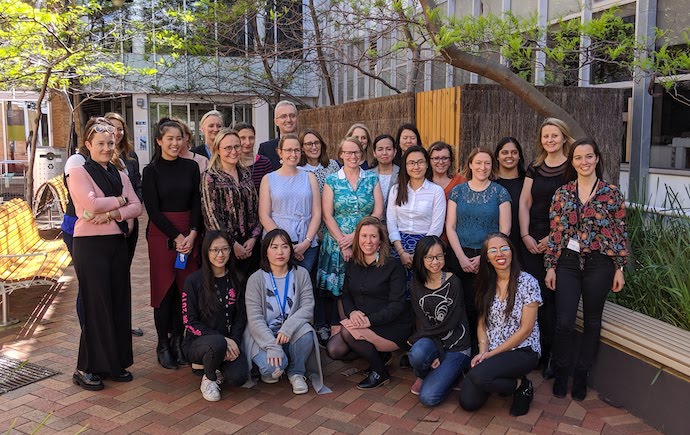
The HRM Collective at the launch event.
The University recently released its new Gender Equality Action Plan 2022 - 2025, which includes a commitment to tackling the underrepresentation of women in STEMM. Acknowledging that “the attraction and retention of women in STEMM remains a challenge,” the Plan pledges to prioritise the advancement of women’s careers in STEMM by investing resources to address gender disparity in these disciplines.
The new Gender Equality Action Plan also makes clear that Monash is committed to closing the pay gap between men and women, setting out its aim to achieve salary parity across the University by 2025. In 2019, the Monash-wide gender pay gap was 13 per cent; in 2022, it is 12.2 per cent. Rather than comparing men and women performing the same roles, the gender pay gap measures the difference between women’s and men’s average weekly full-time earnings. This means that a pay gap at an organisation like Monash tends to reflect women’s underrepresentation in senior roles, particularly senior academic positions.
One of the ways in which Monash plans to recruit, retain and develop women in STEMM is by participating in the Athena SWAN program. The University has taken part in the program since 2015 and, in 2018, won one of the 15 inaugural Australian Athena SWAN Bronze Awards. The internationally recognised program encourages commitment to advancing gender equality in STEMM. It is valued for its data-driven and evidence-based approach that allows organisations to benchmark their efforts. The HRM group says there’s a place for both ‘top-down’ programs, like Athena SWAN, and grassroots collectives like theirs in advancing gender equity.
“We thought it would be quite complementary to have a grassroots approach as well as programs like Athena SWAN. They both have their advantages and limitations in terms of how they can make change,” says May.
Gregory also points out that geography can sometimes hamper the impact of programs like Athena SWAN but that HRM can help bridge that tyranny of distance.
“Being on the Parkville campus, we're not as well connected with some of the centralised activities, and that's part of why HRM exists, to bring some of those things on site,” she says.
Looking to the future
After three years spent establishing the group, consolidating what they’ve built, and achieving some wins, where do the leaders of Her Research Matters see the group going next?
This year the group has focused on reconnecting its network in person after two years of activity limited by pandemic restrictions.
“We've had a bit more of an internal focus this year to try and make sure that we're building something that will last. Going forward, we want to look outward a little bit more,” says Halls.
When it comes to longer-term goals for HRM, the group is aiming high. May says that diversity and equality beyond gender are in their sights. Gregory concurs, saying: “I would like us to get to the point where we have somewhat equal numbers of men and women in senior roles across all decision-making bodies at MIPS - and then let's not stop there.”
Gregory says they hope the HRM model can be adopted by others elsewhere, beyond the Parkville campus.
“When we started, we imagined that this could be modular. You can take our model and apply it to your Institute because it really is just about collective action and the power of collective action is that you don't have to put your head above water and become a target. You can rely on this collective voice to say, ‘This is unfair. This is inequitable. And this is the preferred solution.’”
They’re also open to what the future may bring.
“Ultimately, I think we would want this to be a self-sustaining collective that would continue beyond us leading it,” explains Halls. “This is a network that has grown, and that will maintain its momentum and form new ideas from new people coming in. So its ultimate aim will depend on who's involved and what they see as the solution to particular problems.”
Gregory, May and Halls have seen their original intent to create a support network for women researchers not only realised but take on a life of its own. HRM has enabled women from different areas and themes across MIPS to forge genuine, meaningful connections.
“Now, if they are going for a promotion or if they are going to apply for a grant, they won't necessarily always come through Her Research Matters to get support because they have these networks in place, these people that they can call on that they trust to try and help lift them up,” says Halls. “I think that's a really important feeling to have established within the Institute.”