It’s official: Monash is number one
Monash has ranked number one globally in the 2022 QS World University Rankings by Subject for Pharmacy and Pharmacology. This incredible result is the culmination of years - even decades - of hard work from our academics, researchers, students and leaders. The ranking not only recognises Monash’s innovative approach to education and research but also means it is likely to continue to attract the best and brightest from around the world.
What are the QS Rankings?

Monash University Parkville campus
The QS (Quacquarelli Symonds) World University Rankings have been running since 2004, and are widely considered one of the world’s three most influential university ranking systems. The other two are the Times Higher Education (THE) World University Rankings and the Academic Ranking of World Universities (ARWU).
Each of the three ranking systems has a slightly different focus: the ARWU attempts to rank universities based on their research output, while the other two focus on the overall quality of education. The three ranking systems also use different methodologies to gather data and assess a university’s or faculty’s performance.
The QS Rankings are considered prestigious because they’re based on the result of surveys submitted by employers and academics from around the world. As the rankings are directly informed by peers and industry specialists, researchers and lecturers sometimes use them when deciding their next career step. Many students also use the QS Rankings as the starting point for deciding on which university to attend and, in the case of international students, even which country and city they’ll choose to live in.
For alumni, the rankings also help signify to employers an academically rigorous and globally-focused education.
“The number one ranking elevates our profile and means we’ll continue to attract the best quality enrolments from Australia and overseas,” says Gaby Bright, Manager, Research and Graduate Research at the Faculty.”
“But our graduates all know this is not an overnight thing. It’s a result of all of our long-term work by our students, former-students, academic staff and researchers.”
“This Faculty is different because we have an absolute commitment to excellence in everything we do. Everybody says that, but not many academic institutions actually invest equally in the research and education quality needed to fulfil it.”
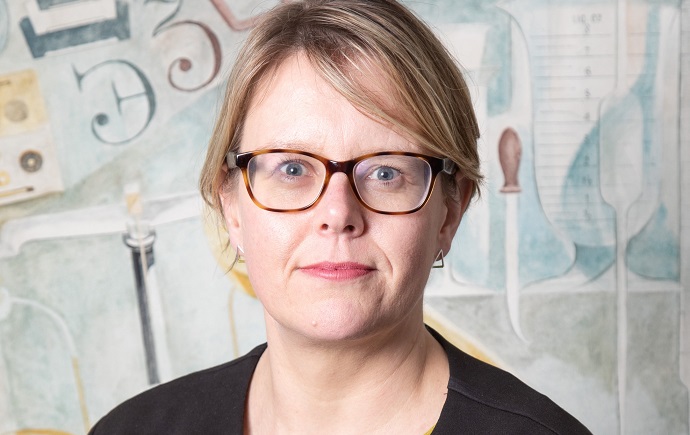
Gaby Bright
What the QS Rankings measure
The QS Rankings cover several different categories. These include overall university rankings, regional rankings and rankings within different disciplines or groups of related disciplines. It’s in this final category that Monash’s Faculty of Pharmacy and Pharmaceutical Science took first place.
In all, 1,500 universities worldwide were assessed across 51 subjects and scored on five different factors:
- Academic reputation
- Employer reputation
- Citations per paper, and
- H-index.
Each of these factors is weighted, and these weightings vary depending on the discipline being ranked. For instance, in life sciences and medicine, citations and h-index count for more than in arts and humanities, where academic reputation counts for as much as 60% of the overall score.
Monash received an overall score of 94.2 for Pharmacy and Pharmacology, with the next highest position going to Harvard University, which scored 93.2. Below, we look at each of these factors that went into this result and examine why Monash likely performed so well.
Academic reputation (40% of overall score)
View

Employer reputation (10%)
View
Research citations per paper and h-index (25% each)
View
Our Faculty’s global focus
The Faculty of Pharmacy and Pharmaceutical Sciences has a long history of focusing its attention globally - one that stretches back to its predecessor institution, the Victorian College of Pharmacy. As long ago as 1970, the College established the Intersearch program with the University of Kansas. This allowed high-performing students, including former Dean, Professor Charman, to travel to the United States to collaborate on research. This same spirit of international collaboration continues today.
“In virtually all instances, the only truly novel thing that any biomedical researcher can realistically claim is simply the start of a good idea," Professor Christopoulos says.
"Everything else comes from partnership and collaboration. A smart institution will acknowledge that there are areas that they lead, but there are also areas where they need to partner well, early, and strategically. And many of these partnerships are often international. As a Faculty, we have had a long track record of major, sustained international partnerships with industry and other leading academic institutions.”
Professor Christopoulos says that one of the Faculty’s “proudest and most important initiatives” in this space has been the formation of the PharmAlliance - a research, professional practice and education partnership between the schools of pharmacy at Monash University, University College London (UCL) and the University of North Carolina at Chapel Hill (UNC).
“Each school is ranked in the global top 10, and it is the first cross-continent model of this type in the world, which was grown organically through a shared sense of vision and purpose,” Professor Christopoulos says.
"Rankings will come and go, but scientific rigour, educational credibility and improving the human condition are not negotiable.”

Professor Bill Charman AO (left) and Professor Arthur Christopoulos FAA FAHMS
Standing on the shoulders of giants
Professor Christopoulos says there is no way the Monash Faculty of Pharmacy and Pharmaceutical Sciences could be where it is today without decades of hard work from everyone involved. He especially attributes this to the quality of staff, and the spirit of collaboration they bring to their work.
“When someone comes to work at Monash, they leave their ego at the door. But they also know they will be followed, supported and limited only by their imagination.”
“This is one of the reasons we’re able to attract the best academics and researchers. There is no way that we could be where we are without having excellent staff across the board, working together towards common goals.”
He also credits the ideas, innovation and entrepreneurialism of his predecessor, Professor Charman, as one of the defining factors in the Faculty’s recent successes.
Professor Christopoulos says that when Professor Charman became Dean in 2007, he immediately took a very different approach to arranging the Faculty’s research and education programs. This involved looking at the needs of the community, pharmacy profession and pharmaceutical sciences network before realigning the entire school to meet them.
“You don’t become the best at anything by just doing what everyone else does. You have to offer more, and that is what Professor Charman focused on.”
Professor Charman’s approach included the Faculty restructuring its research arm as the Monash Institute of Pharmaceutical Sciences (MIPS). Within MIPS, research was divided into themes that aligned with the drug discovery, development and medicine use pipeline, signalling areas of expertise but also the Faculty’s in-house collaboration capability. More recently, a new theme, led by Professor Paul White, was created for Pharmacy and Pharmaceutical Sciences Education Research (PPSEd), and this theme sits alongside MIPS.
Today, MIPS, led by Professor Chris Porter, is one of Australia’s most successful biomedicine research institutes and a known brand in its own right.
Professor Christopoulos is confident that PPSEd will eventually achieve a similar level of brand recognition in the education space as MIPS does in the research space. “To me”, he added, “it is all about differentiation, collaboration and impact - be it in education, research, enterprise or engagement”.
An example of education innovation that has put Monash at the forefront of Pharmacy and Pharmacology around the world is MyDispense, a free tool that allows students to dispense drugs in the ‘safe’ environment of an online simulation. Developed as a way to reduce dispensing error, it is now used by 210 pharmacy schools across 41 countries.
“Wherever we go in the world, people ask us about MyDispense,” says Deputy Dean Professor Paul White. “It’s really hard to estimate the reputational gain that this brings to Monash. However, it has been one of the things we have done that has helped transform education - not just here, but globally.”
Read more about the future of MyDispense here.

Professor Paul White (left) and Professor Chris Porter