Dowling Honours Projects
Professor Damian Dowling
The Experimental Evolutionary Biology Research Group
damian.dowling@monash.edu
Projects
Does mitochondrial evolution “curse” males to shorter lifespans? Full time Background: Evolutionary theory predicts that maternal inheritance of the mitochondria will lead to the build up of mutations in the mitochondrial genome that are sexually antagonistic – harming males, but benefitting females (this idea has been called the “mother’s curse” hypothesis). This is because maternal inheritance of this genome means that all mutations in the mitochondrial DNA are screened for their function only through females (i.e. males never pass their mtDNA onto their children – they are evolutionary dead-ends). Mutations that work well in females are then favoured by natural selection, even when these same mutations are detrimental to male health. Consequently, we predict that mitochondrial genomes will carry numerous “male harming” but “female friendly” alleles, and act as genetic hubs of sexual conflict – that’s a fascinating idea when you consider just how important the mitochondrial genome is in regulating energy production in animals! Project Aims: We are offering 2 projects, whereby the students will test the idea that mitochondrial genomes carry “male-harming” mutations that affect sex differences in life-history. One student will focus on lifespan, the other on reproductive success. The students will explore the idea that maternal inheritance of mitochondria plays a role in driving the evolution of sex differences in these traits (when it comes to lifespan, for example, in Australia females live on average 5 years longer than males). They will also test whether there are “counteradaptations” hidden in the nuclear genome that try to restore the balance of this genetic conflict by offsetting the negative effects of the mitochondrial mutations. The Dowling lab has prepared for this project by developing the tools and resources the student will need to test this hypothesis. This includes a set of unique genetic strains of fruit flies, each of which carry a different genotype, and which enables the student to explore the effects of mitochondrial genotype, nuclear genotype, and their combination on sex differences in lifespan and reproductive performance of the flies. Why study evolutionary and behavioural ecology in fruit flies? Fruit flies are great animals to study processes of sexual conflict, concepts of evolutionary ecology related to life-history, and animal behaviour. For example, males are very coercive, and compete with each other, and with females, for access to reproductive opportunities. This includes participating in complex mating behaviours that include “fencing” – essentially swordplay with their forelegs. The ejaculate of these males also contains toxic proteins that have evolved to manipulate the reproductive physiology and lifespan of the females. The flies might be small, but this is actually a massive advantage when it comes to doing scientific research on them, since it means we never have a problem with sample sizes, and we can breed them up quickly and study them with relative ease. Techniques: The student will learn cutting edge techniques in experimental design relevant to the fields of evolutionary biology and ecology. They will learn to work quickly with 1000s of live animals, and set up, and implement experiments that are able to separate “causation” from “correlation”, with the power to disentangle genetic vs non-genetic effects on lifespan, and to hone in on the contribution of the mitochondria to determining traits like lifespan. This involves working extensively with stereomicroscopes, collecting, sexing, and crossing fly populations, and using equipment developed for behavioural and physiological phenotyping. The student will learn to synthesise and appraise key research and concepts in evolutionary ecology, to position their research at the forefront of the scientific discipline, and to lead and manage a major research project, within a dynamic and collaborative team setting. They will become proficient with the quantitative analysis of data, using statistical approaches such as linear mixed modelling.
***** Can novel Wolbachia strains improve on current Wolbachia biocontrol methods? Full time Supervisor: Dr Heather Flores Background: Wolbachia is a bacterial endosymbiont found in nearly 60% of insect species. However, it is not naturally found in Aedes aegypti, the mosquito vector responsible for transmitting significant human pathogenic viruses such as dengue and Zika. Work over the last decade has shown that various Wolbachia strains can be introduced into Ae. aegypti, resulting in mosquitoes that have a reduced ability to transmit viruses such as dengue and Zika. These Wolbachia strains have differing impacts on host fitness and vary in how well they reduce virus transmission in their mosquito hosts. Ae. aegypti transinfected with two strains of Wolbachia, wMel (originally from Drosophila melanogaster) or wAlbB (originally from Ae. albopictus) have been released in field sites around the world, and multiple sites have seen a significant reduction in dengue incidence. However, both strains have struggled in some field release sites due to fitness impacts on hosts, which can be exacerbated at high temperatures, as well as reduced temperature tolerance of Wolbachia strains. Additionally, while both strains significantly reduce the ability of Ae. aegypti mosquitoes to transit viruses, a small proportion of mosquitoes still develop infectious saliva which is needed for virus transmission. Therefore, there is a significant need for alternative Wolbachia strains that limit fitness impacts on their Ae. aegypti hosts and further limit their ability to transmit viruses. Project Aims: This project will determine the suitability of novel Wolbachia transinfections in Ae. aegypti for potential field release. Techniques: The student will learn mosquito husbandry, experimental design, and data analysis. ***** |  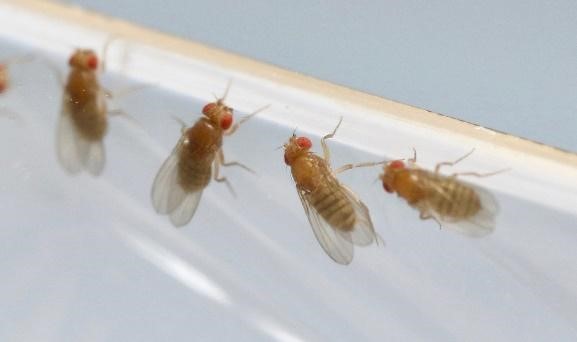  |