
Hodgins Projects
A/Professor Kay Hodgins
Plant Ecological Genomics Research Group
kathryn.hodgins@monash.edu
Projects
Project offering: Honours/BIO3990/GEN3990 Project title: Can herbarium collections reveal evolution in action? Background: Invasive species often encounter new climates and may need to adapt rapidly as they spread. Flowering time is a key trait because plants must reproduce before seasonal drought or other stressful conditions occur. Herbarium collections preserve plants sampled throughout the history of an invasion and can therefore provide a record of phenological change through time. Capeweed (Arctotheca calendula) was introduced to Australia more than a century ago and now occupies a broad range of climates, making it an excellent system for investigating rapid evolution during invasion. Project Aims: This project will use historical herbarium specimens to test whether flowering phenology has changed during the Australian invasion of capeweed. The student will score reproductive stage from specimen images and examine how flowering varies with climate, geography and collection year. The project may also test whether climatic clines in phenology have strengthened through time as capeweed adapted to Australian environments. Students with an interest in evolutionary genomics may also integrate existing herbarium genome sequences to investigate how allele frequencies at candidate flowering-time genes, or genomic signatures of local adaptation, have changed during the invasion. Techniques: Herbarium research, image-based phenotyping, climate and spatial data analysis, and statistical modelling, with opportunities to integrate existing genomic datasets. ***** Project offering: Honours/BIO3990/GEN3990 Project title: Why do flower colour polymorphisms persist in nature? Background: Many plant species exhibit striking variation in flower colour and patterning, yet the evolutionary processes maintaining this diversity remain poorly understood. Floral traits can influence interactions with pollinators, herbivores and the physical environment, potentially leading to natural selection that varies across habitats. Capeweed (Arctotheca calendula) is an invasive species that displays a conspicuous flower colour polymorphism, with populations varying markedly in the frequency of banded and non-banded flower forms across Australia. This provides an excellent opportunity to investigate the ecological processes that maintain genetic diversity in natural populations. Project Aims: This project will investigate the ecological mechanisms maintaining the flower colour polymorphism in capeweed. The student will test whether the alternative flower morphs differ in fitness and evaluate several hypotheses for why both forms persist in nature. Potential mechanisms include differences in pollinator attraction, flower temperature, drought tolerance, herbivory, or other environmental factors that generate spatially or temporally varying selection. Students with an interest in evolutionary genomics may also investigate genomic signatures of balancing selection at the underlying flower colour locus using existing whole-genome datasets. Techniques: Greenhouse and field experiments, plant phenotyping, experimental design, measurement of reproductive success, statistical analysis, with opportunities for evolutionary genomic analyses using existing datasets. ***** Project offering: Honours/BIO3990/GEN3990 Project title: Does hybridisation drive the evolution of flowering time during biological invasion? Background: When closely related species invade the same region they often compete for resources and may hybridise, reducing reproductive success. Natural selection may therefore favour traits that minimise these costly interactions, a process known as reproductive character displacement. The invasive sea rockets Cakile maritima and Cakile edentula provide an excellent opportunity to test this hypothesis. Previous research has shown that, although native populations flower at similar times, the two species have evolved divergent flowering times following invasion. One explanation is that divergence in flowering time reduces opportunities for hybridisation and increases reproductive success. Project Aims: This project will test whether interactions between the two species generate selection on flowering time. The student will establish experimental populations in which the species are grown either alone or together and measure flowering time, flowering overlap and reproductive success. The project will test whether the presence of the other species alters selection on flowering time and favours reduced reproductive overlap. Techniques: Field experiments, plant phenotyping, measurement of flowering time and fitness, experimental design, and statistical analysis. |  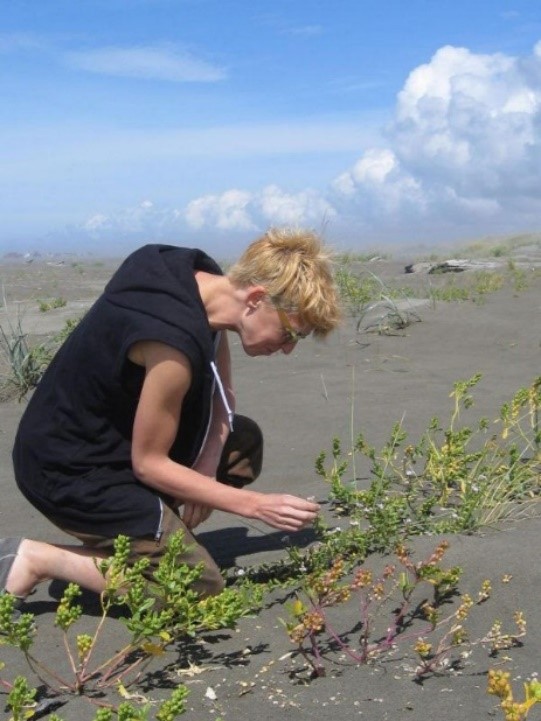   |