
Roycroft Projects
Dr Emily Roycroft
Evolutionary and Conservation Genomics Research Group
emily.roycroft@monash.edu
Projects
Project offering: Honours Conservation genomics of the endangered heath mouse Background: The heath mouse (Pseudomys shortridgei) is a small native Australian rodent that persists in fragmented populations across south-eastern Australia and south-western WA. It is listed as Endangered under Australia's Environment Protection and Biodiversity Conservation (EPBC) Act. Previous genetic work has shown substantial divergence between eastern and western populations, suggesting they represent separate Evolutionarily Significant Units (ESUs) that have been isolated since the early Pleistocene. However, little is known about the genetic diversity and extent of inbreeding in individual populations. Recent population declines, long-term isolation of remnant populations, and potentially low genetic diversity, place the heath mouse at high risk of extinction. Project Aims: This project will use genomic-scale data to assess levels of genetic diversity and inbreeding in the threatened heath mouse populations, and apply genetic approaches to reconstruct the near- and long-term demographic history of the species across both ESUs. These results will inform conservation management of the heath mouse, and guide potential genetic rescue to save the heath mouse from extinction. Techniques: This project will involve bioinformatics, population genomics and statistical analysis in Linux command line and R, and would suit a student who is motivated to develop these skills. The project may also involve molecular laboratory work (DNA extraction and genomic library preparation), depending on the interests of the student. *** Project offering: Honours Phylogeography of northern Australian mammals Background: Phylogeography provides a window into the past, allowing us to reconstruct the evolutionary history of species, and of the environments in which they live. Past environmental change leaves signatures in the genomes of individuals and populations, which enable high-resolution insight into past and ongoing patterns of isolation, connectivity, introgression, range shifts, and speciation across taxa. Project Aims: This project will investigate the 1) comparative phylogeography, 2) genetic diversity/genetic health, and 3) demographic history of multiple co-distributed small mammals across northern Australia, and compare this to the patterns observed in other taxonomic groups. Techniques: This project will involve bioinformatics, phylogenetics, population genomics and statistical analysis in Linux command line/Python/R, and would suit a student who is motivated to develop these skills. The project may also involve molecular laboratory work (DNA extraction and genomic library preparation), depending on the interests of the student. *** Project offering: Honours Genetic health of Australia’s island mammals Background: Australia has the highest rate of recent mammal extinction in the world, with 46 mammals lost since European colonisation in 1788, and over 30% of surviving species at risk. If not for offshore islands, this world-leading rate of mammal extinction would be even higher. Largely free from feral-predators and other threats prevalent on mainland Australia, islands protect 29 nationally threatened mammal species from extinction. These very small populations, isolated from the mainland for at least ~8,000 years, are now crucial sources for conservation translocations and genetic rescue, but little is known about their genetic health. Project Aims: This project will investigate 1) genetic diversity, 2) isolation time, and 3) harmful mutations in island populations compared to mainland populations of a chosen focal species. The focal species is flexible and can be selected based on the interests of the student. Techniques: The core component of this project involves bioinformatic analysis of whole-genome sequencing data and population genomics, using Linux command line, high-powered computational analysis, and data visualisation/statistics in Python/R. This project would suit a student that has some experience with Linux command line or coding, or is very motivated to learn these skills. The project may also involve molecular laboratory work (DNA extraction and genomic library preparation), depending on the interests of the student. *** Project offering: GEN3990/BIO3990 Project title: Geographic predictors of genetic diversity in Australasian mammals Background: Genetic diversity underpins the ability of species to adapt to environmental change and is therefore a fundamental component of biodiversity conservation. Across Australasia, many mammal species have experienced recent population declines, habitat fragmentation, and range contractions, yet broad-scale patterns of genetic diversity and the factors that shape them remain poorly understood. By first understanding the extrinsic and intrinsic factors that contribute to genetic diversity through evolutionary time, we can then disentangle the impact of recent population collapse on genetic diversity in Australia since European colonisation. Project Aims: This project aims to identify geographic, environmental, and historical factors that influence the genetic diversity of mammal species throughout Australia, New Guinea, and nearby islands. By collating species distributions, environmental data, and life-history traits, and combining these with existing genome-scale datasets, this project will determine the drivers of genetic diversity through evolutionary time. Techniques: This project will involve statistical analysis in R, and would suit a student who has some previous experience with handling data in R, or is motivated to learn these skills. The project may also involve molecular laboratory work (DNA extraction and genomic library preparation), depending on the interests of the student. *** Project offering: GEN3990/BIO3990 Project title: Historical demography of Australia’s threatened mammals Background: Understanding how species have responded to past environmental change provides critical context for predicting their resilience to future threats. Australia’s threatened mammals have experienced substantial population declines since European colonisation, yet their long-term demographic histories remain poorly understood. Project Aims: By comparing demographic trajectories across threatened mammals (marsupials or rodents) species from whole-genome data, the project will identify periods of expansion, contraction, and persistence associated with past climatic and environmental change. These insights will improve understanding of species' evolutionary histories, and provide an important foundation for conservation management by identifying taxa that may be particularly vulnerable due to historically small or declining population sizes. Techniques: This project will involve bioinformatics, population genomics and statistical analysis, primarily in Linux command line, and would suit a student who is motivated to develop these skills. The project may also involve molecular laboratory work (DNA extraction and genomic library preparation), depending on the interests of the student. | 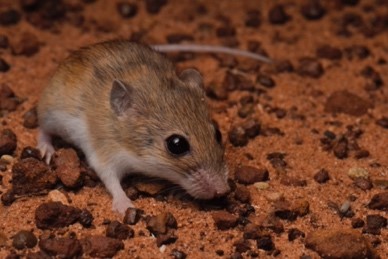 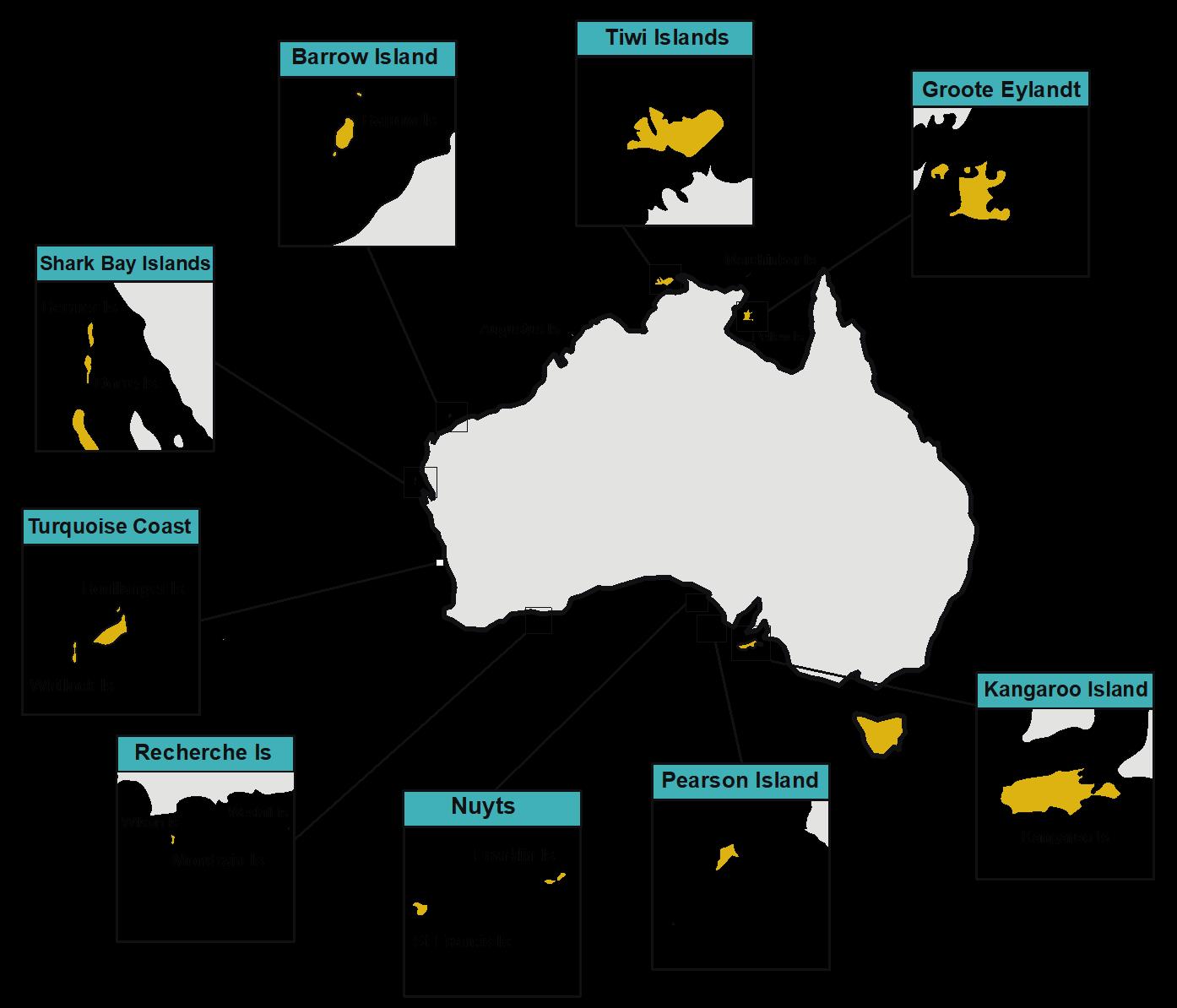 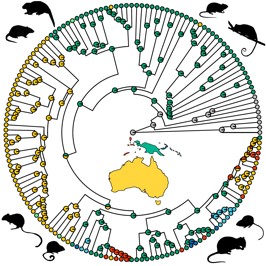  |