
Our Community
The Monash School of Mathematics is a diverse and inclusive community of people who share a love of studying, learning, teaching, and researching mathematics.
Meet some of the faces of the Monash Maths Community.

ABBEY LAVERY - UNDERGRADUATE STUDENT
I am currently half-way through my third year of my undergraduate degree, and I am majoring in Pure Mathematics and Physics. I have always been interested in maths – it was my favourite subject at school and still is. It was the most natural discipline for me, and I loved that you could describe real life things and events with just numbers, symbols and equations.
I delight in the patterns, the rules and the sense of playing a puzzle you get when doing maths. Even now at university level these are still the reasons I love and am studying maths! Mathematics, I believe, is so understated in its significance compared to some of the other sciences which have a more tangible importance.
Mathematics plays a key role in all the sciences as one of its tasks and purposes is to describe, model and predict natural phenomena and scientific theories. So far, studying mathematics at Monash has been everything I hoped it would be. I have had some fantastic opportunities within the faculty such as doing a Summer Research Project and participating in the Simon Marais Mathematics Competition.
My goals currently are to complete my undergrad and continue onto an honours year next year and in the future hopefully complete a PhD. Although I am still undecided what area this will be in, whether Maths or Physics, the wonderful thing is that whichever path I choose Maths will always play a starring role!

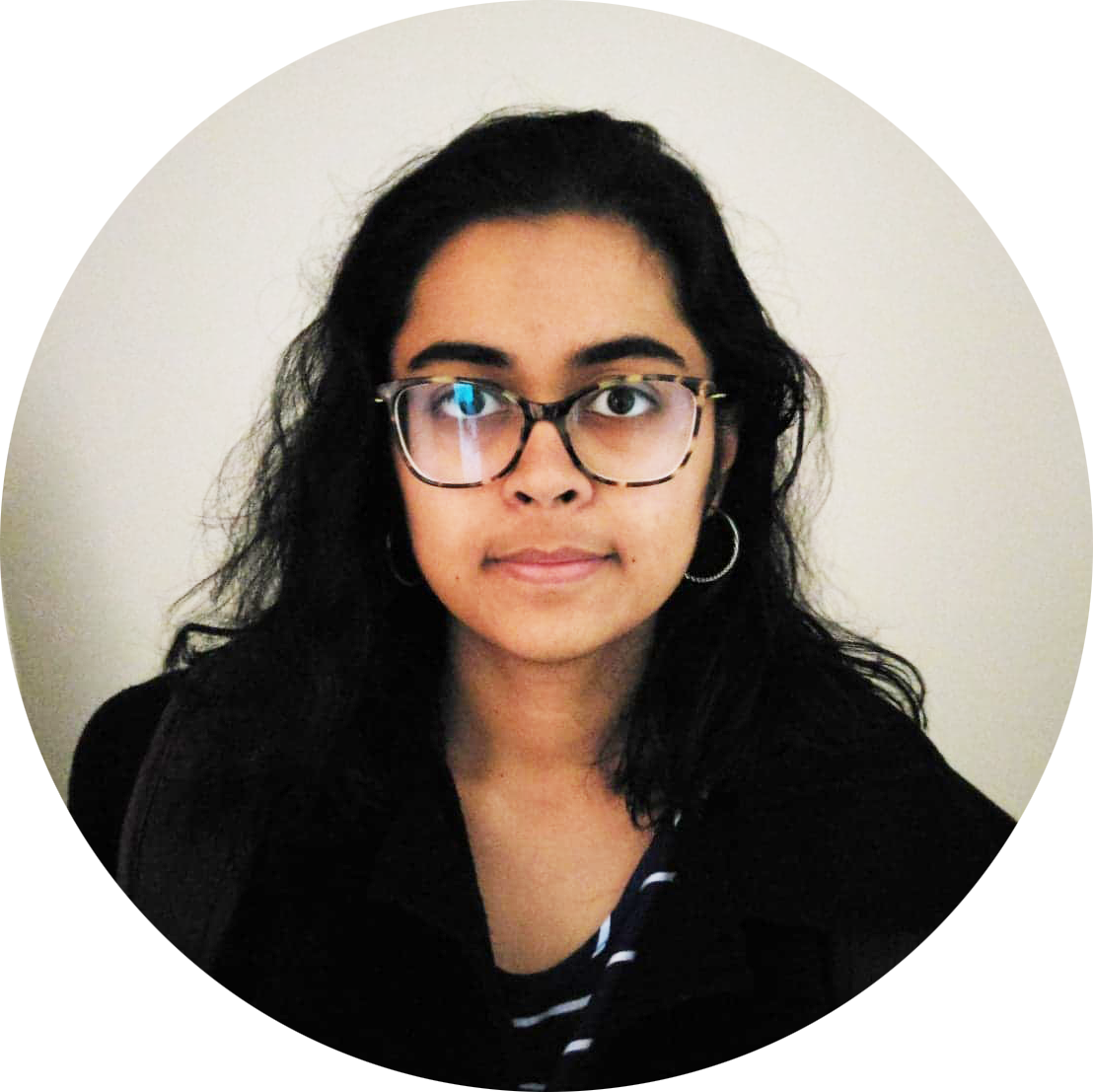
SIKSHA SIVARAMAKRISHNAN - HONOURS GRADUATE
Maths wasn't always my favourite subject, even though I always enjoyed problem solving. I became immersed in the engagement programs by the Maths faculty at Monash like Lunch Maths and Pure Maths Meetups, which encouraged problem solving, and talking about and doing maths in an engaging way. During this time, I discovered my love for pure maths, and studying a new area of mathematics for the simple purpose of learning an elegant new theory. With the mentorship and encouragement of my
lecturers and others in the faculty, I was pushed to do honours, and I am so grateful for the experience. I was able to delve deeply into a very specific idea, while also broadening my understanding of different areas of mathematics.
I would highly recommend anyone who is interested in maths, or is even thinking about doing it to participate fully in all the activities available and talk to lecturers about it. Even if it wasn't your go to subject in high school, you might change your mind once you get to university subjects, like me! It is a highly rewarding subject and I miss it everyday.
I am currently a teacher, but I plan on continuing to engage with maths with my lecturers and colleagues at Monash to continue to learn and have fun participating in this beautiful subject!
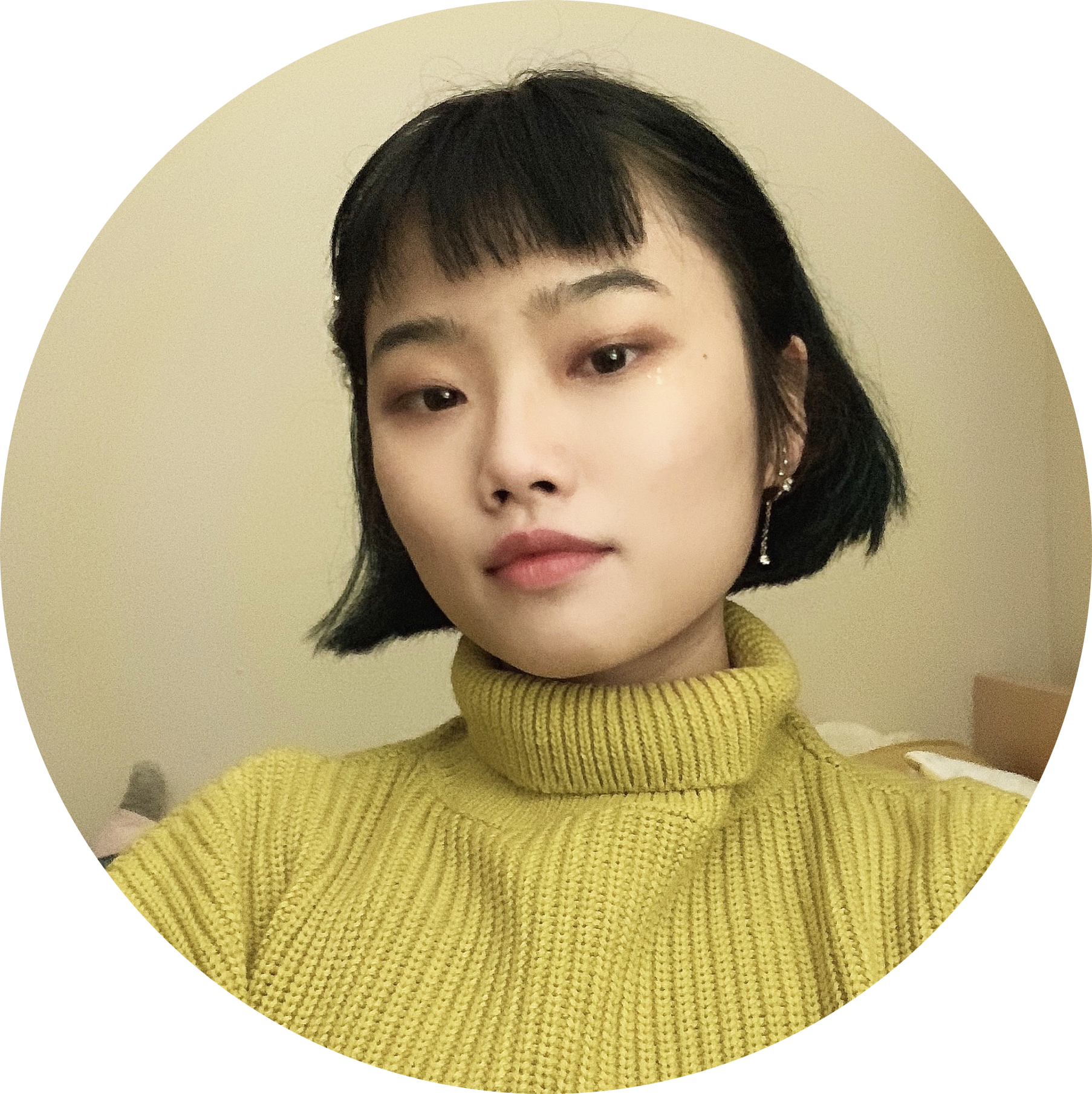
EILEEN PAN - PHD GRADUATE
Good day! I have submitted my thesis under Prof. Heiko Dietrich and Assoc. Prof. Adam Thomas (Warwick) and funded by the Monash–Warwick Alliance Joint PhD program. My research project focused on finite groups of Lie type with broad interests in linear algebraic groups and in computational aspects. Having done my BEd (Hons) degree in Secondary Education at Monash, I am also passionate about exploring new ideas and pedagogy in teaching and learning maths better. Apart from maths, I spend a big chunk of my time on books and theatre.
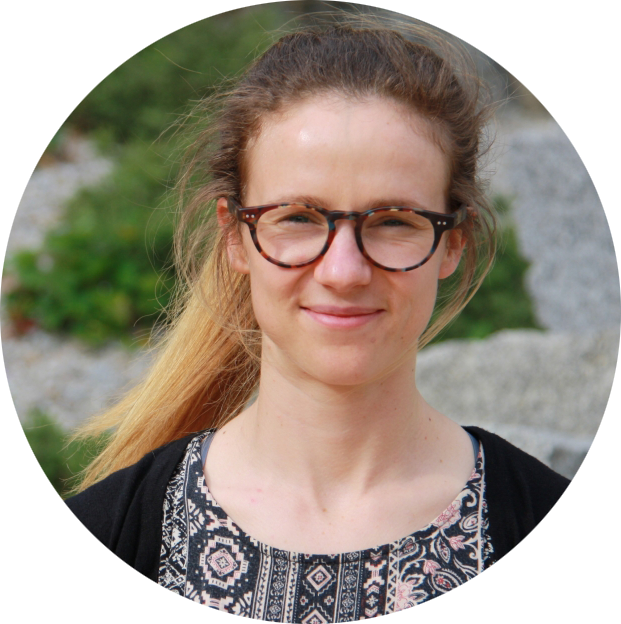
ELLENA MOSKOVSKY - PHD GRADUATE
I have always been passionate about mathematics, even from quite a young age. There are many things about maths that I love and enjoy – it’s rigorous and structured, yet it can also be very creative and chaotic. I like solving problems by thinking critically.
I completed my PhD in pure mathematics in a field loosely called enumerative geometry in 2022, studying problems that arise from mathematical physics and the mathematical study of string theory. Since then I have been working in industry, at a high-frequency trading firm. In my life, I've been lucky to be surrounded by people who have not only supported my endeavour to pursue mathematics, but have also encouraged and believed in me. And now the pursuit has opened up so many exciting opportunities for me. Every young woman pursuing mathematics deserves the same.
ANNE BOSCHMAN - RESEARCH FELLOW
Hi there! I am a Research Fellow here in the School of Mathematics, specialising in applied and computational mathematics. I have always been naturally curious about the world around me and love to solve problems, which definitely contributed to me stepping into the world of mathematics.
What I love about mathematics is that it acts as a language. It is a way to express and formalise ideas, whether they are very simple or incredibly complex. This makes mathematics a powerful tool across many scientific areas. It is key to communicating your ideas in a clear way to others.
To me, there is beauty in its interaction with other disciplines; how it can be used to develop models ranging from the smallest to the largest scales in the world. When I solve the models I work with on a computer, I enjoy knowing that the numerical method used will give me a meaningful result, simply because I understand the way the method works or have designed it to operate in a particular way.
I believe that many of the skills that you learn as a mathematician are highly transferable to other disciplines or life outside academia. It is fun seeing mathematics show up in so many places.
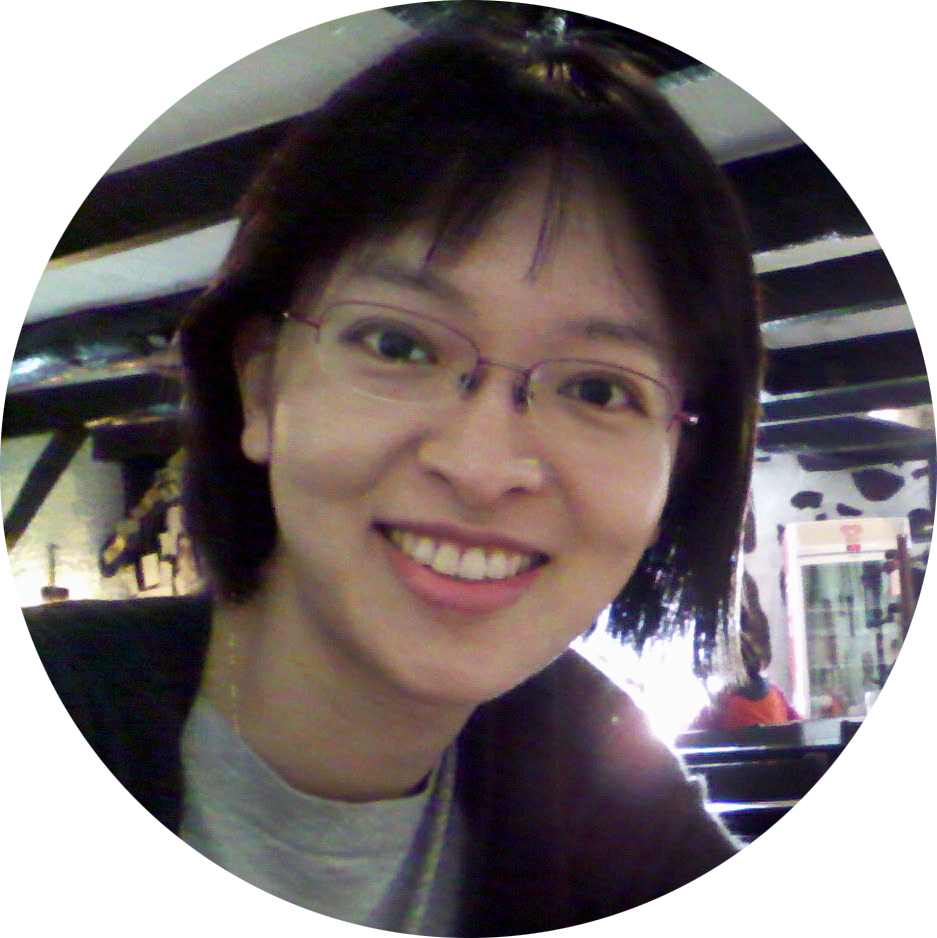
DR SOOJIN ROH - ASSISTANT LECTURER
As a kid, I loved math, and I was always interested in how numbers worked. Later, I became attracted by using mathematics and real world data in exploring the uncertainty of the world, so I chose to study statistics.
Now when I hear a number, I come to think about how they came up with that number, and what might have gone wrong in the data
analysis. Statistics can discover the unexpected patterns in data, support what’s been believed or disclose that’s not true in diverse areas such as climate research and medical studies on the outbreak of a disease like COVID-19, and using statistics is a way that data is maximally useful to society and improves our world.
If you want to use your quantitative skills in a way that can benefit society, statistics is an ideal career.
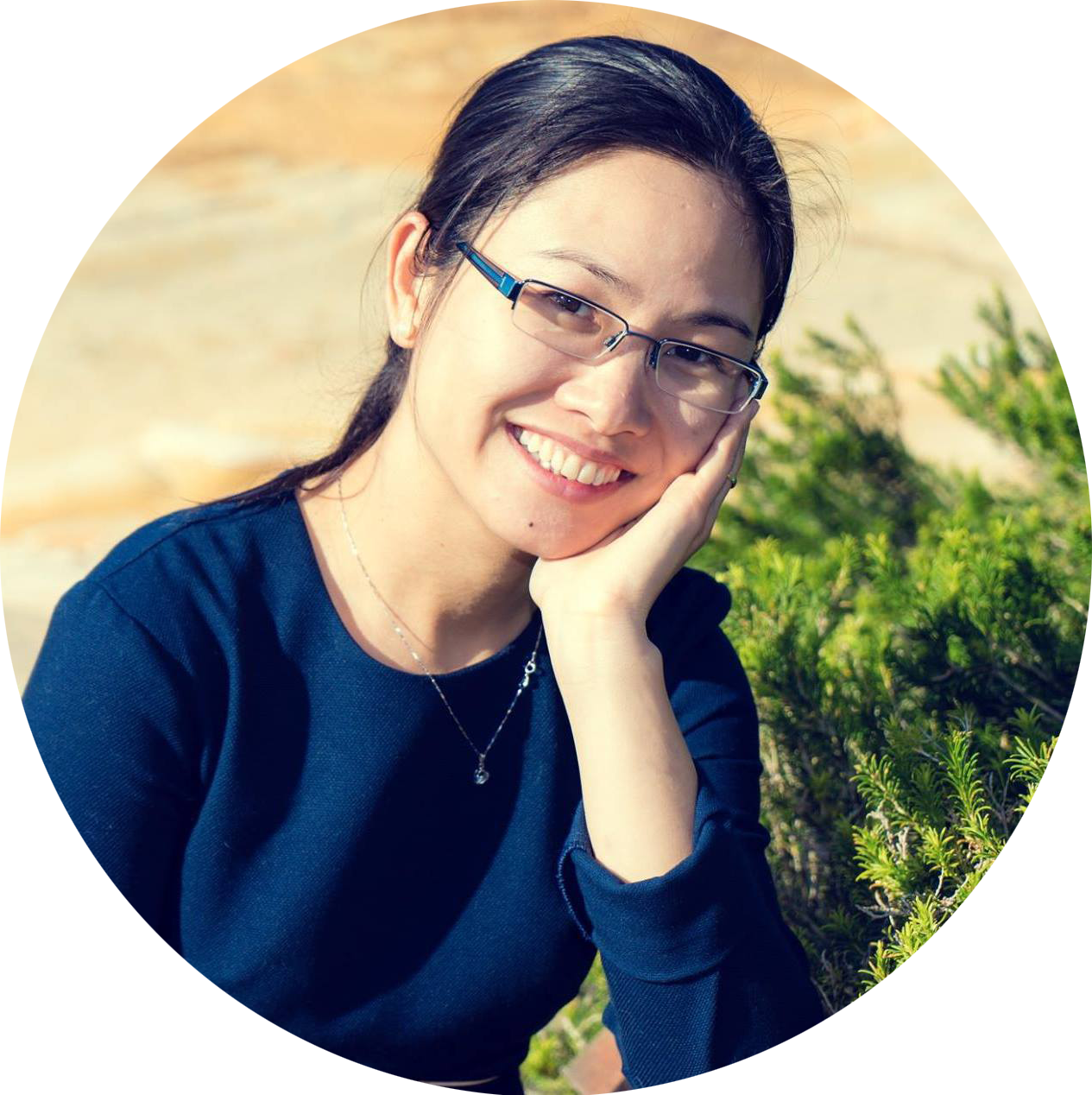
DR KIM NGAN LE - SENIOR LECTURER
I've enjoyed mathematics since I was in 8th grade. I always love to learn new mathematics, tackle new problems. When I started university, I took math subjects and realized that mathematics is so interesting and so beautiful. It is playing an ever more important role in the natural sciences like physics, chemistry, biology, engineering as well as in finance and computer science.
My goal is not only teaching maths but also showing students how it influences their everyday life and encouraging them, especially female students, to pursue math careers. Many girls might already be interested in math and science, but eventually lose interest due to lack of encouragement. Mathematics is not a gender-specific field. Monash has been changing female students' attitudes toward math by offering them encouragement and opportunities to learn; introducing female role models to keep them interested; and tapping into their innate math skills.
To all female students who have fallen in love with math: "Believe in your intellectual abilities and remember that math ability - like all abilities - can be improved over time with continuous effort and engagement".
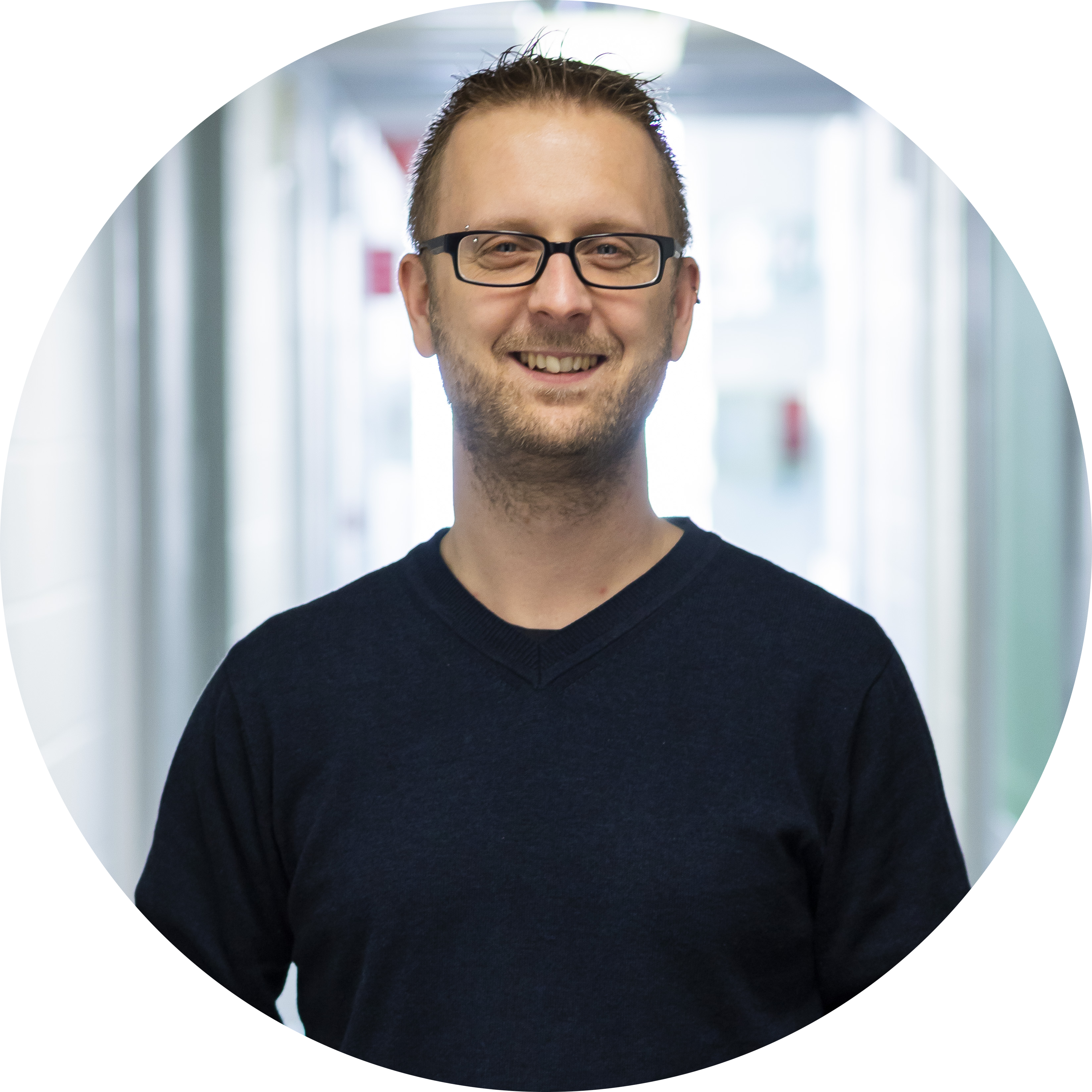
PROFESSOR HEIKO DIETRICH
My love for mathematics began in high school in Germany and a key moment was in year 11 when my teacher introduced me to a
mathematician to work on a school project. This experience led me to study mathematics at university level, which I completed in 2009 with my PhD. Subsequently, I was a research fellow in New Zealand and Italy, before I settled in Australia in 2013. As a school student I never imagined that becoming a mathematician would be so exciting and international!
What I like most about mathematics is that it uncovers absolute truths that will stay forever: for example, Pythagoras Theorem about right-angled triangles has been proven 2-3 thousand year ago and will remain valid in the future. That's amazing! At Monash, I do fundamental research in computational algebra, and this sort of research is driven by curiosity and the desire to push the boundaries of what’s currently known. To me, mathematics is essentially about observing patterns and finding “proofs”, or logical arguments, that explain these patterns.
My advice to future students is that if you are passionate about mathematics, then you should definitely consider it a career option. When studying mathematics, you'll acquire skills that are in high demand by employers in many sectors. It'll surely open a lot of doors for you!
PROFESSOR JESSICA PURCELL
I liked mathematics in school, but I didn’t understand that mathematics could be a career. I remember telling someone early in my undergraduate days that I had already learned nearly everything there was to learn about mathematics — I couldn’t imagine maths beyond multivariable calculus. With the support of strong mentors and the encouragement of my professors, I continued taking more and more mathematics courses, and discovering that in fact there was more and more to learn.
A few years later, I did have a hard time deciding whether or not to get a PhD in mathematics. While I was doing well in my maths classes, I imagined that a mathematician had to be clever and quick – the kind of person who did really well on maths contests and competitions. I was not that kind of person. Again with some encouragement, I built up enough confidence to try a PhD. And again I found that I liked it, and continued to enjoy mathematics most of the time, and I realised that the day to day job of a mathematician was not much like a maths contest. In any case, I am happy to be a mathematician now.