Balasubramanian Honours Projects
Professor Sureshkumar Balasubramanian
Phenotypes to Genes and Mechanisms Research Group
mb.suresh@monash.edu
Projects
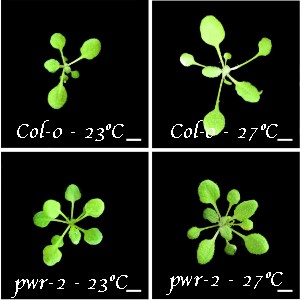
Epigenetic regulation of thermal responses in plants Background: When you eat spicy food, you feel the heat and sweat! When the autumn is a bit hot, plants flower and announce an early spring arrival. Have you wondered how do the plants know it is spring to flower? How do they sense temperature and respond? Our work in recent years suggest a key role for epigenetic gene regulation in thermal responses. Students who are interested in this project are encouraged to look at Casal and Balasubramanian, Ann. Rev. Plant Biol, 2019 and Tasset et al, PLoS Genetics, 2018 for background on the proposed project. Project Aims: To characterise the gene regulatory networks involving the gene POWERDRESS, which encodes a component of the Nuclear Co-Repressor (N-CoR) complex using genetic and molecular techniques. The specifics of the project will be decided upon mutual discussions with the prospective candidate. Techniques: This project will utilise techniques including: ChIP assays, qRT- PCR, molecular biology techniques such as cloning, sequencing as well as phenotyping and genetic analysis. This project would require you have strong skills/interest in genetics and molecular biology. Research Methods is not a pre- requisite for this project.
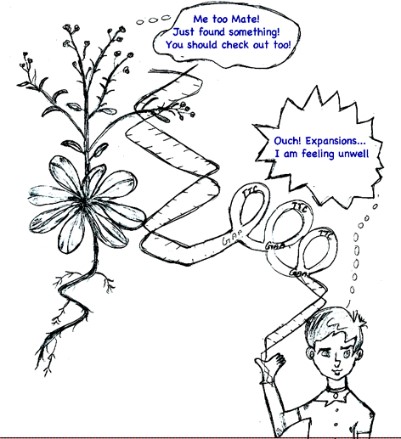
***** Epigenetic gene silencing in Friedreich ataxia, a triplet expansion disease Background: Trinucleotide repeat expansions underlie several neurogenetic diseases such as Huntington disease, Friedreich ataxia and Fragile X syndrome. Friedreich ataxia occurs due to an intronic repeat expansion associated with epigenetic silencing. This project will investigate the potential molecular mechanisms that lead to epigenetic gene silencing caused by expanded repeats taking advantage of the findings in other systems. Students who are interested in this project are encouraged to look at Eimer et al, Cell, 2018 for background on the proposed project. Project Aims: To analyse the molecular mechanism that mediate phenotypic consequences of triplet repeat expansions in diverse organisms. The specifics of the project will be decided after discussions with the prospective candidate. Techniques: This project will utilise techniques including: ChIP assays, qRT- PCR, molecular biology techniques such as cloning and sequencing, cell culture techniques and protein work (western blots, immunoprecipitation etc). This project would require you to have strong skills/interest in genetics and molecular biology.
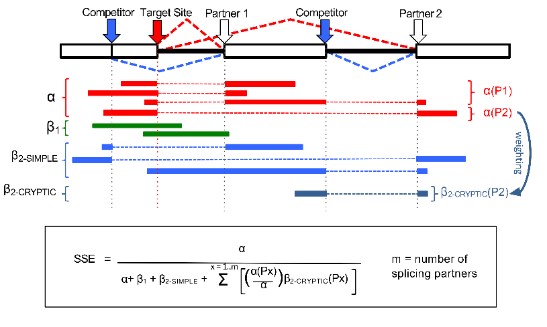
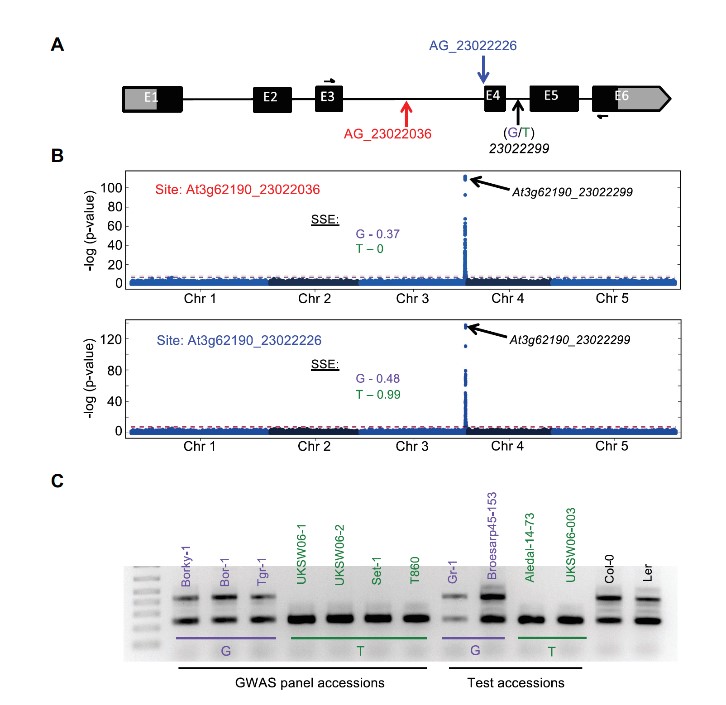
***** Deciphering the splicing code through Genome Wide Association Studies (GWAS) Background: RNA splicing is a key molecular process that plays a vital role in gene regulation. Changes in splicing mediate growth and development of eukaryotic organisms. Differential selection of splice sites in an RNA molecule leads to differential splicing. How is this process decided? What are the genetic determinants of this process? How does this vary and lead to human genetic diseases? This project will investigate some of these key questions. Students who are interested in this project are encouraged to look at Dent et al, NAR-Genomics and Bioinformatics, 2021and Sureshkumar et al, Nature Plants, 2016 for background on the proposed project. Project Aims: To determine the molecular basis of how splicing decisions are made and to identify factors and rules that govern splicing decisions in organisms. Techniques: This project will utilise techniques including: next generation sequencing approaches, computational approaches to analyse splicing, genome-wide analysis of splicing. Programming skills will be great, but you would also learn standard molecular genetic techniques such cloning, sequencing etc. This project would require you have strong skills/interest in computational genetics and molecular biology. Research Methods is not a prerequisite for this project.
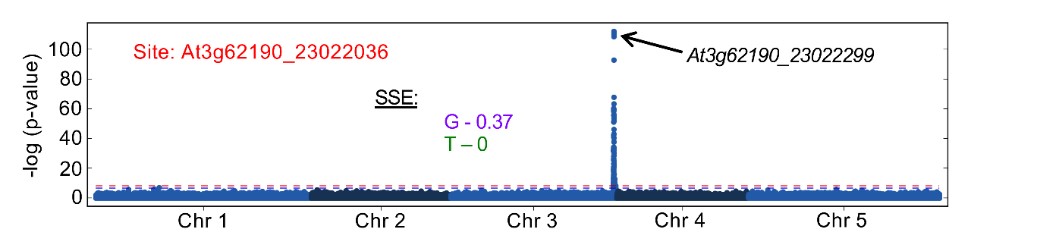
***** Genome editing of splicing-associated SNPs using CRISPR Background: RNA splicing is a primary link between genetic variation and human disease. However, linking specific genetic variation with specific splice-sites is a huge challenge. We have recently developed a method to quantify splice-site usage and use this quantification as a phenotype to identify associated SNPs by GWAS (Dent et al, NAR-Genomics and Bioinformatics, 2021). Project Aims: This project aims to apply this method on publicly available human RNA-seq data, identify interesting SNPs and then edit them using CRISPR-based genome editors and then analyse their impact on splicing decisions. Techniques: This project will use computational analysis of splicing, CRISPR-genome editing methods and other standard molecular biology techniques. A student with strong interest or prior computational programming skills would find it an optimal project.
***** |  |