PhD Projects available within Monash-Bath Joint Doctoral Program
The School of Chemistry has a joint doctoral program with the University of Bath. Within this program the student performs a joint research project with a research laboratory in the partner University and spends 12 months in the overseas laboratory.
Below are projects currently on offer that are in competition for up to two funded studentships that have Monash University as the home institution.
There are also currently two funded scholarships available that have the University of Bath as the home institution. Please see this list of available projects on the University of Bath FindAPhD page, located here.
If your preferred project is one of the ones below, i.e. has Monash University as the home institution, then please submit an Expression of Interest using the form located here. Expressions of Interest close on Sunday, January 26, 2025.
In your Expression of Interest, you will need to choose three Monash University based projects, in order of preference.
Shortcut to project descriptions
Project #1 Electrochemical transformation of Carbon Dioxide to Deeply Reduced Products using Immobilised Molecular Catalysts
Project #2 Hydrogen Storage on Monolithic Carbon
Project #3 Selective and Sustainable Alkaline Earth-centred Activation of Inert Bonds and Substrates
Project #4 Electrifying Organocatalysis – Technology Enhanced Sustainable Organic Synthesis
Project #5 Synthesis of chemical sensors for detection of persistent organic pollutants
Project #6 Sustainable Synthesis of Drug Scaffolds from Biorenewable Feedstocks Using Visible Light Photocatalysis
Project #7 Environmental micro/nanoplastic aging pathways and impact on human health
Project #8 A Novel Label-Free Molecular Sensing Approach for Drug Tracking Using Vibrational Spectroscopy
Project #9 Photocyclisation: Enabling Atom-Economical Synthetic Transformations
Project #10 From electricity to pharmaceuticals: sustainability and understanding
Project #11 Making s-Block Elements Act Like Transition Metals
Project #1
Electrochemical transformation of Carbon Dioxide to Deeply Reduced Products using Immobilised Molecular Catalysts
Home Institution: Monash University
Supervisor at Monash: A/Prof. Jie Zhang, Supervisor at Bath: Dr Daniel Scott
The field of electrochemical reduction of carbon dioxide (CO2) has witnessed significant progress in recent years, driven by the urgent need to develop sustainable technologies for mitigating climate change and producing value-added chemicals. Among many catalysts developed so far, molecular catalysts dissolved in an electrolyte medium (i.e. homogeneous catalysts) are highly attractive since they exhibit a well-defined structure and active site, thereby offering opportunities to tailor the catalytic properties for specific CO2 reduction pathways.1 However, they also suffer from several major drawbacks, such as poor stability, low solubility, challenging product separation, and a highly limited product scope (typically low-value products with net electron transferred ≤ 2 per carbon, including oxalate, formate, and carbon monoxide). To overcome these limitations, immobilised molecular catalysts have gained increasing attention in recent years.2 This approach involves the immobilisation of molecular catalysts onto solid supports, such as porous carbon materials. The integration of molecular catalysts with solid supports facilitates efficient charge transfer and minimises aggregation effects, leading to improved selectivity and overall catalytic activity. As a result, more deeply reduced products, such as methanal, have been produced in aqueous electrolyte media, albeit with relatively low activity and product selectivity compared to nanoparticle counterparts.3
While significant strides have been made in this area, in this project Associate Professor Zhang's expertise in the electrochemical reduction of CO24-7 with that of Dr. Scott in designing the synthesis of molecular catalysts8,9 will be integrated to address remaining challenges. These challenges include optimising the design of immobilised molecular catalysts to achieve high selectivity towards deeply reduced products (such as methanol and multi-carbon products), enhancing long-term stability under practical operating conditions, and scaling up these technologies for industrial applications. The project is designed to address these challenges. At Bath University, the student will have the opportunity to design and synthesise new molecular catalysts. The study at Monash University will begin with the development of catalyst immobilisation strategies and the investigation of the influence of microenvironments (e.g., support, binder, and other additives) on product selectivity and catalytic activity using advanced characterisation tools. The knowledge developed will then be applied to the new catalysts synthesised at Bath University. The ultimate goal of this project is to develop a highly efficient process for the electrochemical conversion of CO2 to deeply reduced products. This multidisciplinary research project holds great promise for advancing the development of efficient and sustainable electrochemical CO2 conversion technologies.
References: 1. Zhang, H.; Liang, Q.; Xie, K. iScience 2024, 27, 108973. 2. Boutin, E.; Merakeb, L.; Ma, B.; Boudy, B.; Wang, M.; Bonin, J.; Anxolabéhère-Mallart, E.; Robert, M. Chemical Society Reviews 2020, 49, 5772-5809. 3. Wu, Y.; Jiang, Z.; Lu, X.; Liang, Y.; Wang, H. Nature 2019, 575, 639-642. 4. Zhang, X.; Sun, X.; Guo, S.-X.; Bond, A. M.; Zhang, J. Energy Environ. Sci. 2019, 12, 1334-1340. 5. Guo, S.-X.; Bentley, C. L.; Kang, M.; Bond, A. M.; Unwin, P. R.; Zhang, J. Accounts of Chemical Research 2022, 55, 241-251. 6. Li, L.; Zhang, X.; Liu, C.; Mosali, V. S. S.; Chen, J.; Bond, A. M.; Gu, Q.; Zhang, J. Applied Catalysis B: Environmental 2023, 331, 122597. 7. Yu, H.; Wu, H.; Chow, Y. L.; Wang, J.; Zhang, J. Energy Environ. Sci. 2024, 17, 5336-5364. 8. Horsewill, S. J.; Hierlmeier, G.; Farasat, Z.; Barham, J. P.; Scott, D. J. ACS Catalysis 2023, 13, 9392-9403. 9. Horsewill, S. J.; Cao, C.; Dabney, N.; Yang, E. S.; Faulkner, S.; Scott, D. J. Chemical Communications 2023, 59, 14665-14668.
Project #2
Hydrogen Storage on Monolithic Carbon
Home Institution: Monash University
Supervisor at Monash: Prof. Alan Chaffee, Supervisors at Bath: Prof. Andrew Burrows and Prof. Tim Mays
There is ever increasing interest in the adoption of ‘green’ hydrogen as a fuel to facilitate the development of a circular and sustainable economy 1. This would enable the displacement of hydrocarbon fuels and their associated carbon dioxide emissions. A significant impediment towards achieving this objective, especially for mobile applications, is the low storage density of hydrogen that can cost-effectively be achieved at practicable temperatures and pressures, both on a gravimetric and volumetric basis (e. g., mol/kg and mol/L of the total storage system) 2. Hydrogen storage is conventionally achieved by gas compression to 70 MPa or liquefaction to 20 K, both being very energy and materials intensive to achieve and maintain.
One alternative approach is to use a highly porous substrate, such as active carbon, to adsorb, (via ‘physisorption’ or van der Waals forces) a similar amount of gas at a lower pressure or higher temperature, enabling reduced storage investments. A second alternative approach to hydrogen storage is via the use of metals that react with hydrogen forming metal hydrides in the solid state, thereby removing hydrogen from the gas phase. In this latter case the equilibrium between the metal and metal-hydride phases is influenced by temperature. This research will develop the hydrogen storage capacities of novel monolithic forms carbon that are already under development at both Monash and Bath universities. Monash has developed a process to prepare high surface area carbons via extrusion from low-cost precursors such as lignite, waste plastics and tyres 3. At Bath, polymers of intrinsic microporosity (PIMs) are cast directly into monolithic form4, 5. The project will involve purposeful development of the microporosity of these materials, via controlled carbonisation and oxidation steps, to directly enhance the hydrogen storage capacities of these materials.
A complementary aspect of this project will involve the development of carbon/metal composites to explore the synergy that can be achieved between these two alternative approaches. As the monolithic carbons possess intrinsic conductivity, it is anticipated that this feature can be used to provide temperature control for the endothermic release of hydrogen from the hydride.
The project will involve the synthesis of materials, their characterisation by a wide range of state-of-the-art spectroscopic and imaging techniques, as well as the direct measurement of hydrogen storage capacities.
References: 1. CLM Eh, ANT Tiong, et al., Chem Eng Transactions, 94 (2022) 1273; DOI: 10.3303/CET2294212. 2. Q Hassan, AZ Sameen, et al., J Energy Storage, 72 (2023), 108404; DOI: 10.1016/j.est.2023.108404. 3. M Parsa, Y Qing, et al., Chem Eng J, 471 (2023) 144699; DOI: 10.1016/j.cej.2023.144699. 4. C Butler, TJ Mays, et al., Mater Adv, 5 (2024) 6864; DOI: 10.1039/d4ma00325j. 5. GM Neville, R Jagpal, et al., Mater Adv, 3 (2022) 8934; DOI: 10.1039/d2ma00710j.
Project #3
Selective and Sustainable Alkaline Earth-centred Activation of Inert Bonds and Substrates
Home Institution: Monash University
Supervisor at Monash: Prof. Cameron Jones, Supervisor at Bath: Prof. Michael S. Hill
Although the activation and reduction of commodity small molecules underpins many of the chemical transformations vital for the maintenance of human society, a majority of large-scale processes continue to be based around the use of precious metals of the heavier d-block (e.g. Pd, Pt, Ir). The development of new reagents and catalysts derived from more sustainable, earth-abundant metals and non-toxic metals has, thus, been recognized as a vital undertaking. The ecologically benign and inexpensive alkaline elements of groups 1 and 2 are highly relevant to sustainable & circular technologies, and the Jones (Monash) and Hill (Bath) groups are among the pioneers in catalysis, and the catalytically relevant activation of small molecule substrates, using normal and low oxidation state reagents derived from sustainable alkaline earth metals (e.g. magnesium, calcium).1,2 Replacing toxic, expensive d-block metals with cheap non-toxic s-block metals is a global growth area of sustainable synthetic chemistry and the circular economy. Both research groups have previously reported a variety of transformations leading to the productive activation of the thermodynamically robust bonds of the industrially relevant small molecules H2,3 benzene,4 and CO.5 Although more recent advances have shown that the even more challenging N≡N triple bond yields to reduction by putative Ca(I) and Mg(I) intermediates,6 the area is still in its infancy and ripe for further elaboration.
In his project, the development of molecular group 2 reagents capable of the most challenging bond (C-H, C-C, N2) activation processes and their onward transformation to useful products will be addressed. To achieve this, a variety of organometallic, hydrido and low oxidation state derivatives of Mg, Ca, Sr and Ba will be stabilised. The reactivity of these new species will be assayed toward relevant small molecules under both thermal and photochemically activated conditions. Any new transformations, which will be assessed computationally through DFT methods, by Prof. L. Maron (University of Toulouse), who has a strong history of collaboration with both the Bath and Monash research groups.

References: 1. Hill, M. S.; Liptrot, D. J.; Weetman, C, Cherm. Soc. Rev., 2017, 45, 972. 2. (a) Green, S. P.; Jones, C.; Stasch, A., Science 2007, 318, 1754; (b) Jones, C., Nature Rev. Chem. 2017, 1, 0059. 3. Wilson, A., Dinoi, C., Hill, M., Mahon, M. & Maron, L., Angew. Chem. Int. Ed. 2018, 57, 47, p. 15500. 4. Wilson, A.; Hill, M. S.; Mahon, M.; Dinoi, C.; Maron, L., Science, 2017, 358, 1168. 5. (a) Paparo, A.; Yuvaraj, K.; Matthews, A. J. R.; Douair, I.; Maron, L.; Jones, C., Angew. Chem. Int. Ed. 2021, 60, 630; (b) Anker, M. D.; Kefalidis, C. E.; Yang, Y.; Fang, J.; Hill, M. S.; Mahon, M. F.; Maron, L., J. Am. Chem. Soc. 2017, 139 (29), 10036-10054. 6. (a) B. Rösch, T. X. Gentner, J. Langer, C. Färber, J. Eyselein, L. Zhao, C. Ding, G. Frenking, S. Harder, Science, 2021, 371, 1125; (b) R. Mondal, K. Yuvaraj, T. Rajeshkumar, L. Maron, C. Jones, Angew. Chem. Int. Ed., 2023, 62, e202308347.
Project #4
Electrifying Organocatalysis – Technology Enhanced Sustainable Organic Synthesis
Home Institution: Monash University
Supervisor at Monash: Prof. David Lupton, Supervisors at Bath: Dr Louis Morrill, Dr Sourav Chatterjee and Dr Matthew Grayson
It is becoming increasingly important to innovate more sustainable synthetic methods to produce the chemicals that underpin various aspects of our society. In this domain, organic electrosynthesis is one of the most promising technologies to deliver molecular discoveries in a more sustainable way that is complementary to existing methodologies.
This highly interdisciplinary project will combine electrochemistry with organocatalysis (2021 Nobel Prize in Chemistry) to develop novel electrosynthetic approaches to access valuable products. Studies will commence at Monash and be led by the Lupton lab. Specifically, we will commence with the systematic preparation of a series of a series of acyl azoliums using approaches pioneered in the Lupton group. These species, the catalyst to form them, substitution patterns, and nature of the substrate, will be varied then subjected to routine analysis in order to develop a clear picture of the reduction potentials for the single electron reduction chemistry. Using these important guiding results studies will then continue in Bath led by Morrill who will exploit electrochemistry to facilitate the 1- and/or 2-electron oxidation/reduction of various organocatalytically-generated intermediates, including but not limited to the acyl azolium introduced above (derived from N-heterocyclic carbenes, tertiary amines/phosphines etc.), these will provide access to alternative (radical) species with distinct reactivity that enable powerful new synthetic transformations. The project will also incorporate aspects of flow chemistry, automation, and machine learning (e.g., rapid optimization), which will significantly enhance the sustainability metrics of what is already an inherently “green” approach to synthesis. This stage of the project will be centered in Bath but will also be guided by the Lupton labs experience in catalyst immobilization for flow chemistry and enantioselective catalysis. Alongside synthetic experiments, the computational evaluation of electrochemical organocatalytic reactions via DFT analysis will be employed to gain insight into the reaction mechanisms.
The supervisory team has been carefully selected according to their expertise, which underpin each core aspect of the project: Lupton (enantioselective organocatalysis), Morrill (organic electrochemistry), Chaterjee (automation / machine learning), Grayson (computational chemistry). The PhD student will spend 12 months within the research labs of Dr Louis Morrill at the University of Bath (likely during year 2), to benefit from their expertise and research infrastructure (e.g., batch and flow electrochemical reactors, electrode materials etc.) relating to the development of electrosynthetic methodology.

Project #5
Synthesis of chemical sensors for detection of persistent organic pollutants
Home Institution: Monash University
Supervisors at Monash: Prof. Kellie Tuck and A/Prof. Victor Cadarso, Supervisor at Bath: Prof. Simon Lewis
Persistent organic pollutants (POPs) pose significant risks to both human health and the environment, yetcurrent detection methods are time consuming, expensive, and often require extensive sample preparation. This barrier hampers our ability to effectively monitor and manage these potentially hazardous substances, particularly in the context of Australia's unique and diverse ecosystems. This project will explore a range of fluorescent and luminescent chemical sensors that will allow accurate detection of the POPs within a complex mixture by exploring a new methodological approach to the detection of analytes based on the use of arrays of non-selective or partially selective fluorescent/ luminescent lanthanide complex-based chemosensors to establish “fingerprints” for different analytes. These differential sensor arrays will be employed in combination with Linear Discriminant Analysis (LDA) to provide a powerful approach to assaying multiple analytes within complex mixtures (Figure 1). The POPs that will be investigated include polyaromatic hydrocarbons (PAHs), dioxins, polychlorinated biphenyls (PCBs), organochlorine pesticides (OCPs), polybrominated diphenyl ethers (PBDEs), poly- and perfluoroalkyl substances (PFASs), endocrine disrupting compounds (EDCs), (phyto)estrogens, alkylphenols, phthalate derivatives etc.
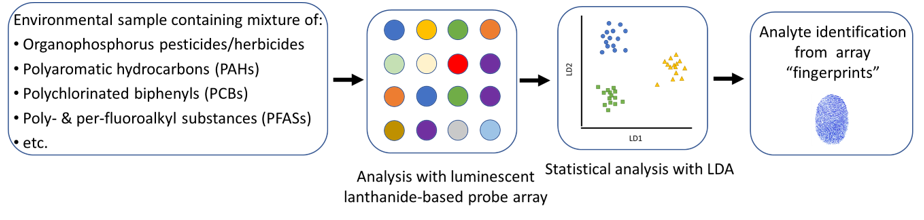
Figure 1. Proposed approach for rapid analysis of multi-analyte environmental samples using arrays of luminescent lanthanide complex-based probes in combination with statistical analysis (LDA).
Within the project a range of chemosensors will be synthesised and tested for their response to POPs. Once suitable methodology is established for multi-analyte mixtures, application to a ‘lab-on-a-chip’ device will be pursued, along with testing it on real-life environmental samples. These sensors have the potential to contribute to sustainable and circular technologies. Integration of this technology into routine environmental monitoring programs will provide valuable insights to guide and expedite remediation, decontamination, and detoxification efforts. Additionally, development of such a sensor-array has the capacity to identify environmental hazards, to track the effectiveness of pollution control measures, and to assist with the reuse of water for irrigation or in industrial processes.
During the year at the University of Bath, the student will focus on the PFAS sensing aspect in particular, as the Lewis lab has an ongoing programme in this area. To date the research in Bath has not incorporated luminescent lanthanide complexes, which are anticipated to bring significant advantages over previous colorimetric sensors – their long luminescent lifetimes allow the exclusion of background fluorescence, crucial for analysis of complex real-world samples with high sensitivity. The period in Bath will also allow the student to benchmark their array approach using the gold-standard HPLC methods developed by Lewis group collaborators at the UK Centre for Ecology & Hydrology ( www.ceh.ac.uk ).
Project #6
Sustainable Synthesis of Drug Scaffolds from Biorenewable Feedstocks Using Visible Light Photocatalysis
Home Institution: Monash University
Supervisor at Monash: Prof. Philip W. H. Chan, Supervisors at Bath: Dr Alexander J. Cresswell and Dr Sourav Chatterjee
The project will explore the sustainable synthesis of azaspirocyclic scaffolds for drug discovery, using biorenewable itaconic acid as a key feedstock (generated on large scale annually by the fermentation of glucose). In the Chan lab, these novel, polyfunctional scaffolds will be used as a testbed to invent new catalytic reactions for azaspirocycle functionalisation that address challenges in chemo-, site-, and stereoselectivity control. In the Cresswell and Chatterjee labs, automated flow chemistry will be used to optimise and conduct visible-light photocatalysed C–H functionalisation reactions on unprotected primary amines, to generate spirocyclic δ-lactams on multigram scales. Together, this will provide sustainable and scalable methodology to access new and highly desirable 3D chemical space for ongoing drug design programmes.
Prof. Chan specialises in the development of new photocatalytic methods in organic synthesis that do not rely on the platinum group metals and follow the principles of atom and step economy. Drs Cresswell and Chatterjee specialise in organic photochemistry and automated flow chemistry. The first two years of the PhD will be spent at Monash, the research focus will be on the development of new photocatalytic reaction chemistry discovery. In the ensuing 12 months at Bath, studies will continue to focus on developing the photocatalytic reaction discovery and the application of automated flow chemistry. The final six months of the PhD will be spent back at Monash, introducing the expertise gained at Bath to the research group at Monash, as well as writing the final PhD thesis.
Both supervisors in chemistry specialise in reactions that are step- and atom-efficient, expediting access to complex molecules that cannot be prepared through alternative means, starting from simple precursors. For example, the photocatalytic reaction to be developed at Monash will require carbon-based catalysts and not on the platinum group metals. Where possible, they will also be promoted simply by irradiation with light, so that post-reaction processing is limited to evaporation of the solvent (which can be recycled), minimising both resources and waste. Similarly, the photocatalytic approaches to be developed at Bath will involve simple photocatalytic systems at low loadings, again reducing resources, costs and waste. The sustainable nature of the developed chemistry will be further augmented by the development and application of automated flow chemistry by the chemical engineering supervisor by enabling the further reduction of resources, costs and waste.

Project #7
Environmental micro/nanoplastic aging pathways and impact on human health
Home Institution: Monash University
Supervisor at Monash: Dr Khay Fong, Supervisors at Bath: Dr Jannis Wenk and Dr Antonio Exposito
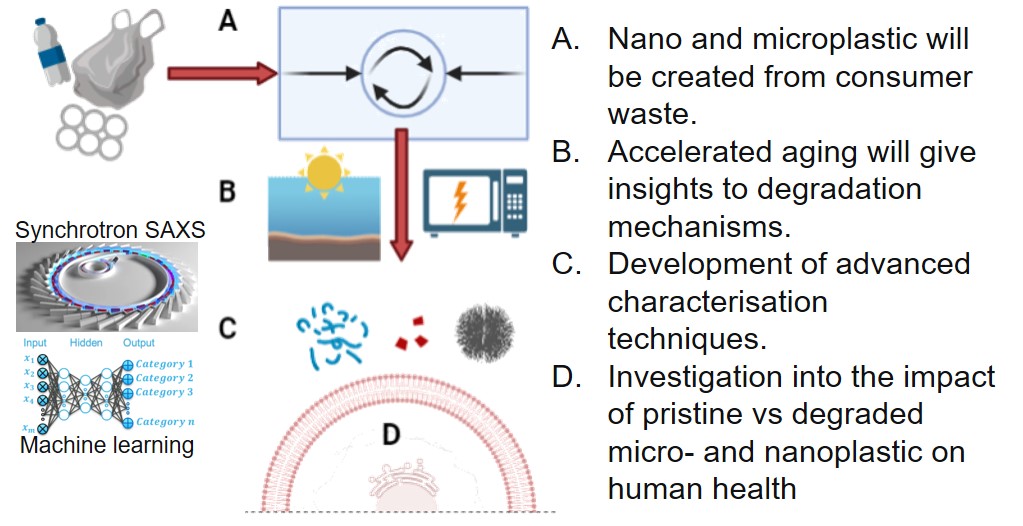
The plastic paradox presents this generation’s urgent global challenge. While this revolutionary material transformed human progress, its environmental persistence has created an unprecedented crisis. As plastics fragment into microplastics and nanoplastics (MNPs), they infiltrate every level of our ecosystem.1–3 Unlike biodegradable materials, plastics persist indefinitely, breaking down through photo-oxidation and mechanical stress into increasingly smaller particles that now permeate our environment.
The scope of MNP contamination is staggering: humans inadvertently consume approximately 2,000 microplastic particles annually from salt alone,4 with additional exposure through seafood, drinking water,5 and airborne particles. More alarming still is the detection of these particles in human placentas6 and other tissues,7 raising critical concerns about their impact across all life stages. Emerging evidence links MNP exposure to cardiovascular disease, while these particles may also serve as vectors for pathogens and persistent organic pollutants.8,9
A critical parallel exists with nanomedicine, where particles below 100 nm are engineered specifically for cellular penetration to deliver therapeutic effects.10 While pharmaceutical scientists carefully optimise these nanoparticles' properties for controlled cellular entry, we face a troubling knowledge gap: the mechanisms governing MNP-cell interactions remain largely uncharted territory. This blind spot in our understanding poses significant risks given the ubiquitous nature of plastic pollution.
Elimination of MNP exposure is unrealistic in our plastic-dependent world. However, by identifying the specific properties that make MNPs harmful, we can develop targeted strategies to mitigate their risks – a key part of the proposed Global Plastics Treaty strategy.11 This research is fundamental to advancing circular technology and sustainable materials science: understanding how plastics interact with cellular systems will enable the design of safer alternatives that maintain functionality while minimising harmful characteristics. Our findings will bridge critical gaps between materials science, toxicology, and sustainable engineering, providing essential insights for developing the next generation of environmentally compatible materials.
This investigation addresses critical knowledge gaps in MNP toxicology through three interconnected research aims:
Primary Research Objectives:
- Physicochemical Characterisation of Environmental MNPs12
- Quantitative analysis of size distribution, morphology, and surface properties
- Development of analytical protocols for MNP isolation and characterisation
- Correlation of physicochemical parameters with potential toxicological endpoints
- Structure-Activity Relationship Analysis
- Investigation of size-dependent cellular internalization mechanisms
- Quantification of surface chemistry effects on cellular interactions
- Validation of preliminary findings indicating enhanced cellular penetration by consumer plastic-derived nanoplastics
- Dynamic Surface Evolution Analysis
- Systematic investigation of MNP surface modifications in physiologically relevant conditions
- Characterization of oxidative and biomolecular corona formation kinetics
- Extension of our established nanomedicine protocols to environmental MNP systems
This research directly advances sustainable and circular technology development by providing crucial insights into the biological implications of plastic materials throughout their lifecycle. By elucidating the specific physicochemical properties that drive cellular interactions and potential toxicity of MNP, our findings will establish evidence-based design principles for next-generation sustainable materials. Understanding these structure-activity relationships is fundamental to developing truly circular plastics that maintain their functional properties while minimising harmful biological interactions. This knowledge will enable materials scientists and manufacturers to engineer safer alternatives that are inherently less toxic when they inevitably enter environmental cycles, thus supporting the transition from current linear plastic production to circular materials systems. Ultimately, this work bridges a critical gap between materials science and biological safety, providing essential guidelines for sustainable material design that considers end-of-life impacts from the outset of development.
References: 1. Savoca, M. S., McInturf, A. G. & Hazen, E. L. Glob Chang Biol 27, 2188–2199 (2021). 2. Boots, B., Russell, C. W. & Green, D. S. Environ Sci Technol 53, 11496–11506 (2019). 3. Carbery, M. et al. Mar Pollut Bull 184, 114179 (2022). 4. Kim, J.-S., Lee, H.-J., Kim, S.-K. & Kim, H.-J. Environ Sci Technol 52, 12819–12828 (2018). 5. Qian, N. et al. Proceedings of the National Academy of Sciences 121, (2024). 6. Weingrill, R. B. et al. Environ Int 180, 108220 (2023). 7. Jenner, L. C. et al. Science of The Total Environment 831, 154907 (2022). 8. Meaza, I., Toyoda, J. H. & Wise Sr, J. P. Front Environ Sci 8, (2021). 9. Bydalek, F. et al. Water Res 235, 119936 (2023). 10. Behzadi, S. et al. Chem Soc Rev46, 4218–4244 (2017). 11. Brander, S. M. et al. Science of The Total Environment 949, 174881 (2024). 12. Fong, W. K. et al. in NanoScience and Technology 101–150 (2019). doi:10.1007/978-3-030-12461-8_5. 13. Muff, L. F., Balog, S., Adamcik, J., Weder, C. & Lehner, R. Environ Sci Technol 57, 17201–17211 (2023).
Project #8
A Novel Label-Free Molecular Sensing Approach for Drug Tracking Using Vibrational Spectroscopy
Home Institution: Monash University
Supervisors at Monash: Dr Kamila Kochan and A/Prof. Toby Bell, Supervisor at Bath: Prof. Sofia Pascu
Tracking drug distribution, interaction, and release within biological systems is essential for understanding pharmacokinetics and optimizing therapeutic efficacy. Traditionally, fluorescent labelling has been the predominant method due to its sensitivity and ease of detection.1 However, bulky fluorescence tags alter drug behavior, potentially impacting pharmacokinetics, and bioavailability.1 Moreover, the production and disposal of organic fluorescent tags contribute to environmental pollution and waste, presenting a challenge to sustainability and their complete removal from the environment can be a difficult task.1-2 Discovering sustainable, environmentally friendly, and cost-effective alternatives to the use of fluorescence detection in drug discovery processes provides a non-invasive and cost-effective means of tracking drug behavior. By reducing the need for chemical reagents and fluorescent labels, new methodologies that align with the growing demand for greener and more sustainable practices in drug development and precision medicine will emerge.
Vibrational spectroscopy - specifically Raman and infrared spectroscopies (RS, IR) - presents a promising label-free alternative for drug tracking because it provides a more holistic approach to evaluating drug effects, offering insights into drug localization while also assessing cellular responses beyond therapeutic outcomes, such as potential toxicity or other adverse cellular alterations. By eliminating the need for large fluorescent labels, vibrational spectroscopy preserves the drug’s native pharmacokinetic properties while also minimizing environmental impact by reducing the reliance on chemical reagents and tags. These techniques enable nanoscale imaging, and recent innovations, such as the optical photothermal infrared (oPTIR) system, allow for simultaneous Raman and IR imaging with nanometer-scale resolution.3 Additionally, oPTIR facilitates comprehensive, spatially-resolved imaging of entire cells, generating high-quality spectra that reveal the location of a drug and its metabolites, as well as changes in cellular structures in response to drug exposure.4
Despite the significant potential, the application of vibrational spectroscopy in drug tracking has been hindered by several challenges. Drugs often share functional groups and bonds with biological compounds, leading to spectral overlap and complicating the identification of drug-specific signals in complex biological environments. Furthermore, conventional IR lacks nanoscale imaging capabilities, while RS suffers from weak scattering efficiency, limiting its sensitivity.5 Recent advancements, such as AFM-IR and oPTIR, addressed the limitations of traditional IR systems by enabling nanoscale IR imaging. To overcome the weak intensity of Raman scattering, techniques such as surface-enhanced Raman spectroscopy (SERS) or resonance Raman spectroscopy (RR) can be employed to amplify the signal. Although SERS has become the most widely used method, it is often constrained by reproducibility issues, which can limit its reliability for consistent drug tracking in complex biological samples.1
Combining vibrational spectroscopy with small, spectroscopically unique molecular markers represents a promising, yet underexplored, avenue for overcoming these challenges.
This PhD project aims to develop an alternative molecular imaging approach using nanoscale IR and Raman spectroscopy, which does not require fluorescence labels. The focus will be on the use of distinct vibrational markers (e.g. nitrile or alkyne groups, metal-carbonyl complexes, etc.) that exhibit sharp, clear bonds in both Raman and IR spectra and are not commonly found in biological matrices. These small molecular tags will enable the tracking of drug distribution and interaction within biological systems with minimal interference, thereby preserving the drug’s natural properties and pharmacokinetics. This approach offers a significant advantage over traditional fluorescent labelling by eliminating the impact of bulky tags, thus providing a more accurate and reliable tool for evaluating new drugs. Notably, the addition of a small molecular tag does not interfere with comprehensive imaging and still allows for the visualization of the drug its metabolites, together with other cellular components. Spectral imaging also offers valuable insights into cellular responses to the drug, including alterations in cell morphology, tissue integrity and potential toxicity or inflammatory reactions.
The straight-forward blend of spectroscopic investigations underpinned by sustainable (microwave driven) nanoparticles synthesis and metal coordination chemistry proposed hereby provides the ideal training ground for a PhD student working at the interface between disciplines. Dr. Kamila Kochan brings expertise in advanced nanoscale spectral imaging of tissues6 and cells7, including the study of drug-induced effects,8-9 while Professor Sofia Pascu from the University of Bath specializes in the assembly and synthesis of novel functional metal complexes and nanomaterials for drug delivery applications.10-11 The collaboration will combine cutting-edge vibrational spectroscopy with advanced material science to develop a robust, label-free tracking method that overcomes the limitations of traditional fluorescent probes. Ultimately, it holds the potential to transform how drug behavior is tracked and understood, with direct applications in drug development, precision medicine, and drug delivery systems.
References: 1. S Vanden-Hehir et al., Nanomaterials (Basel) 9 (3) (2019), 2. NS White and RJ Errington, Advanced Drug Delivery Reviews 57 (1), 17 (2005), 3. D Khanal et al., Int J Pharm 664, 124653 (2024), 4. GE Gómez et al., Applied Sciences 13 (13), 7687 (2023), 5. Y Liu et al., Int J Nanomedicine 18, 6883 (2023), 6. K Kochan et al., Analyst 140 (15), 4997 (2015), 7. Kochan et al., Analyst 144 (3), 901 (2019), 8. K Kochan et al., Anal Chem 91 (24), 15397 (2019), 9. K Kochan et al., Anal Chem 92 (12), 8235 (2020), 10. DG Calatayud et al., in Imaging Tools for Chemical Biology, edited by Lei Feng and Tony D. James (Royal Society of Chemistry, 2024), Vol. 24, p. 0, 11. M Lledos et al., Chemistry – A European Journal 30 (49), e202400858 (2024).
Project #9
Photocyclisation: Enabling Atom-Economical Synthetic Transformations
Home Institution: Monash University
Supervisor at Monash: Prof. Philip W. H. Chan, Supervisor at Bath: Dr Susannah Coote
Converting simple materials into complex products using only light is a particularly attractive approach to sustainable synthesis – waste is minimized, and light is readily available. Such photoreactions often allow rapid access via excited state intermediates to complex molecular frameworks that cannot be reached using ground-state chemistry, through the simple application of ultraviolet light, and are thus highly relevant in the development of sustainable technologies. Nevertheless, classical photochemistry (i.e. using UV light) has been underutilized by synthetic chemists (particularly compared to photoredox catalysis), largely due to many synthetic chemists lacking practical experience and/or theoretical training in photochemical processes.
This project will focus on photocyclisations – “reagentless” transformations that offer total atom economy and deliver value-added molecular scaffolds that are highly sought-after within the pharmaceutical industry. At Monash, it will begin by developing new catalytic reaction chemistry that enables the derivatisation of a variety of photoproducts assembled from photocyclisation studies vide infra. Studies will focus on novel sustainable catalytic stereo- and site-selective C–C and C–X (X = N, O) bond formation methods such as the chiral Brønsted acid catalyzed regio-, diastereo- and enantioselective formal [2 + 2 + 2] cycloaddition of 3-vinyl-1H-indoles with nitrosobenzenes (ACS Catal. 2024, 14, 13269). With this new chemistry in hand, its application to the derivatisation of phototropone and bicyclic diazetidines, both of which are versatile synthetic intermediates, into bespoke products will be explored at Bath (Org. Lett. 2019, 22, 9232). This latter part of the project will focus specifically on 4-π-photocyclisations (electrocyclisations of 1,3-dienes to give cyclobutene products), by extending the range of substrates that can be used in 4-π-photocyclisations, and by studying the derivatization of the photoproducts into diverse molecular building blocks. Optimisation of the photocyclisations for scale-up will also be performed, involving the study of various parameters of the reaction (e.g. solvent choice, temperature, substrate concentration, use of catalysts/additives) in both batch and flow photoreactors to allow access to multigram quantities (and beyond) of the photoproducts, which will allow their timely incorporation into drug discovery programmes.
Prof. Philip Chan specialises in the development of new catalytic methods in organic synthesis that do not rely on the platinum group metals and follow the principles of atom and step economy. Dr Susannah Coote specialises in organic photochemistry and in the synthesis of strained (hetero)cycles, with particular focus on atom-economical transformations. The products generated have wide-ranging applications in medicinal chemistry, materials chemistry and agrochemistry. The first two years of the PhD will be spent at Monash, the research focus will be on generating arrays of functionalised products from each photocyclisation product by applying new catalytic reaction chemistry of the group. In the ensuing 12 months at Bath, studies will focus on developing the photocyclisation of novel substrates - first in batch reactors, then scaled-up to multigram-scale in flow reactors. The products obtained will be amenable to functionalisation using metal- and/or organocatalytic chemistry developed at Monash. The final six months of the PhD will be spent back at Monash, introducing the expertise gained at Bath to the research group at Monash, as well as writing the final PhD thesis.
Both supervisors specialise in reactions that are step- and atom-efficient, expediting access to complex molecules that cannot be prepared through alternative means, starting from simple precursors. For example, the catalytic reaction to be developed at Monash will require carbon-based catalysts and not on the platinum group metals. Where possible, they will also be promoted simply by irradiation with light, so that post-reaction processing is limited to evaporation of the solvent (which can be recycled), minimising both resources and waste. Similarly, the photocatalytic approaches to be developed at Bath will involve simple catalytic systems at low loadings, again reducing resources, costs and waste.

Project #10
From electricity to pharmaceuticals: sustainability and understanding
Home Institution: Monash University
Supervisors at Monash: Dr Tomohiro Yasukawa and A/Prof. Jie Zhang, Supervisors at Bath: Dr Louis Morrill and Dr Frank Marken
Electrochemical synthesis, which uses electricity to convert common feedstocks into valuable chemicals, holds great promise for sustainable production. Traditional electrochemical methods primarily rely on the electrode for simple electron transfer, but this project aims to innovate by incorporating a “catalyst” function into the electrode. This approach broadens the scope of possible reactions, enabling low-waste, low-energy synthesis. The project focuses on developing single-atom catalysts (SACs) to facilitate efficient and environmentally friendly electrochemical reactions. SACs are heterogeneous catalysts with localized single metal active sites created through strong metal-support interactions, maximising the atom utilisation efficiency of metal resources.1 Specifically, we will develop novel synthetic methods, such as (1) reductive coupling reactions as a hazardous waste-free process and (2) the electro-oxidative activation of common feedstocks such as alcohols.
Project (1): Addition reactions using organometallic reagents, such as Grignard reagents, are among the most powerful carbon-carbon bond-forming reactions, yet they generate more than stoichiometric amounts of metal-derived waste. We envisioned an electrochemical approach in which metal catalysts immobilized on the cathode participate in reactions with organometallic reagents, allowing for the regeneration of metal(0) species by electrochemical reduction. Through this approach, we will develop “catalytic” organometallic reagents for metal waste-free processes.
Project (2): Alkoxy radicals are highly reactive oxygen-centered radicals that are valuable in various chemical transformations, but traditional methods for their generation often require transition metal catalysts and stoichiometric oxidants.2 Electrochemical processes offer a cleaner, more sustainable approach to alkoxy radical generation. To achieve a greener process, we will develop an approach using electrooxidation with an SAC-based anode.
Dr. Yasukawa is a specialist in heterogeneous catalysis and has achieved results in electrochemical synthesis using SACs.3 Dr. Morrill is a specialist in electrochemical synthesis and has achieved results in electrochemical generation and utilization of alkoxy radicals.2 At each university, Prof. Marken and Prof. Zhang, both experts in electrocatalysis, will participate in the project as co-supervisors. Through this project, we aim to contribute towards reducing the energy consumption and waste associated with organic synthesis.

References: 1. S. K. Kaiser, Z. Chen, D. Faust Akl, S. Mitchell, J. Pérez-Ramírez, Chem. Rev. 2020, 120, 11703. 2. A. A. M. A. El Gehani, H. A. Maashi, J. Harnedy, L. C. Morrill, Chem. Commun. 2023, 59, 3655. 3. R. Masuda, T. Yasukawa, Y. Yamashita, T. Maki, T. Yoshida, S. Kobayashi, J. Am. Chem. Soc. 2023, 145, 11939.
Project #11
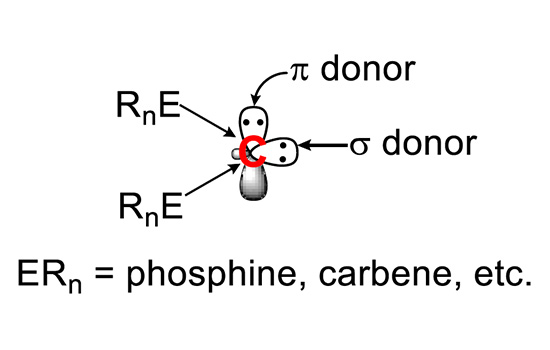
Making s-Block Elements Act Like Transition Metals
Home Institution: Monash University
Supervisor at Monash: A/Prof. Drasko Vidovic, Supervisor at Bath: Dr David Liptrot