
Rowe Prize Biographies: Semester 1
CHM1011 Chemistry I
Coller-McKinnon-Wilson Prize
Bruce Coller
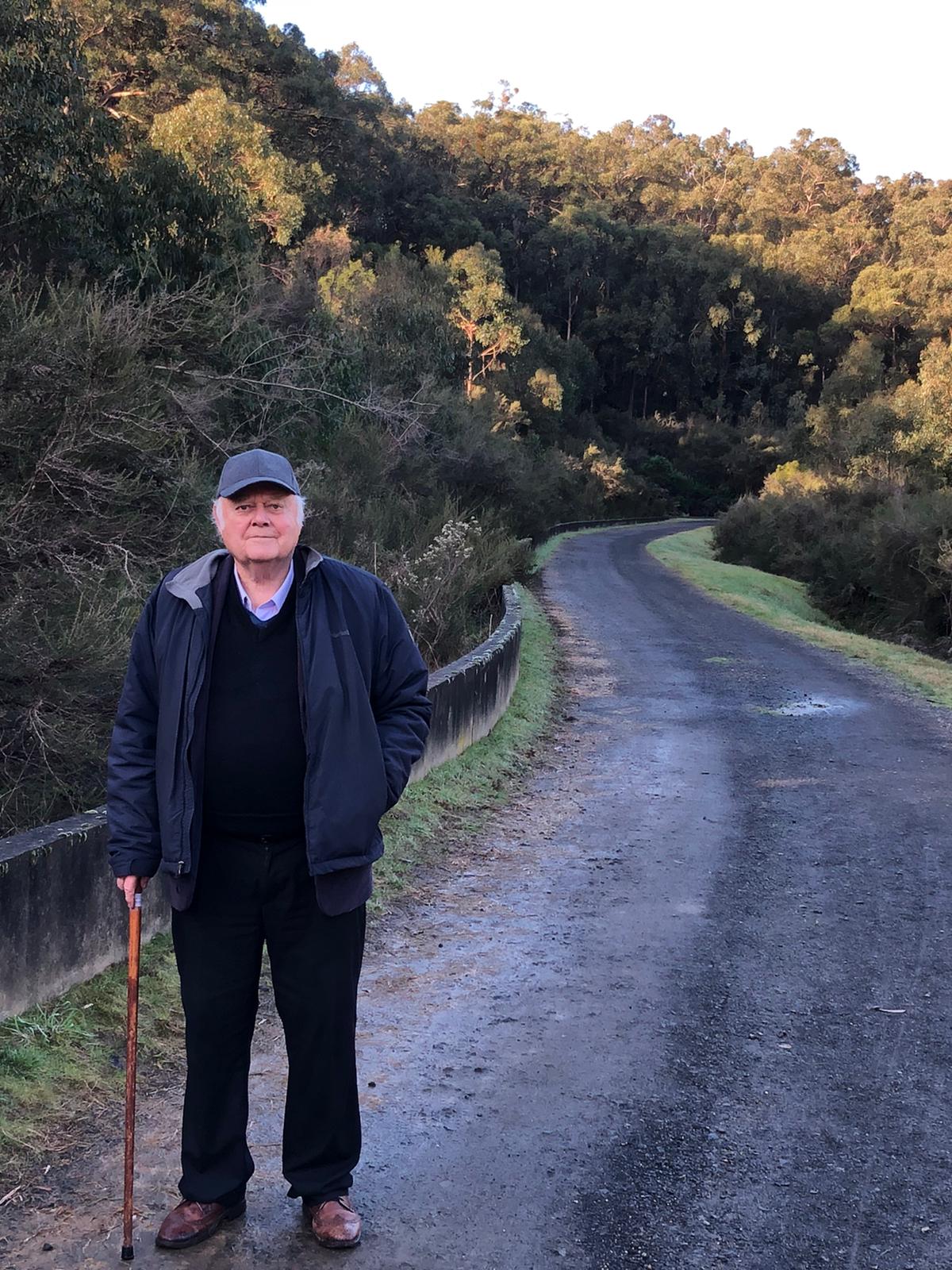
Bruce was born in 1936 in Alexandra, Victoria, and grew up on a sheep farm. He learned about physics, chemistry, atomic structure and mathematics from teachers he affectionately nicknamed while boarding at Caulfield Grammar School. During his BSc at Melbourne University he did a 3rd year project making a Grignard reagent for Syd Middleton, who later became an organic lecturer at Monash. For his BSc Hons and MSc, Bruce was supervised by Dr Ron Brown from 1957 until RDB’s appointment in 1959 as the first Professor at Monash. For his PhD (1959-60), he conducted variable electronegativity calculations using the SILLIAC computer in Sydney. During 1961-63 Bruce completed his DPhil at Oxford with Mr R.P. Bell, FRS, and followed this period with a fellowship at University College, Oxford. Between 1965-2001 Bruce was a Lecturer and later Senior Lecturer in the School of Chemistry at Monash University. He was co-author of the "Coller, McKinnon & Wilson" texts and participant in the extended trial of "tandem" lectures. He was involved in many course developments such as "Group Studies of Chemical Industries" and he researched mercury in gold mine wastes, a legacy from the 1850s. Bruce was heavily involved in VCE course development - "Physical Science - Science, Technology and Society” and was also on the Board of Studies of the Graduate School of Environmental Studies leading to the creation of the MEnvSci degree. Outside of teaching chemistry Bruce was socially involved in organising a retreat in the 1970s for 2nd and 3rd year Monash students. He campaigned for a high school at Berwick and, in retirement (2001), is actively involved in palliative care initiatives to help the elderly, an outreach program dealing with domestic violence, and researching aboriginal history in the Alexandra region.
Ian McKinnon
Ian’s initial studies were at the University of Otago. Enthused with chemistry and the physical sciences, the experience of research and discoveries concerning intermolecular interactions between r-dioxan and chloroform, the discovery of the rewards of teaching (demonstrating, tutoring and giving occasional lectures in physical chemistry to students of “home science”) left him with a dilemma - industry, government laboratory or academia? Ian chose to wait and see what turned up. Without formal teacher training and knowing little biology he accepted an offer to teach chemistry, mathematics and general science at his old High School. After a year’s teaching Ian went to the University of Exeter (UK) to undertake a PhD (under Professor Max McGlashan) studying the liquid/gas phase behaviour of the simple quasi-spherical non-electrolytes neo-pentane, tetramethylsilane and their mixtures, a project financed by a grant from British Gas. A year was later spent (1968) at the University of Michigan Ann Arbor working with Professor Edgar Westrum on the design and construction of a calorimeter for measuring the heat capacities of solids at temperatures below 1K. In January 1969 Ian came to Monash as a Senior Teaching Fellow working with David Pullin and in the following year was appointed as lecturer. This was the beginning of a long friendship and collaboration with Ivan Wilson and Bruce Coller. Ian enjoyed teaching and in 1976 was promoted to senior lecturer and given the task of running the first year laboratory classes. He taught statistical mechanics in both 3rd and 4th year and also in 3rd yr the study of colloids and surface chemistry including an introduction to light scattering and rheology, which course, after amalgamation with CIT, was taught in conjunction with Ron Beckett.
Ian was heavily involved with secondary education, following Ian Rae and Ron Dickson respectively as a tertiary representative on the VISE chemistry committee (then responsible for the year 12 course) and the Chemistry Education Committee. He assisted organising the annual chemistry teachers conference held at Monash, organised workshops and established the chemistry enhancement program for selected year 12 students. He found the classes exhilarating.
Ian’s research focussed on the application of basic physico-chemical principles to understanding real situations. The role of the repulsive forces between molecules and the properties of solutions and their phase behaviour. The chemistry of the lower stratosphere and in particular the likely effect of the exhaust emissions of fleets of supersonic aircraft and the release of waste refrigeration fluids (chloroflurocarbons) into the atmosphere on the ozone layer. The formation and growth of polymer latex particles – essential components of water-based paints and automobile tyres. Controlled release formulations of selective herbicides to increase their efficacy and minimise the negative effect on the environment of their use. The components of milk, the chemical and physical interactions between them and the changes both physical and chemical that occur during the processing of milk to form a myriad of products such as cheeses, yoghurt, milk powders all carried collaboration with CSIRO. Success was coupled with an insistence on the understanding of measuring instruments. Knowing precisely what is being measured, the relationship between what is measured and the information that is being sought and the limitations of the instrument in the situation that it is being used. Ian’s career at Monash provided him with much enjoyment and satisfaction, not only intellectually, but also in the relationships developed with colleagues in all places and at all levels.
Ivan Wilson
Ivan Robert Wilson (1925-2020) was born near Goulburn, NSW, and excelled in Chemistry and French while at High School in Wollongong. Later he entered the University of Sydney with a scholarship and completed his undergraduate degree with a major in Chemistry with Physics and Maths. After employment as a demonstrator, and completion of a MSc in Physical Chemistry, he completed his doctorate in 1957 studying "The Rates and Mechanism of Hydrolysis of Dimethyl Sulphate". Ivan became a Lecturer at University of Queensland and later joined Monash early in 1962 as a Senior Lecturer, soon to become Reader, focussing his research on oxidation reactions in aqueous solutions. Ivan led the production of a new 1970s Chemistry textbook for HSC/VCE in Victoria drawing accolade from the Chemistry Education Association for this achievement. He also co-authored, with Bruce Coller and Ian McKinnon, "Physical Chemistry; A Behavioural View" and "Principles of Physical Chemistry", two textbooks used for many years by Monash First Year students and overseas. In addition to chemistry, Ivan was active in establishing the Religious Centre on campus. He was politically aware and skilled in student and family counselling, establishing "Ongoing Change", a 30 year strong initiative helping the community to address domestic violence and achieve positive change.
CHM1051 Chemistry I Advanced
Jackson Prize
Roy Jackson
William Roy Jackson (1935-2019) was born in Bacup, England, and was affectionately known as Roy and Prof by academic colleagues and students alike. He received a Bachelor of Science with first-class honours in 1955 from Manchester University and completed his PhD at University College London in organometallic chemistry in 1958. After undertaking a postdoctoral fellowship at Oxford, he started his academic career at Queen’s University, Belfast, before immigrating to Australia to join Monash University. Roy was Professor of Organic Chemistry in the School of Chemistry from 1973, and in 1995 was appointed the inaugural Sir John Monash Distinguished Professor and became the foundation director for the ARC Special Research Centre in Green Chemistry, the legacy of which is still found in the Green Chemical Futures Building. He earned an international reputation for his research in synthetic chemistry, especially catalysis and organotransition metal chemistry, and coal liquefaction. He made major contributions in drug design and development and took out several patents. He was an avid supporter of the University’s interaction with the general public, and for many years ran highly acclaimed chemical “magic shows” for spellbound children (and adults) on Open Day. His contribution to the world of science and academia was recognised by the many accolades and honours bestowed on him, including the Leighton Memorial Medal, the RACI’s Premier Award (2002), and a Centenary Medal (2003). He was a Fellow of the Australian Academy of Applied Science and Engineering, and a Fellow of the Royal Australian Institute of Chemistry. Outside of science, he was a keen and vociferous squash player, avid bushwalker and rogainer, keen poetry reciter, player of the recorder, supporter of the English cricket team and great lover of dogs, big and small. Roy worked enthusiastically in the School well into his 80s. In 2013, he was appointed a Member of the Order of Australia (AM) for services to science in the field of organic chemistry as an educator and researcher. He was a much loved member of the School of Chemistry, always welcoming and full of life, stories and encouragement.
CHM2911 Synthetic Chemistry I
Roger Brown Award
Roger Brown

Roger Brown (1931-2013) developed an early interest in chemistry and at the age of 14 set up his own laboratory in the family home. In 1949, he attended Sydney University and completed his Honours year in 1953 isolating natural products from an Australian plant species. He was awarded first class Honours and the University Medal leading him to a MSc degree where he elucidated the correct structure of the alkaloid Flindersine. With a scholarship in hand Roger travelled to Cambridge University in 1955 to commence a Ph.D. degree with Sir Alexander Todd. It was an exciting time for synthetic organic chemistry. He examined the chemistry of nitrones for the synthesis of corrin, the central framework of vitamin B12, while all around him mechanisms using curly arrows were being discussed and spectroscopic instruments and column chromatography became common place. After a year of postdoctoral study in the laboratory of George Büchi of MIT, Roger’s life-long interest in thermal degradation of organic compounds had been ignited. In 1968, Roger accepted an appointment to a Readership at Monash University and continued to develop his research. Together with Frank Eastwood, flash vacuum pyrolysis (FVP) was exploited to elegantly create unstable intermediates, benzyne, ketenes inter alia, and examine their rearrangement into stable products. His areas of specialty also included mechanisms of reactions and organic chemical synthesis. Brown was part of the Department of Chemistry at Monash University for over thirty years and his success led to his appointment to a Personal Chair in 1992. Roger was a private person, very knowledgeable, well read, and abreast of current affairs. He attended plays, concerts and operas and enjoyed painting, silver smithing and building model aeroplanes. He formed close personal ties with his research group and was well respected by his students and academic colleagues.
CHM2951 Environmental Chemistry – Water
Hart-McKelvie-Beckett Award
Barry Hart
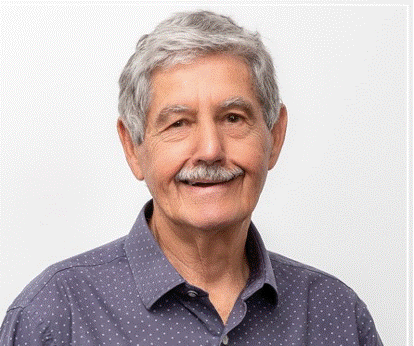
Barry T Hart is currently an Emeritus Professor at Monash University, Director of environmental consulting company – Water Science Pty Ltd, Director of Alluvium Consulting Australia Pty Ltd, and Chair of the Goyder Institute for Water Research. He spent 35 years at Monash University (and Caulfield Institute of Technology). For much of that time he was Director of the Water Studies Centre and for 10 years was also Deputy Director Research of the CRC for Freshwater Ecology. He gained a PhD at Monash University in theoretical chemistry. He established a national and international reputation in the fields of natural resources decision-making (water quality and catchment management, environmental flows, water policy), ecological risk assessment and environmental chemistry. He has published over 200 refereed papers and 13 books, and is on the editorial board of 5 international journals. Prof Hart also worked hard over the years to get this and other research adopted in water policy and management. To this end, he has chaired or been a member of many scientific inquiries, reviews and advisory committees. He recently completed 9 years as a board member of the Murray-Darling Basin Authority. He has received several awards, including the Limnology Medal (1982) from the Australian Society for Limnology, the Environmental Chemistry Medal (1996) and Applied Chemistry Medal (1998) from the Royal Australian Chemical Institute, and in 2003 a Centenary Medal for services to water quality management and environmental protection. He was also made a Member of the Order of Australia (AM) in the 2012 Queens Birthday awards.
Ian McKelvie

Ian McKelvie grew up in Clayton, where he attended the local technical school. He undertook a Diploma of Applied Chemistry at the then Caulfield Institute of Technology (CIT), and subsequently worked as a water chemist in the La Trobe Valley. He returned to CIT to undertake a Master of Applied Science supervised by Barry Hart and Ron Beckett, and subsequently took up a junior lecturing position teaching physical and analytical chemistry. While teaching full time, he commenced a PhD in analytical chemistry at La Trobe University with Bob Cattrall and Terry Cardwell, investigating flow analysis techniques for aquatic phosphorus speciation. His research thereafter focussed on the interface between analytical chemistry and aquatic science, with an emphasis on flow analysis and microfluidic approaches.
As a result of the tertiary institutional amalgamations in the early 1990’s, Ian became an “accidental” member of Monash University. During his 20 year career at Monash, he would sometimes horrify his students by mentioning that he didn’t have an undergraduate degree. Ian loved teaching, and with Ron Beckett and Barry Hart was instrumental in the development and implementation of aquatic and analytical chemistry courses. In his final years at Monash he served as deputy Head of School, and sub-Dean for Honours for the Science Faculty. Ian was awarded the RACI Analytical Medal in 2004 and held the position of visiting professor at the University of Plymouth from 2007 to 2019. In 2010, Ian left Monash, and moved to central Victoria. In semi-retirement, he spends his time restoring an 1860’s miner’s cottage, cycling, working as Editor-in-Chief and Associate Editor for the analytical chemistry journals, Talanta Open and Talanta, respectively, and is an honorary research fellow at the University of Melbourne.
Ron Beckett
Ron Beckett attended the University of Melbourne graduating with BSc(Hons) in 1967 and PhD in inorganic chemistry in 1972. He was appointed lecturer in chemistry at Caulfield Institute of Technology (now the Caulfield campus of Monash University) in 1970 and soon converted to the field of surface and colloid science. During these early years he was active in developing curricula for new undergraduate and postgraduate degree courses. Ron was encouraged by Prof Barry Hart to join his newly founded Water Studies Centre and began studies in aquatic science, particularly the speciation, transport and fate of pollutants. In 1983 Ron commenced a long term collaboration with renowned scientist Prof Calvin Giddings from the University of Utah. Giddings had invented a new separation technique (field-flow fractionation) and Ron pioneered the use of FFF to characterize aquatic and soil particles and organic matter, particularly humic substances. Ron was enthusiastic about teaching and taught at all levels at Monash particularly in courses related to colloids, separation science and aquatic chemistry. He was also active at Department and Faculty levels in administration of research and graduate studies. He retired from Monash as Reader/Associate Professor at the end of 2011 after nearly 42 of years service and moved to Tasmania. Today, he is still involved in mentoring graduate students and staff at several universities in Thailand.
CHM3911 Advanced Physical Chemistry
Pullin-Heffernan Prize
David Pullin
David obtained his PhD at London University. In 1963, he was appointed into a Senior Lecturer position at Monash University after arriving from the south of England. His research was in the infrared spectra of short-lived species, often trapped in matrices such as argon at very low temperatures. One such example, published in the Australian Journal of Chemistry in 1988 with Frank Eastwood and Roger Brown, involved the examination of five compounds, such as 3-ethenylidenebicyclo[2.2.1]hept-5-ene with -CF3-type 2,2 substituents, designed for the pyrolytic generation (at 350 to 725 °C) of pentatetraenone, H2C=C=C=C=C=O. The pyrolysate was frozen on an argon matrix at 10 K so that the IR spectrum could be measured and assigned. In 1982, David went on study leave in the USA and published the matrix isolated absorption spectrum of the phenoxyl radical, PhO*,in 1982. Unfortunately, David’s retirement from the School of Chemistry (in 1988 as a Reader) was made difficult for him and his family when he contracted Parkinson’s disease. David was quietly spoken by nature and well respected and liked by his research students and academic colleagues. Occasionally he would “let go” and was fondly remembered for dancing on the table at a staff function
Mike Heffernan
Michael Heffernan was born in 1934 and grew up in Melbourne. He was raised with his sister by his mother and attended a local Parish school. A gifted student, he skipped a year and was awarded a tuition scholarship to enter Parade College in East Melbourne where he completed Year 12 twice because he was too young to enter university. He completed Honours, MSc and PhD degrees at the University of Melbourne over 1952-1957. Research in these latter degrees centered on molecular orbital theory of conjugated heterosystems and his supervisor was Professor R D Brown. In early phases of his work, Mike calculated the p-electron distribution in a variety of N-containing heterocycles (like pyridine, quinoline, pyrimidines) using then current, Hückel Theory, but later developed more advanced theories using explicit calculation of electron-electron repulsion energies from published tables. Post-doctoral work at University College London exposed Mike to NMR spectroscopy for the first time, where he examined the chemical shifts and spin-spin coupling of phosphonitrilic halides. In 1961, he took up a lectureship in the Chemistry Department of the newly created Monash University. Together with Professor R D Brown and Dr F W Eastwood, he initiated the creation of the inaugural undergraduate curriculum, lecture and laboratory courses. Mike’s research interest in high resolution NMR spectroscopy continued at Monash with the analysis of non-alternant hydrocarbons such as fulvene and dimethylenecyclobutene, spin-decoupling techniques and methodology to facilitate the prediction of proton chemical shift. The School’s first NMR instrument was purchased in 1963, a Varian HR 100 NMR spectrometer and required the use of early computer programmes written in Ferrantic SIRIUS AUTOCODE and later FORTRAN, to analyse the spectra. Following a brief foray into X-Ray Photoelectron Spectroscopy in the early 1970s, Mike focused on UG teaching within the School. Mike also co-authored a chemistry textbook for Year 12 students ‘Chemistry - A Structural View’ and helped to develop the Year 11 and year 12 syllabus in Victorian secondary schools. Outside of the School, Mike was a keen long distance runner, an activity he started at age 45, and completed 15 Melbourne Marathon events. Mike retired from the School in December 1999 but still enjoys reading about advances in quantum chemistry, listening to Gustav Mahler and conversation with friends.
CHM3930 Medicinal Chemistry
Jean Youatt Prize
Jean Youatt
Born in China in 1925 to missionary parents, Jean Beatrice Youatt had a very disrupted primary and secondary education due to her parents’ frequent moves, culminating in four years internment in Japanese run camps in China, from 1941-1945. As one of the senior girls, Jean was very busy, but managed about a year of excellent maths education from a retired teacher. She gained straight As in her Oxford School Certificate, and was accepted into a science course at the University of Melbourne, but knew she had a very poor background compared with other students. She didn’t ask for help at that stage, afraid she’d be asked to leave, but honed her ‘considerable logical, organising and problem-solving skills’, skills she continued to use throughout her research and teaching career. She completed her BSc (Chemistry/Microbiology, Melbourne, 1949), followed by an MSc in microbiology, partly without supervision. Then she was off to Leeds for a PhD in biochemistry (awarded in 1954), on autotrophic organisms, once again working largely without supervision, but utilising the careful techniques she had learned in chemistry, biochemistry and microbiology. After working for a few years on the mode of action of isoniazid, then used to treat TB, in 1962 she was appointed as Lecturer in the Monash Department of Chemistry, initially to teach biochemistry. She thoroughly enjoyed the first two years, particularly as she planned and ran a practical course which filled her ideals, that ‘students should participate in the experimental design and not follow recipes, and experiments should be designed..so that a technique learned in one class could be applied in others’. During a 1968 Study Leave in Seattle, she joined a project studying the fungus Allomyces, which she worked on for the rest of her academic career, establishing an international reputation in the area. Unlike most others working in the field, Jean understood the relevance of the solution chemistry, particularly that involving stability constants in chelation studies of the vital biological ions Ca2+, Mg2+, Mn2+, Fe2+ and Zn2+. She was able to debunk several then current theories on the role of Ca2+ in growth cycles of Allomyces, and was disillusioned to have difficulty in finding a publisher for the work; she was just not believed, in spite of meticulously gathered evidence. Other groups have now reproduced her results. Jean approached teaching as research too – helping students to analyse and solve problems, a very successful approach. She also spent hours during the early years compiling the Science Faculty timetable, a task most other academics regarded with horror. But as far as Jean was concerned, ‘I like doing timetables. I don’t like getting the information, I don’t like persuading people to accept the results, but the timetable itself is a nice puzzle’. That was Jean.
CHM3941 Advanced Inorganic Chemistry
Ron Dickson Prize
Ronald Dickson
At High School, Ron was quickly drawn to Chemistry. In a small home laboratory, he observed what happened when he mixed ‘this’ with ‘that’. This led to BSc Honours (1st Class) and PhD degrees at the University of Adelaide, South Australia. His university studies and playing football for Norwood in the SAFL was sometimes a difficult balancing act, but he managed to succeed in both. In his PhD years, he became interested in organometallic chemistry, a rather new field at the time. The role of organometallic compounds as catalysts for the polymerization of olefins (Ziegler catalysis) attracted him and this became his topic for PhD studies with Professors Jordan and West as supervisors. He then did post-doctoral studies (CSIRO Scholarship) with Professor Geoffrey Wilkinson (Nobel Laureate) at Imperial College London followed by a year of teaching and research at the University of British Columbia in Canada. While considering his next career step, Monash University was created and Professor West was appointed to the first Chair of Inorganic Chemistry – West offered Ron a lectureship at Monash and he arrived in 1964. Other inorganic appointments followed including Bryan Gatehouse, Glen Deakin, Keith Murray and Leone Spiccia, and Monash soon earned a reputation as one of the best inorganic chemistry schools in Australia. At Monash, Ron developed and taught courses in Inorganic Chemistry, Organometallic Chemistry and Food Chemistry. He supervised research projects in organometallic synthesis – especially metal (Co and Rh) complexes with carbonyl and alkyne ligands, the role of metals in catalysis (with Professor Roy Jackson), and metal organic chemical deposition. Ron was a Professorial Fellow (1995-1997), held a Personal Chair (1997-1999) and was Head of School (1996-2002).
CHM3960 Environmental Chemistry
Frank Burden Prize
Frank Burden
Prof. Frank Burden gained his PhD from University College London in 1963 working on microwave spectroscopy with Prof. Jim Millen. In 1964 he was appointed a Senior Teaching Fellow at the newly established Monash University chemistry department. He collaborated with Peter Godfrey, Ron Brown’s research assistant, to set up a new microwave spectrometer at Monash. In 1965 the first microwave spectrum of the heterocycle selenophene was assigned as part of Godfrey’s BSc Honours research project. During 1965 Frank developed the first software to predict and analyze of microwave spectra on a rather primitive Ferranti Sirius computer, the Monash Computer Centre’s first digital computer. In 1987 Frank attracted international attention by writing the first AI program to predict organic chemical reactions, the Logichem Organic Inference Program. Frank’s most notable achievement, the development of a chemical index named in his honour (the Burden index) followed in 1989. His seminal paper “Molecular identification number for substructure searches” has been cited >300 times. His method was adopted by the Chemical Abstracts Service as a unique index for chemical data base searches, and his index is still widely used to generate machine learning models to predict the properties of complex molecules and materials. Although a theoretician, Frank also had strong interest in ecology and the environment. In 2001 has was affiliated with the CRC for Freshwater Ecology and in 2003 edited the Environmental Monitoring Handbook which is still in print. He started a very productive long-term collaboration with Prof. Dave Winkler (also a past member of the Monash microwave group, then at CSIRO) on development of AI and machine learning methods to model complex drug molecules, biomaterials, and nanomaterials. This collaboration continued for more than a decade after his retirement from Monash as a paid consultant to CSIRO. During this period he continued to publish, and was a driving force in the Sustainable Living Foundation and Victorian Skeptics, and helped to establish a new type of university, Akademos in Melbourne.