
Rowe Prize Biographies: Semester 2
CHM1022 Chemistry II
O’Dwyer-Kent Prize
Michael O’Dwyer

After post-doctoral work at Florida State University in Tallahasse with Wilse Robinson, Dr Mike (Michael Francis) O'Dwyer arrived at Monash in 1962. In the early years of the School of Chemistry he was involved in developing new lecture courses in atomic structure and valency, atomic and molecular spectroscopy, group theory and molecular vibrations. Mike also taught in the physical/spectroscopy classes of 2nd and 3rd year. His research was in the area of molecular spectroscopy: Vibrational and electronic spectroscopy, especially fluorescence spectroscopy, of organic compounds such as fulvene, 3.4-dimethylene cyclobutene and benzvalene, and a intricately detailed analysis of the electronic spectrum of sulfur dioxide. He and Jay Kent ran a very active joint research group. He created a particularly useful set of notes on spectroscopic states and Russel Saunders coupling that enabled students, and staff, to combine L and S quantum numbers to generate J values for many electronic configurations. His teaching of valence theory and spectroscopy led to the publication of an internationally successful co-authored textbook “Valency” with Ron Brown and Jay Kent. Mike had a quiet personality. In his leisure time, he was a first rate furniture maker and a great cook. He retired from the School of Chemistry in December 1995.
Jay Kent
Jay E. Kent studied chemistry at Washington State University and was recruited to Monash University in the early 1960s as a spectroscopist. Using microwave spectroscopy, Jay measured dipole moments and the electronic structure of many organic molecules including 3,4-dimethylenecyclobutene, oxadiazole isomers and fulvene. He also investigated the thermal rearrangement of 1,5-hexadiyne. He was co-organiser of an Australian spectroscopy conference in the 1970s, notable also for Jay having an accident and being briefly hospitalized, but he carried on bravely. The teaching of spectroscopy and valency was, and remains, a key teaching area in the physical chemistry area at Monash. His experience teaching a first-year university course in valency in the School of Chemistry lead to the creation of the textbook ‘Valency’ (1978), published with co-authors Michael O’Dwyer and Ronald Brown. This textbook aimed to introduce quantum mechanics to chemistry students without the usual mathematical formalism. The text also introduced elementary spectroscopic and diffraction methods. Jay enjoyed fishing in Victorian lakes (with Doug Ellis of Monash Aquatic Centre fame), and also enjoyed piloting a small plane. As a senior lecturer, Jay retired at quite a young age to move back to Seattle, USA, to start a company “Aussie Woollie”, selling sheep skin products with his twin brother Jim. After this successful venture he returned to Australia to live.
CHM1052 Chemistry II Advanced
West Prize
Bruce West

Bruce West graduated from the University of Adelaide with BSc(Hons) 1st Class and completed two PhDs, the first a self supervised study on metal Schiff base complexes where he learned radio-tracer techniques, and the second at Cambridge University on perfluoroalkyl-organometallics after winning a prestigious Rhondda Open Research Fellowship to Gonville and Caius College. In 1964 he was appointed the Foundation Professor of Inorganic Chemistry at Monash in 1964 and set about making Monash internationally distinguished in Inorganic Chemistry. He continued research work in Schiff base chemistry and in perfluoroalkyl-organometallics, and also embarked on the coordination chemistry of cyclic poly-phosphines and -arsines with discoveries that were years in advance of their popularisation. He pioneered Monash’s entry into materials chemistry undertaking collaborations with industry (Telstra and BHP) with commercialisation of his sol-gel and metal organic chemical vapour deposition research, both important for advanced materials. Bruce West was a brilliant lecturer, capable of engendering enthusiasm for his subject, and he led inorganic chemistry at Monash in a gentlemanly and collegiate way for 30 years. He served the University in many leadership roles, including Deputy Dean of Science and pro-Vice Chancellor, and was the recipient of many prestigious awards (RACI Burrows award and Leighton Medal) throughout his academic career.
CHM2922 Spectroscopy and Analytical
Brown-Godfrey Award
Ronald Brown
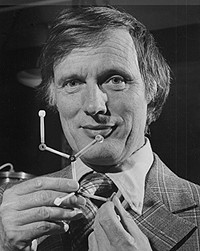
Ron Brown was born in Melbourne in 1927 and began his degree at Melbourne University at age 16, taking mathematics, physics and chemistry. He received his BSc degree in 1946 and completed his MSc in organic chemistry while simultaneously performing Huckel molecular orbital calculations on hydrocarbons, by head and mechanical calculator. Later Ron embarked (literally by ship) with his physics graduate wife, Mary, and three children, to work at Queen Mary College, London, with Charles Coulson, who had co-developed the mathematical formulation of molecular orbital theory.
He completed his PhD at Kings College, University of London, in 1952 and was then appointed to a Lectureship at University College, London, where he and John Ridd began probing the reaction sites for electrophiles attacking hetero-aromatic rings. They had barely published the kinetics of azo-coupling of imidazole (then known as glyoxaline) when Ron was head hunted by the newly appointed Head of Melbourne Chemistry School. He returned to his alter mater where he and Dr Tom O'Donnell wrote the Manual of Practical Chemistry. This manual carried chemistry studies and thinking from the earlier emphasis on methods of analysis into the second half of the twentieth century with emphasis on physical chemistry and eventually the use of spectroscopic methods. Monash Chemistry used the Brown and O'Donnell Manual for decades.
In 1959 Ron became a foundation Professor at Monash University and established a strong research team dedicated to the practice of theoretical chemistry. He remained Head of the School of Chemistry until his retirement in 1992 and together with newly recruited colleagues created the foundations for one of the strongest Chemistry Departments in Australia today. Ron worked in many areas of chemistry including microwave spectroscopy, theoretical chemistry, and the detection of interstellar molecules like glycine. A collaboration with Frank Eastwood led to the discovery of a new oxide of carbon, C3O, an astrophysically important molecule and working with departmental colleagues, Eastwood and Brown, Ron was able to explain the unexpected floppiness of cumulenones such as propadienone (H2C=C=C=O), butatrienone (H2C=C=C=C=O) and hyper-unstable pentatetrenone (H2C=C=C=C=C=O); these molecules were kinked when they were predicted to be straight. Brown received many awards during his career including three from the Royal Australian Chemical Institute: the Masson Memorial Scholarship Prize (1948), the Rennie Memorial Medal (1951) and the HG Smith Medal (1959). He was made an Officer of the Order of Australia in 2002 and received the Australia Centenary Medal in 2001. Brown was elected a Fellow of the Australian Academy of Science in 1965 and was awarded the Academy’s Matthew Flinders Medal in 1988. Ron was also an A-grade tennis player on the weekends.
Peter Godfrey
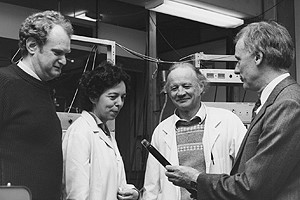
Dr Peter Godfrey had a long and illustrious history with the School of Chemistry at Monash University, starting off his career as a Technical Assistant Grade II in 1962, undertaking his honours in 1965, then completing his PhD with Professor Ron Brown in 1971 in the area of microwave spectroscopy. Thereafter he completed a senior research fellowship at Harvard (1969-71) and was duly appointed to a teaching fellowship in the School of Chemistry in 1973 and an academic position soon after. He spent the next 40 years researching his passion, microwave spectroscopy. Peter was well known for his encyclopaedic knowledge of spectroscopy and physical chemistry and possessed an unrivalled ability to impart his knowledge with enthusiasm to undergraduate students. He was an excellent supervisor, at both graduate and undergraduate level, and possessed great stamina and determination in solving seemingly insurmountable instrumental and computer programming problems. His sense of humour was endearing, earning him the nickname ‘chuckles’ from UG students who frequently engaged him in corridor with conversations including astrochemistry, interacting quadruple nuclei, wine and Airey’s Inlet botanical beauty.
CHM2942 Biological Chemistry
Williams-Yandell Award
Nic Williams
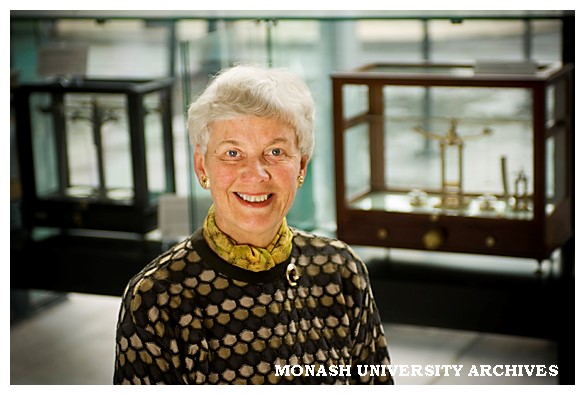
Nicola Hilda Williams grew up in Melbourne, and attended Camberwell High School, one of the 1956 cohort of the school’s first Matriculation class (Year 12). She completed her BSc (Melbourne, 1961) and Dip.Ed. (Melbourne, 1962) and taught chemistry (also their first Matric), maths and general science at Springvale High School, married, travelled overseas, and finally settled back in Melbourne. Once her three children were old enough, she became a part time demonstrator in Monash Chemistry Department (1971), progressing through the levels to Senior Lecturer (2000). She also served as sub-Dean of the Faculty of Science 1984-1995 and the RACI for many years (being recognised as a Fellow in 1987).
Her interest in biological chemistry is reflected in the topic of her 1982 MSc. Thesis, ‘Electron Transfer Reactions of Ascorbic Acid’. She continued research in this area for some years, as well as lecturing in related second year courses of biological chemistry and water chemistry, and general chemistry in first year. Having been attracted to chemistry at school by the excitement of ‘seeing what happened’ in practical work, she made lecture experiments part of her teaching whenever possible, emphasising the importance of problem solving in her practical classes demonstrating.
As a tutor, she soon realised that many students arrived in first year with inadequate backgrounds, so in 1976 she began to run help sessions. These developed into the First Year Chemistry Resource Centre, which is still operating.
Her current research is into historic beam balances made by the London instrument firm of L. Oertling. This builds on her efforts, over many years, to collect special instruments and glassware, especially those made at Monash in the early days, before they were thrown out. These became the Faculty of Science Instrument Collection, and the basis of various displays she set up around the faculty and Hargrave-Andrews library foyer, brightening up otherwise rather bare corridors and spaces.
John Yandell
John Kenneth Yandell (BSc(Hons) (Melbourne, 1962); PhD. (Adelaide, 1968)) grew up in Foster, in southeast Gippsland, and attended Foster High School. Year 12 (Matriculation) was often especially difficult for country students who wished to study science, and John completed some subjects by correspondence. After finishing BSc(Hons), he transferred to Adelaide to complete his PhD under Don Stranks. His thesis, ‘Chain Reactions in Solution’, included the determination of rate constants, the values compared with predictions from the Marcus-Hush theories of electron transfer. Work with rate constants remained central to his research. After postdocs in Leicester (with MCR Symons) and Brookhaven (Norman Sutin), in 1972 John was appointed as lecturer at Monash Chemistry.
Projects for his Honours, MSc and PhD students involved the aqueous solution studies of the kinetics and mechanism of electron transfer (redox) reactions between biologically important molecules such as cytochrome c (his favourite protein), haemoglobin, myoglobin and ascorbic acid, and inorganic complexes of relevant ions, especially copper. Many of these complexes had first to be synthesized and structurally characterised; donor atoms on the ligands were usually the biologically relevant O, N and S. He was very conscious of the effects of solution variables on reaction rates; pH and ionic strength had to be strictly controlled, which was excellent training for his students.
He was a deep and logical thinker, and his ability to see the big picture was a skill he passed on; and according to one of his PhD students, ‘he was not scared to challenge the status quo…to suggest that some Cu(II) electron transfer reactions could be slow, when the accepted thinking at the time (late 1970’s) was that they were fast’.
John died tragically young, but in spite of a short research career, he made a significant contribution in his field.
CHM2962 Food Chemistry
Nunn Award
Ernie Nunn
Ernie Nunn joined Monash University in February 1961, about 5 weeks before the official opening on March 11. The first intake was about 360 students in total. Ernie graduated from the University of Tasmania where he was a part-time member of staff during his PhD on phase equilibria relating to the formation of the alkaline polyhalides. On coming to Monash as a Snr. Teaching Fellow this project was later expanded to include solid state theoretical calculations on the structures using the first computer in the university which used punched paper tape for programming and data input. Ernie later became a Lecturer and Senior lecturer. After study leave at Nottingham, Ernie’s interest turned towards X-ray crystallography.
In the 1970s the education faculty ran a Dip.Ed degree aimed at tertiary teaching and Ernie completed this with a small cohort of colleagues. This lead to the development of audio visual aids, especially for first year laboratory teaching. This was later taken to Bali in a short course to staff at Denpasar. Ernie also served on a committee for a Thai Universities Lecturers scheme.
From 1975, Ernie became the Academic Administrator for the department with his time divided between teaching and administration. This involved academic staff meetings and the paperwork relating to exams and timetabling for the Faculty of Science and Department of Chemistry.
For many years he was involved with RACI. This included being secretary for the National Convention in 1992 here at Monash, chaired by Ron Dickson. For about 10 years he was a member and chair of the Victorian and National membership committees. He was also intermittently chair or secretary of the Victorian and National Chem Ed Divisions and was involved in running two conferences. Locally he was involved with school activities both at Monash and in schools. The highlight of these was the annual “chemfest” in the Alexander theatre and once in the city. This involved schools across the state.
Many of the Departmental tasks were made easier with the support of Diana Gatehouse ranging from the weekly newsletter, ‘bullying’ staff to set exam papers, and the organisation of social events like the annual 4th year BBQ.
CHM2990 Introductory Chemical Research
Gatehouse Award
Bryan Gatehouse
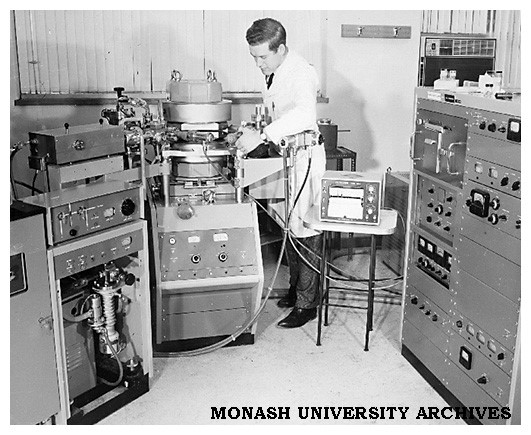
Bryan Gatehouse joined the staff of Monash University School of Chemistry in 1965 and introduced the technique of X-ray crystallography. This is the method of obtaining the molecular structure of crystalline materials and is widely used today. Bryan’s research interests were in the field of metal oxides and their derivatives. Indeed, he has a metal oxide mineral named after him, Gatehouseite, Mn5(PO4)2(OH)4, discovered in South Australia. On the Australian scene, he was a rare example of a solid state chemist, utilizing high temperature synthetic methods, including reaction in platinum crucibles. Bryan’s expertise was in much demand and he collaborated with other members of the inorganic and organic chemistry sections of the School on their many and varied coordination compounds, organometallic compounds and organic crystals. For many years Bryan had the support of Dr Gary Fallon, his research assistant. Bryan was promoted to Reader in 1972 and gained his DSc degree from the University of London in 1977. In the teaching of crystallography, solid state chemistry, materials chemistry and inorganic chemistry, Bryan taught largely in the second year subjects as well as in first year chemistry. He was also the second year lab. coordinator and chief examiner for a long period of time. Bryan retired in 1997 and passed away in 2014.
CHM3180 Materials Chemistry
Spiccia Award
Leone Spiccia
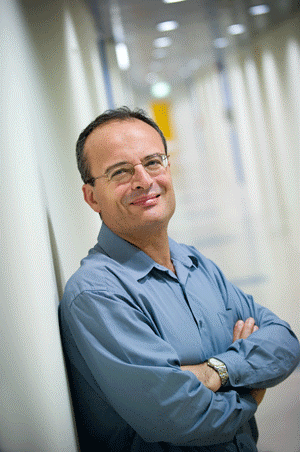
Leone Spiccia was a world-renowned Australian research scientist, who worked at the forefront of materials chemistry, sustainable energy, and medical diagnostic and therapeutic technologies. For his contributions, he received a number of prestigious domestic and international awards namely the Forschungszentrum Dresden Rossendorf Fellow (Germany, 2007), a Senior Research Award from the Alexander von Humboldt Foundation (Germany, 2010), the RACI HG Smith Medal (Australia, 2012), Honorary Professor in the Catalysis Research Centre at Hokkaido University (Japan, 2012), the RACI Inorganic Division Burrows Award (2013), an ARC Discovery Outstanding Researcher Award (2013) and a Helmholtz International Fellowship (2014). He published over 315 refereed papers and lodged 4 patents. His untimely death occurred at the peak of his career.
Leone was born in Sinagra, Sicily, and came to Australia when he was 11 years old. He graduated with a BSc(Hons) and PhD from the University of Western Australia under the supervision of Prof. Don Watts and Dr Jack Harrowfield, and after postdoctoral appointments in Canada, Switzerland, and Canberra was appointed as a Lecturer at Monash University in 1987. He was promoted first to Reader and thence to Professor in 2006. He rapidly transformed himself from a physical inorganic chemist working on hydroxidochromium(III) compounds to a materials, medicinal, and biological chemist with a wide range of interests and a wide range of departmental, inter-departmental (materials engineering) and international collaborations (as can be seen from his awards). In the University he served as deputy Head of Chemistry and Associate Dean Research in the Faculty. He was on the College of Experts of the Australian Research Council for three years, and chaired the Chemistry, Physics and Earth Sciences panel in 2010. He was a keen cricketer, a fearsome squash competitor, and an avid supporter of the West Coast Eagles.
CHM3922 Advanced Organic Chemistry
Eastwood Prize
Frank Eastwood
Frank Eastwood (1930-) was appointed Senior Lecturer (later Reader) in Chemistry at Monash university in 1960 and arrived on the Clayton campus in January 1961 to initiate teaching and research in organic chemistry and help develop the department, the library facilities and the University generally in its first years. Frank went to school during World War II and had an abiding interest in political and social theory, history and technology. He was a graduate of Sydney University, BSc (Hons) 1st Class (1952), and MSc (1953), having worked on natural products. He was awarded an 1851 Exhibition Scholarship to study at Oxford with Sir Robert Roberson (1886-1975) on synthetic approaches to tropolones and graduated DPhil in 1957. In June 1956 he was awarded a Salters Scholarship and moved to Cambridge to work with Sir Alexander Todd (1907-1997) on the structures of new antibiotics provided by the Glaxo Pharmaceutical Company, while working with two PhD students.
To initiate research at Monash with only limited facilities, Frank explored cyclic orthoformate structures as models for low energy transition states and found 1,2-diols formed cyclic orthoformates which decomposed on heating to yield alkenes, the first of several studies of pyrolytic reactions. As the department grew Frank collaborated with other members of staff so that the wide expertise accumulated was available to students. He continued synthetic and structural studies and later participated in a study of Solanum alkaloids as a source of steroids. Major projects were introduced in collaboration with Roger Brown on cumulenones (H2CnO) (n=3, 4, 5) which were highly unstable molecules, pyrolytic rearrangements of aromatics leading to benzyne intermediates, studies which laid the groundwork for determining reaction pathways at high temperatures. Frank also collaborated with Ronald Brown on the formation of a new oxide of carbon, C3O, for microwave studies. Frank canoed, sailed and voyaged on square-rigged ships to learn the ropes and, with a group bought and restored an old hotel which is now a registered historic building. He found life full of interest and read widely.
CHM3952 Advanced Analytical Chemistry
Hearn Prize
Milton Hearn
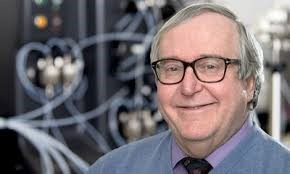
Emeritus Professor Milton Hearn AM, FTSE, FAICD, FRACI CChem, FRSV, FIUPAC, FIChemE(A), FRSC, BSc(Hons), PhD, DSc is an internationally esteemed chemist, well known for his pioneering studies and their practical translation to industry. Milton graduated from The University of Adelaide with BSc(Hons) 1st Class in 1967 and then completed his PhD (1970) and DSc (1983) also at The University of Adelaide. Following his graduate studies, he moved to the University of British Columbia as recipient of a Canadian National Science Council Postdoctoral Fellowship, and subsequently he received the prestigious ICI Fellowship to work at Oxford University on the total synthesis of lead drug candidates based on natural products. During this time, he commenced his career-long research commitment that successfully linked chemistry with the biotechnological sciences and engineering, resulting in several major developments in therapeutic drug design, manufacture and analysis. He has received numerous prestigious national and international awards, including the RACI Leighton Medal, the ACS Chromatography Award and the Alan Michaels Award. During his career, his creative scientific work has resulted in over 690 original peer-reviewed publications.
After holding academic positions at the University of Otago and the University of Melbourne, Milton joined Monash University in 1986 as Professor of Biochemistry and subsequently was appointed Professor of Chemistry in 2002. From 2003, under his leadership as Director, the Monash Centre for Green Chemistry became an international centre of multidisciplinary research excellence with extensive links to industry, partnering with other research centres to find benign ways to make and use chemicals and create less waste. His research has resulted in a range of significant break-through based on the application of green and sustainable chemistry concepts and methods, now widely adopted by the chemical, pharmaceutical and biotechnology sciences and industries within Australia and globally. His PhD and MSc alumni of over 90 successful graduates form part of this impressive legacy.
CHM3972 Sustainable Chemistry
Scott Prize
Janet Scott
Professor Janet L. Scott has worked in industry and academia in three countries. South Africa - Lecturer, Dept. Chemistry, University of Cape Town, 1992-1996; R&D Manager Fine Chemicals Corporation Ltd.; Australia - Research Fellow/Senior Lecturer and Deputy Director of the ARC Centre for Green Chemistry, Monash University, 1999-2006; UK - Senior Marie Curie Transfer of Knowledge Fellow, Unilever, 2006-2008; Director JLS ChemConsult Ltd., 2008-2015; Group Leader/Reader/Professor of Sustainable Chemistry and Co-Director of the Centre for Sustainable Chemical Technologies, University of Bath, 2010 – 2020; Director Naturbeads, 2018 – current.
In spite of not having studied Chemistry at school, she started a science degree with Chemistry and Geology as majors in the early 1980s in Durban South Africa, but decided to change to Chemistry/Applied Chemistry as Chemistry just “clicked”. A combination of depth of scientific understanding and practical application underpinned her career – there’s nothing more fun than discovering new things and then getting them to “work”! While only becoming formally engaged in “Green” Chemistry in 1999 in Australia, she was always interested in sustainability and research to “make a difference”. Her research seemed to range far and wide, but there was always an underpinning of materials that “do” things and the need to conserve the earth’s resources and be smarter about how we enable decent quality of life for humans without degrading our planet. To enable this she often worked with industry and with engineering colleagues. Recently, as a Director of the startup Naturbeads created in collaboration with an engineering colleague and a business development expert (who is also a chemist), she has focused on development of biodegradable microbeads made from renewable resources to replace the persistent plastic microbeads that are hidden in many products – a small contribution to developing more sustainable materials, but lots of small contributions equals big change.
CHM3990 Chemistry Project
Dobney Prize
Bruce Dobney
Bruce Dobney worked in the Department of Chemistry at Monash University for 44 years. At 18, while studying Chemistry at Caulfield Institute Technology (now Monash), his father was killed in a car crash. Compelled by a sense of duty to work, Bruce started work at Monash in 1971 as a Junior Technical Assistant in the First Year Teaching labs. At the time there had been a shift away from the highly structured lab program to a more engaging course which included projects relevant to everyday issues. Although interesting, the projects were also challenging. Students worked in pairs on topics such as the analysis of detergents in waste water, analysis of exhaust gas, using Orsat apparatus and determining the iron content of aluminum foil.
After a few years, Bruce moved to the third year organic and inorganic teaching labs, where the student numbers were smaller but the practical sessions much longer. They started at 10 am and finished at 6 pm, with no lunch break! Students majoring in chemistry had to do two sessions per week. Outside of the academic year Bruce was seconded to work with various research scholars on research projects. He found this stimulating and exciting.
Real chemistry involves real risks and accidents and the School was not immune to accidents, fire and explosions. Some of the experiments performed with Bruce’s watchful eye would be difficult to perform under current day OHS guidelines. Formal risk assessments were not required, however when planning and writing up our lab notes consideration was always given to safety. Phosgene, selenium, thallium, organomercury compounds, arsenic compounds, Birch reductions, lithium aluminum hydride reductions, diazomethane generation, phosgene, cyanide catalyzed benzoin condensations... You name it. It was done!
Bruce also served as the School of Chemistry’s appointed Safety Officer. Perhaps his experience or long-standing record for remaining unscathed without personal injury earned him this role. Despite finding the nature of the work exhilarating, the patience, helpfulness and intelligence of the staff, and of course the students, was cherished by Bruce. He was universally loved by all under-graduate students and academic staff.