Program Development Using Intervention Mapping-Equity - PDM1157

Intervention Mapping is a framework to support effective decision-making when planning, implementing and evaluating health promotion programs. It has been successfully used in a wide range of settings, including health care, social care, and education. Intervention Mapping - Equity extends the Intervention Mapping methodology by supporting program planners to explicitly embed equity across all stages of program planning.  It offers a roadmap from problem identification through to problem-solving or mitigation by combining theory, empirical research, and data from the community to develop new programs that can address the widening gap of inequity across health, social care and education sectors.

At a glance

Fees

Without assessment: $1,800 incl. GST

With assessment: $3,600 incl. GST

Alumni discounted fees

10% discount for Students / Monash staff / Monash alumni / Alfred staff / VHA members
Who should attend

This three-day course utilises Intervention Mapping, Implementation Science methodologies, and equity theories and frameworks and is designed specifically for professionals developing and implementing interventions in health, social care and education settings.

What you will learn

On completion of this course participants will be able to:

  • Investigate and discuss how IM uses theory, empirical evidence and co-design to develop a program or intervention for use in health, social care and education settings.
  • Apply explicit equity practices, strategies and guiding questions for program planners across all IM steps and tasks during program development.
  • Construct a Logic Model of the Problem using the needs assessment approach to ensure the purpose, goals and objectives of the program are relevant and appropriate.
  • Construct IM Change Objectives matrices detailing performance and changes objectives linked to theory and practical program strategies to achieve change.
  • Create an IM plan to develop a program using IM Steps 1–4.

Program structure

DAY 1

Intervention Mapping Step 1: Logic Model of the Problem

  • Introduction to Intervention Mapping - Equity (IM-Equity)
  • The IM-Equity Wheel (equity practices, strategies and guiding questions for program planners)
  • Design and advisory groups
  • Conducting a needs assessment
  • Conducting an asset assessment
  • Creating a logic model of the program and program goal

DAY 2

Intervention Mapping Step 2: Program Outcomes

  • Identifying behaviour and environment outcomes, performance objectives and determinants
  • Creating matrices of change objectives
  • Creating a logic model of the change

DAY 3

Intervention Mapping Step 3: Methods and Strategies

  • Co-designing program themes, components, scope and sequence
  • Selecting theory and evidence-based behaviour change methods
  • Developing practical applications

Intervention Mapping Step 4: Program Design

  • Building program structure, materials, messages and protocols
  • Pre-testing and pilot-testing
  • Producing your intervention

Testimonials

"Great course - excellent facilitators and opportunities to work on own research ideas."

Accelerate your qualification

Eligible participants who complete the micro-credential can receive 6 credit points of unspecified credit towards the Master of Public Health.

Note: Successful completion of a micro-credential does not guarantee admission into an award course. Prospective students must meet the eligibility and admission requirements for the award course. A micro-credential can only be used as credit towards a single degree on one occasion, and is valid for 7 years.

For more details please email pgradenq@monash.edu or shortcourses.depm@monash.edu.

Dr Mandy O'Connor

Dr Mandy O'Connor

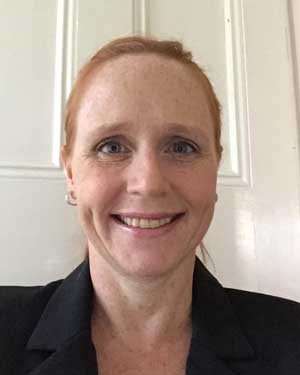
Dr Mandy O’Connor is a Developmental Psychologist and Research Fellow at Monash University, School of Public Health and Preventive Medicine, Health and Social Care Unit (HSCU).

She is an expert in Intervention Mapping, Implementation Science, evaluations and program, framework and model development. Her research interests include parenting, parent-child relationships, child development, family violence, disability, and women’s health and wellbeing.

She developed the Victorian Early Parenting Centres Outcomes Framework for the Victorian Government Department of Health and is leading the implementation of the framework across Victoria.

Dr O’Connor works as a research-in-residence with HSCU industry partners, embedded in organisations, to ensure the translation of knowledge and research reaches clinicians, practitioners, co-ordinators and managers across the organisation. Her strength is building relationships with partners and across sectors and disciplines.

She has written multiple reports for industry partners advocating to the Victorian Government to support Victorian and Aboriginal and Torres Strait families with young children through early parenting services.

Dr O’Connor is a leader of industry partnerships with The Queen Elizabeth Centre, Good Shepherd Australia and Relationships Australia Victoria. She is also part of the HSCU Education teaching team, where she co-designed and facilitates the Program Development Using Intervention Mapping short course.

  Dr Claire Blewitt

Dr Claire Blewitt

Research Fellow, Evidence Synthesis Qual & Implt Methods

Learn more about the program's terms and conditions.