
Biotechnology - M6030
Master's degree
The Master of Biotechnology integrates cutting‑edge science with entrepreneurship, preparing you to operate at the intersection of research, innovation and industry. This multidisciplinary program combines advanced coursework, research training and work‑integrated learning to equip you with the scientific, analytical and commercial skills needed to translate discoveries from the laboratory into real‑world biomedical products and technologies. You’ll explore modern biotechnology platforms, regulatory and ethical frameworks, clinical translation pathways, and the processes involved in funding, commercialising and scaling scientific innovation.
Study your way
Get work-ready with an industry placement
As part of your degree, you'll have the opportunity to gain industry experience and build your professional network through placement in a biotechnology or biotechnology-related organisation, such as clinical trials, pharmaceutical, medical device or regulatory organisations. These organisations include Aeterna Health, CCRM, St Vincent’s Hospital Melbourne, Magic Valley, and Western Health.
Work with globally recognised research experts
You can choose to complete a research project in regenerative medicine or medical biotechnology, where you'll be working on high-impact research alongside experts in the field. This research stream also offers a pathway to a Doctor of Philosophy (PhD).
Why Study Health Sciences at Monash?
Innovative facilities at your fingertips
You’ll learn within some of Australia’s most advanced biotechnology environments, including:
- The Australian Regenerative Medicine Institute (ARMI) – a world leader in regenerative biology
- FishCore – the Southern Hemisphere’s largest zebrafish research facility
- Micromon – genomics, proteomics and molecular biology services
- Monash Micro Imaging – state‑of‑the‑art imaging technology for biomedical research
These facilities offer unparalleled access to cutting‑edge equipment, enabling hands‑on technical training with real research applications.
A developing biotech hub
Located within Victoria, home to one of the world’s largest biotechnology clusters, Monash’s Clayton campus sits inside the Monash Technology Precinct, one of the most diverse science and innovation precincts globally. Surrounded by industry giants and national research infrastructure such as the CSIRO and the Australian Synchrotron, you’ll study in an ecosystem where biotechnology, engineering, medical science and commercialisation converge.
This proximity fosters collaboration, accelerates discovery, and positions you within a thriving biotech and medtech innovation environment.
At a glance
Course Details
Location |
|
|---|---|
Duration |
Depending on prior qualifications, this course can be completed in 1 or 2 years (full time) |
Start date |
First Semester (February), Second Semester (July) |
Qualification |
Master of Biotechnology |
Career Outcomes
Graduates of the Master of Biotechnology are equipped for high‑impact roles across research, industry, government and start‑ups. Career pathways include:
- Biotechnology and biopharma companies
- Medical device and diagnostics firms
- Pharmaceutical development
- Regenerative medicine and cell therapy
- Start‑ups and commercialisation ventures
- Intellectual property and patent offices
- Clinical trials and regulatory agencies
- Research institutes and academic labs
Whether you’re interested in technical research, product development, regulatory affairs, biotech entrepreneurship, or preparing for doctoral research, the Master of Biotechnology gives you the skills and networks to thrive in a rapidly expanding industry.
Meet the Masters of Biotechnology
Watch this video to learn more about our Master of Biotechnology degree.
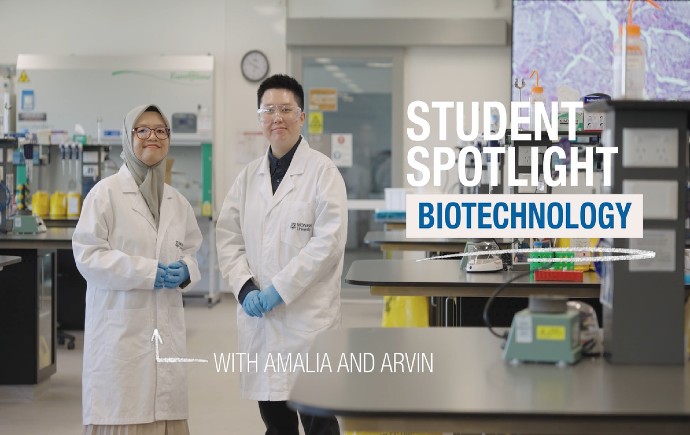
Student Spotlight: Master of Biotechnology
What better way to learn more about our Master of Biotechnology than to hear directly from our students?
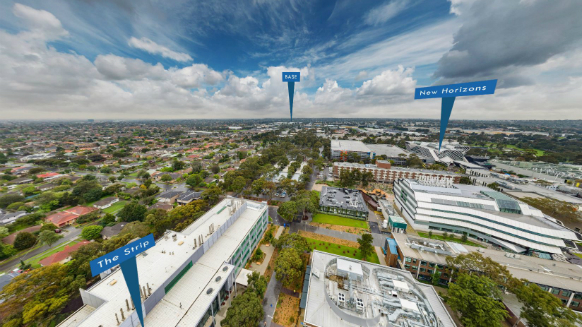
Let us take you on a virtual journey
Immerse yourself in the world of Monash Medicine, Nursing and Health Sciences. Explore our FishCore facility, attend a lecture or work in one of our state-of-the-art medical research labs.
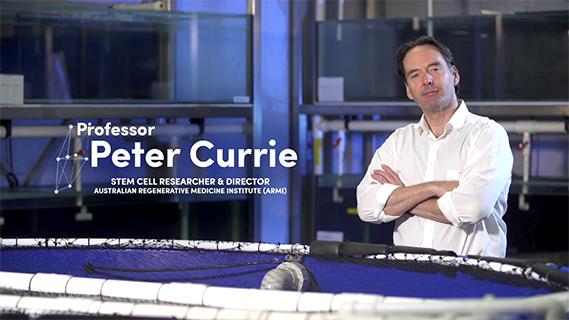
Meet Professor Peter Currie
Master of Biotechnology course coordinator and director of the Australian Regenerative Medicine Institute.
Be at the forefront of regenerative medicine and healthcare innovation.
Work in one of Victoria's fastest growing sectors
Get hands-on training in medical biotechnology and opportunities to apply your skills in a research project or industry placement, where you’ll build your professional network.

Interested in advancing your skills in biotechnology, genomics, or computational biology?
Join our webinar showcasing bioinformatics, biotechnology and genome analytics.
Entry Requirements
You need to satisfy the following entrance requirements to be considered for entry to this course.
Minimum Entry Requirements (Domestic students)
Qualifications
Entry level 1: | An Australian bachelor degree (or equivalent) in a relevant area of study* with at least a credit (60%) average. |
Entry Level 2: | An Australian bachelor honours degree (or equivalent) in a relevant area of study* with at least a distinction (70%) average. *Areas of study include a Bachelor’s degree in one of the following:Biomedical Science, Science/Applied Science with a major in (Biochemistry, Biotechnology, Developmental biology, Human Biology, Marine Biology, Human Pathology, Genetics, Pharmacology, Immunology, Microbiology, Molecular Biology, Physiology and Zoology), Nutrition Sciences, Dietetics, Veterinary Science, Medical Engineering, Pharmacy, Bioengineering, Biotechnology, Life Science, Clinical Medicine, Dental Science/Dentistry, or Bioinformatics. |
English requirements
Applicants must also meet the English language requirements.
University entrance requirements
Minimum entrance requirements for admission to Monash University Australia.
The course structure and progression map can be viewed in the Handbook.
Making the application
Future students
Self assess for credit eligibility
Check for study credit using the "Credit search" link on the Credit for prior study page.
Fees
Fees are subject to change annually.
Full fee
Fees are per 48 credit points which represents a standard full-time course load for a year. The fees for 2027 are:
A$38,140
Fee assistance
As a full fee-paying student, you may be eligible to apply for the optional FEE-HELP to assist you to pay all or part of your tuition fees.
Scholarships
We offer over 360 types of scholarships, valued at up to $280,000. Some scholarships offer one-off payments while others continue for the length of your course. Learn more about Monash Scholarships.
Other costs and fees
For information on other study costs and fees, see other study costs.