
Nursing and Midwifery - M3007
Nurses and midwives are among the most valued members of any community. Midwives play a crucial role caring for mothers and babies throughout the childbearing years.
On completion of the Bachelor of Nursing and Bachelor of Midwifery you are eligible to apply for registration as a nurse and midwife – a highly capable individual who is qualified to work in collaboration with the interdisciplinary team in general nursing and midwifery practice settings.
The versatility of the nurse and midwife is becoming increasingly important in the provision of Australian and international health services.
This joint qualification will make you highly employable in many practice settings, especially rural and remote areas where multi-skilled practitioners are highly valuable.
As a nursing graduate you will have acquired the knowledge and skills to be a competent beginning-level registered nurse who can provide leadership and care across the age continuum, with the scope to provide care in clinical environments, including acute care, primary health care and health promotion.
As a midwifery graduate you will add to the above capabilities the specialist knowledge to provide care to mothers and babies during pregnancy, labour, birth and the postpartum period, including emergencies. Throughout the course, you will connect theory to clinical practice, undertaking clinical experience in diverse settings throughout Victoria and major metropolitan teaching facilities such as Monash Medical Centre, The Alfred, Peninsula Health and others.
You may also have the opportunity to study and undertake international clinical experiences through our successful student exchange programs. These are voluntary activities, additional to mandated clinical placement hours.
Successful completion of the course will lead to eligibility for registration as a registered nurse and a registered midwife, each with the Nursing and Midwifery Board of Australia (NMBA) subject to the graduate also meeting the current MNBA Registration standard: English language skills. Registration with the NMBA is a legal requirement for practising as a registered nurse in Australia. Registration with the NMBA is a legal requirement for practising as a registered midwife in Australia.
At a glance
Subject prerequisites
| English | Maths | Sciences / Other |
|---|---|---|
| N/A |
Course Details
Location |
|
|---|---|
Duration |
|
Start date |
First Semester (February) |
Qualification |
Bachelor of Midwifery (Honours), Bachelor of Nursing |

Discover Monash: Nursing and Midwifery
Watch this video to find out more about our nursing and midwifery courses.

The heart behind nursing and midwifery
Discover the real stories behind choosing nursing and midwifery at Monash University. Hear from our students, academics and alumni as they share the moments, motivations and personal journeys that shaped their decision to pursue a career in care.

Studying nursing and midwifery
Kara O'Sullivan, a third-year student shares her experience about what’s it like to study the course at our Monash Peninsula campus.
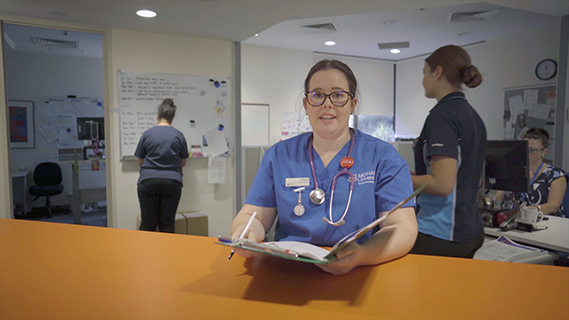
Deliver collaborative health care
Nurses play an important role in patient care. But it takes a whole team of different health professions working together to get the best outcomes for patients.
Entry Requirements
Entry Requirements (Domestic students)
There are many ways to be considered for entry to a Monash University degree depending on your educational background and history. The below options reflect the academic requirements for the different applicant categories (or the highest level of education previously completed) to be considered for this Monash course. All applicants must satisfy equivalence of the VCE subject prerequisites or equivalent tertiary units including the English language requirements.
Qualifications
Equivalent Australian Year 12
Completing Year 12 in the Current Year or within the Last 2 Years
Applicants with Recent Secondary Education
Started or Completed a TAFE Certificate, Diploma or Advanced Diploma
Applicants with VET Study
Started or Completed a Bachelor Degree
Applicants with Higher Education Study
Finished Year 12 More than 3 Years Ago with No Further Study
Applicants with Work and Life Experience
Alternative qualifications and prerequisites
For other domestic and international qualification entry requirements and scores for this course use the study credit and admissions eligibility search.
English requirements
Applicants must also meet the English language requirements.
University entrance requirements
Minimum entrance requirements for admission to Monash University Australia.
Extra Requirements
Additional English language proficiency requirement
In addition to meeting the Monash English requirement, applicants must demonstrate English language proficiency either by providing a written declaration that English is their primary language or evidence that they have achieved the minimum English language test results as specified in the Nursing and Midwifery Board of Australia's (NMBA) English language skills registration standard or hold current registration with Ahpra as an Enrolled Nurse.
Nursing English language requirements self declaration
VTAC applicants will be provided this information via the VTAC application process.
Direct applicants will be required to upload the Self Declaration form.
Primary language
NMBA requirement is that English is your primary language and you have attended and satisfactorily completed at least six years of primary and secondary education taught and assessed solely in English in a recognised country, including at least two years between years 7 and 12
Recognised country for this purpose is one of the following countries:
- Antigua and Barbuda
- Australia
- The Bahamas
- Barbados
- Belize
- Canada (excluding Quebec)
- Dominica
- Grenada
- Guyana
- Jamaica
- New Zealand
- Republic of Ireland
- St Kitts and Nevis
- St Lucia
- St Vincent and the Grenadines
- Trinidad and Tobago
- United Kingdom
- United States of America
Note these and other countries listed in the Monash Admissions Policy are accepted as meeting the Monash Language of instruction requirement.
English language test
IELTS (Academic): Test results will only be accepted from one test sitting completed within two years of course start date. Under certain conditions these English language results may be taken over two sittings. A complete sitting or a one skill retake.
Maximum two test sittings (including one skill retake) in a twelve-month period only if the following three requirements are met:
- A minimum overall score 7 in each sitting
- A minimum score of 7 in each component for listening, reading and speaking and a minimum score of 6.5 for writing across the two sittings
- No score in any test component below 6.5
Pearson Test of English (Academic): Test results will only be accepted from one test sitting completed within two years of course start date. Under certain conditions these English language results may be taken over two sittings.
Maximum two test sittings in a twelve-month period only if the following three requirements are met:
- A minimum overall score 66 in each sitting
- A minimum score of 66 in each of the communicative skills of listening, reading and speaking and a minimum score of 58 in writing across the two sittings
- No score in any test component below 56
TOEFL Internet-based test: Test results will only be accepted from one test sitting completed within two years of course start date. Under certain conditions these English language results may be taken over two sittings.
Maximum two test sittings in a twelve-month period only if the following three requirements are met:
- A minimum overall score of 98 in each sitting
- A minimum score of Reading 24, Listening 24, Speaking 23 and Writing 24 across the two sittings
- No score in any test below Reading 19, Listening 20, Speaking 20 and Writing 24
Cambridge (C1 or C2): Test results will only be accepted from one test sitting completed within two years of course start date. Under certain conditions these English language results may be taken over two sittings. A complete sitting or a one skill retake.
Maximum two test sittings in a twelve-month period only if the following three requirements are met:
- All four components are tested in each sitting
- A minimum score of 185 in each component for listening, reading and speaking and a minimum score of 176 for writing across the two sittings
- No score in any test component below 176
Additional information
Applicants must be 18 years of age by 30 September of the first year of the course in order to meet the mandatory requirements for clinical placements. Underage applicants who can not meet this requirement are not eligible for an offer. Please refer to the mandatory compliance web page for additional information.
Police checks
A valid national or international Police check (for international students) dated no earlier than 6 months prior to course commencement is required. Refer to the faculty website's police checks page.
Working with Children checks
Students must have a current Working with Children check regarding their suitability to undertake placements. Refer to the faculty website's Working with Children checks page.
National Disability Insurance Scheme (NDIS) Worker Screening check
A current NDIS Worker Screening check is required to undertake clinical/fieldwork placements.
Immunisation and infection requirements
In accordance with the National Health and Medical Research Council recommendations, this course requires that students comply with the faculty's Immunisation and vaccination policy and procedures. These are designed to provide maximum protection against the increased risk of some vaccine- preventable diseases for students, patients and workers in a health care setting.
This policy, and the associated procedures require that students have certain specified vaccinations, and have their blood-borne virus status determined, before they commence a clinical placement. Students who have not complied with this policy may not be able to undertake clinical placement, with the attendant academic consequences.
Prospective students are provided detailed information on the effect of blood-borne virus infection on the scope of practice of health care workers. Students who test positive to a blood-borne virus (including HIV, Hepatitis B and Hepatitis C) will be required to consult a specialist medical practitioner approved by the faculty to provide advice on any necessary restrictions on work practices to protect patients and others from infection.
Refer to the faculty website's Immunisation and Infection Risk page for more information.
Drug Administration Policy
Students should be aware of their legal responsibilities regarding the administration and storage of drugs in keeping with the Drugs Poisons and Controlled Substances Act 1981 (Vic) and the Drugs Poisons and Controlled Substances Regulations 2006 (Vic).
Personal Protective Equipment (PPE)
As a healthcare student you will be required to wear PPE to prevent the transmission of Covid-19 on clinical placements. The removal of facial hair may be required for fit testing of masks as a lawful and reasonable direction by healthcare settings.
Substances Regulations 2006 (Vic).
Students should be aware of the School of Nursing and Midwifery drug administration policy relevant to their particular year of study. For more information please visit the website and refer to the section entitled 'Clinical Guidelines'.
* Note: Applicant checks are not required prior to offer, but after acceptance of offer prior to commencing clinical placements.
Inherent Requirements
See Student Placement Guide for information about inherent requirements/personal attributes associated with this course.
Inherent requirements
To complete your degree, you will need to demonstrate that you have the abilities, knowledge, and skills to achieve specific core learning outcomes, these are called inherent requirements.
Find out more about inherent requirements for this course.
Making the application
Future students
Semester one (February)
Applications for on campus studies should be made online through the Victorian Tertiary Admissions Centre.
Current Monash students
You may apply to transfer from another Monash course. Transfers are a competitive process. You may apply mid-year for available courses however consideration will be given as to whether you will be able to follow your course progression.
Please note that if you apply for a course transfer, you should still enrol in your current course as if you were continuing so as not to jeopardise your enrolment in the Faculty if your transfer application is unsuccessful. More about Course Transfer.
Self assess for credit eligibility
Check for study credit using the "Credit search" link on the Credit for prior study page.
Fees
Fees are subject to change annually.
Commonwealth supported place (CSP)
The average annual student contribution amount for 2026 is:
A$7000
Note: see information on how fees are calculated.
Fee assistance
As a Commonwealth supported student, you may be able to either:
- pay all of your student contribution upfront, or
- defer payment through the HECS HELP loan scheme.
Other costs and fees
For information on other study costs and fees, see other study costs.
Scholarships
We offer over 360 types of scholarships, valued at up to $280,000. Some scholarships offer one-off payments while others continue for the length of your course. Learn more about Monash Scholarships.
Other fees
The Student Services and Amenities Fee applies to some students each calendar year.