
Evaluating teaching
Evaluating teaching
Planned feedback opportunities amplify students’ voices and enhance their learning experience.
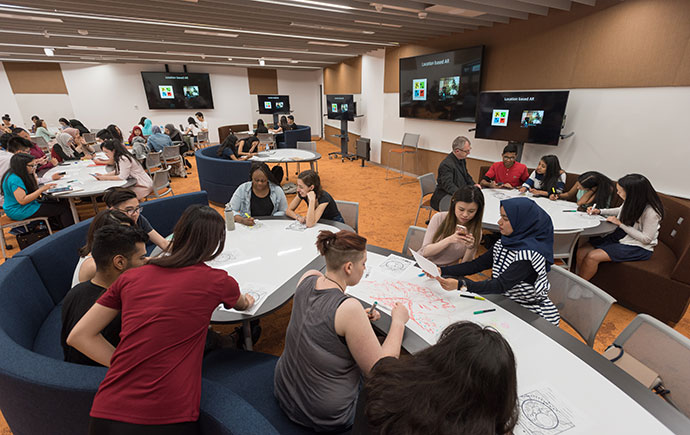
At Monash University, regular student evaluation of teaching occurs at the conclusion of each teaching period, with the use of SETU (Student Evaluation of Teaching and Units).
Opportunities during the teaching period can also be created to collect student feedback. Especially, feedback systems and cycles that are deliberate and are planned during the design of the unit to maximise their value can provide greater insight than ad-hoc and inconsistent requests of students to ‘check in’ or give feedback. This type of responsive evaluation may also allow educators to address student issues during the teaching period before students evaluate the unit formally through SETU.
-
Student Evaluation of Teaching and Units (SETU)
The SETU survey is a way to hear from students about their experience of learning within a unit. This resource provides an overview of the SETU questions, the survey instrument implementation and frequently asked questions.
-
Interpret unit evaluation surveys
This guide provides information about the university-wide questions ask to students in the SETU survey for Unit evaluation and how you can read and interpret qualitative and quantitative unit evaluation SETU data.
-
Interpret teaching evaluation surveys
This guide provides information about the educator-specific questions ask to students in the SETU survey for teaching evaluation and how you can read and interpret quantitative teaching evaluation SETU data.
-
Unit Health Checks (UHC)
Unit Health Checks (UHC) are conducted by the University at least twice a year. These checks give insights into student feedback and unit fail rates and give faculties an opportunity to identify opportunities to improve the student experience and unit delivery.
-
Complete Unit Health Checks
Learn more about faculty and unit responsibilities for completing Unit Health Checks (UHC), the university's structured process for enhancing the student learning experience in units.
-
Gather additional feedback from students
This guide provides additional ways you can gather student feedback and provides advice for how you can close the loop and act effectively on feedback.
-
Use Feed Forward for formative evaluation
The Feed Forward tool enables you to gather formative feedback on your teaching, which you can act on earlier than waiting for the release of SETU.
 Recommendations
View
Recommendations
View


| Don’t wait until the end of the semester to get feedback Gathering feedback during the teaching period is a great way to make sure you are addressing issues during the semester and being responsive to your students’ needs. Use the Feed Forward flux poll or create your own feedback tool to understand more about your students’ learning experiences. |

| Include the students as active participants in the feedback process This means informing your students of the purpose of any feedback and evaluation activities you undertake in your unit so they understand their value. It also includes talking to your students about the changes you have made based on their feedback (or the feedback of a previous cohort). You can communicate this verbally (in class time), and in writing (on the Moodle site or in the unit handbook). Making it apparent that you welcome and appreciate constructive feedback, and providing examples of actionable comments can help students to understand how to use their SETU responses most effectively. Giving them a few minutes to give feedback during a workshop can also improve completion rates so that your data is more representative. |

| Review your SETUs at the end of every semester and implement changes before the next iteration SETU feedback can provide valuable insights into the strengths and areas for improvement in a unit. By reviewing your feedback objectively and looking for any patterns or themes that come up in comments, you can be more responsive to your students in the following semester. However, the data is most valuable when it informs future actions. Often, by the time it comes to deliver a unit again, the previous feedback has been put aside or dismissed. When you review SETU data, make an action plan for the next iteration and either make the changes while it’s front of mind. Alternatively, put the plan in the same place as the materials for next time, so that you will see and act on them in preparation for the upcoming teaching period. |

| Use SETU and evaluation strategies during the teaching period together It can always feel like a big step to making significant changes to your unit, or the way you approach things. When you implement changes for a unit based on SETU, you can firstly inform students of the changes you have made and why (in response to student feedback), but then you can schedule key feedback collection points during the teaching period that specifically gather student sentiments and experiences related to the new approach. If they are positive, you know that this has been successful. If they are mixed, or negative, you can unpack the feedback with students to find out what went wrong and how to improve it. Students are less likely to provide poor feedback in SETU if they have engaged in productive and meaningful conversations about adjusting to feedback during the teaching period. |

| Choose an appropriate technology for gathering feedback There are a lot of different tools you can use to get feedback. Polls, including the FeedForward Bento box, Google Forms, and Moodle Feedback are just some of the tools you can use. Find out more about these tools in the ‘How To’ section. |
Supporting your students
View
Helping your students see the purpose of feedback is an important aspect of seeking evaluation of teaching. Importantly, gathering feedback during the semester and explicitly acting on that feedback is one of the most effective ways of encouraging more (and more effective) feedback for end of semester SETU.
The following tips can be used in eliciting feedback to create a more conducive environment for gaining effective feedback from students.
-
As with anything, context is important. Before you ask your students for their feedback, explain why you’re collecting it and how it will benefit both you and them. They will appreciate the fact that you also are on a learning journey.
-
If you want useful feedback to create meaningful change in the classroom, you must create a welcoming environment for your students. One way for students to feel that they can express their views safely is through enabling anonymous responses. This means that students can be open with their responses.
-
Make sure your questions are specific. This will increase the chances of your students understanding the intent of your question, meaning you’ll get more useful feedback.
For example, “What did you think about the tutorial today?” won’t yield many useful responses. A better phrased question is: “In what ways did today’s activity challenge you?” It should be as clear as possible.
You can also encourage your students to provide feedback that is specific and includes examples, so you can also learn from the experience.
-
The temptation with student feedback is to ask all the questions at the midpoint of the semester. However, as your list of questions gets longer, the chance of your students thoughtfully addressing these questions decreases. Instead, you should aim for fewer questions but at more regular intervals.
Regular gathering of feedback will also provide you with an opportunity to make any changes before it’s too late. As a rule, we suggest two to three questions every few weeks. Think pulse questions, not a survey.
-
There’s nothing worse than providing feedback and then seeing no evidence of it being received. When you ask your students for feedback, be sure to come back to them within a few days. The most effective teachers thank their students for their feedback, and explain a few of the key themes that came through. Most importantly, they outline the things they’ll be doing more of, and the things they’ll be doing less of as a result of the feedback.
Coming back to your students is a critical step that closes the loop in your students’ mind and encourages them to provide useful feedback again in the future.
Supporting your students in giving feedback through SETU
Just as with responsive feedback, students need to understand the purpose of the feedback they are giving in SETUs for this evaluation to be useful and effective. It is important to discuss this explicitly with your students prior to the end of semester.
While the strategies above are helpful for students when completing any kind of feedback, they may also have specific questions about how to access and complete SETU, aspects of confidentiality, and how their responses will be used among others.
What resources and services are available to students
This page provides information about how to complete SETU, survey timing, confidentiality, student support and more.
Related resources
View
Here are some relevant resources that will help support you in implementing an effective feedback practice into your teaching.
Relevant policies & procedures
Monash has specific policies and procedures related to student evaluation. Take the time to review these to inform your teaching practice.
-
Learning and Teaching Student Engagement Procedure
This procedure sets out Monash’s requirements for supporting students in their studies and engaging them as partners in the learning process.
-
Learning and Teaching Quality Procedure
This procedure outlines the mechanisms by which Monash monitors and improves the quality of its learning and teaching in units and assures alignment with the Higher Education Standards Framework (Threshold Standards) 2021.
-
University Student Survey Policy
This policy aims to ensure a strategic and coordinated approach to quality assurance survey activities with students at Monash University.
-
University Student Survey Procedures
This policy aims to ensure a strategic and coordinated approach to quality assurance survey activities with students at Monash University.
Related technologies
Find out more about how you can use each of these polling tools to implement effective student evaluation with your unit.
-
Moodle Feedback
The feedback activity in Moodle allows you to create your own questions to collect feedback from your students. Feedback questions can not be graded. You can also allow students to see each other's responses, either anonymously or identifiable.
-
Moodle Feedback: Listen to your learners
This YouTube video demonstrates how you can use the Moodle Feedback tool to gather feedback from your students.
-
Google Forms
This guide provides examples of how the Google suite of tools, including Google Docs, Google Sheets, Google Forms and Google Drive can be used to effectively teach online. Google suite is available for all Monash staff and students.
-
Google Forms: Making an Exit Ticket
This short YouTube video demonstrates how you can create an exit ticket using Google Forms.
Education Performance Standards Framework
View
The Education Performance Standards identify the expectations of education practice at Monash – See the Education Performance Standards for more details.
Impact on student learning | Impact on educational knowledge | Impact on educational environment | |||||
Effective teaching and learning | Responsive program design | Student- centred orientation | Professional learning engagement | Pedagogical content knowledge | Education research performance | Education innovation | Education leadership |
✓ | ✓ | ✓ | ✓ | ||||
You could address these Practice Elements by providing evidence of how you:
- Reflected on and responded to (SETU) feedback.
- Developed formative feedback tools for your students.
- Responded to formative student feedback within the semester.