
Building pedagogical content knowledge (PCK)
Building pedagogical content knowledge (PCK)
PCK encompasses two fundamental elements: knowledge of representations of subject matter and knowledge of specific student conceptions and learning challenges.
What is PCK?
PCK embodies the integration of content and pedagogy into a comprehensive understanding of how specific content is structured, communicated, and adapted to cater to diverse learners’ interests and capabilities (Shulman, 1987). For example, a chemistry educator’s PCK encompasses how they transform their content knowledge into forms and representations (e.g., chemical models) that are meaningful and comprehensible to students at a level that matches their development.
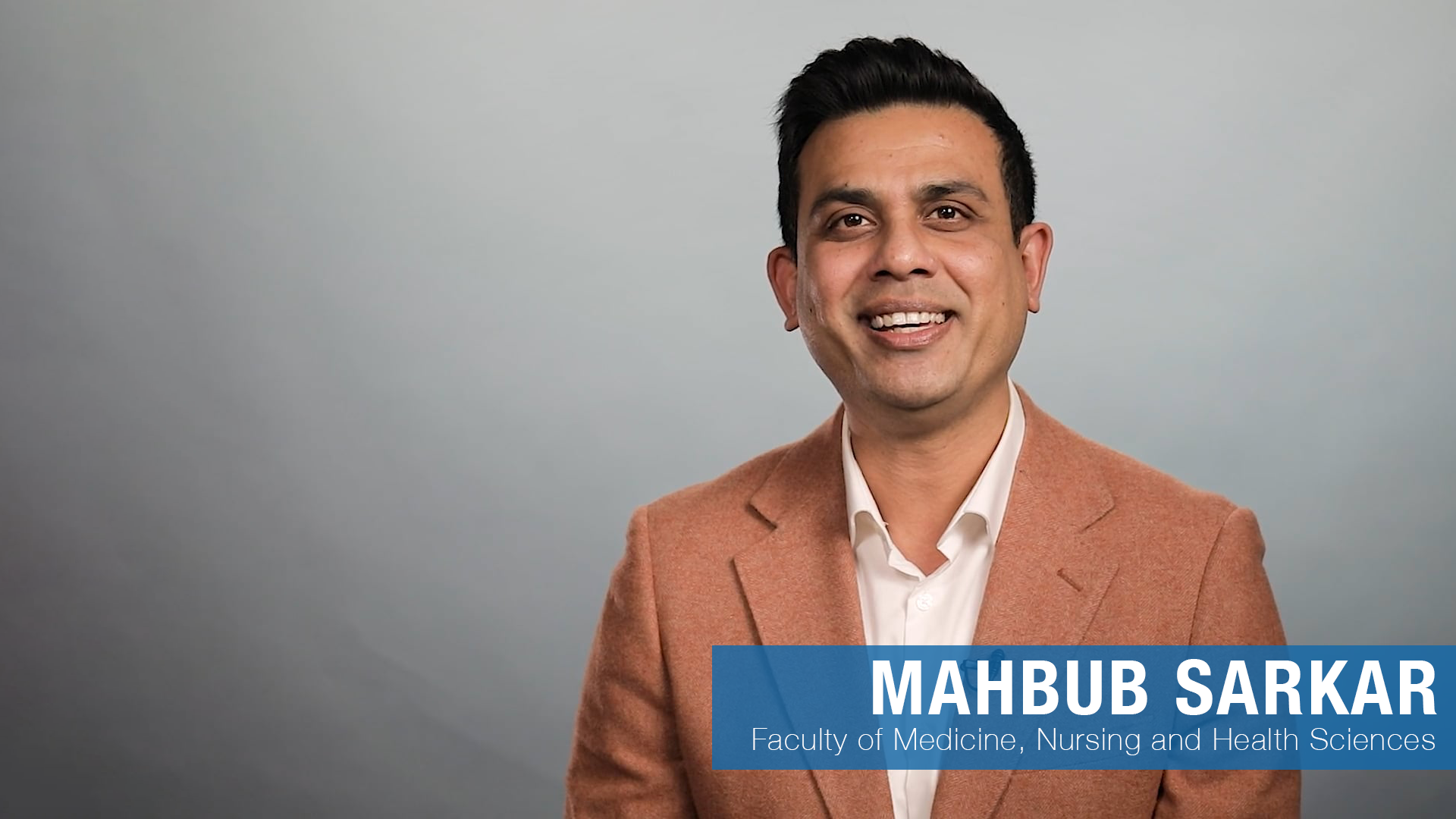
Watch the video to listen to Mahbub Sarkar as he introduces this resource
Expand the accordions below to learn more
Benefits of PCK-informed teaching
View

PCK offers several benefits for educators and their students:
- PCK helps educators integrate their knowledge of subject matter with their understanding of how to teach it effectively (Shulman, 1987). This integration allows educators to present content in ways that are more comprehensible and engaging for students.
- PCK may help promote student-centric education by linking content knowledge with knowledge about teaching and student learning.
- PCK helps educators see the connections between different aspects of teaching, such as content knowledge, pedagogical approaches, and student learning. This holistic perspective allows educators to create more integrated and effective teaching and learning experiences.
- PCK appears to be a stronger predictor for the success of educators’ practice to support student learning as compared to content knowledge alone (Förtsch et al., 2016).
- By using PCK, educators can better anticipate and address student misconceptions and learning difficulties. This proactive approach helps students build a deep understanding of the subject matter (Carlson et al., 2019).
- PCK enables educators to adapt their teaching strategies to meet the diverse needs of their students. This includes adjusting the pace, using varied instructional methods, and providing different types of support to ensure all students can succeed (Hume & Berry, 2011), eventually supporting the promotion of inclusivity and diversity.
- PCK promotes a shared language and understanding among educators about what constitutes effective teaching (Fraser, 2016). This common ground can enhance collaboration and professional dialogue, leading to more cohesive and supportive teaching communities (Sarkar et al., 2024; Bertram & Loughran, 2012).
- Engaging with PCK encourages educators to reflect on their practice and continuously improve their teaching practice. This ongoing professional development fosters continuous professional development and a culture of lifelong learning among educators (Sarkar et al., 2024; van Driel & Berry, 2019).
Common knowledge domains
View
Lee Shulman introduced the concept of PCK in the mid-1980s to highlight a specialised form of professional knowledge that distinguishes educators from other professionals (Shulman, 1987). The notion of this specialised professional knowledge resonated well with educators and academics, leading to widespread exploration, adoption, and adaptation across various domains, especially in science and mathematics education.
Following Shulman's initial conception, numerous PCK models were developed over the years, generating differing orientations on PCK definitions and scope. Different PCK models used by researchers vary in their inclusion of knowledge domains. The most common knowledge domains (with definitions) that contribute to a teacher’s PCK are shown below (Sarkar et al., 2024; Chan and Hume, 2019).
-
Content knowledge
Knowledge of the discipline specific topics, including the basic concepts and principles forming facts and rules/theories to prove their validity (Shulman, 1987).
Pedagogical knowledge
Knowledge of general principles for classroom management (Shulman, 1987) and student engagement (Gess-Newsome, 2015).
Knowledge of students
Knowledge of students' characteristics, including students' learning orientations (e.g., special needs, skills, and personal learning goals) (Gess-Newsome, 2015).
Knowledge of students' understanding
Knowledge of students' areas of learning difficulty or misconceptions, prerequisite knowledge needed by students to develop an understanding of a topic or subject, and the diverse ways in which students approach learning that impact their understanding of a topic or subject (Magnusson et al., 1999).
Knowledge of curricula
Knowledge of curricular programs and learning outcomes, including structure of subject contents and resources related to each content (Magnusson et al., 1999).
Knowledge of assessment
Knowledge about aspects that should be assessed, and the methods used in this assessment (Magnusson et al., 1999).
Knowledge of instructional strategies and representations
Knowledge about subject- or topic-specific instructional strategies (Magnusson et al., 1999).
Knowledge of Context
Knowledge about contextual variables that could influence and affect the teaching and learning process, including the cohort size, time constraints and culture dynamics (Grossman, 1990; Shulman, 1987).
Orientation towards teaching
Knowledge and beliefs about the purpose and goals of teaching a specific topic or subject (Magnusson et al., 1999).
So, PCK goes beyond mere subject matter expertise or general pedagogical skills. It involves a deep understanding of how to structure and deliver content in a way that makes it comprehensible and engaging for students (Berry et al., 2016). It considers the personal and contextual aspects of teaching and student learning, such as teacher beliefs, teaching orientation, learning environment, student beliefs, prior knowledge (with any misconceptions), and learning challenges, all of which significantly impact the teaching and learning process (Carlson et al., 2019; Hume & Berry, 2011). Effective integration of these knowledge domains requires teachers to adapt their teaching strategies to the specific content they are teaching, making PCK a nuanced and context-dependent form of knowledge (Shulman, 1987).
Importantly, PCK comprises a deep understanding of your students. What motivates them? Where do they face difficulties? To create a positive learning experience, you need to identify and address any misconceptions they bring to the classroom. These misconceptions, often deeply ingrained and complex, can shape how students perceive and interact with the world. Simply presenting accurate information may not be enough to change these misconceptions. You need to use active learning strategies that engage students in grappling with the concepts and reflecting on their understanding. Help them see how their misconceptions might be hindering their learning and guide them towards recognising and overcoming these barriers.
The recently developed Refined Consensus Model (RCM) describes PCK as the complex layers of knowledge and experiences that guide educators' professional practice to influence student learning (Carlson et al., 2019). This model identifies three distinct realms of PCK: (a) collective PCK, (b) personal PCK, and (c) enacted PCK.
Personal PCK | An educator’s unique and specialised knowledge for planning and teaching a particular topic. |
Enacted PCK | Knowledge and actions of an educator within a specific teaching moment or situation. |
Collective PCK | The accumulated knowledge that is widely agreed upon and formed through research and/or collective expert wisdom of practice related to the teaching of specific topics to specific groups of learners. |
It is important to remember that PCK is not a fixed body of knowledge but is dynamic, developed and refined by educators over time, based on their experiences of teaching specific topics and through reflecting on their own teaching practice (van Driel & Berry, 2019).
Pause and reflect
- How do you consider students’ prior understanding (including misunderstanding/difficulties) about any particular content when you teach that content?
- Do you think different kinds of content ideas require different pedagogical approaches? Why/why not?
How do you articulate PCK?
View
The Content Representation (CoRes) and Pedagogical and Professional-experience Repertoires (PaP-eRs) are two commonly used tools that support the articulation of PCK (Loughran et al., 2006). The CoRe tool explores educators’ thinking when it comes to understanding and preparing to teach specific content to students. PaP-eRs explore educators’ reflections on how and why they taught a particular topic. CoRes and PaP-eRs can be combined and explored together, which is known as a ‘resource folio’. This resource guides you to use the CoRe tool for capturing and developing PCK.
What does the CoRe tool look like?
The CoRe tool includes a series of prompts that engage educators in planning and reflecting on a specific content topic, asking them to identify the central concepts associated with that topic. Once identified, educators provide written responses to a series of prompts including, what students should learn about each big idea, why that idea is important to know, what students typically struggle to conceptualise related to the idea, specific teaching strategies designed to promote students’ learning about the idea and ways of assessing student understanding of the idea (Shultz et al, 2018).
CoRe prompts from Schultz et al., 2018.
- Identify one ‘big idea’ (or topic) that you teach.
- What is most important for students to know about this idea?
- Why is it important for students to know this?
- What do you know about your students' thinking that influences your teaching of this idea?
- What teaching strategies will you use?
- Why have you chosen these teaching strategies to engage students with this idea?
- What was the source of these teaching strategies?
- How will you ascertain students' understanding or confusion around this idea after teaching them?
Use this blank CoRe tool. (MSWord 1 page)
A CoRe can be completed by an individual or a group of educators. When used by an individual, the CoRe offers both a method for eliciting PCK and a tool for capturing PCK as educators document and reflect on their teaching goals and practices. When used with a group of educators, the CoRe provides a sharing platform for practice wisdom about how to teach particular content and a process for building collective professional knowledge. Thus, CoRe can potentially simultaneously collect sophisticated PCK from expert educators, accelerate PCK development among novice educators and promote collective professional practice knowledge within a community of educators.
A CoRe is always considered a work in progress - that is, it is not meant to represent ‘the best’ or ‘the only’ way to teach particular content to particular groups of students. It is a living document that can be revised, refined, and developed as educators engage with the content, pedagogy and students.
How do you use the CoRe tool?
View
Below you find a step-by-step process to use the CoRe tool to articulate your PCK. You will find examples of completed CoRe tools across various disciplines and video snippets from exemplary educators showcasing their PCK-informed teaching practices in the PCK in Practice section.
-
The first step of using the CoRe tool is to identify the one ‘big idea’ (or topic) that you teach.
A ‘big idea’ is a central concept associated with a topic. For example, for the topic “Information flow in viruses”, a big idea might be “In viruses, gene expression and replication is dependent on host cells”. Developing big ideas for a topic is an important aspect of articulating your PCK because it reveals how you, as an educator, frame the topic. These big ideas highlight what you consider the most valuable concepts for students to grasp in order to fully conceptualise the topic. Identifying these ideas helps you distinguish between the more essential and less essential aspects of the topic, thereby clarifying the focus of both teaching and student learning.
Once you've identified the big idea, you then determine what is most important for students to understand about it. This process of unpacking your content knowledge allows you to concentrate on what truly matters within a content area. It also guides you in teaching with a clear purpose, helping both you and your students develop a deeper conceptual understanding of the subject.
-
It is not just a matter of describing what you are teaching, but just as importantly, why are you teaching this big idea, and why is it important for students to know about it?
The CoRe tool provides a scaffold for planning and designing instruction focused on students’ learning needs, particularly considering students’ prior knowledge, disciplinary backgrounds, learning challenges and knowledge gaps.
Anticipating students’ prior knowledge and experiences in relation to learning the big ideas may enable you to tailor teaching strategies accordingly. Finding out what students have previously learnt about big ideas can help you scaffold students’ learning to progressively build on their existing understanding.
Considering what you know about students’ thinking that influences your teaching of this idea is valuable for accommodating their diverse disciplinary backgrounds and experiences. Establishing connections between the big ideas, students’ prior knowledge, and their disciplinary backgrounds can support you to bridge the gap between different courses that students may undertake.
In this step, you can also identify common student learning challenges and misconceptions. By drawing on your past professional and teaching experiences, you will likely be able to foresee these challenges and select big ideas accordingly.
-
Based on your big ideas, you will now explore specific teaching strategies related to the teaching of that content idea, the rationale for choosing them, and their sources.
You can visit the Monash Teach HQ page to explore a range of teaching practices, inspiring examples from Monash educators, and teaching and learning blog posts. These resources can offer ideas on engaging teaching strategies.
Also explore for external resources. For example, if you teach chemistry, the ChemPCK website is a useful resource containing teaching strategies and insights from a large number of tertiary chemistry educators. You can search by topic that you are interested in to find specific strategies that have been successfully used by others.
Next, you will be prompted to reflect on the reasoning behind choosing specific teaching strategies and how they are intended to enhance student engagement and understanding. It is important to address student needs and prior knowledge, tailoring strategies to meet diverse needs and bridge learning gaps. This reflection ensures that the teaching practices are intentional, effective, and aligned with the learning objectives.
As you make your tacit knowledge explicit, it is valuable to identify the sources of the teaching strategies you employ. This step ensures that your methods are grounded in credible, evidence-based practices, while also providing you with a clear blueprint that you can revisit in the future. Reflect on whether these strategies were inspired by educational research, professional development sessions, collaboration with colleagues, feedback from students, curriculum guidelines, or your own personal experiences. By doing so, you reinforce the intentionality of your teaching and create a robust, reflective approach to continuous professional growth.
-
Assessment is a fundamental element of student learning and allows you to evaluate student achievement. The final CoRe prompt asks you to plan how you will assess students’ understanding or confusion of the big idea after teaching them. When addressing this, consider the following aspects:
- Think about how you will determine what and how your students have learned.
- Choose assessment strategies that reveal student thinking and reasoning as part of their learning.
- Consider incorporating formative assessments that are tailored to the specific content you are teaching. These can provide real-time feedback and allow you to adjust your teaching strategies as needed.
- Reflect on how you will know if students actually understood the idea. What behaviours, actions, or statements (or the absence of them) will indicate that they have understood the idea?
-
The process of documenting your PCK using the CoRe tool can serve a dual purpose—enhancing both your own teaching through feedback and reflection and providing a departmental resource for sharing with colleagues to support the professional growth of new educators.
The CoRe tool can become a teaching guide, used to clearly articulate and record the reasoning behind your chosen pedagogical strategies. This guide will help you deeply reflect on the relationship between your teaching of specific content and your students’ learning outcomes.
You may like to share your documented CoRe with colleagues to provide valuable insights and strategies, supporting the professional growth of educators in your department. Incorporating feedback from peers and mentors on your CoRe documentation will support continuous improvement of your teaching methods.
Once you have completed an entire CoRe worksheet, actively review and reflect on your teaching activities that you have documented and delivered. By comparing actual teaching practices with intended outcomes, you can facilitate a cycle of quality improvement in your teaching.
PCK in practice
View
This section presents five case studies from Monash educators across various disciplines, showcasing their PCK-informed teaching practices. It includes examples of completed CoRe tools and video snippets that offer practical insights into how PCK is applied in different disciplinary contexts.
-
Renee Tsongas describes how she used the CoRe tool to teach cardiovascular physiology. Refer to her completed CoRe tool.
-
Angelina Piccolo describes how she used the CoRe tool to teach students about lung cancer. Refer to her completed CoRe tool.
-
Nemai Karmakar describes how he used the CoRe tool to teach Advanced Electromagnetics. Refer to his completed CoRe tool.
-
Ian Wittman describes how he used the CoRe tool in Chemistry tutorials. Refer to his completed CoRe tool.
-
Megan Waldhuber describes how she used the CoRe tool to teach students about virology. Refer to her completed CoRe tool.
Publications from Monash PCK project
- Sarkar, M., et al. (2024). Pedagogical content knowledge (PCK) in higher education: A systematic scoping review. Teaching and Teacher Education, 144, 104608. https://doi.org/https://doi.org/10.1016/j.tate.2024.104608
- Sarkar, M., et al. (2024). Exploring the development of pedagogical content knowledge (PCK) for health professions educators through faculty development. Advances in Health Science Education. https://doi.org/10.1007/s10459-024-10405-4
Acknowledgements
Thanks to the study participants for their insights and thoughtfulness in their contributions to this work. Also, thanks to the PCK research team, including Mahbub Sarkar, Amanda Berry, Charlotte Barber, Laura Gutierrez-Bucheli, Susie Ho, Thomas Hiscox, Dragan Ilic, Michelle Lazarus, Nicoleta Maynard, Caroline Wright, and Paul White.
Supporting your students
View
PCK enables educators to tailor their teaching strategies to address the diverse needs of their students, fostering an environment where active engagement in learning is central.
Engaging students in active learning
To enhance student engagement, PCK encourages the use of active learning strategies that promote deeper understanding and application of knowledge. Incorporating group discussions, problem-solving activities, and case studies can be effective ways to stimulate active learning. These methods not only reinforce theoretical concepts but also provide students with opportunities to apply their knowledge in practical contexts, bridging the gap between theory and practice.
Monash University's Teach HQ offers a wealth of resources to support active learning, including strategies for understanding student diversity, addressing learning challenges, and leveraging students' strengths. Resources also cover how to implement inclusive learning strategies, nurture inclusivity in teaching, clarify student roles in active learning, and facilitate meaningful student interactions, both in collaborative learning environments and blended or asynchronous learning spaces.
Addressing student misconceptions
PCK emphasises the importance of identifying and addressing student misconceptions—deeply held but incorrect understandings that can significantly impact learning across different courses and disciplines. These misconceptions can serve as a lens through which students view and interact with the world, making it essential to design teaching approaches that build on and correct these misunderstandings.
The constructivist theory of learning supports this approach by suggesting that knowledge is constructed through the modification of pre-existing knowledge by incorporating or replacing them with new, accurate knowledge through scaffolding (Bodner, 1986). Recognising that students engage with knowledge differently depending on context, educators can better assess student understanding through authentic assessment practices that mirror real-world applications.
To effectively identify and address misconceptions, various diagnostic tools are available, broadly categorised as interviews, open-ended tests, multiple-choice tests and multiple tier tests. If you are a science educator, see Gurel et al. (2015) for a range of diagnostic instruments available across science disciplines. Some examples include the Force Concept Inventory (FCI), Mechanical Waves Conceptual Survey, Chemistry Concept Inventory (Mulford & Robinson, 2002), Biology Concept Inventory (BCI), and States of Matter Diagnostic Test (SMDT). These tools, along with formative assessment techniques like quizzes and concept maps, can help gauge student understanding and inform necessary adjustments to teaching strategies.
Incorporating student voice
A PCK-informed approach emphasises the importance of continually evaluating and refining teaching approaches, and student voice—captured through feedback—plays a crucial role in this process. Feedback from students provides educators with essential insights into the learning experience, highlighting what works well and what areas may need improvement. By understanding students' perspectives on what they find engaging, challenging, or confusing, educators can make informed decisions to enhance their teaching and assessment strategies. This not only benefits students by addressing their needs but also fosters a sense of partnership between educators and students, promoting a more inclusive, student-centred approach to education.
For gathering immediate feedback, tools like the Feedforward Bento Box can be useful. It includes a polling tool that offers pre-set or customisable questions. This tool includes polling options with pre-set or customizable questions, enabling educators to gather timely insights from students. You may also wish to explore the MEA module Formative evaluation using Feed Forward for further professional development.
Feedback in actionMake your way through Incorporating Student Feedback and Enhancing Student Experience to learn how Monash University academics have used student feedback to amplify students’ voices and enhance their learning experience - these case studies demonstrate how actionable feedback can transform teaching and create a more responsive learning environment. |
Related resources
View
Monash Teaching Community Blog: Educators’ professional knowledge from a pedagogical content knowledge (PCK) perspective
Chemistry pedagogical content knowledge: ChemPCK
Colorado State University resource on PCK
Professor John Loughran’s lecture on PCK
References
Berry, A., Depaepe, F., & van Driel, J. (2016). Pedagogical Content Knowledge in Teacher Education. In J. Loughran & M. L. Hamilton (Eds.), International Handbook of Teacher Education: Volume 1 (pp. 347-386). Springer Singapore. https://doi.org/10.1007/978-981-10-0366-0_9
Bodner G. M. (1986). Constructivism: A theory of knowledge. Journal of Chemical Education, (10), 873. https://doi.org/10.1021/ed063p873
Carlson, J. et al. (2019). The Refined Consensus Model of Pedagogical Content Knowledge in Science Education. In: Hume, A., Cooper, R., Borowski, A. (eds) Repositioning Pedagogical Content Knowledge in Teachers’ Knowledge for Teaching Science. Springer, Singapore. https://doi.org/10.1007/978-981-13-5898-2_2
Chan, K.K.H., Hume, A. (2019). Towards a Consensus Model: Literature Review of How Science Teachers’ Pedagogical Content Knowledge Is Investigated in Empirical Studies. In: Hume, A., Cooper, R., Borowski, A. (eds). Repositioning Pedagogical Content Knowledge in Teachers’ Knowledge for Teaching Science. Springer, Singapore. https://doi.org/10.1007/978-981-13-5898-2_1
Förtsch, C., Werner, S., Von Kotzebue, L., & Neuhaus, B. J. (2016). Effects of biology teachers’ professional knowledge and cognitive activation on students’ achievement. International Journal of Science Education, 38(17), 2642-2666. https://doi.org/10.1080/09500693.2016.1257170
Fraser, S. P. (2016). Pedagogical Content Knowledge (PCK): Exploring Its Usefulness for Science Lecturers in Higher Education. Research in Science Education, 46(1), 141-161. https://doi.org/10.1007/s11165-014-9459-1
Gess-Newsome, J. (2015). A model of teacher professional knowledge and skill including PCK: results of the thinking from the PCK summit. In A. Berry, P. Friedrichsen, & J. Loughran (Eds.), Re-examining Pedagogical Content Knowledge in Science Education (pp. 28-42). Routledge. https://www.taylorfrancis.com/chapters/edit/10.4324/9781315735665-4/model-teacher-professional-knowledge-skill-including-pck-gess-newsome-julie
Grossman, P. L. (1990). The making of a teacher: teacher knowledge and teacher education. Teachers College Press, Columbia University.
Gurel, D. K., Eryılmaz, A., & McDermott, L. C. (2015). A review and comparison of diagnostic instruments to identify students’ misconceptions in science. Eurasia Journal Of Mathematics Science And Technology Education, 989–1008. https://hdl.handle.net/11511/38957
Hume, A., & Berry, A. (2011). Constructing CoRes—a Strategy for Building PCK in Pre-service Science Teacher Education. Research in Science Education, 41(3), 341-355. https://doi.org/10.1007/s11165-010-9168-3
Loughran, J., Mulhall, P., & Berry, A. (2004). In search of pedagogical content knowledge in science: Developing ways of articulating and documenting professional practice. Journal of Research in Science Teaching, 41(4), 370-391. https://doi.org/10.1002/tea.20007
Magnusson, S., Krajcik, J., & Borko, H. (1999). Nature, sources, and development of pedagogical content knowledge for science teaching. In J. Gess-Newsome & N. G. Lederman (Eds.), Examining pedagogical content knowledge: The construct and its implications for science education (pp. 95-132). Kluwer Academic. https://doi.org/10.1007/0-306-47217-1_4
Sarkar, M., Gutierrez-Bucheli, L., Yip, S. Y., Lazarus, M., Wright, C., White, P. J., Ilic, D., Hiscox, T. J., & Berry, A. (2024). Pedagogical content knowledge (PCK) in higher education: A systematic scoping review. Teaching and Teacher Education, 144, 104608. https://doi.org/https://doi.org/10.1016/j.tate.2024.104608
Sarkar, M., Gutierrez-Bucheli, L., Maynard, N., Lazarus, M., Wright, C., Ho, S., Ilic, D., White, P. J., & Berry, A. (2024). Exploring the development of pedagogical content knowledge (PCK) for health professions educators through faculty development. Advances in Health Science Education. https://doi.org/10.1007/s10459-024-10405-4
Schultz, M., Lawrie, G. A., Bailey, C. H., & Dargaville, B. L. (2018). Characterisation of teacher professional knowledge and skill through content representations from tertiary chemistry educators. Chemistry Education Research and Practice, 19(2), 58-519. https://doi.org/10.1039/c7rp00251c
Shulman, L. S. (1987). Knowledge and Teaching: Foundations of the New Reform. Harvard Educational Review, 57(1), 1-23. https://doi.org/10.17763/haer.57.1.j463w79r56455411
van Driel, J., & Berry, A. (2019). Pedagogical Content Knowledge in Preservice Teacher Education. In M. A. Peters (Ed.), Encyclopedia of Teacher Education (pp. 1-6). Springer Singapore. https://doi.org/10.1007/978-981-13-1179-6_176-1