AI can now produce almost anything we ask of students: the essay, the code, the reflection. The moments where learning happens can be skipped with a prompt, often without anyone noticing, including the student. Everyone agrees we need to protect learning, but what is learning, how do we design for it and how do we know it's happening?
This page is a starting point, with ideas to try now and new modules and workshops on the way.

Building learner agency moment by moment in the age of AI
Watch Building learner agency moment by moment in the age of AI, presented by Dr Paula de Barba at the Monash University Learning and Teaching Conference 2026.
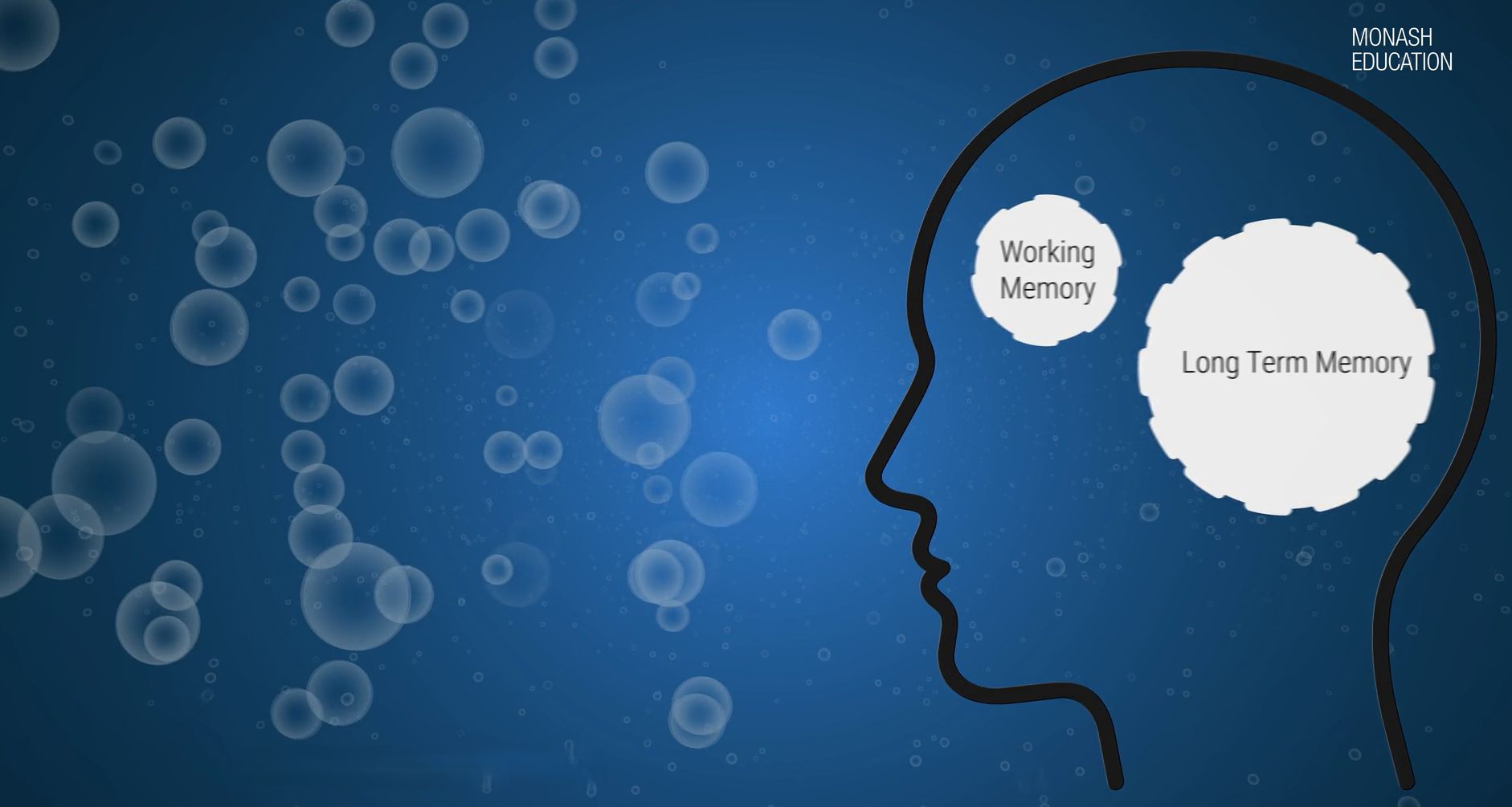
Educators answer this question differently. Learning can mean coming to know a discipline, developing confidence and identity or joining a professional community. Underneath all of these sit shared cognitive processes, and from that perspective learning is a lasting change in what a person knows and can do. Students first acquire new knowledge, then build fluency, then develop durable, adaptive knowledge they can use in new situations.
What students already know shapes what they notice, understand and can judge. That makes knowledge matter more with AI, not less: without it, a fluent answer and a correct one look the same.
Students who learn and think well with AI are good learners first. What sets them apart isn't study technique but agency: the capacity to act with intention, deciding what to ask, what to accept and what must remain their own.
A 2026 TEQSA resource, co-authored by Monash academics, puts agency and regulation at the centre of the adaptive capabilities students need when AI is everywhere, all grounded in deep disciplinary knowledge. As AI increasingly acts on our behalf, the question is no longer what AI can do but who is directing whom.
Students build agency across three scales at once: regulating their learning, making sense of it over time and questioning the conditions around them. Start close, in the classroom, moment by moment.
Explore the tabs for ideas of what each scale can look like when AI is in the room.
Taking the controls of their learning:
Think first, then prompt: students draft, predict or recall before opening AI.
Socratic mode first: use or configure AI that asks questions and gives hints rather than solutions.
Judge before you accept: students check AI output against a rubric or exemplar before using it.
Making sense of learning over time:
A capability map: each semester, students map what they own, share with AI or delegate to AI.
Decision logs that travel: the accept or reject reflections students already write for individual tasks are gathered across units.
Feedback across units: AI collates past feedback and students decide what to act on.
Questioning the conditions around them:
Audit the tool: students test an AI tool in their discipline for errors and bias, then propose changes.
Co-design purpose, not rules: agree with students what evidence of learning should look like.
From where I stand: students read AI outputs against their own context and name what's flattened or absent.
Three self-paced modules from the Monash Education Academy will take these ideas further, starting in October. Each has about 2 hours of content, answers one question and can be registered as professional development on myDevelopment if you complete the assessment.
Understanding learning for teaching What is learning? Explore how we learn and turn that understanding into practical, evidence-based teaching moves you can use straight away.
Designing for learning How do we design for it? Plan learning experiences that set students up for lasting learning, including deciding what role AI should play in each activity.
Responding to learning How do we know it's happening? Make students' thinking visible in lectures, tutorials and online classes, then adjust your teaching to what you see.
We are also planning workshops to support more hands-on experiences about learning.
More to come
Stay tuned as we develop more resources on learning for TeachHQ.
Select the blue button to register your interest for new MEA professional development related to learning.