integrating Science And Practice - iSAP
About this example
iSAP - integrating Science And Practice is an experientially oriented online program that supports student centred learning, authentic assessment and the delivery of feedback at scale.
Watch Marilyn Baird explain the inspiration behind the creation of iSAP.
Medicine, Nursing Health Sciences
-
iSAP has had a very long gestation. It is an educational response to preparing students for real - world practice in which knowledge is shaped and used in ways that appear to challenge the theories of that practice. During their placements our students repeatedly found practitioners relying more on so-called "rules of thumb" than theory to address complex situations.
So we began to search for a different way to bridge this “theory-practice gap”.
The 5 step iSAP process is designed to provide students with a "stop and think" moment that obliges them to use critical thinking to resolve the issues and challenges embedded within each case or scenario.

-
We decided that our new approach had to be digital and genuinely engage students both intellectually and emotionally. Importantly it had to imitate professional practice, offering opportunities for practitioners to model their practice and for students to learn how to think for themselves, justify their actions and reflect critically on complex (and sometimes messy!) workplace situations.
We also wanted to provide an opportunity for students to share with us how engagement in the case had changed their perceptions of practice and how science is used to resolve real world issues.
To address these issues, we created iSAP.
iSAP facilitates inquiry-based learning through an iterative process of feedback that leads to the development of higher-order cognitive, emotional and social skills through the following series of steps:

Present students with an authentic workplace scenario.
Add one or more procedural, technical, cultural, professional, political and ethical issues and some starting resources.
Ask them to create an evidence-informed response to resolving the issue/s.
Provide students with access to model responses from experts/practitioners which shows them how experts use theoretical and research-based knowledge as well as experiential know-how to fit the circumstances encountered.
In the final step of the process, ask students to engage in a reflective analysis where they compare their initial responses to those provided by the expert/s and reflect upon the relevance of their learning for their future studies or professional goals. -
iSAP creates a safe place for simulated experimentation, and personal and professional growth.
Students can make errors in their initial responses because the feedback from experts is extremely fast - within Step 4.
This helps students to understand the interplay between intuition, pattern recognition and analytical thinking that characterises professional practice. Using a digital approach also means they can work from anywhere, and the expert approach provides students with a fast, real-life check while the case, and tasks, are fresh in their minds.
The expert response supports students as they evaluate their initial approach, consider alternative factors, issues and ideas, and consider how to remedy their skill or knowledge gaps. Through this approach, they learn to think critically.
Feedback from 221 students told us that more than 90% thought the iSAP case was representative of a real-life scenario, more than 80% reported that the iSAP case was easy to navigate and they thought of the client in the case as a real person.
Students in graduate-entry programs feedback included:
- 96.8% thought that the iSAP case helped them integrate theoretical concepts from the unit with clinical decision making and/or clinical practice
- 96.7% found that that their understanding of the topic increased after reflecting on the expert response
- 87.1% thought that the iSAP resources were helpful in starting their own research into topics related to the case
- 83.9% thought iSAP was well structured
Unsolicited student feedback over the past couple of years has included comments such as:
-
A more practical way to learn
“iSAP was a brilliant assessment and a great way to learn. Much more enjoyable and a more practical way to learn compared to an essay for example.”
-
Loved the ISAP case work!
“Loved the ISAP case work! Made it more interesting to be graded on our clinical side rather than academically. Made assessments a positive experience”
-
Challenged my way of thinking
“The iSAP case studies really helped to challenge my way of thinking of approaching the assessment and management of patients.”
Try it out
This exemplar is a bit more complex to implement.
Recommended resources and training:
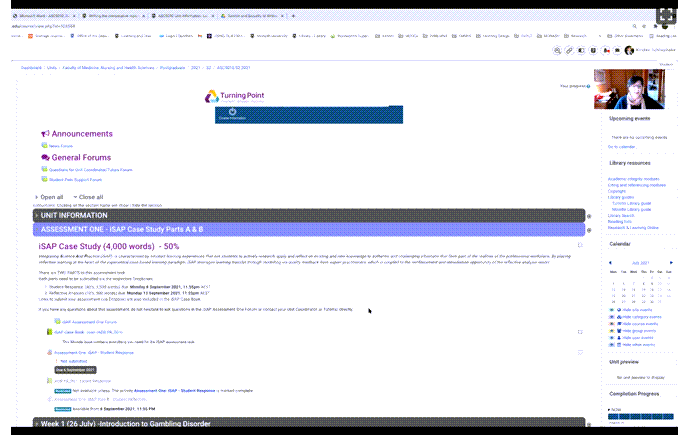
- Review the Moodle Module on how to integrate iSAP.
- Follow up with your Faculty Educational Designer.
- Gain access to industry experts willing to provide feedback to students.
-
iSAP’s five-step structure provides academics with a robust framework that creates formative and summative opportunities to assess for - and of - learning. The balance of consistency and flexibility means that iSAP can be incorporated at many levels within a course.
A single case, for example, can be considered across several year levels of a course, with increasing complexity in the professional issues put to students as they develop their reservoir of procedural, professional and experiential learning.
-
Watch Marilyn Baird discuss how iSAP integrates with providing feedback to students.
iSAP is a program which can be explored, adopted and adapted within its five steps. It has sufficient structure to provide a starting point and direction but is flexible enough that educators can specifically apply it to their teaching context.
There is a storyboard template to guide development of cases following the broad steps identified below:
- Develop a case idea that aligns with unit or course learning outcomes
- Storyboard a scenario and identify appropriate educational resources.
- Develop professional issues and marking criteria/rubric aligned to learning outcomes.
- Conceptualise the expert response, identifying relevant experts in academic and professional networks, and identify the most appropriate means of realising the response.
- Evaluate the logistical requirements.
Supporting resources
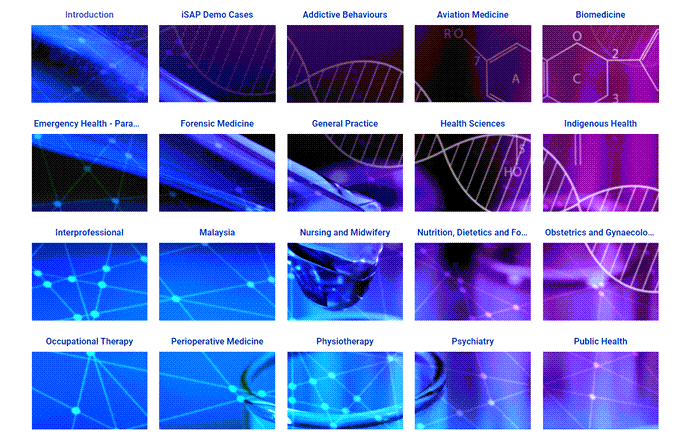
Here are some additional resources that you can browse to help you implement this assessment.