Animation group project
Try it out

This exemplar requires a medium level of effort to implement.
Recommended resources and training:
Supporting resources
Here are some additional resources that you can browse to help you implement this assessment.

In Molecular Biology and the Cell (MCB2011), a second-year undergraduate unit, we created a non-traditional assessment task that challenged students to work collaboratively with their peers to create scientifically accurate animations that explain molecular and cellular biology concepts.
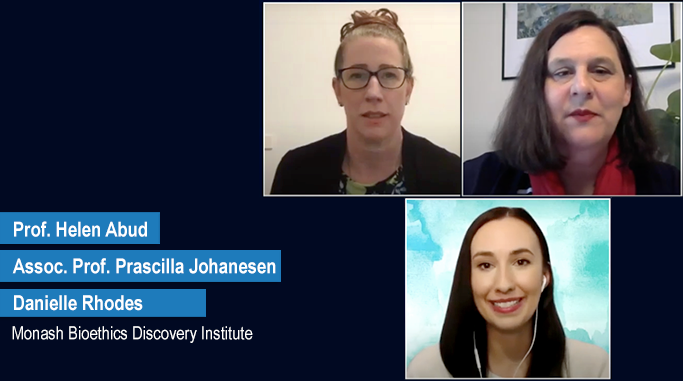
Watch Helen Abud, Priscilla Johanesen and Danielle Rhodes talk about the animation group project.
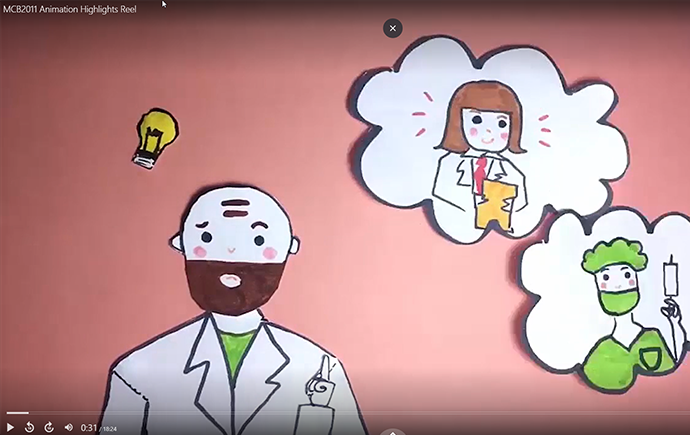
We realised that many of our students found molecular and cellular biology conceptually challenging because they are asked to visualise ‘unseeable’ biological processes. This often resulted in misconceptions, difficulty connecting and applying knowledge. Quickly following came feelings of frustration, dissatisfaction and disengagement - we wanted to resolve this!
We realised we needed to innovate in the design, creation and assessment of learning spaces to improve their conceptual understanding of these foundational concepts.
We designed a semester-long project that challenges students to create scientifically accurate animations that explain molecular and cellular biology concepts - they do this collaboratively. The animations are approximately five minutes in length.
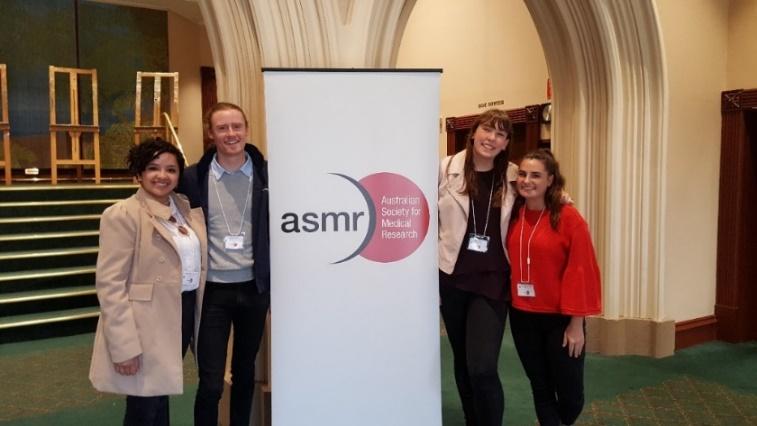
The teams can produce any type of animation they choose (computer-generated, stop-motion, claymation etc.) and present them to an audience of their peers, teaching assistants and academic assessors.
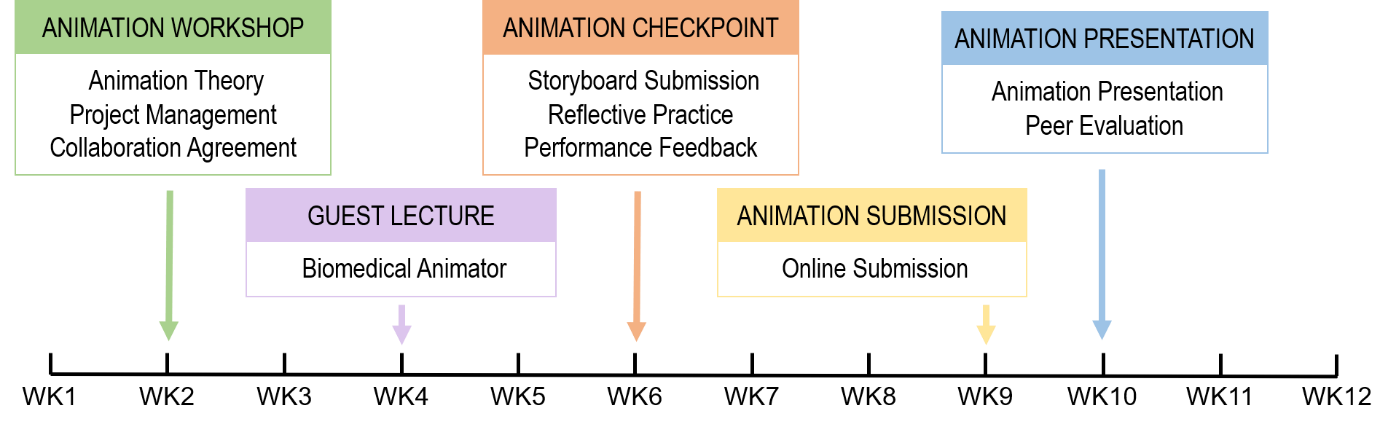
Here is a timeline of how we structured the assessment and feedback opportunities.
Qualitative comments collected from students enrolled in MCB2011 indicate that completing the animation project leads to both cognitive and affective learning gains. They also developed a broad range of transferable soft skills including project management, teamwork, communication and information technology skills - things which will be of great use as they move into the workforce.
“It was an innovative way to understand and visualise complex molecular mechanisms.”
"It made us think outside the box and promoted deeper learning."
“It was more engaging and exciting than other projects.”
"It allowed us to express ourselves creatively which was fun!"
This exemplar requires a medium level of effort to implement.
Recommended resources and training:

| We created a workshop to introduce students to animation theory, project management and setting up collaboration agreements. |

| We invited a guest lecturer who specialises in biomedical animations to present to the students some key strategies. |

| We set up animation checkpoints with students to review their animation storyboard submission, reflect on their practice, and provide them with performance feedback. |

| Students submitted their animation videos via Moodle submission. |

| Students presented their animations and we went through peer evaluation using FeedbackFruits Group Member Evaluation. |
Here are some additional resources that you can browse to help you implement this assessment.