Mid-semester reflections with FeedbackFruits

Try it out

This exemplar is easy to implement.
Recommended resources and training:
Supporting resources
Here are some additional resources that you can browse to help you implement this assessment.

PTY2042 is a second year undergraduate unit within the Bachelor of Physiotherapy. Each week, students engage in a small group case based learning (CBL) activity. In Week 5, FeedbackFruits was used to provide students with an opportunity to reflect on their individual contribution and team dynamic across the first half of the semester.
Watch the video to learn more
In PTY2042, each week students engage in a small group case based learning (CBL) activity, applying what they have learned about physiotherapy theory and skills, anatomy, physiology and research to the content of that week. Students are required to complete a reflection activity relating to their Case Based Learning individual contribution and team dynamic in Week 5 of the unit. Reflection activities are an opportunity for students to do a self-reflection which tutor’s can respond to instead of just delivering formative feedback based solely on the teaching staff’s perspective, without really knowing the student’s own perspective.
By this time, students are just developing their understanding of the dynamic of their group. This provides the students with an opportunity to self reflect on how they are progressing personally and as a group, and allows them to develop strategies for improvement across the second half of the semester.
Teaching staff respond with formative feedback to support students in consolidating their strengths within Case Based Learning and to assist in development of strategies for areas requiring further development.
Prior to 2022, within the many previous iterations of the unit, this was completed as a paper-based task. The rubric was provided to students at the end of Week 5 and returned at the end of the class. These would then be scanned for record keeping and cross referencing.
In 2022, we progressed to an electronic Word document format that students were able to download, complete and then upload into a Moodle DropBox. Teaching staff then reviewed student submissions and completed a subsequent marking rubric which was uploaded as a Feedback File to Moodle.
Overall, both of these methods were quite labour intensive and we knew there had to be an easier way to utilise modern technology to streamline completion of this task.
We reached out to our faculty educational designer and they suggested FeedbackFruits. Utilising the same self reflection marking rubric, used in previous semesters, students were asked to self-assess themselves on a scale of 0 to 5 on the following criteria:
Students were also required to include a general comment.
Our faculty educational designer developed a screen recording demonstration as visual instructions for the teaching team and students.
The tabs below show how the same self reflection marking rubric was set up originally, in FeedbackFruits and from the student perspective.
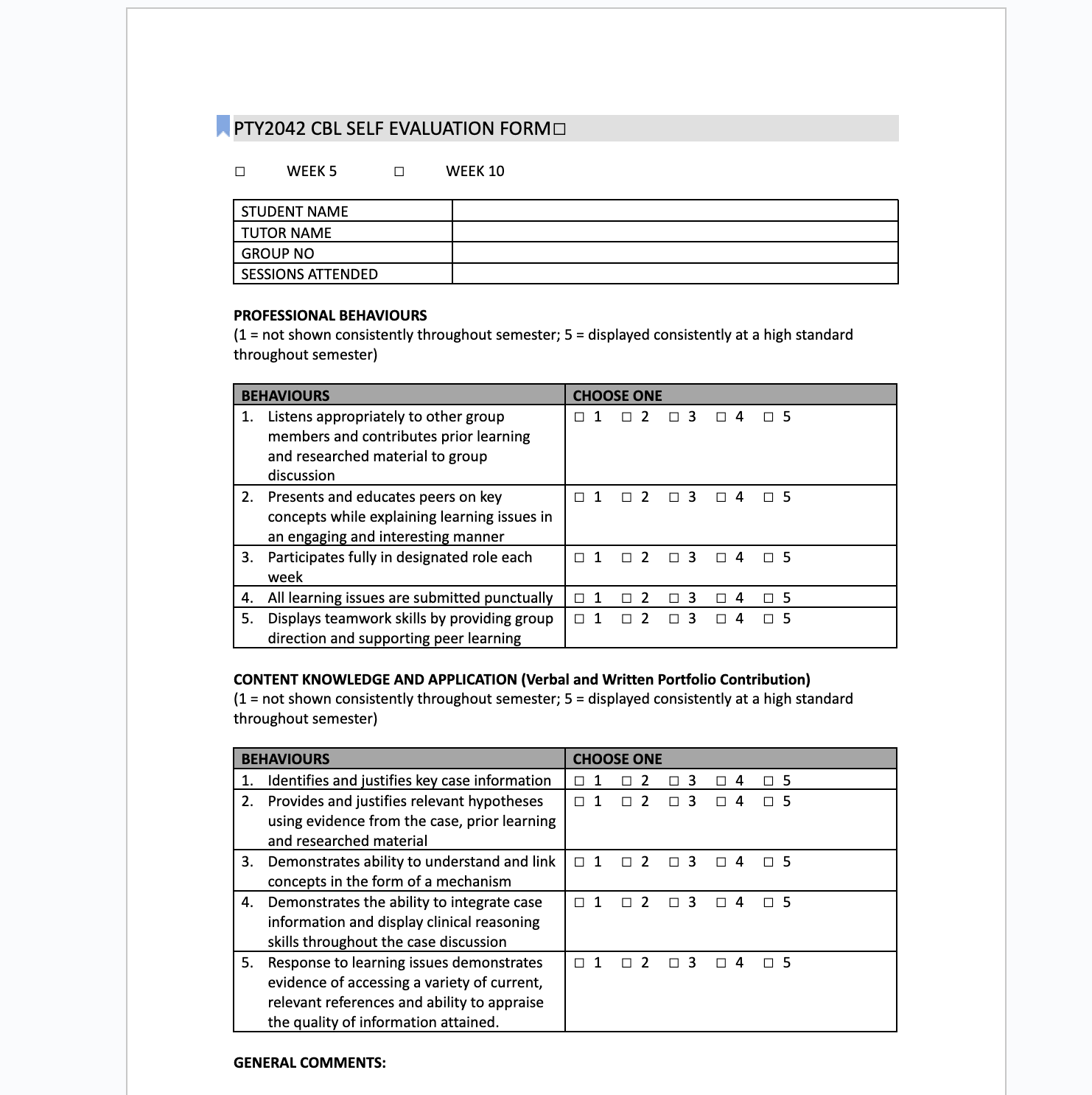
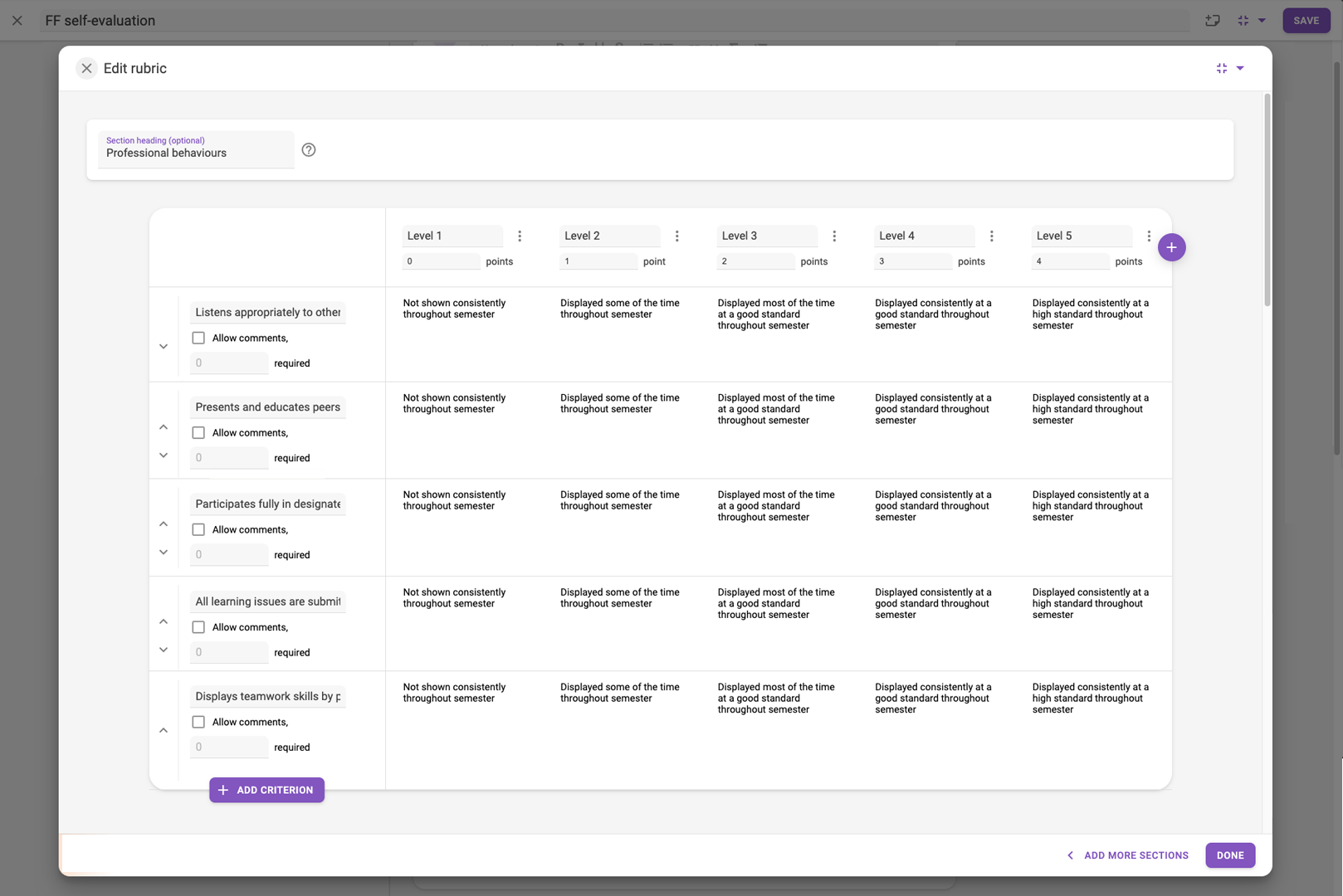
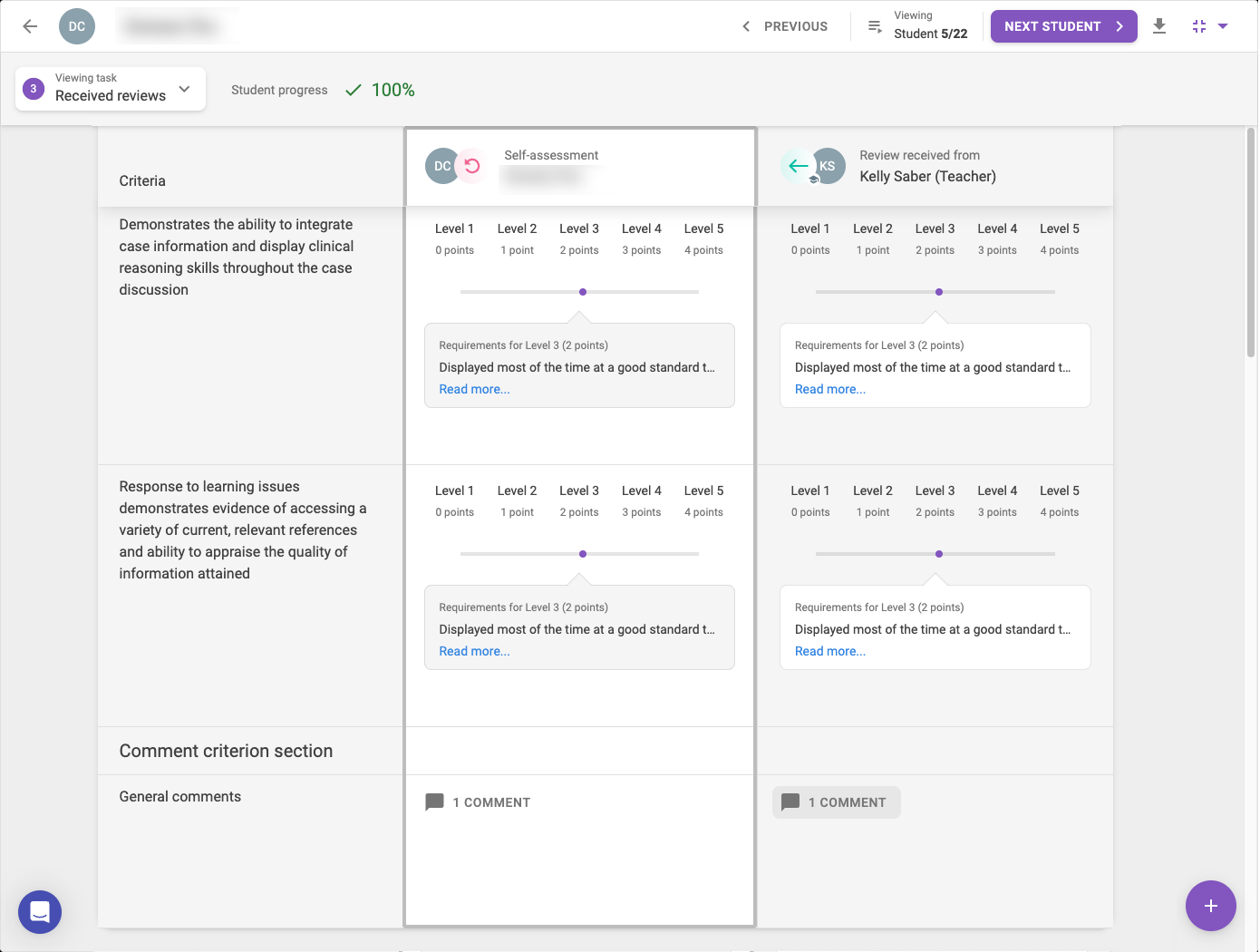
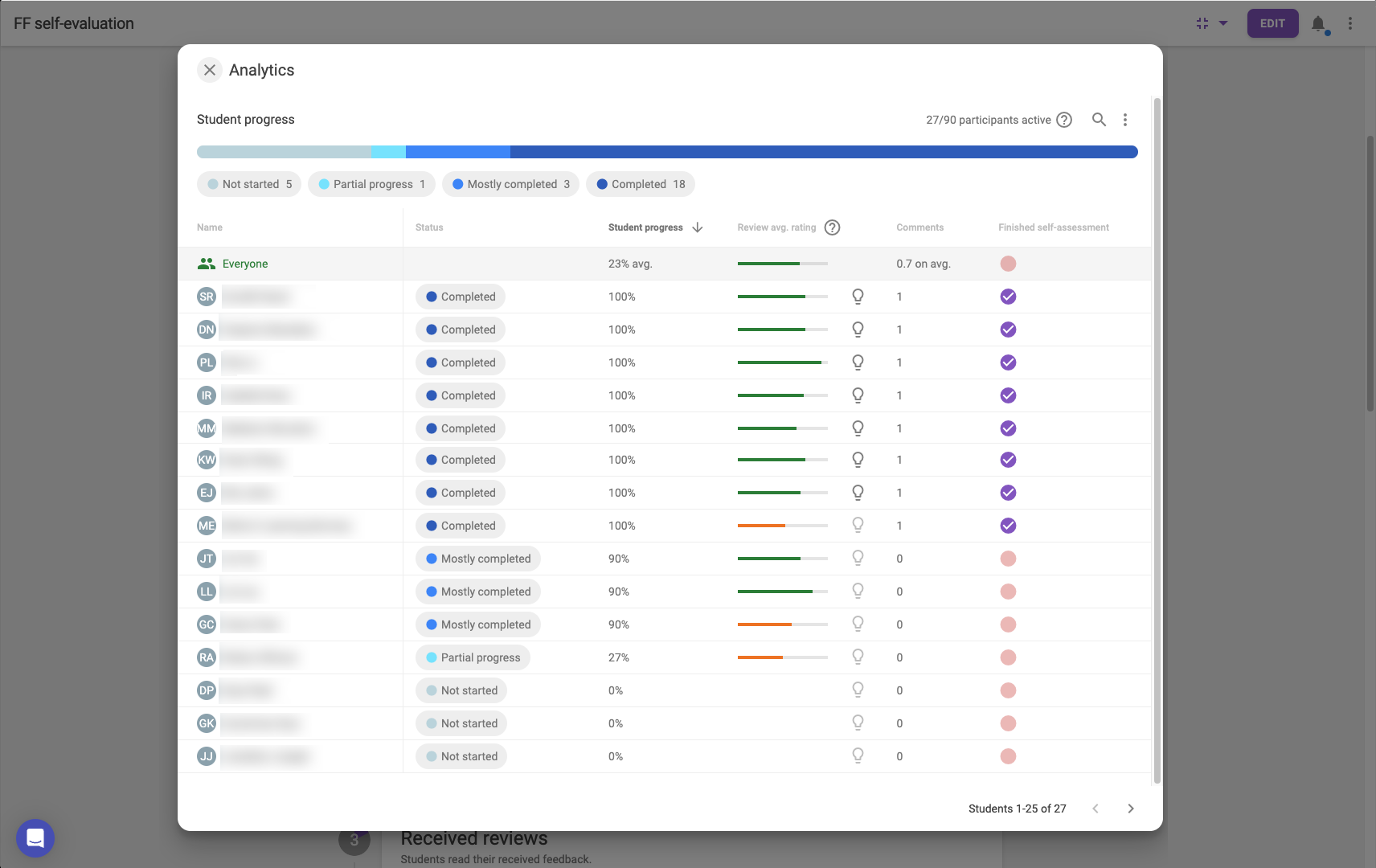
Each of our five Case Based Learning groups is broken into three smaller groups., There may also be more than one tutor per tutorial group. Previously, managing the completion of the feedback activity and following up with each member of the teaching team and student was time and resource intensive.
With FeedbackFruits, we were able to quickly view task completion logs for each group and confirm which students had completed. FeedbackFruits allowed us to view everything on one screen, so we didn't have to open multiple documents and be commenting on another screen or document. We could easily read student self reflections and be really quick and responsive to what they were saying.
Tutors were then able to respond with formative feedback that was informed by the student's own perspective, as well as the tutor’s observations. The teaching team also found the ability to reuse written comments very helpful and time saving. The whole process was much quicker and we definitely found it was a lot less labour intensive.
It was our first time using FeedbackFruits and in this scenario we used FeedbackFruits purely for self assessment and not peer assessment, but there is potential scope to use the tool for a variety of other scenarios.
This exemplar is easy to implement.
Recommended resources and training:
FeedbackFruits was relatively easy to set up, so just to give it a go! If you're unsure, start with something that is a simple task that is not high stakes.

| Think about where in your unit students may benefit from the opportunity for feedback. You could also use FeedbackFruits for skills mastery, group dynamics evaluation or self evaluation. |

| If you have existing activities, you can use existing marking rubrics and easily build them in FeedbackFruits. |

| Reach out to your faculty educational designer who can help you with the set up of FeedbackFruits. |

| Test out your FeedbackFruits with colleagues early to preview the activity from the student view before making it available to students. |
Here are some additional resources that you can browse to help you implement this assessment.