Competency-based peer assessment with FeedbackFruits
About this example
In Science Communication to Influence Change (SCI1000) we have converted to competency-based assessment, to teach science communication skills. All initial assessments in my unit are assessed by their peers using the FeedbackFruits Peer review tool, with quality checks by staff.
Science
-
In 2019, we transformed the unit with help from the Monash Learning Transformation Team. While we implemented the new unit in 2020, cost became prohibitive and the unit was paused in 2021. We then looked for a way that we could gain similar educational outcomes for students i.e. they learn core science communication skills but still reduce the cost of delivering the unit.
-
In 2022, I re-transformed the unit from:
Original Transformation A second year unit A first year unit A blended mode with an F2F workshop An online unit that had weekly Moodle modules and a 1-hr Zoom seminar Assessments were graded by staff Competency based assessment that was graded by their peers (with oversight quality checks by me) Switching from grade to competency based assessment was quite a learning curve for me. All of my prior assessment design has been grade based, so my first step was to reach out to colleagues who had designed competency based assessment and consult the literature.
After getting my head around how competency based assessment worked, I also brainstormed what science communication competencies would be relevant for first year students, relative to their assessments.
This led to me developing two assessments, with a third student-generated component:
AT1 A popular media article AT2 An infographic AT3 A review their own work and peer review of other students’ work Assessment regime design
Students produced these with the aim to meet the 12 defined science communication competencies. They were then required to self-review their own popular media article and infographic, before providing a peer review of two popular media articles and two infographics from other students (AT3).
In conducting the self and peer review for AT1 and AT2, students aim to meet the six self/peer review competencies. Students must meet all 18 competencies to pass the unit.
If a student has not met the 18 competencies to pass the unit they are offered additional assessment to be completed by the end of week 12.
I designed this so that students would be able to use feedback comments to edit their initial assessments (AT1 and AT2) and submit these as a portfolio in the aim to meet any remaining science communication competencies.
If they are missing self/peer review competencies they need to complete these based on popular media articles or infographics chosen by me.
-
What I have learnt from the first implementation are the following:
- Students were very confused about what competency based assessment was, even after much explanation
- Students did not take competency based assessment seriously, thinking it was much easier than grade based assessment until after their initial results were returned.
- After AT1 – AT3 only 130 of 475 students had passed all competencies and the unit.
- After the additional assessment another 191 students met the remainder of their competencies and passed the unit.
- Overall, 321 out of 475 students (i.e. 67%) achieved a pass in S1 2022.
- Of the 154 students that failed, 96 are missing two or less of the competencies (near fail) and will be eligible for unit-based additional assessment.
- There is a direct relationship between students who completed the weekly modules (i.e. geared toward teaching them assessment skills) and those who passed the unit.
- In week 12, I offered 16 hours of drop-in sessions. Students could come along and ask questions and get help from me to meet their remaining competencies. Those that came along to these sessions had greater success meeting their competencies over those who did not.
- As this is the first iteration there is little to no feedback from students in relation to the unit. The only feedback I have received via email was that students were really happy with the amount of effort I put into answering all of their queries via the forums.
Students’ work
-
Example of a student's popular media article
An example of a student's work created for AT1.
-
Example of a student's infographic
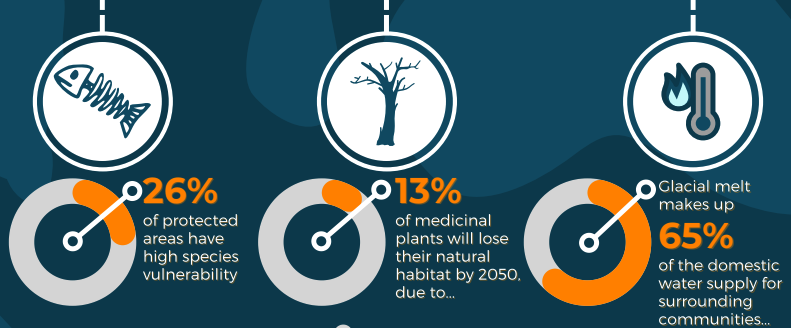
An example of a student's work created for AT2.
-
Example of a student's peer review
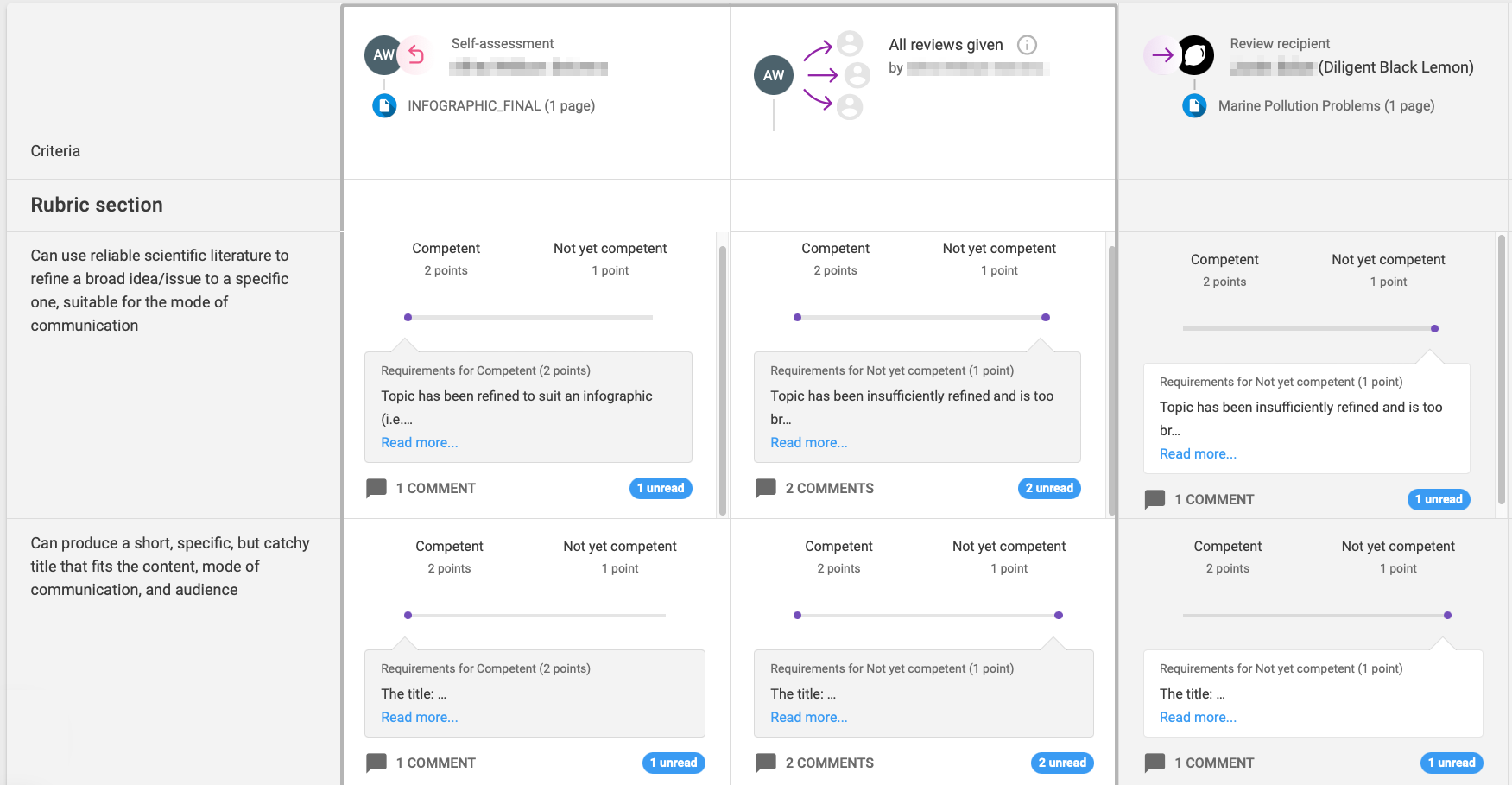
An example of a student’s self review and the review they have provided to a peer for AT3.
Try it out
This exemplar requires a medium level of effort to implement.
Recommended resources and training:
- Support staff to verify students competences and peer review skills
- Support from your faculty educational designer for Gradebook setup
- How to: Set up Moodle Gradebook
- How to: Set up a FeedbackFruits activity
- How to: Select the right information for a rubric
-
Once you have decided on your assessment regime and obtain approvals from your Faculty, you would need to set up both Moodle Gradebook and Feedback Fruits to enable grading and marking.
Set up the Moodle gradebook for competency based assessment
Setting up the Moodle gradebook for competency based assessment is more complex than then the standard Moodle gradebook setup but getting it right early will save you a lot of time and effort in the long run. Below is an example of how I set up the Moodle gradebook in SCI1000 for competency-based assessment.
Click on the plus icons below to learn more about how the SCI1000 Gradebook was set up for competency-based assessment. You can click the icon in the top right corner to view in fullscreen. Click esc at any time to exit full screen.
Set up the FeedbackFruits Peer review activity
The FeedbackFruits Peer review activity was simple and quick to set up. Instructions to add a FeedbackFruits activity to your Moodle unit can be found here. You can read about how to set up the Peer Review activity here.
Expand the accordion below to see the steps for setting up the Peer Review activity for SCI1000
-
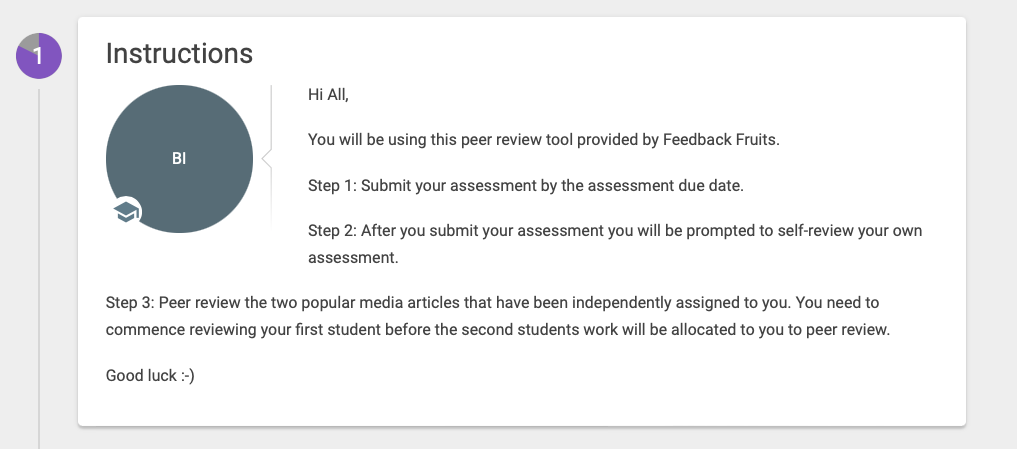
Fill in instructions for the activity for students and choose whether students will hand in work individually or as a group, and review their peers individually or within groups.
It is recommended that you familiarise students prior to commencing the FeedbackFruits activity. FeedbackFruits provides many student facing resources that you can share with your students to introduce them and set clear expectations for how to engage the FeedbackFruits activity.
Note: You will not be able to publish/save the assignment if you leave the instructions field blank.

-
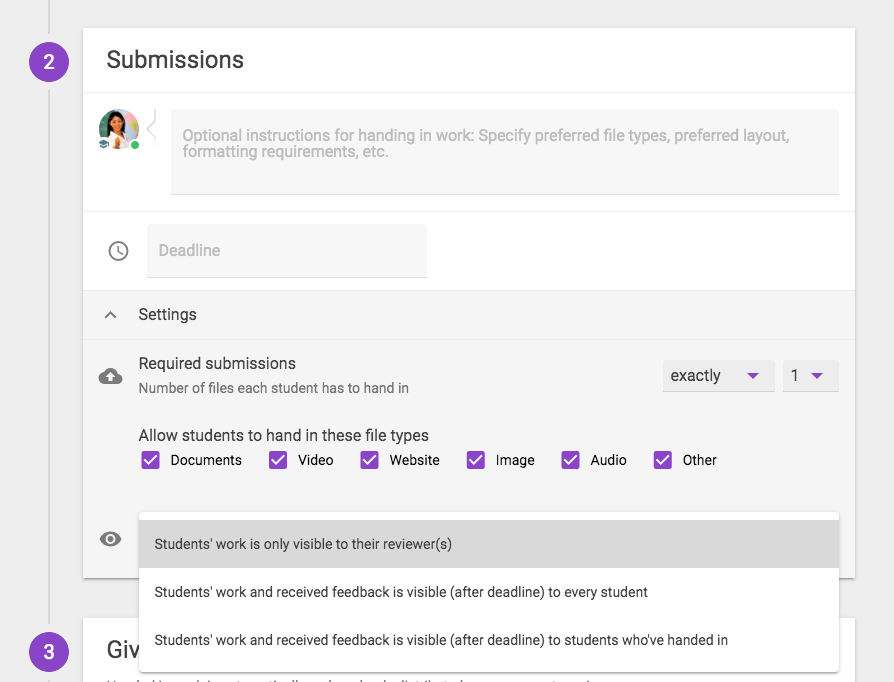
For the Peer Review activity, students submit work to be reviewed. Set a deadline for students, specify the number and what types of files can be submitted, and the visibility of student submissions. For this activity students submitted a document file type individually.

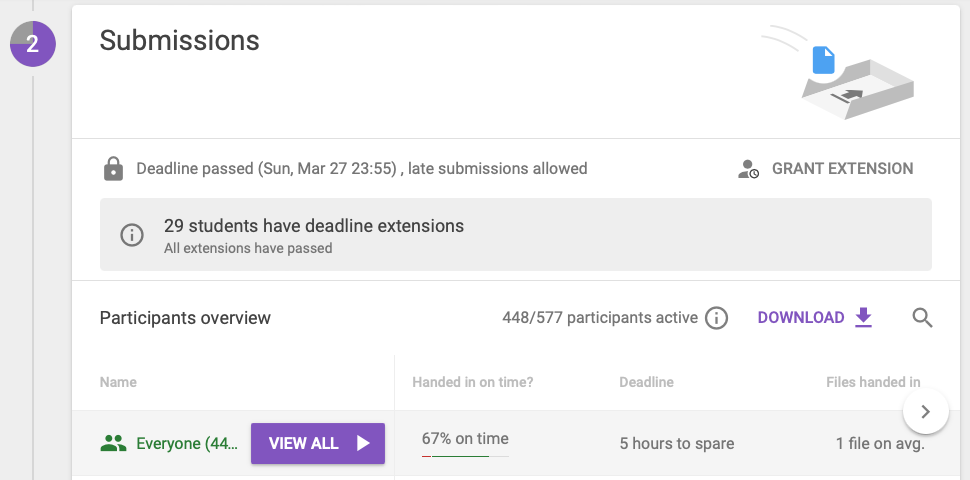
Once students have begun submitting work, you can view analytics for all student's progress and individual students.

-
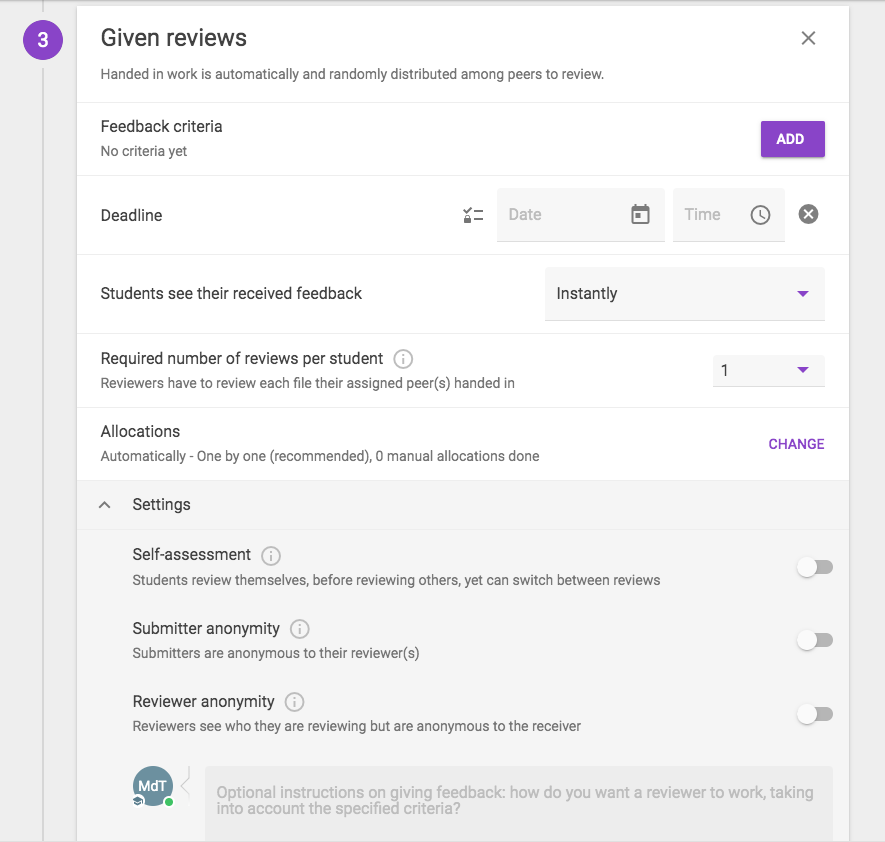
In this step 3, specify the criteria to help guide students as they give feedback. For this activity, the feedback criteria where the competencies and students could rate their peers on a scale of competent or not yet competent, and leave written feedback as comments to suggest on how their peer could achieve a competent grade.
Set a deadline for when students should complete their reviews by, and if students will be able to see the feedback they have been given instantly, or at a scheduled date. In this activity, the release date of feedback was scheduled later to give students time to complete their reviews.
For this activity, in Allocations students handed work in individually and conducted their reviews individually.


-
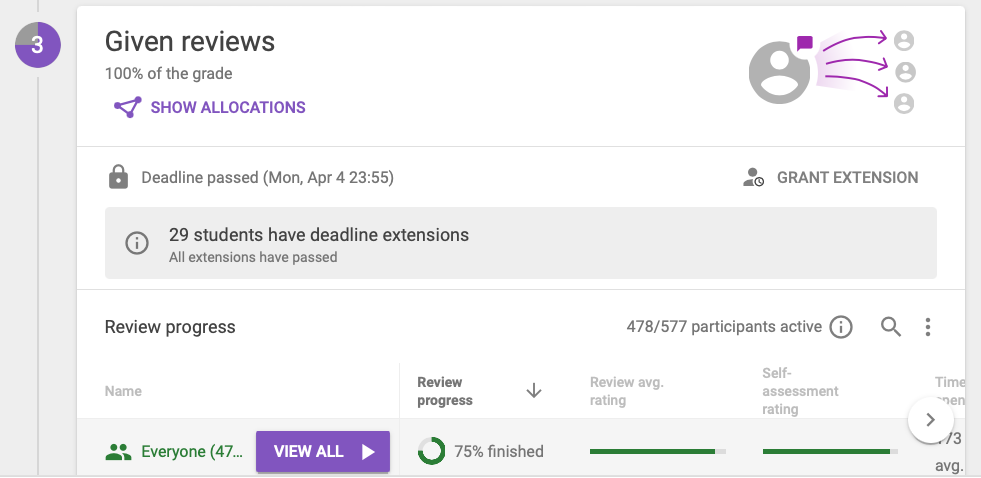
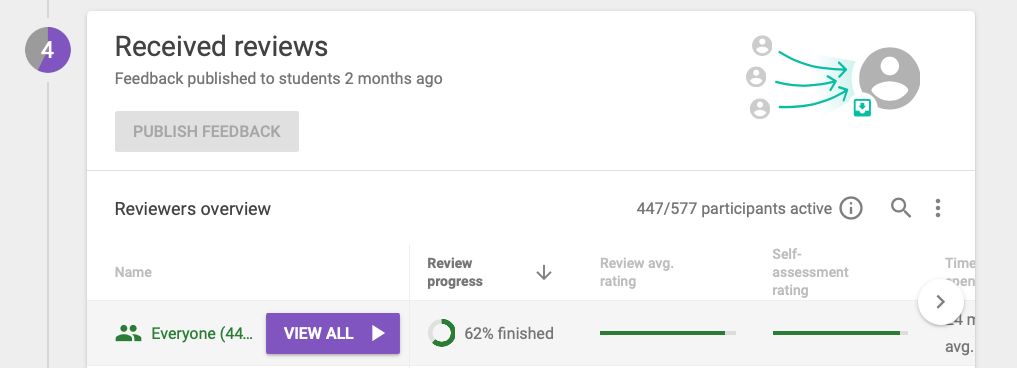
Once students have completed step 3, you can publish student feedback for their peers to receive. You can also review all of your students progress or view the progress of individual students.

-
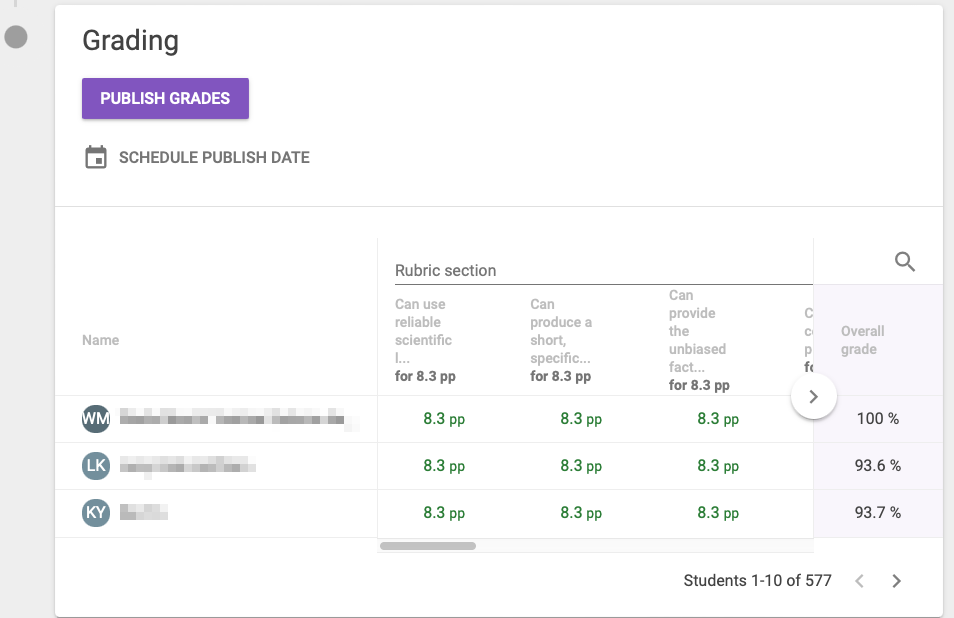
The last step is to publish grades. In the set up you can configure the weighting of each criteria. For this activity the weighting for each competency was equal.

-
-
Emphasise on every occasion how important the online weekly modules are to their success in the unit.
Even though I did this in S1, I am going to pull out the data and actually present this to students in our first seminar in S2. Seeing graphical data of pass rates vs completion of online modules may have more impact than simply telling them.Think very carefully about the competencies you want students to achieve and map these across both assessments.
This way, they get two chances to meet the competencies before additional assessment is required.Have enough staff on board to check all student’s competences and their peer review skills for both assessments.
In S1 I was the lone staff member to 475 students. While I quality checked 50% of students in A1 and 50% in A2 for the science communication competencies, I was unable to check that they had done their peer reviews to the standard required. This will be remedied in the next iteration.Make sure the Gradebook is set up correctly for competency based assessment.
Getting this right will save you a lot of time behind the scenes. I was lucky to get advice from Monash Education Academy on how to do this. In S1 I thought I had it right, but part way through realised it needs a bit more tweaking to minimise processing outside the gradebook.Offer drop-in sessions at key points throughout the semester
For example you can offer drop-in sessions before assessment submission, after they receive results for each semester and prior to submission of additional assessment. I was developing and delivering the unit at the same time (not recommended by the way) and could only offer drop-in sessions in week 12. But these were very well received by students.
Supporting resources
Here are some additional resources that you can browse to help you implement this assessment.